

Journalist Amber Lyon: The War on Drugs is a Human Rights Crisis

JournalistAmberLyonWikimedia CommonsHave you ever found it odd that a side effect of Cymbalta, a leading anti-depressant, is suicide? It seems counterintuitive, but in a country where medicine is dictated by Big Pharma, such a paradox is hardly surprising.

That’s because, as former CNN correspondent Amber Lyon points out, Western medicine treatments are not intended to get to the root of the sickness.

The result of prolonged medical treatment is a country with 70% of its citizens on prescription drugs. And perhaps more shocking, where at least one fifth of its population is taking five or more prescription pills.

The US remains one of only two countries in the world with direct-to-consumer advertising, and the sheer amount of pills flooding the market is having deadly results. According to the book Our Daily Meds, nearly 100,000 Americans die each year from prescription drugs, roughly 270 people every day.

The non-profit organization Trust For America’s Health also found last year that deaths involving prescription drugs quadrupled between 1999 and 2010. Nearly 6.1 million people abuse prescription pills and overdose deaths have doubled in 29 states, exceeding vehicle related deaths.

With the innate perils of these drugs becoming more evident, Lyon dedicated her journalism to finding another way to treat psychological illnesses. Her personal experience curing Post Traumatic Stress Disorder (PTSD) with psilocybin mushrooms led her into a world of research establishing that what we’ve been told by the establishment about psychedelics is wrong.

Lyon travelled around the world to legally take psychedelics with foreign cultures that have used them medicinally for thousands of years. She explains that when done in a safe setting, these psychedelic therapies allow people to confront, process and purge their darkest memories, instead of numbing them with pharmaceuticals.

How Psychedelics Are Saving Lives

**

Amber Lyon joined Abby Martin on Breaking the Set to debunk the myths surrounding psychedelics and explain their proven benefits.

Amber Lyon Trips All Over the World to Discover the Power of Hallucinogens

**

Lyon launched the website Reset.Me in order to change the narrative and spread awareness about the benefits of psychedelics.

Written by Abby Martin and Anya Parampil, photo by Wikimedia Commons

Einstein’s Circle of Compassion

Learning about world issues sometimes brings despair and helplessness from the feeling of not being able to immediately bring change.

Even while acknowledging the good, it’s hard to come to terms with so much bad. The eternal struggle for many is how to actively engage with the problems facing the planet while at the same time maintaining stability in our own lives.

Breaking the Set gives a heartfelt remark about the great philosopher and scientist Albert Einstein’s ‘Circle of Compassion’ by reflecting on how to balance personal stability with the plight of humanity by establishing a sense of global empathy.

Abby

Einstein’s Circle of Compassion

LIKE Breaking the Set @ http://fb.me/BreakingTheSet
FOLLOW Abby Martin @ http://twitter.com/AbbyMartin

Graham Hancock Explores Ancient Mysteries

pyramid sphinxMEDIA ROOTS — Graham Hancock, arguably the world’s foremost expert on ancient mysteries, has devoted his life to uncovering and demystifying the rituals, legends, and wisdom of ancient cultures.  In this video, he investigates oft-ignored inconsistencies.  For example, he discusses the true age of the Great Sphinx of Giza, which remains under debate.  Scholars’ estimates vary widely, though mainstream Egyptologists generally believe it was constructed approximately 4,500 years ago, whereas Hancock asserts heavy water erosion indicates the Sphinx was built quite earlier than believed, at a time when the Giza Plateau wasn’t even a desert yet. 
Hancock also questions how Egyptian culture could have attained, such an advanced state so quickly.  As he explains, cultures generally undergo evolutionary processes before reaching a point of historic greatness or iconic status.  There is usually a progression, in which the building blocks of a society are gradually created over time, giving rise to increased sophistication as the civilization matures.  However, with ancient Egypt this does not seem to be the case.  Egypt seemingly appeared out of nowhere, complete with massive, architectural wonders, a complex mythology, and an eerily accurate astronomy.  Yet, no concrete evidence links Egypt to a previous culture.  So, where did ancient Egyptians develop their wisdom?  Or should we be asking:  Where did the Egyptians come from?

In the video, Hancock lays out a fascinating theory.  He believes an ancient culture existed far earlier than contemporary scientists believe, which laid the foundation for Egyptian civilization.  He suggests around the end of the last ice age, approximately 10,500 BCE, a cataclysmic natural disaster altered the course of mankind by disrupting this ancient culture.  Because most people at this time were living close to water, flooding from the disaster killed the vast majority of them.  However, the small minority, which survived retained the wisdom of their antecedents.

Who were these people?  Hancock believes they were from Atlantis, the mythical lost island, which most scholars have concluded to be non-existent.  For example, Alex Cameron wrote in Greek Mythography in the Roman World (124), “It is only in modern times that people have taken the Atlantis story seriously; no one did so in antiquity.”

Hancock also investigates a number of other ancient artifacts, mysterious discoveries, and cultural anomalies.  With cultivated elocution and an erudite demeanor, Hancock tempers his non-traditional theories with cool, detached logic and reasoning.  Whether one’s persuaded by him or not, one can’t deny his ability to bring excitement and attention to the study of ancient cultures.  For example, Hancock tells us ancient cultures were much more in tune with nature, astronomy, and the Earth itself, all of which helped shape their worldview.  Consequently, their wisdom and spirituality was much deeper and more encompassing than modern cultures.  In fact, Hancock’s theories may cause you to wonder whether humanity has progressed at all since the time of the ancients.

Written by Adam Miezio

Edited by Alex Starace

***


***

Photo by Flickr user S W Ellis

Insomnia, Sleep, and Unconventional Rhythms


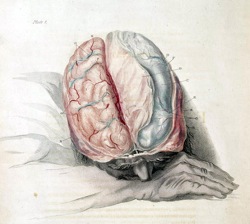
brainflickrbrain_bloggerMEDIA ROOTS — Like many customs handed down to us by ‘experts‘ we often uncritically accept, sleep is yet another custom we may be misinformed about.  Daily, millions of people struggle with the simplest of biorhythms—sleep.  And we are often led to believe this has always been so.  Insomniacs are stigmatised and branded inadequate and defective.  But what if everyone complying with the six-to-eight hour sleep rule of thumb are wrong?

A growing body of research and increasing evidence are suggesting, up until relatively recently in human history, humans have slept in a disjointed manner comprised of two phases.  Modern technology has enabled states to squeeze their working-class, even persuading them to identify with a workaholic ethic.  Prior to the industrial era, human activity was harmonised with the Sun’s cycles.  So, at night, humans slept for a few hours, then awoke for an hour or two.  They would then drift off back to sleep for another cycle.  These phases were known as first sleep and second sleep.  And the period in between was known as the watch.  People used the watch to visit neighbours, chat with family, smoke a pipe, pray, or analyze their dreams, for example.

Just as we develop more sophisticated approaches to nutrition, exercise, and health, sleep should carry equal significance in our lives.  It’s widely held we spend roughly one third of our lives sleeping.  Could we be sleeping our lives away?  Or are we maximizing our lifespans with the eight-hour sleep regimen?  Still, it’s never too late to reconnect with our true circadian rhythms.

Adam Miezio

***

ALTERNET — I’ve always been at odds with sleep. Starting around adolescence, morning became a special form of hell. Long school commutes meant rising in 6am darkness, then huddling miserably near the bathroom heating vent as I struggled to wrest myself from near-paralysis.

Pursuing the truth about sleep means winding your way through a labyrinth of science, consumerism and myth. Researchers have had barely a clue about what constitutes “normal” sleep. Is it how many hours you sleep? A certain amount of time in a particular phase? The pharmaceutical industry recommends drug-induced oblivion, which, it turns out, doesn’t even work. The average time spent sleeping increases by only a few minutes with the use of prescription sleep aids. And — surprise! — doctors have just linked sleeping pills to cancer.  We have memory foam mattresses, sleep clinics, hotel pillow concierges, and countless others strategies to put us to bed. And yet we complain about sleep more than ever.

We have been told over and over that the eight-hour sleep is ideal. But in many cases, our bodies have been telling us something else. Since our collective memory has been erased, anxiety about nighttime wakefulness has kept us up even longer, and our eight-hour sleep mandate may have made us more prone to stress. The long period of relaxation we used to get after a hard day’s work may have been better for our peace of mind than all the yoga in Manhattan.

In sleep, we slip back to a more primitive state. We go on a psychic archaeological dig. This is part of the reason that Freud proclaimed dreams to be the royal road to the unconscious and lifted his metaphors from the researchers who were sifting through the layers of ancient history on Egyptian digs, uncovering relics and forgotten memories. Ghosts flutter about us when we lie down to rest. Our waking identities dissolve, and we become creatures whose rhythms derive from the moon and the seas much more than the clock and the computer.

Read more about The 8-Hour Sleep Myth.

***

Photo by Flickr user brain blogger

Matthew Taylor on 21st Century Enlightenment

MEDIA ROOTS– What is is that enhances and what is it that inhibits our empathic capacity? Matthew Taylor explores the concept of 21st century enlightment in this RSA animate video, suggesting that the new enlightenment should champion a more self-aware, socially embedded model of autonomy that recognizes the frailties and limitations of the human race and the planet in which we live. Matthew discusses how the idea might help us meet the challenges we face today, and the role that can be played by certain organizations to help in the evolution of our global consciousness.


Matthew Taylor on RSA Animate


Abby

Photo by flickr user digitalbob8