
MR Original – Some Better This World Through Film

MEDIA ROOTS – The ability to combine audio and visuals to tell a compelling narrative makes documentary films a powerful means of storytelling. They are education through entertainment and, at their best, a persuasive and motivating push to action. It is no surprise that the Bay Area, teeming with political and artistic thought, is a documentary film capitol of the world. As an aspiring documentarian, encouraged by the learning potential from this rich network, I began seeking out insight from local filmmakers.
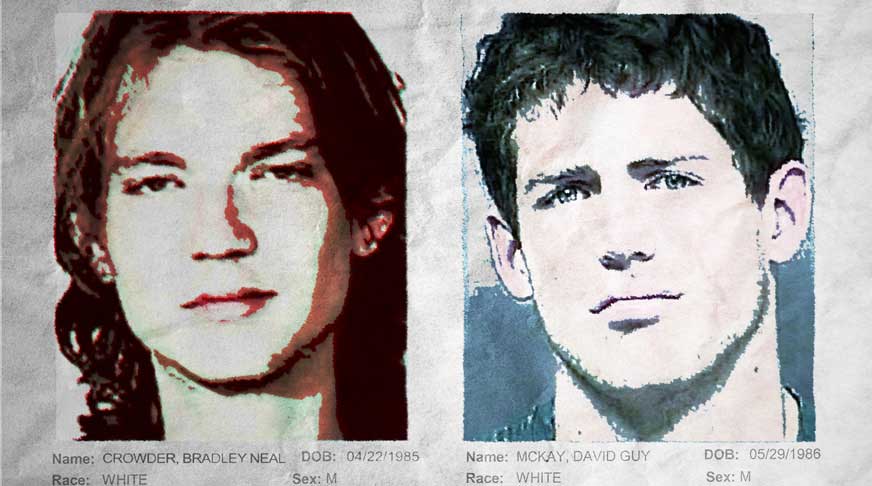
Following a tip from a friend, I came across Better This World – a film in post-production about two young men from Midland, Texas who are facing multiple domestic terrorism charges after manufacturing and bringing Molotov cocktails, or petrol bombs, to the 2008 Republican National Convention. What drew me into the story, and the filmmakers themselves, was the government’s star witness in the case – a controversial and unsuspected FBI informant.

Many of the stories behind the ‘foiled’ terrorist plots of the past few years share in common the trend of an undercover paid FBI informant that often times held a facilitating role in the group– a detail that frequently goes missing from mainstream media reports. (You can find more information on a few of these cases here, here and here.) Knowing this, I became eager to speak with the filmmakers who are taking on such an important and overlooked story.

Loteria Films, the local non-profit production company behind the film, is run by two women, Kelly Duane de la Vega and Katie Galloway. Kelly’s background in still photography and photojournalism, and Katie’s, in radio and print journalism, drew both women to film for what it could accomplish by blending these mediums.

When we met, Kelly recounted the restriction she felt in conveying people’s amazing personal stories as a photographer. “I think there are photographers whose photographs blow my mind, even more than a story. But I wasn’t feeling that about mine. I became so hungry for people to know the story. I knew there was another step.“

For Katie, filmmaking was a natural progression out of her love for working with audio and the depth and intimacy it brought to storytelling. While apprenticing at Frontline under documentarian, Ofra Bickle, criminal justice became her passion.
It was a blurb that Katie found in the Federal Court section of the New York Times that set the two women in pursuit of their first film together. Katie believed the story of two young men facing terrorism charges against the word of an FBI informant was a “really sexy, boiled down way into a story that is my life work so far – examining the criminal justice system and the problems with it.”

The trial was starting a week later, leaving not a moment for second-guessing.

“You say ‘I’m never going to do this on my credit card again. I’m never going to just start spending my own money again.’ But no one is going to give you money in a week’s turn around,” Katie explained with a smile reflecting love for the thrill and risk of chasing a good story. “It’s a gamble, its like going to Vegas.”

Better This World presents tough questions about the balance between liberty and safety in the face of post 9/11 domestic security. “The common thread in many of these [foiled terrorism] cases is some sort of political aspiration and an informant or a government agent who they hook up with and spend a lot of time with, and then at other end, the terrorism case. The question is what happened? Was it entrapment?”

Somewhat tongue-in-cheek Katie went on to ask, “What happens when you have so many resources going into the domestic security apparatus and not necessarily enough terrorists to go around?”

“In the FBI they call it ‘aspirational and not necessarily operational’,” she added.

In a recent interview by Reuters, filmmaker and award winning journalist, John Pilger described a mindset of reporters that says, “only authority can really determine the ‘truth on the news’,” and which leads to a dangerous form of embedding in government and official versions of events.  “Authority has its place, but the skepticism about authority must be ingrained in people,” he said.

And so it seems to be among documentarians.

It is the often skeptical and critical voice of documentary film that has shaped its long and growing legacy of critiquing the status quo while motivating people to educate themselves and take action.

Filmmakers do not face the same time constraints that can lead print and broadcast journalists to regurgitate the press releases handed to them by government, military and business leaders. Instead, they use a richly layered medium to tell the deeper story that hasn’t been told before, or to tell it differently. “Otherwise, what’s the point?” asked Katie.

Kelly pointed to the lack of a concrete power structure, or system, for documentaries to pander to.  “There isn’t a central authority figure in documentary filmmaking. There isn’t a central voice. There isn’t an outlet that is determining what we get to see and don’t get to see – except for PBS and HBO and A&E, but there are ways to get your film out if you are not in those venues.

In some ways it is a much more democratic universe than mainstream journalism. We’re already so far out of the system in some ways.”

One consequence of being outside of the ‘system’ is the struggle of fundraising. As an educational nonprofit, Loteria Films can apply for grants. It has been fortunate for the support it has received so far – the Independent Television Service, the biggest grant maker nationally for documentary films, is funding Loteria’s current project but only funds 1-2% of projects that come in its door.

“When you look at all the labor and heart and soul and money that goes into independent projects and the struggle…” Katie reflected.

“We went a year and a half with very little funding. You know, begging, borrowing and stealing. That’s really the life of an independent unless you’ve made it and have money coming in regularly for projects. We’re not there yet. We’ve been really lucky raising money through grants and so forth.”

But, funding is only part of the equation. Kelly attributes the success of the partnership to their base of trust and respect, calling it the “bedrock” of their collaboration.

“When the other person is talking you know that you respect the way they think as a creative person and as a story teller. So, if they are challenging your idea it is something you have to listen to because it very well might be right. When you and your partner are both able to do that for one another it deepens your respect and base trust.”

Comparing the partnership positively to a marriage Kelly added, “It’s a long intimate journey. Its pretty damn intense – you are really committing so much to each other.”

When I asked what advice the activist filmmakers had for aspiring documentarians, Kelly’s words resonated with my pull to the medium.

“I feel like there are certain people who don’t have a choice in life, who just are going to do something creative whether it makes good sense or not…I think you have to have something inside of you that is somewhat predetermining your fate, that is driving you, that is making you choose something that is difficult. You can’t be materialistic. You have to be the kind of person that gets pride from the good their work does, or the quality and pleasure of their work.”

Just as Katie had, Kelly was sure not to gloss over the financial struggles that, more often than not, accompany the production of an independent film, while highlighting that flexibility is key in overcoming those challenges.

“Sometimes you might have to take a commercial job and that sucks because it might not be at the core of where your values are. But unless you are from a financial situation where you aren’t forced to have that choice I think you have to be okay with that – moving in and out of those worlds to tell a bigger, larger more important story. You have to figure out how to keep yourself viable so you can raise the seed money to do the thing that matters.

You just have to go for it and at the end of the journey you know whether you can do it again. Whether it was great or if it was too hard.”


Better This World
will be premiering at SXSW in March. Stay tuned to Loteria Films for an upcoming trailer of the film.


Article by alicia roldán, editor for Media Roots

Image © Copyright of Loteria Films

MR Original – Surfacing Your Inner Revolt

MEDIA ROOTS– “I think we all have a little voice inside us that will guide us…if we shut out all the noise and clutter from our lives and listen to that voice, it will tell us the right thing to do.” – Christopher Reeve

After several scores of human history, contrary to popular belief, the human race as a whole is still not free. Many of us claim that we are free, but we are rather enslaved by our perishable pleasures and appetites (perishable pleasures not to be confused with engaging in your passions). We carry on the charade of freedom while deep down we are still locked in prisons of fear and ignorance – gagged, shackled and blindfolded. Is there a way out, one asks? It feels like there isn’t, and many of us tend to believe that we were made to spend eternity being slaves at the behest of a mercenary.

I am aware that many of you reading this have been through tunnels of trials and tribulations. I understand that there are many of you that want positive, peaceful and lasting change in this world, but are constantly inflamed by thoughts and emotions that dictate that nothing will change in an environment that strips you of that opportunity. I believe many of you want to rise up and live your destiny – only to find discouragement weighing down on you like a ton of bricks.

One can only endure this type of perception for so many years before the time of questioning comes: questioning of the calamity, the malaise, the resentment, the bitter and bloody rivalries. Is this all there is? Let me ask once more: Is this all there is?

I recall a scene from the popular movie The Matrix where Morpheus is sitting down with Neo in a room draped in shadows and desolation. At one point, Morpheus offers Neo two different pills: a blue one and a red one. Should Neo take the blue one, he will return to his slumber and convince himself that his calling was but a mere dream. Should he take the red one, Morpheus will then fulfill his promise to take Neo down the rabbit hole far beyond what he can imagine, in order to discover his true self and to learn the true nature of reality.

The discovery of oneself – therein lays the key. However, embarking on the journey can be a very fearful thing. Down the rabbit hole, you cannot see what is ahead and there is a surprise around every corner. Once you go deep down, there is no turning back and it is either prosperity or peril. The red pill may be bitter and tough to swallow, but it is something one must do in order to discover his/her true salvation, prosperity and destiny.

You have to leave it all behind…all the falsehoods that you have been told and raised upon – by the mainstream media, by “religious leaders”, by those in authority and perhaps your parents and peers. Your worst enemy down the rabbit hole is not the termites, not the earthworms nor the reptiles – but rather your own ego that keeps your brain in a cell.

But why is it so hard to take the red pill? Why do so many us choose to live out our lower nature and refuse to acknowledge higher levels of intelligence and intuition? Why do we approve of, or are even grateful for, our own chains, despite their fierce and intense limitations? I believe there is a big reason as to why so many of us refuse to be awakened…

It is a fear that manifests on an unconscious level.

The fear of what other people think of us.
 
It is more than just a simple matter of peer pressure going way beyond what you experienced in high school. I believe most people want to speak out and have an idea of how they want to go about it, only to be ensnared by fear of public opinion. It is the single, most crushing thing to the revolutionary spirit and couldn’t come at a time where dissent is needed the most.

Why is it that we promote free speech, encourage discussion and the right to be different when at the same time we slander those actions whenever they are committed by a creative, peaceful and thoughtful individual? The fact is that we create enemies amongst ourselves and most of us do not respect each other for our differences, especially when it comes to a revolutionary act. In other words, we only entertain differences established by the standards of authority over public opinion such as mainstream television shows, movies and sitcoms. It reminds me of a quote by late comedian Bill Hicks: “You are free to do as we tell you.”

We live in this dream world buying the illusion that we are free. We are rendered less inclined to question the nature of the system that we live in, by the relentless propaganda and fanfare of mainstream glamour that consistently holds our attention so. We believe that this reality is the absolute and despite any glimpse of the long-term misery and suffering it brings. So how then can we be free?

It is all about looking at the world around you – realizing what type of world we’re becoming, let alone what we already are. Look deep inside of yourself, deep down, and realize what you’re sick and tired of, what angers you, what enrages you – and get up and doing something about it. What is it you value? What change do you want to see…for yourself…and for others? Once you reconnect with your intuitive capabilities, then, and only then, will real change come into play. As Gandhi once said, “You must be the change you want to see in the world.” Doing things the other way around will have catastrophic effects.
Don’t let peer pressure win you over. Look around you. Why are so many people in debt? Why are so many people getting divorced? Why all the various health problems, including diabetes and heart attacks striking young adults? Why the rising crime? Why the gradual loss of our liberties and the mounting injustice around the world? All of these can be traced back to a peer pressure or groupthink of some kind. Every action we perform creates a reaction (or “domino effect”) in our surroundings and these reactions play out in various forums and ways. Open your mind and you will immediately notice this taking place. We are connected and the more we let our influences and egos get the better of us, the more negative change we will see expressed around us. If we wait, it will be far too late.

If you choose to not become conscious and give into the herd mentality, you’ll be taking a great risk – a risk that has consequences that far outweighs the benefits. If you want to make a difference but choose to remain idle, I must ask you: What price are you willing to pay?

What price are you willing to pay for not thinking for yourself?

What price are you willing to pay for not sending your voice out into the universe and making a creative contribution to put an end to this nonsense and tyranny on the planet?

What price are you willing to pay for letting fear run your life?

What price are you willing to pay for ignoring your revolutionary duty to stand up in the face of tyranny and injustice?

What price are you willing to pay for leaving the decisions to the elite in power, only to find months down the road that your neighbors have been grossly unrepresented and impoverished as more people die for the gain of a few people at the top?

What price are you willing to pay for giving up and walking away, letting the system get the best of you while people close to you suffer greatly as a result?

It is surprising what can happen when one person becomes enraged and starts doing something about it. Look back through history for just a moment. Who was it that changed the course of history? Was it a group, a mob or a committee? In the vast majority of cases, it was an individual who got the ball rolling and these individuals came from all walks of life. They woke up and realized, through creative insight that the system, whatever conditions they lived under, was doing humanity a great disservice – so they decided to act. They intuitively knew full well that sitting back and pretending things were okay would lead to absolute disaster.

Martin Luther King, Jr. and Mohandas Gandhi are two outstanding examples of individuals whose efforts amassed a movement to epic proportions that eventually changed the course of history forever. The individual can begin a movement but it is the group that sustains it. Martin Luther King once stated that it wasn’t him that made the Civil Rights Movement effective, it was the people – the people were the change, not some government.

It is interesting to note that Martin Luther King, Gandhi and others like them, always stood up against tyranny, not terrorism. Tyranny, often occurring on their own soil, was at the root of the problem and the only way to medicate it was to stand up with the passion and determination to change things – a determination powerful enough to move mountains.  Shortly after, people followed in response.

Marianne Williamson stated this brilliantly in her famous poem Our Deepest Fear: “…and as I let my own light shine, I unconsciously give other people permission to do the same…” (my emphasis). It is your energy, the energy that you radiate out into the universe without conscious awareness, which has a ripple effect among your fellow human beings. If you really know what you need and change is burning at your core, you will automatically summon others to your cause. I know, I’ve experienced it and have seen others do the same.

We want hospitality rather than hostility.

Truth rather than trauma.

Forgiveness rather than frustration.

Serenity rather than segregation.

Reconciliation rather than racism.

Liberty rather than libel.

Peace rather than pestilence.

Ingenuity rather than isolation.

And equality rather than extermination.

You will have to endure the slander of your fellow men. But please remember that there are others out there just like you and they are there to support your efforts while permitting others to do the same – all you have to do is open your mind and your heart…and they will come.

Written by Shawn Bent

Photographs by BlaisOne

‘The Left Has Nowhere To Go’

TRUTHDIG –  Ralph Nader in a CNN poll a few days before the 2008 presidential election had an estimated 3 percent of the electorate, or about 4 million people, behind his candidacy. But once the votes were counted, his support dwindled to a little over 700,000. Nader believes that many of his supporters entered the polling booth and could not bring themselves to challenge the Democrats and Barack Obama. I suspect Nader is right. And this retreat is another example of the lack of nerve we must overcome if we are going to battle back against the corporate state. A vote for Nader or Green Party candidate Cynthia McKinney in 2008 was an act of defiance. A vote for Obama and the Democrats was an act of submission. We cannot afford to be submissive anymore.

“The more outrageous the Republicans become, the weaker the left becomes,” Nader said when I reached him at his home in Connecticut on Sunday. “The more outrageous they become, the more the left has to accept the slightly less outrageous corporate Democrats.”
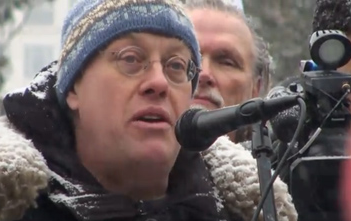
Nader fears a repeat of the left’s cowardice in the next election, a cowardice that has further empowered the lunatic fringe of the Republican Party, maintained the role of the Democratic Party as a lackey for corporations, and accelerated the reconfiguration of the country into a neo-feudalist state. Either we begin to practice a fierce moral autonomy and rise up in multiple acts of physical defiance that have no discernable short-term benefit, or we accept the inevitability of corporate slavery. The choice is that grim. The age of the practical is over. It is the impractical, those who stand fast around core moral imperatives, figures like Nader or groups such as Veterans for Peace, which organized the recent anti-war rally in Lafayette Park in Washington, which give us hope. If you were one of the millions who backed down in the voting booth in 2008, don’t do it again. If you were one of those who thought about joining the Washington protests against the war where 131 of us were arrested and did not, don’t fail us next time. The closure of the mechanisms within the power system that once made democratic reform possible means we stand together as the last thin line of defense between a civil society and its disintegration. If we do not engage in open acts of defiance, we will empower a radical right-wing opposition that will replicate the violence and paranoia of the state. To refuse to defy in every way possible the corporate state is to be complicit in our strangulation.

“The left has nowhere to go,” Nader said. “Obama knows it. The corporate Democrats know it. There will be criticism by the left of Obama this year and then next year they will all close ranks and say ‘Do you want Mitt Romney? Do you want Sarah Palin? Do you want Newt Gingrich?’ It’s very predictable. There will be a year of criticism and then it will all be muted. They don’t understand that even if they do not have any place to go, they ought to fake it. They should fake going somewhere else or staying home to increase the receptivity to their demands. But because they do not make any demands, they are complicit with corporate power.

“Corporate power makes demands all the time,” Nader went on. “It pulls on the Democrats and the Republicans in one direction. By having this nowhere-to-go mentality and without insisting on demands as the price of your vote, or energy to get out the vote, they have reduced themselves to a cipher. They vote. The vote totals up. But it means nothing.”

There is no major difference between a McCain administration, a Bush and an Obama administration. Obama, in fact, is in many ways worse. McCain, like Bush, exposes the naked face of corporate power. Obama, who professes to support core liberal values while carrying out policies that mock these values, mutes and disempowers liberals, progressives and leftists. Environmental and anti-war groups, who plead with Obama to address their issues, are little more than ineffectual supplicants.

Obama, like Bush and McCain, funds and backs our unending and unwinnable wars. He does nothing to halt the accumulation of the largest deficits in human history. The drones murder thousands of civilians in Afghanistan and Pakistan, as they did under Bush and would have done under McCain. The private military contractors, along with the predatory banks and investment houses, suck trillions out of the U.S. Treasury as efficiently under Obama. Civil liberties, including habeas corpus, have not been restored. The public option is dead. The continuation of the Bush tax cuts, adding some $900 billion to the deficit, along with the reduction of individual contributions to Social Security, furthers a debt peonage that will be the excuse to privatize Social Security, slash social services and break the back of public service unions. Obama does not intercede as tens of millions of impoverished Americans face foreclosures and bankruptcies. The Democrats provide better cover. But the corporate assault is the same.

“Obama has the formula now,” Nader said. “You give the Republicans a lot of what they want. Many of them vote for you. You get your Democrat percentage. You weave a hybrid victory. That is what he learned in the lame-duck session. He gets praised as being a statesman and a leader and getting things done. Think of all the rewards he can contemplate while he is in Hawaii compared to what they were saying about him on Nov. 5. All the columnists and pundits say that now he can work with John Boehner. But once you take a broader view, it is the difference in the mph of corporatism. McCain is 50 miles per hour and Obama is 40 miles per hour.

“The left has disemboweled itself,” Nader said. “It doesn’t even have a strategy every four years like a good poker player. The best example is Richard Trumka and the AFL-CIO. Obama has given them nothing. Therefore, they are demanding nothing. They huff and puff. They make tough speeches. But Trumka hasn’t even made Obama’s campaign pledge of a $9.50 minimum wage by this year an issue. If you want to increase consumer demand, what better way to do it than to unleash $300 billion in wages? The card check for unionization, which Obama pledged as his No. 1 sop to the labor unions, is dead. The unions do not even demand a hearing. And now wait till you see what they will do to the public employee unions. Part of it is their own fault. They are going to be crushed. Everybody is ganging up on them. You have new class warfare. It is non-unionized lower income and middle class taking it out on the unionized middle-income public employees. It is a classic example of oligarchic manipulation. It will start playing out big time in New York State with Andrew Cuomo and others. They will start saying, ‘Why are you getting this? Most workers who pay the taxes, who pay your salaries, are not getting this.’ This plays.”

The banishment from the corporate media, Nader argues, has been one of the major contributors to the demoralization and weakening of the left. Protests by the left, which get little national or local coverage, have steadily dwindled in strength across the country. The first protest gets little or no coverage and this leads to movements, as well as the voices of activists, being diminished and finally suffocated.

“The so-called liberal media, along with Fox, is touting the tea party and publicizing Palin,” Nader said. “There was an editorial on Dec. 27 in The New York Times on the Repeal Amendment, the right-wing constitutional amendment to allow states to overturn federal law. The editorial writer at the end had the nerve to say there is no progressive champion. The editorial said that the liberals and progressives have faded out to let the tea party make history. And yet, for months, all The New York Times has done is promote Sarah Palin and Glenn Beck. They promote Newt Gingrich and the neocons on the Op-Ed pages. The book pages of the newspaper ignore progressive authors and pump all the right-wing authors.

“If we don’t raise hell, we won’t get any media,” Nader said. “If we don’t get any media, the perception will be that the tea party is the big deal.

“On one notorious Sunday, Oct. 10, two of The New York Times’ segments led with a big story about Ann Coulter and how she will change her strategy because she is being outflanked by others,” Nader said. “There was also a huge article on this anti-Semite against Arabs, this Islamaphobe, Pam Geller. Do you know how many pictures they had of Geller? Twenty on this front-page segment. The number of anti-war Op-Eds in The Washington Post over nine months in 2009 was 6-to-1 pro-war. We don’t raise hell. We don’t say Terry Gross is a censor. We don’t say that Charlie Rose is a censor. We have got to blast publicly. We have got to hammer them, because they are the tribune of right-wing fascist forces.

“Three thousand people rallied to protest the invasion and massacre in Gaza two years ago,” Nader said. “It was held four blocks from The Washington Post. It did not get a single paragraph. People should march over to the Post and say ‘Fuck you! What are you doing here? You cover every little blip by the right-wing and you don’t cover us?’

“They are afraid of the right-wing because the right-wing bellows, and they have become right-wing,” Nader said of the commercial press. “They have become fascinated by the bias of Fox. And they publicize what Fox is biased on. The coverage of O’Reilly and Beck and their fights is insane. In the heyday of coverage in the 1960s of what we were doing, it was always less than it should have been, but now it is almost zero. Why do we take this? Why do we accept this? Why isn’t Chris Hedges three times a year in the Op-Ed? Why is it always Paul Wolfowitz and Elliott Abrams and all these homicidal maniacs? Why are they there? Why is John Bolton constantly published in The Washington Post and The New York Times? Where is Andrew Bacevich? Bacevich told me he has had five straight Op-Eds rejected by the Post and the Times in the last two years. And he said he is not inclined to send anymore. How many times do you hear Hoover Institution? American Enterprise Institute? Manhattan Institute. These goddamned newspapers should be picketed.”

The timidity and silencing of the left fuels the steady impoverishment of a dispossessed working class and a beleaguered middle class. It solidifies a corporate oligarchy that is dismantling the anemic regulatory agencies that once protected citizens from predatory corporations. The economic system is designed to bail out Wall Street rather than replace the trillions of dollars and millions of jobs lost by workers. And the only hope left, Nader argues, is if the conservatives in the right-wing movement break from the corporatists. If the big banks again start going to the cliff and calling for new bailouts, Nader says, this may provoke a schism between conservative groups embodied by figures such as Ron Paul, and corporate lackeys.

“Every major movement starts with field organizers, the farmers, unions, and the civil rights movement,” Nader said. “But there is nothing out there. We need to start learning from what was done in the past. All over the country people are pissed off. They hate Wall Street. They know they are being gouged. They know they are slipping behind. They know their kids will not be as well off as they were, and they were not that well off. But no one is putting it together. Who could put a thousand organizers in the field, besides George Soros? The labor unions. They have the money. They have a lot of cash. These idiots are going down. The UAW is a paradigm of a suicidal, supplicant labor union. It is disgusting. They are a puppy dog of GM, Ford and Chrysler. They have huge reserves. The labor unions could organize the country, but they are into their own emoluments and high salaries. The union leadership has so distanced itself from the rank and file that it is ashamed to do anything controversial. These union leaders will not go on TV on Labor Day because they do not want someone saying ‘Why are you making $500,000 a year with a pension that is six times your rank and file?’ There is corruption at the top. The only way the union leaders can continue is to be in the shadows. And you don’t build a strong movement in the shadows.

“The black swan question is whether something will erupt that is rare, extreme and unpredictable,” Nader said. “It is amazing that it hasn’t happened in any pockets of the country. How much more can the oppressed take before they revolt? And can they revolt without organizers? These are the two important questions. You have got to have organizers, and as of now we don’t.”

© 2011 Truthdig.com

Chris Hedges writes a regular column for Truthdig.com. Hedges graduated from Harvard Divinity School and was for nearly two decades a foreign correspondent for The New York Times. He is the author of many books, including: War Is A Force That Gives Us Meaning, What Every Person Should Know About War, and American Fascists: The Christian Right and the War on America.  His most recent book is Empire of Illusion: The End of Literacy and the Triumph of Spectacle

Photograph by Flickr User: Nick Bygon


Posted in Uncategorized | 1 Reply

Media Black Out of Veterans Chained to WH Fence

COMMONDREAMS – There was a black-out and a white-out Thursday and Friday as over a hundred US veterans opposed to US wars in Afghanistan and elsewhere around the world, and their civilian supporters, chained and tied themselves to the White House fence during an early snowstorm to say enough is enough.

Washington Police arrested 135 of the protesters, in what is being called the largest mass detention in recent years. Among those arrested were Ray McGovern, a former CIA analyst who used to provide the president’s daily briefings, Daniel Ellsberg, who released the government’s Pentagon Papers during the Nixon administration, and Chris Hedges, former war correspondent for the New York Times.
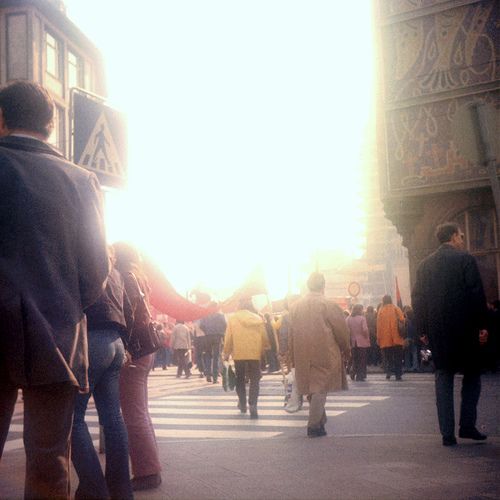
No major US news media reported on the demonstration or the arrests. It was blacked out of the New York Times, blacked out of the Philadelphia Inquirer, blacked out in the Los Angeles Times, blacked out of the Wall Street Journal, and even blacked out of the capital’s local daily, the Washington Post.

Making the media cover-up of the protest all the more outrageous was the fact that most news media did report on Friday, the day after the protest, the results of the latest poll of American attitudes towards the Afghanistan War, an ABC/Washington Post Poll which found that 60% of Americans now feel that war has “not been worth it.” That’s a big increase from the 53% who said they opposed the war in July.  

Clearly, any honest journalist and editor would see a news link between such a poll result and an anti-war protest at the White House led, for the first time in recent memory, by a veterans organization, the group Veterans for Peace, in which veterans of the nation’s wars actually put themselves on the line to be arrested to protest a current war.

Friday was also the day that most news organizations were reporting on the much touted, but also much over-rated Pentagon report on the “progress” of the American war in Afghanistan–a report that claimed there was progress, but which was immediately contradicted by a CIA report that said the opposite. Again, any honest journalist and editor would see the publication of such a report as an appropriate place to mention the unusual opposition to the war by a group of veterans right outside the president’s office.

And yet, the protest event was completely blacked out by the corporate news media, even as the capital was whited-out by a fast-moving snowstorm that brought traffic almost to a standstill.

If you wanted to know about this protest, you had to go to the internet and read the Huffington Post or to theSocialist Worker, or to this publication (okay, we’re a day late, but I was stuck in traffic yesterday), or to Democracy Now! on the alternative airways.

My old employer, the Sydney Morning Herald in Australia, showed how it’s supposed to be done. In an article published Friday about the latest ABC/Washington Post Poll, reporter Simon Mann, after explaining that opposition to the war in the US was rising, then wrote:

“The publication of the review coincided with anti-war protests held across the US, including one in Washington in which people chained themselves to the White House fence, leading to about 100 arrests.”

That’s the way journalism is supposed to work. 

Relevant information that puts the days news in some kind of useful context is supposed to be provided to the reader.

Clearly, in the US the corporate media perform a different function. It’s called propaganda. And the handling of this dramatic protest by American veterans against the nation’s current war provides a dramatic illustration of how far the news industry and the journalism profession has fallen.

Dave Lindorff is a Philadelphia-based journalist and columnist. He is author of Marketplace Medicine: The Rise of the For-Profit Hospital Chains (BantamBooks, 1992), and his latest book “The Case for Impeachment” (St. Martin’s Press, 2006). All his work is available at www.thiscantbehappening.net


MR Original – Personal Revolution

“The biggest impediment to revolution is a personal one: our own deep-seated feelings of cynicism and impotence. How can anything “I” do possibly make a difference? Most of us have trouble accepting radical change as a viable option. Entrenched in a familiar world, we cannot imagine another. It’s hard to see our current system as simply one stage of a never-ending cycle that sooner or later will fall and be succeeded – but this process of creative destruction is exactly how the world works.”Kalle Lasn, contributing writer for Adbusters

MEDIA ROOTS– Galvanization in the world of social media is increasingly difficult, despite a level of interactive accessibility that was inconceivable two decades ago. People look to Twitter and Facebook for information, advice and input to their own queries, but you can’t ask too much of your connections. They aren’t friends, they aren’t family, but acquaintances with which we share very limited common social threads. As Malcolm Gladwell explains, “Social networks are effective at increasing participation—by lessening the level of motivation that participation requires.”

The result is a culture of noncommittal semi-passion, casual unrest and part-time activism that tokenizes the opposing view to the status quo and eliminates any genuine threat of effectiveness. It allows our conveniences to work against us, by removing all potency in the simplicity of action. How impressive is a thousand “like” clicks on your new group page, when all it takes is an uncommitted finger movement? It’s token activism, “clicktivism,” empty and largely another layer on the white noise of saturated information.

The rinse/repeat culture of sarcastic cool and cynicism rules the day, blotting out the nourishing light of compassion and the open-minded communication that’s crucial to a productively evolving society. One-uppery has replaced interactive, real-life storytelling & inspiration garnered through collectively shared experiences. Part of this can be attributed to our runaway free-market hyper-addiction, and our total complacency in the face of the fact that we are no longer citizens first, but consumers. Friends are now collections. Healthy is expensive, deadly comes in a myriad of value meals.

It’s clear that something is very wrong. Still, there is no rational, collective sense of motivated urgency as a society. No fists pounding the tables and podiums on network TV, demanding that the focus move from saving the banks and the executives to saving the homes, the jobs and the schools, rebuilding what truly makes us functional. There is a massive and deliberate blind eye being turned on the treacherously detrimental use of factory farming and genetically-engineered crops. By design, there are critically few, readily visible and widely viable alternatives to the status quo.

In the complete convenience and 24 hour full-blast entertainment access of today’s consumerist culture, the grounds for a truly meaningful uprising is at both points more fertile and more complicated than ever before. Organizing has reached hyperactive levels of interactivity, yet it’s largely done on the wings of casual, uncommitted interest. All the same, there is valid argument against Gladwell’s logic, given that awareness now takes flight over the digital realm, and his idea of a return to an authoritarian or even hierarchal activism model is precisely the opposite of what is needed for effective social revolution. What we need is to awaken the bits of humanity within all of us, that we’ve consumed our way away from.

The promise of passion’s proximity to youth is shackled by encouraged naivete, enabled in its aimlessness at a time when calculated, impassioned unrest is badly needed. A time when far more than a “like” button on a Facebook page or a retweet is necessary to make a meaningful impact, despite an encouraged and growing belief to the contrary. We need to learn how to find that passion once more, to water the seeds of effective activism and motivated focus in a climate of encouraged delusion and critical overexposure. We need to learn how to build a meaningful momentum in a climate where informed dissent is easily encapsulated and polarized, and how to feed the crucial fires of passion with a raw truth and motivation. We need to learn how to make a unified difference both within and without a digital playing field that’s overwhelmingly complex, and against an adversary that’s become inconceivably multi-faceted. We must be willing to tear down the walls of the box of commercial culture in very literal ways.

We accept the billboard horizon as reality each day, despite the unmistakable signs of full-scale class warfare being waged – and won – against us. We delightfully and collectively consume toxic ammunition, scrambling in our idiot rituals for the latest product updates, commiserating with nuanced passion over the design flaws in the latest minor tech boost. We silence our conscience whispers by bemoaning society’s mucosal sheen of vapid idiocy lathered on by the Lohans and Kardashians, all while perpetuating their undeserved spotlight with our prolonged attention and wholehearted addiction to tabloid culture. We’re a proud car crash flashbulb society, dipping toes into reflective self-loathing only for those token moments of inevitable reflection at what we’ve become. We deal poorly with these minor flashes of clarity, largely viewing them as inconvenient truths best medicated away or left for the hand-wringers and worrywarts, to be swiftly replaced by the next hype magnet.

We’re racing to rot the soul of our entire existence, because we’ve been programmed to know and do only this. To champion idiocy, retard our spirituality and wear our deference to marionette leaders like MVP jerseys at a football game. My team versus your team. The only catch – they’re both the same team, and neither are scoring points for us.

But not all of us are proud. Not all of us are content in our disposable culture, our celebration of cynicism and culturally impotent existence between the seemingly unstoppable glaciers of the Left/Right corporate body. Not all of us see the rising millions of unemployed as lazy freeloaders, or questioning the media narrative, the voracious capitalism machine & untethered funding of the industrial military complex as our nation’s foundation corrodes as anti-American.

Like you, there are those of us who understand the immense, gnawing reality of this frustration we’re feeling. We see the mechanics beneath the formidably valid fog of confusion we’ve found ourselves caught in, huddled in reluctant refuge under the umbrella shelter of the soothsayer’s broad-stroke assessments and promises as the torrents of terrifying, confusing and agonizing truth pound down all around us. Don’t get caught out in the rain – results may be horrifying. 

We are led by our entertainment and quest for immediate comfort. The government and media’s relentless focus on bank bailouts and Wall Street rather than urgently finding immediate solutions for the suffering citizens is a giant, vague, monolithic nightmare to the average American, who knows something is very wrong but feels entirely powerless to stop it. Especially with all these wonderful distractions…

We’re no longer communities of individuals seeking connection, but hyper-connected consumer groups, subjects in the latest advertising onslaught, promotional campaign, marketing blast. The chaos of the 24-hour news cycle- the parade of pundits with their myriad of bullshit nutshell assessments- is enough to bring about a collective migraine and personal inner turmoil unlike anything we’ve ever known. It chips at our resolve and our ability to find and hold truth. It gives us an unease that every fiber of our beings tells us needs remedying.

And so the latest line of designer medications arise, for those less-chipper moods, for nicotine or caffeine or shopping addiction, for the latest adolescent energy-suppressant. The problem doesn’t have to go away – where’s the profit in that? It just has to not seem so scary. We have to know that every cloud has a silver lining, every problem can be compartmentalized and treated with a flurry of life-crushingly expensive name-brand medications. As a result, more than half of all insured Americans are now taking prescription medicines regularly for chronic health problems, due in no small part to the explosion of pharmaceutical advertising.

The feeling of this dark momentum weighs on you like a hundred pounds of fat. Are you alone in your disgust & disassociation from the current political landscape of corporate America? The empty echo chamber dialogue that only truly furthers and enables one side of the argument? Are you alone in your horror at the arrogant, shameless profiteering and cultivated confusion all around us? You’re most certainly not. There are millions who empathize with your discontent. Your sense of isolated disconnect in the white noise of conflicting information and punditry is an understandable and natural reaction to this manufactured mirage of immediacy-overload, aimed at preventing organization, galvanization and true change in the interest of the general welfare.

So where do we make a stand? How do we make a difference? Devoted activism carries the guaranteed weight of polarization these days, the promise of external definition and damnation by a system with everything to lose. Every risk taken becomes high-risk when the opposition provides nearly every aspect of your daily reality. A modern social architecture has risen, one that’s led to a greater disconnect between the true spirit of humanity and our realization of its value than ever before. This is a vital reason why making educated, calculated movements is so crucial, why going to yet another rally or holding yet another sign will not make a lasting difference. It’s not enough. We must participate, of course, but we must also be smarter in doing so – and turn up the subversion. We must organize more efficiently and act out more symbolically, so the impact of our actions resonates far more clearly than simply another cupful of water in the ocean of discontent. FUCK YES

By all means, wear your heart on your sleeve. Be proud and vocal of your beliefs, and think outside the box of what’s now considered “acceptable activism”. Live your word. But most of all, be informed. And when it’s time to make a real move, when an opportunity arises to be heard far and wide, do it from a platform of educated discontent with words and actions of impact, not armchair cynicism. Step outside the current pattern of activism and ask yourself, what’s the next step in the evolution of this process? How do I personally affect change? How can I shock the system without fearmongering? And most importantly, how do I get others to actively participate?

Conversation. It’s the most basic way for an idea to spread and myths to either thrive or be shattered. Communication is key, be it as direct as a conversation with a neighbor or as abstract as the breaking of instilled patterns and routines in the public eye. Don’t rely on a prompt from the outside. Start your own ball rolling. Begin the process of new activity that rejects vulture commercialism but thrives with passion, with revolutionary joy, and you may soon find yourself amidst a groundswell of not just onlookers, but supporters and enthusiastic companions.

What will it take to shake us awake? What will finally bring about the motivated focus so desperately needed to cauterize the festering wound eating a gangrened hole through the fabric of our nation? The solution is a sweeping social revolution, not defined by a funding contributor but by a collective of minds willing to take risks for an egalitarian movement diametrically opposed to the consumerist stockpile culture of haves, have-nots and an extinct middle class.

We forget the power of an uprising. An uprising based on free-thinking independence and impassioned rejection of pop culture pollution. To channel this passion, this explosive unrest, progressively, in a series of strategic maneuvers, can be to create an avalanche of awareness & motivation. A tidal shift in consciousness, a momentary lapse in our consumer catatonia that allows a breath of true life to pass through us. A reminder of what was, for those who remember, and a glimpse of what can be for the generations who are inheriting this infinitely complex, badly rotting system.

Perhaps this can serve as an entry point for those who feel the sense of wrongness within and without, but wonder what kind of impact one person can have. For people who feel a rising, precipitous guilt over our collective casual complicity, while living in the shadow of the shimmering mountain of distraction and discouragement from true involvement, and true living-community evolution. We can join in non-linear activism that will represent more than another grain of sand among the identical billions in the vast deserts of vague discontent. Perhaps, for those desperate for a sign of true change, for those willing to lend a hand but hesitant to be another lost voice in the white noise, this can offer some confidence and reaffirmation.

There are many voices shouting their certainties of what will happen next. The new model for galvanization, the next version of the movement. They’ll want you to sign their petitions, wave their flags, scream your affiliations. Don’t participate in anything you haven’t analyzed enough to put your heart behind. Contemplate your steps. Be willing to make waves, black out the ads, deconstruct the mirage. Be the alternative you’re looking for.

Chris Blaszczyk is actively helping to build new horizons of personal activism and sociopolitical progress in Los Angeles, where he runs Antiquiet.com and is a senior writer/editor at CraveOnline.

Photo by flickr user Andreas Helke