The Constitutionality of Police Imposed ‘Free Speech Zones’

CNN– Last week, the Democratic National Convention (DNC) ended. But the First Amendment issues that were raised there did not. Indeed, they are likely to continue on indefinitely — recurring at the upcoming Republican National Convention (RNC), and similar public events raising intense security concerns.

Protesters at the DNC were confined to a fenced-in area — a wire enclosure topped by razor wire outside Boston’s FleetCenter, where the Convention was held. They charged that their First Amendment rights were violated by this confinement.

Were they correct? Certainly, the involvement by police in enforcing the enclosure established the “state action” necessary to establish a First Amendment violation. (Because the First Amendment does not apply to private actors, only government action can trigger its protections, and lead to a constitutional challenge.)

But on the other hand, one could argue that the protesters still did get to exercise their free speech rights to some extent — and that, even if their rights were infringed upon, that infringement was necessitated by security concerns.

In this column, I will explain why the DNC protesters’ confinement was a free speech violation under fundamental principles of First Amendment doctrine. I will also suggest that these same principles ought to govern the treatment of protesters at the RNC and similar events.

Continue reading about Free Speech Zones.

© CNN 2004
ACLU: ‘Constitution Free Zone’ 100 Miles From Border

(Video Below)

RAW STORY– This past summer, Craig Johnson joined dozens of other activists in a San Diego-area park to protest the expansion of a fence along the US-Mexico border.

An associate professor at Point Loma Nazarene University, Johnson says he took his two children, aged 8 and 10, to Border Field State Park in Imperial Beach in June. Scores of border patrol agents were on the scene, Johnson said, and some were recording license plate numbers from protesters’ cars parked a more than a mile away from the border.

It seems that Johnson’s participation in the anti-fence demonstration may have landed him on a government watch list that has inhibited his ability to travel freely between the US and Mexico. A professor of Music, Johnson said he traveled to Tijuana about a week after the protest; upon returning to the US, Johnson says he was handcuffed and arrested by customs agents after a listing associated with his name pegged him as armed and dangerous.

“I was thoroughly and aggressively searched. … Every inch and crack and crevice of my body was poked and prodded,” Johnson said. “I was in complete bewilderment of what was going on; I felt violated and frankly was embarrassed.”

Prior to that visit, Johnson said he had traveled regularly between the US and Mexico for a variety of reasons without facing any harassment. After the June visit, Johnson said he did not cross the border again until October, when he decided to go simply to see whether he could re-enter the country easily. He was subjected to the same harassment.

“It took me four months to return to Mexico,” he said. “Not because I’m afraid of traveling outside my own country, but rather because I’m afraid of returning home.”

Johnson spoke Wednesday at a gathering organized by the American Civil Liberties Union, which is highlighting the extent to which the Department of Homeland Security is expanding the authority it claims at US border crossings to infringe upon Americans rights.

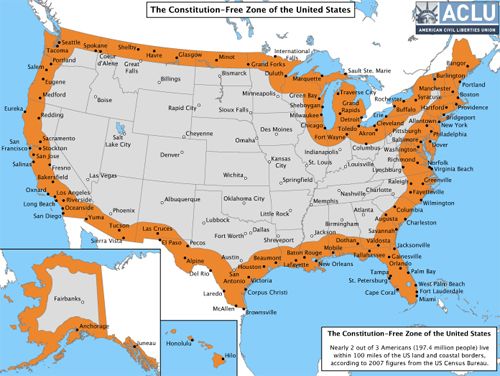
The ACLU says a “Constitution-free zone” exists within 100 miles of the US border, where DHS claims the authority to stop, search and detain anyone for any reason. Nearly two-thirds of the US population lives within 100 miles of the border, according to the ACLU, and the border zone encompasses scores of major metropolitan areas and even entire states.

Customs and Border Patrol, a component of DHS, was authorized by Congress to operate within a “reasonable” distance of the border, and that distance has been set at 100 miles in regulations governing CBP, the ACLU says. The authorization has been in place for decades, but complaints about abuses of the extended border zone began to ramp up as CBP was expanded and folded into DHS after 9/11.

Also of concern, according to the group, is the border patrol’s use of massive databases and watch lists to screen travelers. Much remains unknown about how those lists are compiled and it is exceedingly difficult for a person to be removed from the list once he or she is added to it.

ACLU affiliates around the country have fielded dozens of calls from people claiming they were harassed by border agents, and the group believes there are untold numbers of other victims who are afraid to come forward.

No lawsuits have yet been filed against DHS or CBP, but the ACLU says its attorneys in border states are preparing cases.

“Part of what we’re trying to do is to draw our own line in the sand here and say this has to stop,” Barry Steinhardt, director of the ACLU’s Technology and Liberty Program, said Wednesday. “We cannot determine two-thirds of America as a Constitution free zone.”

DHS 33 “interior checkpoints” that are monitored by the border patrol, according to a 2005 Government Accountability Office report. The ACLU assumes more checkpoints have been established since then, and group affiliates have complained about checkpoints as far as 93 miles from the border.

ACLU lobbyists are working with members of Congress to rein in DHS’s border authority. Caroline Fredrickson, the group’s chief legislative counsel, praised a measure introduced by Sen. Russ Feingold and others to ban suspicionless laptop searches at the border.

“We need to restore the Constitution to the Constitution-free zone,” Fredrickson said.

Wednesday’s event also featured a video testimonial from Vince Peppard, another San Diegoan who faced trouble from border agents. Peppard said he was stopped at least 20 miles inside the border on a return trip from Mexico. He refused to open his trunk “on a matter of principle” and was detained for about 30 minutes.

“I didn’t feel like I was in the United States,” he says. “I felt like I was in some kind of police state.”

© RAW STORY 2008

Protect America From the Protect America Act

By Rep. Ron Paul M.D. (R-Texas)

Before the US House of Representatives, Jan. 30, 2008

Madam Speaker, I rise in opposition to the extension of the Protect America Act of 2007 because the underlying legislation violates the U.S. Constitution. The misnamed Protect America Act allows the U.S. government to monitor telephone calls and other electronic communications of American citizens without a warrant. This clearly violates the Fourth Amendment, which states:
“The right of the people to be secure in their persons, houses, papers, and effects, against unreasonable searches and seizures, shall not be violated, and no Warrants shall issue, but upon probable cause, supported by Oath or affirmation, and particularly describing the place to be searched, and the persons or things to be seized.”

The Protect America Act sidelines the FISA Court system and places authority over foreign surveillance in the director of national intelligence and the attorney general with little if any oversight. While proponents of this legislation have argued that the monitoring of American citizens would still require a court-issued warrant, the bill only requires that subjects be “reasonably believed to be outside the United States.” Further, it does not provide for the Fourth Amendment protection of American citizens if they happen to be on the other end of the electronic communication where the subject of surveillance is a non-citizen overseas.

We must remember that the original Foreign Intelligence Surveillance Act was passed in 1978 as a result of the U.S. Senate investigations into the federal government’s illegal spying on American citizens. Its purpose was to prevent the abuse of power from occurring in the future by establishing guidelines and prescribing oversight to the process. It was designed to protect citizens, not the government. The effect seems to have been opposite of what was intended. These recent attempts to “upgrade” FISA do not appear to be designed to enhance protection of our civil liberties, but to make it easier for the government to spy on us!

The only legitimate “upgrade” to the original FISA legislation would be to allow surveillance of conversations that begin and end outside the United States between non-U.S. citizens where the telephone call is routed through the United States. Technology and the global communications market have led to more foreign to foreign calls being routed through the United States. This adjustment would solve the problems outlined by the administration without violating the rights of U.S. citizens.

While I would not oppose technical changes in FISA that the intelligence community has indicated are necessary, Congress should not use this opportunity to chip away at even more of our constitutional protections and civil liberties. I urge my colleagues to oppose this and any legislation that violates the Fourth Amendment of the Constitution.

Photo by flickr user JohnE777

Bad For Democracy: Journalists in Jail

AMERICAN PRESS INSTITUTE– It can be something of a jolt to the democratic sensibilities of most Americans when they learn that a journalist has been arrested for treason, held for months without public charges, denied bail not by a court but by the government accuser, and is destined to be tried in secret.

And even though that injustice unfolds in China, quite distant from us geographically and constitutionally, there are elements of such government action that offer unsettling reminders that from time to time we threaten our journalists with jail, too.

Zhao Yan was charged by Chinese authorities with the capital crime of leaking state secrets after his employer, The New York Times, published an article about the impending resignation of a top government official. Zhao and the Times both assert that Zhao had nothing to do with the article; nevertheless he faces a harsh prison sentence.

Zhao is not alone. The Times reports that 30 other journalists are in jail in China right now on similar charges.

Such a thing couldn’t happen in the United States, at least not in that way.

We have the First Amendment to protect journalists. We have independent courts to safeguard the rights of all Americans. It is not in our nature to charge journalists with treason when they disclose sensitive government information.

We are much more circumspect when we threaten journalists who irritate government officials or confound government procedures. We try to follow the law and we respect the Constitution.

But we still find ways to send journalists to jail.

For example, one way around current law and the First Amendment is to go after journalists’ confidential sources – and then send the journalists to jail if they refuse to disclose those sources to a grand jury investigating a possible crime.

That is why Judith Miller, also a Times employee, has been incarcerated nearly three months in a federal prison, the longest term ever served by a newspaper reporter in the United States. Miller is not in prison for revealing “state secrets”; she did not even write an article. Instead, she was held in contempt of court for refusing to tell a grand jury who in the government she talked to, or, more probably, who talked to her.

Read more about Sending Journalists to Jail.

© AMERICAN PRESS INSTITUTE 2005

College Student Detained for Having English-Arabic Flashcards

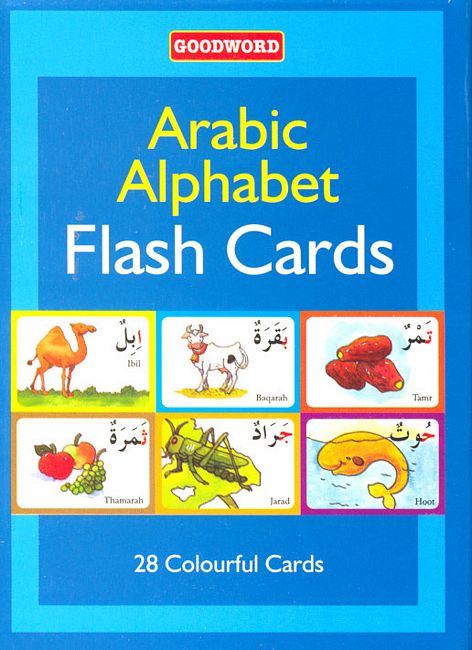
REUTERS– Federal agents detained and interrogated a U.S. college student at the Philadelphia airport simply because we was carrying a set of English-Arabic flashcards, a lawsuit alleged on Wednesday.

The American Civil Liberties Union said it filed the suit on behalf Nicholas George, 22, a language student at Pomona College in California who was held at Philadelphia International Airport for nearly five hours in August 2009.

George, a U.S. citizen from the Philadelphia suburb of Wyncote, was on his way back to college when airport security officers found him carrying the flashcards, each of which had an English word on one side and its Arabic equivalent on the other, the ACLU said.

The U.S. Transportation Security Administration questioned him, and a TSA supervisor asked him how he felt about the September 11 attacks, whether he knew “who did 9/11,” and whether he knew what language Osama bin Laden spoke, the ACLU said.

He was handcuffed and left in a locked cell for two hours before being “abusively” interrogated by two FBI agents, but was never told why he was being detained, the ACLU said.

The lawsuit, filed in U.S. district court for the Eastern District of Pennsylvania, charges that officers from the TSA, FBI and Philadelphia police violated George’s constitutional rights of free speech and to be free from unreasonable seizure.

“As someone who travels by plane, I want TSA agents to do their job to keep flights safe,” George said in a statement. “But I don’t understand how locking me up and harassing me just because I was carrying the flashcards made anybody safer.”

Neither the federal agencies nor the Philadelphia police could be reached for comment.

© COPYRIGHT REUTERS, 2010