

Torture, Secret Wars, U.S. Disdain for Justice & More

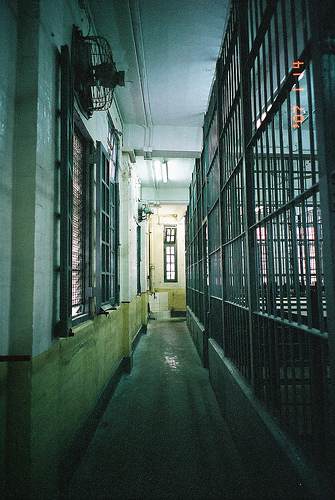
photo by jan kromerDemocracy Now! has spent this week examining the revelations behind the first installments of State cables released by WikiLeaks on Sunday. Below is a collection of the outlet’s interviews and broadcasts covering torture, renditions, secret U.S. War Ops in Pakistan, U.S. pressure on other countries to thwart justice, and the most startling leaks that have yet to come.


WikiLeaks Reveals U.S. Tried to Thwart Spanish Probes of Gitmo Torture and CIA Renditions

The latest disclosures from the massive trove of diplomatic cables published by WikiLeaks reveal U.S. officials tried to influence Spanish prosecutors and government officials to drop court investigations into torture at Guantánamo Bay and CIA extraordinary rendition flights. We speak to Scott Horton, an attorney specializing in international law and human rights and a contributing editor of Harper’s Magazine.


Leaked Cables Reveal U.S. Pressured Spain to Drop Case of Cameraman Killed in 2003 Attack on Journalists in Baghdad

Leaked U.S. embassy cables from Madrid reveal the United States pressured the Spanish government to close a court case brought by the family of a Spanish cameraman, José Couso. Couso was killed in Baghdad when a U.S. Army tank fired on the Palestine Hotel, which was filled with journalists, on April 8, 2003. Three U.S. soldiers have been indicted in Spanish court for Couso’s death. “I am outraged,” says Javier Couso, the brother of José Couso. “I can’t believe my government conspired with a foreign government… It seems we are citizens, or at least a small province, of the empire of the United States.”


Jeremy Scahill: WikiLeaks Cables Confirm Secret U.S. War Ops in Pakistan

Despite sustained denials by the Pentagon, the leaked cables from WikiLeaks confirm that U.S. military special operations forces have been secretly working with the Pakistani military to conduct offensive operations and coordinate drone strikes in the areas near the Afghan border. A U.S. embassy cable from October of 2009 states: “These deployments are highly politically sensitive because of widely-held concerns among the public about Pakistani sovereignty and opposition to allowing foreign military forces to operate in any fashion on Pakistani soil.” The cables confirm aspects of a story about the covert U.S. war in Pakistan published in The Nation magazine last year by investigative journalist and Democracy Now! correspondent Jeremy Scahill.


“We Have Not Seen Anything Yet”: Guardian Editor Says Most Startling WikiLeaks Cables Still to be Released

In the coming days, we are going to see some quite startling disclosures about Russia, the nature of the Russian state, and about bribery and corruption in other countries, particularly in Central Asia,” says Investigations Executive Editor David Leigh at the Guardian, one of the three newspapers given advanced access to the secret U.S. embassy cables by the whistleblower website, WikiLeaks. “We will see a wrath of disclosures about pretty terrible things going on around the world.” Leigh reviews the major WikiLeaks revelations so far, explains how the 250,000 files were downloaded and given to the newspaper on a thumb drive, and confirms the Guardian gave the files to the New York Times. Additional cables will be disclosed throughout the week.


U.N. Special Rapporteur Juan Méndez: Instead of Focusing on Assange, U.S. Should Address WikiLeaks Disclosure of Torture

One of the leaked U.S. State Department cables released by WikiLeaks urges diplomats to gather intelligence about “plans and intentions of member states or U.N. Special Rapporteurs to press for resolutions or investigations into U.S. counter-terrorism strategies and treatment of detainees in Iraq, Afghanistan or Guantanamo.” We speak to Juan Méndez, the new U.N. Special Rapporteur on Torture and Other Cruel, Inhuman and Degrading Treatment or Punishment. He has called on the United States to investigate and prosecute torture committed under former President George W. Bush. He also said he hopes to visit Iraq and Guantánamo Bay to probe widespread torture allegations. Méndez says, “We seem to be focusing on whether disclosing [the cables] merits some kinds of action against Julian Assange… I am very concerned about the documents that show that thousands of people first imprisoned by U.S. forces [were] transferred to the control of forces in Iraq and perhaps even in Afghanistan, where they knew they were going to be tortured.”


photograph by Jan Krömer 

US Is Using Private Spy Ring to Gather Information Abroad

NY TIMES– Top military officials have continued to rely on a secret network of private spies who have produced hundreds of reports from deep inside Afghanistan and Pakistan, according to American officials and businessmen, despite concerns among some in the military about the legality of the operation.

Earlier this year, government officials admitted that the military had sent a group of former Central Intelligence Agency officers and retired Special Operations troops into the region to collect information — some of which was used to track and kill people suspected of being militants. Many portrayed it as a rogue operation that had been hastily shut down once an investigation began.

But interviews with more than a dozen current and former government officials and businessmen, and an examination of government documents, tell a different a story. Not only are the networks still operating, their detailed reports on subjects like the workings of the Taliban leadership in Pakistan and the movements of enemy fighters in southern Afghanistan are also submitted almost daily to top commanders and have become an important source of intelligence.

The American military is largely prohibited from operating inside Pakistan. And under Pentagon rules, the army is not allowed to hire contractors for spying.

Military officials said that when Gen. David H. Petraeus, the top commander in the region, signed off on the operation in January 2009, there were prohibitions against intelligence gathering, including hiring agents to provide information about enemy positions in Pakistan. The contractors were supposed to provide only broad information about the political and tribal dynamics in the region, and information that could be used for “force protection,” they said.

Some Pentagon officials said that over time the operation appeared to morph into traditional spying activities. And they pointed out that the supervisor who set up the contractor network, Michael D. Furlong, was now under investigation.

But a review of the program by The New York Times found that Mr. Furlong’s operatives were still providing information using the same intelligence gathering methods as before. The contractors were still being paid under a $22 million contract, the review shows, managed by Lockheed Martin and supervised by the Pentagon office in charge of special operations policy.

Continue reading about Spy Rings.

© NY Times, 2010

Posted in Uncategorized | 1 Reply

Obama Preserves Rendition as Counter-terrorism Tool

LA TIMES– The CIA’s secret prisons are being shuttered. Harsh interrogation techniques are off-limits. And Guantanamo Bay will eventually go back to being a wind-swept naval base on the southeastern corner of Cuba.

But even while dismantling these programs, President Obama left intact an equally controversial counter-terrorism tool.

Under executive orders issued by Obama recently, the CIA still has authority to carry out what are known as renditions, secret abductions and transfers of prisoners to countries that cooperate with the United States.

Current and former U.S. intelligence officials said that the rendition program might be poised to play an expanded role going forward because it was the main remaining mechanism — aside from Predator missile strikes — for taking suspected terrorists off the street.

The rendition program became a source of embarrassment for the CIA, and a target of international scorn, as details emerged in recent years of botched captures, mistaken identities and allegations that prisoners were turned over to countries where they were tortured.

The European Parliament condemned renditions as “an illegal instrument used by the United States.” Prisoners swept up in the program have sued the CIA as well as a Boeing Co. subsidiary accused of working with the agency on dozens of rendition flights.

But the Obama administration appears to have determined that the rendition program was one component of the Bush administration’s war on terrorism that it could not afford to discard.

The decision underscores the fact that the battle with Al Qaeda and other terrorist groups is far from over and that even if the United States is shutting down the prisons, it is not done taking prisoners.

“Obviously you need to preserve some tools — you still have to go after the bad guys,” said an Obama administration official, speaking on condition of anonymity when discussing the legal reasoning. “The legal advisors working on this looked at rendition. It is controversial in some circles and kicked up a big storm in Europe. But if done within certain parameters, it is an acceptable practice.”

Continue reading about Obama Preserving Rendition.

Written by Greg Miller, [email protected]

Photo by flickr user Mocvdleung

© LA TIMES, 2009
