Cell Phone Radiation Listed as Cancer Risk

RAW STORY– A new report from the World Health Organization (WHO) classifies cell phones as a possible carcinogen in the same category as lead, engine exhaust and chloroform.

A team of 31 scientists from 14 countries in the International Agency for Research on Cancer, the cancer arm of the World Health Organization, made the determination that cell phone exposure was “possibly carcinogenic to humans.” The team, which included scientists from the U.S., reached their conclusion after reviewing dozens of studies.

“The biggest problem we have is that we know most environmental factors take several decades of exposure before we really see the consequences,” Dr. Keith Black, chairman of neurology at Cedars-Sinai Medical Center in Los Angeles, told CNN.

“What microwave radiation does in most simplistic terms is similar to what happens to food in microwaves, essentially cooking the brain. So in addition to leading to a development of cancer and tumors, there could be a whole host of other effects like cognitive memory function, since the memory temporal lobes are where we hold our cell phones,” he added.

Read the full article about Cell Phone Radiation Officially Listed a Potential Cancer Risk.

© 2011 RAW STORY

Photo by Flickr user jonjon_2k8
Are You Enjoying Your Daily Chemical Cocktail?

GRIST– Chemicals and additives found in the food supply and other consumer products are making headlines regularly as more and more groups raise concern over the safety of these substances. In a statement released this week, the American Academy of Pediatrics (AAP) asked for reform to the Toxic Substances Control Act of 1976. The group is particularly concerned about the effects these substances have on children and babies.

Last month, the U.S. Food & Drug Administration (FDA) held hearings on the safety of food dyes but failed to make a definitive ruling. The most recent study on Bisphenol-A (BPA) added to growing doubts about its safety; but the FDA’s stance on it remains ambiguous. Meanwhile, in 2010, the Government Accountability Office (GAO) reported [PDF] that the FDA is not ensuring the safety of many chemicals.

Yet while the FDA stalls and hedges on the safety of these substances, Americans are exposed to untested combinations of food additives, dyes, preservatives, and chemicals on a daily basis. Indeed, for the vast majority of Americans consuming industrial foods, a veritable chemical cocktail enters their bodies every day and according to the GAO report, “FDA is not systematically ensuring the continued safety of current GRAS substances.”

The term GRAS refers to “generally regarded as safe,” the moniker the FDA uses to regulate food additives, dyes, and preservatives. The trouble is, this system is not effective. Dr. Michael Hansen, a senior scientist at Consumers Union, said in an interview that many additives in our food supply are never even tested. That’s because the GRAS designation is a voluntary process – instead of being required to register food additives, companies can notify the FDA about their product, but only if they so choose. Hansen added that even for those additives considered GRAS, he didn’t have much faith in the designation.

Read more about Are You Enjoying Your Daily Chemical Cocktail?

© 2011 GRIST

Photo by Flickr user joepitz

Posted in Uncategorized | 1 Reply

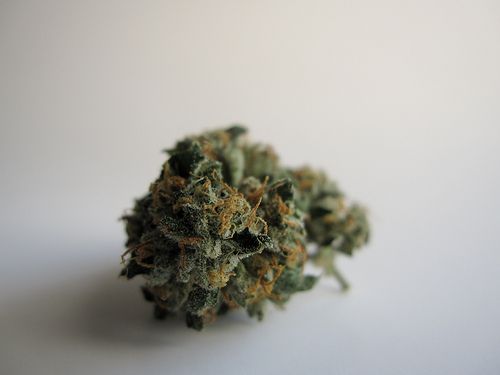
If Pot Prevented Cancer, Would You Have Heard?

HUFFINGTON POST– Two just-published studies assessing adults’ risk of cancer have reported wildly divergent, and fairly extraordinary, outcomes. One study you may have read about. The other has been ignored entirely by the mainstream media. But no doubt the results of both will surprise you.

First, the study you may have heard of. Writing August 3 in the journal Cancer Epidemiology, investigators at McGill University in Montreal reported that moderate alcohol consumption — defined as six drinks or fewer per week — by adults is positively associated with an elevated risk of various cancers, including stomach cancer, rectal cancer, and bladder cancer.

And now for the study you haven’t heard of. Writing in the August issue of the journal Cancer Prevention Research, investigators from Rhode Island’s Brown University, along with researchers at Boston University, Louisiana State University, and the University of Minnesota reported that lifetime marijuana use is associated with a “significantly reduced risk” of head and neck squamous cell carcinoma.

Authors reported, “after adjusting for potential confounders (including smoking and alcohol drinking), 10 to 20 years of marijuana use was associated with a significantly reduced risk of head and neck squamous cell carcinoma (HNDCC).”

Perhaps even more notably, subjects who smoked marijuana and consumed alcohol and tobacco (two known high risk factors for head and neck cancers) also experienced a reduced risk of cancer, the study found.

Our study suggests that moderate marijuana use is associated with reduced risk of HNSCC,” investigators concluded. “This association was consistent across different measures of marijuana use (marijuana use status, duration, and frequency of use)….Further, we observed that marijuana use modified the interaction between alcohol and cigarette smoking, resulting in a decreased HNSCC risk among moderate smokers and light drinkers, and attenuated risk among the heaviest smokers and drinkers.”

Read full article about Pot Smoking Preventing Forms of Cancer.

© HUFFINGTON POST 2009

Photo by KayVeeInc.

Posted in Uncategorized | 1 Reply

31 Cities’ Water Has Carcinogens

YAHOO NEWS– The Environmental Working Group released a report Monday indicating that millions of Americans are regularly drinking hexavalent chromium, made famous in the film “Erin Brockovich” as a carcinogen, through their tap water.

The group — whose study was first reported in a story Sunday by the Washington Post’s Lyndsey Layton — tested water from 35 U.S. cities and found that samples from 31 cities contained hexavalent chromium. The highest concentrations were found in Norman, Okla.; Honolulu; and Riverside, Calif. The substance had been a widely used industrial chemical for decades and has evidently leached into the groundwater in many areas.

The EWG report states:

“Despite mounting evidence of the contaminant’s toxic effects, the U.S. Environmental Protection Agency (EPA) has not set a legal limit for chromium-6 in tap water and does not require water utilities to test for it. Hexavalent chromium is commonly discharged from steel and pulp mills as well as metal-plating and leather-tanning facilities. It can also pollute water through erosion of natural deposits.

“The authoritative National Toxicology Program (NTP) of the U.S. Department of Health and Human Services has said that chromium-6 in drinking water shows ‘clear evidence of carcinogenic activity’ in laboratory animals, increasing the risk of gastrointestinal tumors. Just last October, a draft review by the EPA similarly found that ingesting the chemical in tap water is ‘likely to be carcinogenic to humans.’ Other health risks associated with exposure include liver and kidney damage, anemia and ulcers.”

Read full article about Cities’ Water Containing Hexavalent Chromium here.

Photo by Flickr user GFRPhoto