Thousands at Risk as AIDS Care Centers Turn Away New Patients

THE INDEPENDENT– Thousands of patients who are becoming clinically eligible for anti-retroviral treatment (ART) in Uganda risk early death unless an informal ban on enrollment of new patients by the ART treatment centres countrywide is lifted.

Several organisations caring for people living with HIV/AIDS in Uganda have sounded alarm bells regarding their members who are being turned away at anti-retroviral treatment centres even when their CD4 counts (which determine patient immunity levels) show that they are due for treatment.

An evening television news report on NTV Uganda on June 16 June, 2010 highlights the plight of hundreds of people with HIV/AIDS who are stranded at treatment centres which have declined to enroll them on treatment citing severe funding dilemmas for the lifelong ART drugs.

For people with HIV/AIDS, anti-retroviral treatment is the main hope of prolonging life. Anti retroviral drugs (ARVs) inhibit the ability of the HIV to multiply in the body.

Dr Peter Mugyenyi, the Executive Director of the Joint Clinical Research Centre (JCRC), one of the leading national providers of HIV/AIDS care and treatment in Uganda, acknowledges the problem.

“In Uganda, lower- than- anticipated funding support from PEPFAR and other donor entities in the past couple of years has forced many facilities to turn away new HIV-positive patients seeking ART,’’ Dr Mugyenyi says in a foreword he wrote for the latest  2010 report of the International Treatment Preparedness Coalition (ITPC) entitled Rationing Funds, Risking Lives: World Backtracks on HIV Treatment.

Dr Deus Lukoye, the Kampala City Council HIV/AIDS Focal Person, has confirmed to this reporter that many ART sites in Kampala are turning away new patients due to donor funding deficits.

Read full article about Thousands at Risk with HIV.

© COPYRIGHT THE INDEPENDENT, 2010

Africa’s National Parks Failing to Conserve Large Mammals

GUARDIAN– Africa’s extensive network of national parks is failing to stem the decline of large mammals, according to a new study that highlights biodiversity loss across the continent.

Populations of large mammals such as zebra, buffalo and lion have declined by an average of 59% since 1970, according to the research, which collated data from parks including popular tourist safari destinations such as the Masai Mara in Kenya and the Serengeti in Tanzania.

The study warns that urgent efforts are needed to better protect the animals and secure the future of the parks, which draw millions of tourists each year and provide much-needed income.

Ian Cragie, a conservation scientist at the University of Cambridge who led the study, said: “Although the results indicate that African national parks have generally failed to maintain their populations of large mammals, the situation outside the parks is undoubtedly worse. Many species like rhino are practically extinct outside national parks.”

The team of scientists, including experts from the Zoological Society of London (ZSL) and the United Nations environment programme World Conservation Monitoring Centre in Cambridge, compiled population records of 69 key species, including lion, wildebeest, giraffe, zebra and buffalo, inside 78 protected areas across Africa from 1970 to 2005. More than half the records came from aerial surveys, the most accurate but also the most expensive way to monitor.

The results show an average decline of 59%, though the results varied significantly from region to region. Eleven parks in west Africa were the hardest hit, with a decline of 85%. Mammal species populations across 43 protected areas in east Africa fell by more than half, while those in 35 reserves in southern Africa showed an increase of 25%. The scientists say they cannot break down the results to show the change in numbers in individual parks because of confidentiality agreements with data providers.

Read full article about Africa Failing to Conserve Large Mammals at Parks.

© COPYRIGHT GUARDIAN, 2010

Photo by Abby Martin

South African Doctor Invents Female Condoms With ‘Teeth’ to Fight Rape

CNN– South African Dr. Sonnet Ehlers was on call one night four decades ago when a devastated rape victim walked in. Her eyes were lifeless; she was like a breathing corpse.

“She looked at me and said, ‘If only I had teeth down there,'” recalled Ehlers, who was a 20-year-old medical researcher at the time. “I promised her I’d do something to help people like her one day.”

Forty years later, Rape-aXe was born. Ehlers is distributing the female condoms in the various South African cities where the World Cup soccer games are taking place.

The woman inserts the latex condom like a tampon. Jagged rows of teeth-like hooks line its inside and attach on a man’s penis during penetration, Ehlers said. Once it lodges, only a doctor can remove it – a procedure Ehlers hopes will be done with authorities on standby to make an arrest.

Continue reading about the Female Rape Condom.

© COPYRIGHT CNN, 2010

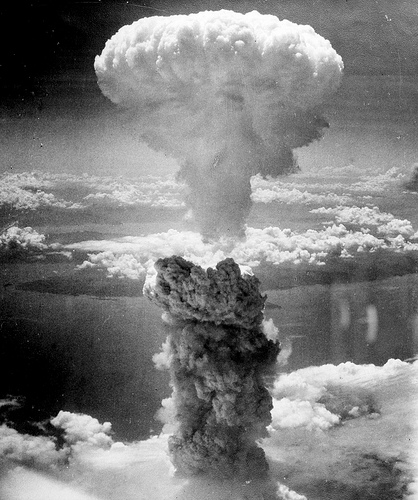
Israel Offered to Sell South Africa Nuclear Weapons, Confirming Israel’s Possession

GUARDIAN– Secret South African documents reveal that Israel offered to sell nuclear warheads to the apartheid regime, providing the first official documentary evidence of the state’s possession of nuclear weapons.

The “top secret” minutes of meetings between senior officials from the two countries in 1975 show that South Africa‘s defence minister, PW Botha, asked for the warheads and Shimon Peres, then Israel’s defence minister and now its president, responded by offering them “in three sizes”. The two men also signed a broad-ranging agreement governing military ties between the two countries that included a clause declaring that “the very existence of this agreement” was to remain secret.

The documents, uncovered by an American academic, Sasha Polakow-Suransky, in research for a book on the close relationship between the two countries, provide evidence that Israel has nuclear weapons despite its policy of “ambiguity” in neither confirming nor denying their existence.

The Israeli authorities tried to stop South Africa’s post-apartheid government declassifying the documents at Polakow-Suransky’s request and the revelations will be an embarrassment, particularly as this week’s nuclear non-proliferation talks in New York focus on the Middle East.

They will also undermine Israel’s attempts to suggest that, if it has nuclear weapons, it is a “responsible” power that would not misuse them, whereas countries such as Iran cannot be trusted.

A spokeswoman for Peres today said the report was baseless and there were “never any negotiations” between the two countries. She did not comment on the authenticity of the documents.

South African documents show that the apartheid-era military wanted the missiles as a deterrent and for potential strikes against neighbouring states.

Continue reading about Israel Selling South Africa Nuclear Weapons.

© COPYRIGHT THE GUARDIAN, 2010

Photo by Flickr user The Official CTBTO Photostream

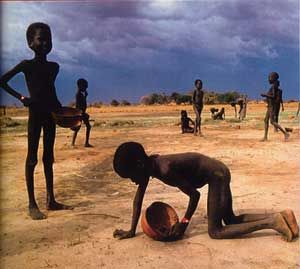
Sudan Hunger Crisis, Families Struggle to Survive

HUFFINGTON POST– Three-day-old Odong Obong lay in the hospital bed, his pencil-thin arms almost motionless and his shriveled, gaunt face resembling that of an elderly man.

Emaciated babies and young children throughout the ward bore the signs of hunger: exposed ribs and distended stomachs. Outside, old villagers reclined motionless in the shade, too frail to walk.

The U.N. calls this the “hungriest place on Earth” after years of drought and conflict, with aid agencies already feeding 80,000 people here. A doctor says the worst is yet to come.

Two years of failed rains and tribal clashes have laid the foundation for Africa’s newest humanitarian crisis. The World Food Program quadrupled its assistance levels from January to March in the Akobo region of southeastern Sudan.

International aid agencies are bracing for the worst. Even if spring rains materialize this year, the harvest won’t come in until fall.

“And if there is no rain, it will get worse,” said Dr. Galiek Galou, one of three doctors at the hospital in this town on the border with Ethiopia.

“If you stay here for a week you’ll have problems, even if you have money,” he said. “There is nothing to buy.”

Southern Sudan lies in a drought-prone belt of Africa, but the situation has been exacerbated by rising intertribal violence that claimed more than 2,000 lives in 2009. Because of the global financial meltdown, the government has fewer available resources.

The food crisis is also a legacy of a devastating north-south civil war of more than 21 years that left 2 million people dead and many more displaced. That conflict is separate from the war in the western Sudanese region of Darfur, which began in 2003 and has killed 300,000.

Continue reading about Sudan’s Hunger Crisis.

Medair: http://www.medair.org/

Save The Children: http://www.savethechildren.org.uk

© COPYRIGHT HUFFINGTON POST, 2010