
How the Wars Are Sinking the Economy

DAILY BEAST– Nobel Prize recipient Joseph Stiglitz and Harvard budget guru Linda J. Bilmes are revising their original $3 trillion war cost estimate. As Bilmes reports, the Iraq and Afghanistan wars are at least 25 percent costlier than previous projections.

As Election Day draws near, it’s pretty clear: Voters are worried about jobs, the budget deficit and the rising national debt. But behind those issues—behind the ads and candidates’ speeches, behind the rhetoric about “out-of-control” government spending—there lurks a hidden, less-talked-about issue: the cost of the ongoing wars.

Already, we’ve spent more than $1 trillion in Iraq, not counting the $700 billion consumed each year by the Pentagon budget. And spending in Iraq and Afghanistan now comes to more than $3 billion weekly, making the wars a major reason for record-level budget deficits.

Two years ago, Joseph Stiglitz and I published The Three Trillion Dollar War in which we estimated that the budgetary and economic costs of the war would reach $3 trillion.

Taking new numbers into account, however, we now believe that our initial estimate was far too conservative—the cost of the wars will reach between $4 trillion and $6 trillion.

For example, we recently analyzed the medical and disability claim patterns for almost a million troops who have returned from the wars, and, based on this record, we’ve revised our estimate upward to between $600 billion and $900 billion—a broad specter, yes, but certainly also a significant upward tick from our earlier projection of $400 billion to $700 billion, based on historical patterns.

Similarly, our estimates for the economic and social costs associated with returning veterans can be expected to rise by at least a third—the staggering toll of repeated deployments over the past decade.

Read full article HERE.
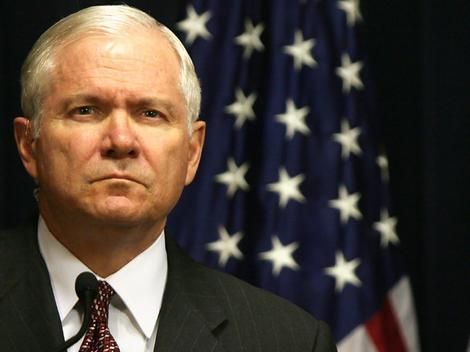
Robert Gates: ‘We’re Not Ever Leaving’ Afghanistan

HUFFINGTON POST– In a shocking indication of a split between the White House and the Pentagon over the war in Afghanistan, Defense Secretary Robert Gates believes that the U.S. military will never leave the war-torn country.

During a dinner hosted by Secretary of State Hillary Clinton for Afghan President Hamid Karzai in May, Gates reminded the group that he still feels guilty for his role in the first President Bush’s decision to pull out of Afghanistan after the Soviet withdrawal in 1989, according to Bob Woodward’s new book, “Obama’s Wars.” And to express his commitment to not letting down the country again, he emphasized:

“We’re not leaving Afghanistan prematurely,” Gates finally said. “In fact, we’re not ever leaving at all.”

Woodward notes that the group was shocked by the blunt comment: “At least one stunned participant put down his fork. Another wrote it down, verbatim, in his notes.”

The definitive statement seems to clash with President Obama’s assertion that he does not want to leave the war to his successor. Though he has emphasized that the U.S. will stay in Afghanistan “until the job is done,” he wants almost all the US troops out before the end of his first term in January 2013, leaving in place a small contingency force.

Yet Obama’s public commitment to eventually leaving Afghanistan seems partly based on political calculation, reports Woodward. When questioned by Republican Senator Lindsay Graham about the July 2011 deadline to begin withdrawing troops, Obama tells him:

“Well, if you’d asked me that question, what I would say is, ‘We’re going to start leaving.’ I have to say that. I can’t let this be a war without end, and I can’t lose the whole Democratic Party… And people at home don’t want to hear we’re going to be there for ten years.”

White House Chief of Staff Rahm Emanuel privately refers to the war as “political flypaper” and the veteran of sharp-elbowed Chicago politics once got so frustrated with Karzai that he considered sending him “the equivalent of a dead fish with an imperial wrapping,” writes Woodward. Emanuel’s threat — “Tell him we’re going to put our own governors in if we have to” — was ignored by the president during a meeting with military brass.

Gates, who is planning to leave his job before the 2012 presidential election, could be referring to that small contingency force with his comments. But his remarks do seem to highlight the differences between the military brass and the White House over Afghan strategy from the type of warfare to the size of the troop increase, as outlined in Woodward’s book.

And it seems to further indicate the Pentagon’s commitment to staying in Afghanistan. The commander of US troops in Afghanistan, Gen. David Petraeus, is quoted saying about the country: “You have to recognize that I don’t think you win this war. I think you keep fighting. You have to stay after it. This is the kind of fight we’re in for the rest of our lives and probably our kids’ lives.”

Photo from US Navy Seals blog

© COPYRIGHT HUFFINGTON POST, 2010

How the CIA Ran a Secret Army of 3,000 Assassins

INDEPENDENT– The US Central Intelligence Agency is running and paying for a secret 3,000-strong army of Afghan paramilitaries whose main aim is assassinating Taliban and al-Qa’ida operatives not just in Afghanistan but across the border in neighbouring Pakistan’s tribal areas, according to Bob Woodward’s explosive book.

Although the CIA has long been known to run clandestine militias in Afghanistan, including one from a base it rents from the Afghan president Hamid Karzai’s half-brother in the southern province of Kandahar, the sheer number of militiamen directly under its control have never been publicly revealed.

Woodward’s book, Obama’s Wars, describes these forces as elite, well-trained units that conduct highly sensitive covert operations into Pakistan as part of a stepped-up campaign against al-Qa’ida and Afghan Taliban havens there. Two US newspapers published the claims after receiving copies of the manuscript.

The secret army is split into “Counterterrorism Pursuit Teams”, and is thought to be responsible for the deaths of many Pakistani Taliban fighters who have crossed the border into Afghanistan to fight Nato and Afghan government forces there.

There are ever-increasing numbers of “kill-or-capture” missions undertaken by US Special Forces against Afghan Taliban and foreign fighters, who hope to drive rank-and-file Taliban towards the Afghan government’s peace process by eliminating their leaders. The suspicion is that the secret army is working in close tandem with them.

Continue reading about the CIA’s Secret Kill Team.

© COPYRIGHT INDEPENDENT, 2010

CIA Makes Payments to Members of Karzai’s Administration

WASHINGTON POST– The CIA is making secret payments to multiple members of President Hamid Karzai’s administration, in part to maintain sources of information in a government in which the Afghan leader is often seen as having a limited grasp of developments, according to current and former U.S. officials.

The payments are long-standing in many cases and designed to help the agency maintain a deep roster of allies within the presidential palace. Some aides function as CIA informants, but others collect stipends under more informal arrangements meant to ensure their accessibility, a U.S. official said.

The CIA has continued the payments despite concerns that it is backing corrupt officials and undermining efforts to wean Afghans’ dependence on secret sources of income and graft.

The U.S. official, speaking on condition of anonymity, said a significant number of officials in Karzai’s administration are on the payroll. Paul Gimigliano, a CIA spokesman, disputed that characterization, saying, “This anonymous source appears driven by ignorance, malice or both.”

A former agency official said the payments were necessary because “the head of state is not going to tell you everything” and because Karzai often seems unaware of moves that members of his own government make.

The disclosure comes as a corruption investigation into one of Karzai’s senior national security advisers – and an alleged agency informant – puts new strain on the already fraying relationship between Washington and Kabul.

Top American officials including Secretary of State Hillary Rodham Clinton and Sen. John F. Kerry (D-Mass.) have expressed concern about Karzai’s efforts to rein in anti-corruption teams, as well as intervention in the case against the security adviser. The aide, Mohammad Zia Salehi, is accused of accepting a $10,000 car as a bribe in exchange for his assistance in quashing a wide-ranging corruption probe.

The issue carries enormous stakes for the Obama administration. Concerns that the Afghan government is hopelessly corrupt have prompted a congressional panel to withhold billions of dollars in aid, and threaten to erode American support for the war.

Read full article about the CIA Making Payments to Karzai

© COPYRIGHT WASHINGTON POST, 2010

250,000 “Contractors” Remain in Iraq and Afghan Wars

REBEL REPORTS– A couple of years ago, Blackwater executive Joseph Schmitz seemed to see asilver lining for mercenary companies with the prospect of US forces being withdrawn or reduced in Iraq. “There is a scenario where we could as a government, the United States, could pull back the military footprint,” Schmitz said. “And there would then be more of a need for private contractors to go in.”

When it comes to armed contractors, it seems that Schmitz was right. According to new statistics released by the Pentagon, with Barack Obama as commander in chief, there has been a 23% increase in the number of “Private Security Contractors” working for the Department of Defense in Iraq in the second quarter of 2009 and a 29% increase in Afghanistan, which “correlates to the build up of forces” in the country.

In Iraq, the Pentagon attributes the increase to better accounting. But, these numbers relate explicitly to DoD security contractors. Companies like Blackwater and its successor Triple Canopy work on State Department contracts and it is unclear if these contractors are included in the over-all statistics. This means, the number of individual “security” contractors could be quite higher, as could the scope of their expansion.

Overall, contractors (armed and unarmed) now make up approximately 50% of  the “total force in Centcom AOR [Area of Responsibility].” This means there are a whopping 242,657 contractors working on these two US wars. These statistics come from two reports just released by Gary J. Motsek, the Assistant Deputy Under Secretary of Defense (Program Support): “Contractor Support of U.S. Operations in USCENTCOM AOR, IRAQ, and Afghanistan and “Operational Contract Support, ‘State of the Union.’”

“We expect similar dependence on contractors in future contingency operations,” according to the contractor “State of the Union.” It notes that the deployment size of both military personnel and DoD civilians are “fixed by law,” but points out that the number of contractors is “size unfixed,” meaning there is virtually no limit (other than funds) to the number of contractors that can be deployed in the war zone.

At present there are 132,610 in Iraq and 68,197 in Afghanistan. The report notes that while the deployment of security contractors in Iraq is increasing, there was an 11% decrease in overall contractors in Iraq from the first quarter of 2009 due to the “ongoing efforts to reduce the contractor footprint in Iraq.”

Both Pentagon reports can be downloaded here.


Jeremy Scahill is the author of the international best-seller Blackwater: The Rise of the World’s Most Powerful Mercenary Army. He is a frequent contributor to The Nation magazine and a correspondent for the national radio and TV program Democracy Now! He is currently a Puffin Foundation Writing Fellow at The Nation Institute. Scahill has won numerous awards for his reporting, including the prestigious George Polk Award, which he won twice. While a correspondent for Democracy Now!, Scahill reported extensively from Iraq through both the Clinton and Bush administrations.
