


While many in power recklessly escalate tensions with Russia, there’s very little discussion of the geopolitical significance of this aggression and the dangerous consequences people could suffer as a result.
The establishment’s anti-Russian sentiment goes beyond allegations of election hacking, with leading US intelligence officials labeling Russia as the number-one existential threat to the United States. One of the foremost experts on US-Russia relations is sounding the alarm, that the potential for nuclear confrontation is greater than ever before, fueled with virtually no debate by the mass media.
Dr. Stephen Cohen is one of the leading scholars on Russia. He is professor emeritus of Russian studies at Princeton and New York University, and is the author of many books on the subject, including Soviet Fates and Lost Alternatives: from Stalinism to the New Cold War, and the forthcoming book Why Cold War Again? How America Lost Post-Soviet Russia.
Dr. Stephen Cohen: US-Russia Relations in Most Dangerous Moment
**
ABBY MARTIN: The Department of Defense has just declared Russia is the number-one existential threat facing this country. Professor, it seems so interesting that we just came from a war on terror to now a war on Russia, despite the rise of Isis.
STEPHEN COHEN: Right, well they didn’t just do this. I mean this business that Russia is the number-one existential threat has been unfolding—this drama, this false drama—at the expense of our national security maybe for a decade, but it certainly intensified under the Obama administration because you had the American commander of NATO, the joint chiefs of staff here all saying “number-one existential threat.” Meanwhile Russia was, of course, in the person of Putin, repeatedly almost begging the United States to join it in an alliance against terrorism, not only in Syria but in a kind of global… I don’t know if a global war against terrorism is possible. That’s a separate issue. Russia wanted to partner with the United States. Obama was inclined very briefly in September 2016, but that was killed by our Department of Defense when they attacked those Syrian troops, and so Russia has been made the number-one existential threat. …Certainly, it’s not even on the list of the top five or ten, in my judgment, of what really threatens us, [and it] has become linked inextricably with his wild demonization of Putin personally because it’s the demonization of Putin as a man who assassinates his enemies, who invades countries… [and now] only in 2017 we’re being told that his alleged hacking of the American election was only part of his plan to destroy democracies around the world. And now he’s going for Europe. I mean it has really become right up there with the former Soviet threat, but now it’s personified in Putin. It’s this loathing for, or demonizing, or vilifying of Putin as a leader, as a person which shades occasionally into russophobia, transferring this, but not that often, into vilification of Russia. I think that’s really behind this notion that this is our number-one threat. And by the way it’s not only to the United States. They’re now talking about the 2017 elections in Europe, and Putin will probably hack those too [allegedly]. I mean it’s just… there’s no facts or logic to any of this. It has taken on a life of its own, so we’ve got senate hearings and Obama’s threatened some covert action against Russia, which is very dangerous because the Kremlin regards this is a declaration of war. We don’t know whether he is he going to attack banks or nuclear command and control. You just don’t do things like this when both sides have got bad nerves and nuclear weapons.
AM: But the military intelligence community certainly understands. Why this deflection, why this misdirection in this potentially dangerous tinderbox?
SC: I’ve been around long enough to observe, and I’ve had enough former students go to work for intelligence communities, and I can remember what happened involving the intelligence communities regarding the Bay of Pigs when Kennedy was so angry at the bad information they gave him. He said he’d like to break them up. I can remember the bogus information they gave Johnson about the so-called Tonkin resolution which dragged us deeper into Vietnam. I can remember the Iran-gate scandal which the CIA was behind under Reagan. We all mentioned the bad information intelligence gave about Saddam’s weapons of mass destruction. There’s a long history of wrong intelligence, so let’s deconstruct that. It’s politicized intelligence, so there is no, so far as I know, no “the” intelligence community. There’s not even “the” CIA. There are groups with different political impulses, different vested interests in these organizations, and often they’ve been at war among themselves within, say, the CIA. We know this. It’s a fact. I think we’re seeing that now with the hacking allegations, and in all likelihood, later we will discover this was a war within the CIA itself. I mean the FBI tried not to get involved. It said “we don’t know” but it got dragged in. So now your question. What do they really know? I know, as close as I can say for a fact–and since we don’t seem to do facts in America anymore when it comes to Russia, we should be careful–that there are very different views about Washington’s policy toward Russia inside the intelligence community. I don’t want to be hyperbolic, but to me this may be the single most dangerous moment in American-Russian relations. The Cuban Missile Crisis is always said to have been the turning point in our awareness of how dangerous the Cold War was, and that after we avoided nuclear Armageddon over Khrushchev having put missiles, or at least the silos, in Cuba, and then backed down in light of Kennedy’s leadership, that both sides became wise and the Cold War continued, but there was a code of conduct. Everybody understood where the danger lines were, and that never again did we advertently, at least, [create a crisis]. There were some near misses, accidentally, when radars indicated a nuclear attack when there was none. It was a large seagull or something. We were all are at the mercy of this technology. That was true, though, until Gorbachev and Reagan thought they had ended—thought they had ended–the Cold War. There was a code of conduct between the Soviet Union and the United States. That doesn’t exist today.
AM: There’s barely any communication…
SC: It’s even worse than that. After the Cuban Missile Crisis in 1962, the two sides began to develop interactive cooperation, student exchanges, scientific exchanges, hotlines, constant talks about nuclear weapons, nuclear reductions, trade agreements, cultural… All this has come to an end, along with communication, and yet against this backdrop I’ve been saying we are in a new Cold War, moving there with Russia for more than 10 years. We are certainly there today, but here’s what’s also different. There are now three fronts in the new Cold War that are fraught with the possibility of actual war. There’s the Baltic region and Poland where NATO is unwisely building up its military presence. There is, of course, Ukraine which could exploded at any moment, and, of course, there is Syria where you’ve got Russian and American aircraft and others all flying, so you’ve got a multi-front potential Cuban Missile Crisis, and meanwhile here in the United States this hysterical reaction to alleged–because there’s no proof that’s been produced–that somehow Putin put Trump in the White House. This combination of demented public discourse and grave danger abroad puts us in a danger that’s at least comparable to the Cuban Missile Crisis, and yet nobody protests. Nobody notices, and people march on.
AM: You’ve compared it to the Cuban Missile Crisis saying then we at least knew what was happening. Here this is all based on classified intelligence. We’ll never have an investigation. We will never see the evidence, and 52% of Democratic voters don’t just believe that Russia hacked the DNC and Podesta’s emails. They think that Russia actually altered the vote, and that’s a whole other level.
SC: Times have changed. When I entered public life, such as it was, as a kind of commentator on public affairs as a young professor at Princeton, there was a debate in the late 70s and even in the 80s after Gorbachev came to power. Should we pursue more Cold War with Russia, or should we have what’s called detente? Nobody imagined you could actually end the Cold War at that time, but detente meant introducing more elements of cooperation in the relationship so we’d be safer. There was a lot of space, political space, media space, for both sides in the 70s and 80s, and it was a fair fight. Now it’s not. It’s one hand clapping. The Cold Warriors dominate the media. Now how did that happen? The journalism schools, who are supposed to say something about media malpractice, seem silent. They’re too busy deploring RT [Russia Today].
AM: That’s why it’s so scary because you look… People can mock RT and state media, but when you have a corporate media apparatus that essentially mimics what state media would do, where The New York Times and The Washington Post just paint the narrative for war time and again, whether it’s Libya, Syria or Russia, it seems like this acquiescence and unquestioning stenography… You’ve said these false narratives that dominate the discourse today are more dangerous, of course, than the so-called fake news hysteria. One is that Putin is responsible for the build-up of the new Cold War. One senior military official recently admitted that there are US special operations forces in every single country surrounding Russia. The build-up of NATO forces, of course, at Russia’s border is a huge source of tension. Professor, tell us about the agreement between Gorbachev and Reagan, what NATO was initially supposed to be, and how that promise has been broken today.
SC: The history is well-known. The issue in 1990 was whether or not Germany would be reunited, but the issue became then [this]: once Germany is reunited, where does it sit geopolitically, strategically? And it was proposed to Gorbachev that Germany be put in NATO. England and France, which feared Germany, thought this wasn’t a bad idea because they could keep control and stop Germany’s military aspirations from arising, but for Gorbachev it was really a hard sell at home. After all, 27.5 million, as best we know, Soviet citizens died in the war. For Gorbachev this was a hard sell at home. Then the issue became NATO itself, which already was in West Germany. Where would it go? And Baker was later quoted as having promised–he was secretary of state–that NATO would not move one-inch east. George Kennan, whom I knew well when I was at Princeton, and once was thought to be the wisest American about Russia (I’m not sure he was), but he was thought to be an iconic figure. He warned repeatedly when Clinton was considering NATO expansion that this would be the most grievous mistake, and it would lead to a new Cold War, but it didn’t take a profound mind to understand this.
NATO was a military alliance that had been created in the late 40s to deter or fight Soviet Russia. Russia was no longer Soviet but was still Russia. When you begin to move it slowly, creep like pac-man gobbling all the way to Russia’s border where it sits now, worse trouble is going to ensue, and the way it ramified of course is it was the driving force behind the Georgian war of 2008. We created a proxy army in Georgia. People say it [NATO] had nothing to do with the Ukrainian crisis, but it had everything to do with it. People say, well, the European Union offered Ukraine a very benign economic relationship. That wasn’t a benign agreement. It was about a thousand pages long, and I reported this in one of my first articles on the crisis, and everybody got very angry at me. There’s a section called “military security issues” and it’s very clear that any country that signs the so-called Eastern Partnership Agreement with the EU is obliged to adhere to NATO security policies. By signing that you become a de facto member of NATO, and this was just more of the attempt by Washington to get Ukraine in NATO, if not openly, through the back door, and they’re still at it. So what can we say? That the decision to expand NATO all the way, including Ukraine and Georgia, has created a situation in which none of us is safe, and they call that national security?
AM: Professor, I wanted to talk briefly about Syria because, of course, the US has been screaming about Russia’s intervention in Syria, not really speaking much about their long-standing intervention as well with the funding and arming of Islamic extremists on the ground. Objectively, what has Russia’s interference been like? Why did they intervene? What was their purpose, and what has the outcome been?
SC: Let’s start with the outcome: the fall of Aleppo. There are two narratives, probably a third, but there are two competing around the world–that the Russian-Syrian-Iranian taking of Aleppo was an act of great liberation. The city was liberated from terrorists and there’s plenty of footage (though footage can be faked) of people rejoicing when the Syrian army entered on the ground and the Russians sent in the humanitarian trucks. The other is it was a war crime committed by Russia and Syria against people called rebels and their kids. I believe (though I know why we call war hell–that the innocent suffer above all) that the truth is closer to the liberation scenario than to the war crime scenario. Isis retook Palmyra, the city that the Russians had liberated–had held concerts in months before–clearly abetted by the United States which is allowing, as the United States seeks to “liberate Mosul.” The US allows the jihadists to go from Iraq unfettered into Syria, probably to help retain Palmyra.
AM: They held that back door open.
SC: Right, I mean they see them. They could bomb if they wanted to, but they’re “moderate jihadists,” I guess, but why did Russia go in? I think that really is the best question, in some ways, we could discuss today because left out of all the scenarios demonizing Russia, you get the opinion, because it’s left with you, that Russia has no legitimate national interests abroad. Russia should be OK with NATO military bases in several places, from Ukraine up to the Baltics, right on its border. You know, “we’re good guys, why would you care?” You can do the usual analogy. What if it was a Chinese or Russian base in Canada or Mexico? This is just preposterous. We don’t ask. Syria seems remote, but it isn’t. Russia has a very serious problem with domestic terrorism at home in the Caucasus. It has had it for a long time. Somebody did the numbers. I can’t vouchsafe for them, but the number of people lost to terrorism on 9-11 here and in other terrorist acts involving Americans, and those lost to terrorism inside Russia are about the same—somewhere approaching 4,000, but Russia’s number continues to grow because it has this terrorism. Putin was very clear from the beginning, but the number-one reason for sending the Russian air force to fight in Syria Putin put like this: “It’s either Assad in Damascus or the Islamic State in Damascus, and if the Islamic State is in Damascus, our national security is gravely threatened.” For Putin, and not just Putin, but the Russian security elite, the fall of Damascus to the Islamic State would have been a national security disaster as they saw it. They counted on the American promise for two years that they were going to destroy the Islamic State and they said, “Good. Let Americans do it. We don’t need this.” What happened during those two years?
AM: The Islamic State grew…
SC: …took more and more territory in Syria, leave aside Iraq, until we had something new we had never had before: we had a terrorist organization that actually had become a state. They were running it in their own way, while they weren’t chopping off heads. They had municipal government, they were collecting taxes, issuing currency, running schools, and the rest. We had never had this kind of phenomenon before, and the Russians were deeply worried, and the Americans said, “Don’t worry. We’ll take care of it,” but they didn’t. They were too busy trying to get rid of Assad, so when people say Putin’s a liar–we see this almost every day in The New York Times–they have to add that he didn’t go to Syria to fight terrorism. He went “to bolster Assad.” You have to connect the dots. In Putin’s mind, bolstering Assad, which meant what was left of the Syrian state, and the Syrian army, was essential to stopping Isis or the Islamic State. You couldn’t separate the two. Not only was Putin candid about this but he came to the UN a couple years ago and in his speech said this is what we’re confronting. Join us. Russia’s never said, “Assad forever in Damascus.” That’s the so-called political process, but the Obama White House sent our Secretary of State Kerry forth to negotiate this with Lavrov, and he seems to have constantly, repeatedly, or at least once, reached an agreement for this alliance [but it] was sabotaged in Washington. It was more important for the forces in Washington to be rid of Assad or to prevent Putin from any kind of “victory” than it was to fight this terrorism in Syria, but you could go on. I mean is there any major issue that we say we care about? Climate change, energy reserves, trafficking in women, trafficking in drugs–anything where Russia is not either complicit enough to help out or central enough to help out? There is nothing that can be solved of this magnitude without Russia, so the gravest danger today is not ending this American-fostered new Cold War and turning Russia even more into an opponent of our mutual interest. That’s the gravest danger. The other grave danger, of course, is that no sensible person should trust the so-called nuclear safeguards. We’re on the razor’s edge of accidental nuclear war launch. Weapons on both sides are still on high alert. High alert means that the leader of the other country has somewhere between 13 and 25 minutes to know whether that’s a large seagull coming in or a nuclear weapon, and to retaliate because the whole system is based on “you won’t attack me because I’ll attack you [if you do].” Russia could be an immense threat to us by our continuing to treat it the way we are, but you could turn this around in important ways very, very quickly, and of course the mainstream will resist. It will fight, but politics is about fighting, so the handful of us, or maybe there are more, who think we have to do this for our own security, will have to fight.
**
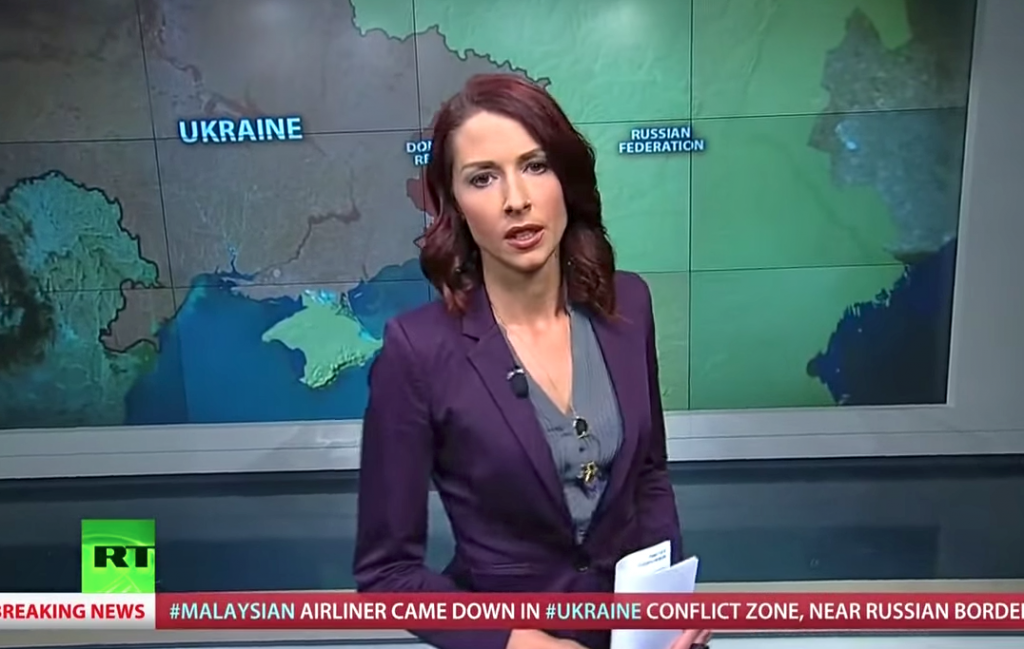 Desperate to push this US intelligence narrative, The New York Times