Manhattan UFOs Predicted by Ex-NORAD Officer

EPOCH TIMES– Manhattan UFO sightings that generated buzz in downtown New York City coincided with a prediction made by Stanley A. Fulham, a retired NORAD officer, in his recently published book, according to a press release dated September 13, 2010.

In “Challenges of Change (3rd ed),” Fulham says that a fleet of UFOs would hover over earth’s major cities on Oct. 13, and says this event is the first interaction that leads to mankind’s acceptance of aliens. That turns out to be the same day of the UFO sightings.

Fulham claims that he has had experiences with UFOs dating back to World War ll, and has received a plethora of historical data on NORAD’s experiences with UFOs that have never before been revealed.

Epoch Times reporter Stephen Summer was an eyewitness of the UFOs, and was present at a scene where New Yorkers gathered and pointed at the mysterious metallic objects in the sky.

Summer said he was walking near the corner of 28th Street and Sixth Avenue when he saw groups of people looking up. He said he looked up as well, and saw four small shiny objects in the sky.

Videos of the UFOs have gone viral on the Internet and clearly show shiny silver objects floating over Manhattan.

Continue reading about Manhattan UFOs Predicted by Ex-NORAD Officer.

© Epoch Times, 2010


My Fox News covers the incredible phenomenon.


Russia Today’s coverage of the sightings.
 

Diamond Star Thrills Astronomers

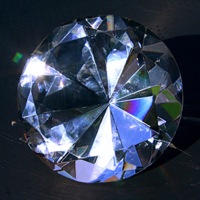
diamond starBBC– Twinkling in the sky is a diamond star of 10 billion trillion trillion carats, astronomers have discovered. The cosmic diamond is a chunk of crystallised carbon, 4,000 km across, some 50 light-years from the Earth in the constellation Centaurus.

It’s the compressed heart of an old star that was once bright like our Sun but has since faded and shrunk. Astronomers have decided to call the star “Lucy” after the Beatles song, Lucy in the Sky with Diamonds.

“You would need a jeweller’s loupe the size of the Sun to grade this diamond,” says astronomer Travis Metcalfe, of the Harvard-Smithsonian Center for Astrophysics, who led the team of researchers that discovered it.

The diamond star completely outclasses the largest diamond on Earth, the 546-carat Golden Jubilee which was cut from a stone brought out of the Premier mine in South Africa. The huge cosmic diamond – technically known as BPM 37093 – is actually a crystallised white dwarf. A white dwarf is the hot core of a star, left over after the star uses up its nuclear fuel and dies. It is made mostly of carbon.

For more than four decades, astronomers have thought that the interiors of white dwarfs crystallised, but obtaining direct evidence became possible only recently. The white dwarf is not only radiant but also rings like a gigantic gong, undergoing constant pulsations.

Continue reading about Diamond Star Thrills Astronomers.

© BBC, 2004

Photo by flickr user stevendepolo

Could ‘Goldilocks’ Planet Be Just Right For Life?

THE HERALD SUN– Astronomers say they have for the first time spotted a planet beyond our own in what is sometimes called the Goldilocks Zone for life: Not too hot, not too cold. Juuuust right.

Not too far from its star, not too close. So it could contain liquid water. The planet itself is neither too big nor too small for the proper surface, gravity and atmosphere.

It’s just right. Just like Earth.

“This really is the first Goldilocks planet,” said co-discoverer R. Paul Butler of the Carnegie Institution of Washington.

The new planet sits smack in the middle of what astronomers refer to as the habitable zone, unlike any of the nearly 500 other planets astronomers have found outside our solar system. And it is in our galactic neighborhood, suggesting that plenty of Earth-like planets circle other stars.

Finding a planet that could potentially support life is a major step toward answering the timeless question: Are we alone?

Scientists have jumped the gun before on proclaiming that planets outside our solar system were habitable only to have them turn out to be not quite so conducive to life. But this one is so clearly in the right zone that five outside astronomers told The Associated Press it seems to be the real thing.

“This is the first one I’m truly excited about,” said Penn State University’s Jim Kasting. He said this planet is a “pretty prime candidate” for harboring life.

Continue reading about Could ‘Goldilocks’ Planet Be Just Right For Life?.

© AP, 2010

Should We Give Cancer Patients ‘Magic Mushrooms’?

ATLANTIC WIRE– According to a new study, psilocybin, the active ingredient in “magic mushrooms” has a beneficial psychological impact on terminal cancer patients. Researchers in Los Angeles found that the hallucinogen reduced anxiety and depression, giving patients peace in their final days.

The experiment involved 12 subjects with advanced-stage cancer between the ages of 36 and 58. While some are skeptical of the pilot study, others are hailing a new era of psilocybin testing.

  • Here’s How They Did the Study, writes Rosemary Black at The New York Daily News: “The patients had two sessions apiece. In one, they received psilocybin and in the other, they got a placebo. The patients and doctors were able to tell which drug was administered about 80% of the time. For the study, which was reported in the Archives of General Psychiatry, the patients got a fairly low dose of the drug. In addition to feeling less anxious, they reported needing fewer narcotic pain relievers.”

  • A Huge Success, writes Claire McCormack at Time: “The results demonstrated a substantial improvement in symptoms of anxiety and at six months recorded a statistically significant improvement on one depression scale. This outcome indicates that the study may be the first step in restoring the drug’s flawed reputation from the 1960s and 1970s when it was widely abused for non-medical reasons.”

Continue reading about Should We Give Cancer Patients ‘Magic Mushrooms’?.

© Atlantic Wire, 2010

Picture of Art by Maria Scott and Abby Martin

Rachel Sussman: The World’s Oldest Living Things

July 2010

TED– Rachel Sussman shows photographs of the world’s oldest continuously living organisms — from 2,000-year-old brain coral off Tobago’s coast to an “underground forest” in South Africa that has lived since before the dawn of agriculture.

Rachel Sussman is on a quest to celebrate the resilience of life by identifying and photographing continuous-living organisms that are 2,000 years or older, all around the world.

Continue reading about Rachel Sussman: The World’s Oldest Living Things.

© TED, 2010

Page 17 of 24<<...1516171819...>>