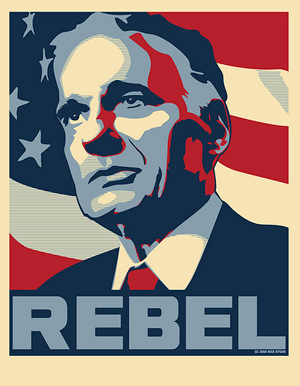
MEDIA ROOTS- Ralph Nader continues to be one of the most
honest U.S. political analysts, despite being
such an influential public citizen.
Too
often, political pundits spin us with ‘horse race’ coverage that’s confined within a false left/right paradigm, and report under the assumption that U.S. voters are satisfied with the
two-party system. In recent interviews,
Ralph Nader has critically analyzed controversial topics such as ‘corporate fascism’ and the ‘US two-party dictatorship’, confronting what many other public figures shy away
from.
Despite
low voter turnouts, tens of millions of U.S. citizens will still take to the ballot
boxes in 2012. So, we may as well speak
plainly about the reality of our electoral system. As in past U.S. Presidential elections, millions of progressives will admit to
holding their noses as they cast a ballot for the ‘lesser-of-two-evils’, instead
of voting their consciences or demanding free and fair elections. Yet, such topics remain taboo.
As Occupy
Wall Street protesters across the country increasingly express
disaffection with both corporate-driven political parties, it’s remarkable how
difficult it is for our national discourse to lay bare the false left/right
paradigm that is propped up by the establishment. OWS protesters have been
photographed with signs rejecting the two-party system. Yet, amorphous anti-greed or anti-inequality complaints,
rather than fundamental structural issues, such as our broken electoral system,
are disproportionately featured by the mass media. This seems as much
a cognitive question of mass psychology or taboos associated with appearing
partisan, as it is one of mass media complicity in the perpetuation of the two-party system. However, younger generations see through this false dichotomy, and we can
credit those same younger generations for energizing the mass political awakening we
are witnessing with the OWS movement.
“Well,
of course,” Ralph Nader candidly admitted, ”two-party dictatorship, completely
rigged, right down to the Presidential Debate Commission, which is a fancy
phrase for a private corporation created in 1987 by the Republican and
Democratic parties to get rid of the League of Women Voters, which supervised
Presidential Debates up to then, and to exclude anyone who they think should
not reach tens of millions of Americans.”
It may
seem an obvious question. But it’s very
empowering to hear it asked plainly and answered so candidly by one of America’s
greatest public citizens.
Without
broadcasting meaningful discussions about the regressive consequences of
perpetuating a restrictive two-party system, which groups like MoveOn, Global
Exchange, Code Pink, and even A.N.S.W.E.R. seem to shy away from, progressives
are held captive by the Democratic Party.
Ralph
Nader also makes an important distinction in pointing out the Koch Brothers’ astro-turfing of the original Tea Party ideals, because it demonstrates the
model by which the same may occur to the grassroots OWS movement by
well-funded media darlings like MoveOn.
It’s important to not only take into consideration the hopes and aspirations of protesters on the ground, but also to follow the money back to who inevitably funds Left organizers, such as billionaire George Soros’ subsidiaries or MoveOn
(which although no longer a 527, stands upon a pro-Democratic Party track
record). It may be impossible for organizers to avoid grants from funders with a vested interest in preserving the two-party system, but at least an informed citizenry can better navigate the uphill struggle toward representative democracy. Most, including Nader, will argue it doesn’t
matter from where organizing funds originate, as long as it doesn’t corrupt the message. However, if the message emanating from
mass demonstrations seems to avoid critical electoral analysis, progressive activists may
be playing into pro-Democratic influences unwilling to confront such fundamental
structural problems.
For example, the Keystone XL protests in D.C. earlier this year was funded in part by the Rockefeller Brothers– the No Tar Sands
Oil campaign was funnelled financially through Corporate Ethics International. This money trail may help explain why
none of their spokespersons, including Bill McKibben, ever really slammed Obama
or the Democratic Party beyond supplicant appeals, much less threatened withholding
mass electoral support if their environmental demands went ignored.
Since
well-funded groups like MoveOn (and its charismatic leaders like Van Jones) do
not question the two-party system, they thereby function to perpetuate it under
the pretence of grassroots transformation.
This illusion in which such groups operate only hurts real
activism, progress, and change in the U.S. Even
with mass protests reaching historic proportions, we still must confront the
reality of a captured electoral system.
Critical
electoral analysis is not a partisan issue– it is a question of free and fair elections. The people of this country deserve to have an electoral system which truly reflects the popular will of its people, rather
than one which locks them into a false choice between two increasingly
identical versions of the same thing.
It’s
up to honest journalists, to citizen journalists, to resident journalists, to look beyond symptoms and to causality. It’s up to the dialectic between independent journalists and a candid Left to broadcast critical, empirically-based,
electoral analysis, to cut through the false left/right paradigm, to expose uncomfortable
truths, and to help raise the consciousness of the masses toward breaking out
of our restrictive two-party dictatorship paradigm.
MEDIA ROOTS- Abby Martin of Media Roots talks to political activist and former presidential candidate Ralph Nader about Project Censored,
the landscape of media censorship, the establishment co-opting of the
tea party, the two party dictatorship in the US, Obama’s exacerbation of Bush era policies and the recent assassination of Anwar
al-Awlaki. [Transcript Below]
Ralph Nader sits down to speak with Media Roots.
Abby Martin: “Ralph, thanks so much for taking the time.
Ralph Nader: “Great.”
Abby Martin: “Why do you support Project Censored? I know that their, last year’s, book was on your essential reading list. Why?”
Ralph Nader: “Because Project Censored focuses on the courageous media that publishes articles that the mass media doesn’t cover. And it does it in a very clear way. And the selection process, I think, has been pretty effective. They take really important subjects that are censored out by the networks or the major newspapers and they find it being covered, say, in Mother Jones or Multinational Monitor or Nation magazine and they highlight it. So, it’s a memorable way to show how much censorship there is, still, in the media because these topics that they select are extremely important ones. They’re not marginal trivial matters.”
Abby Martin: “Do you think media censorship is more of a problem now than ever before?”
Ralph Nader: “Well, in some ways there’s more disclosure and reporting because of the internet, because of the blogs, and the websites, and the world-wide range, like if you can’t find the story reported in the U.S., you get it from The Guardian or the independent newspapers or, you know, some newspaper abroad. Or you see it on Al Jazeera. So, in that sense it’s better than the past. In the second, though, there’s far more censorship of citizen activity trying to do something about the very revelations that are reported in the newspapers. So, you get great feature stories that are Pulitzer Prize-winning in The New York Times or The Washington Post and The Wall Street Journal; and then when people rally or march or file lawsuits or give testimony about the very abuses that these papers have exposed they don’t cover it, the citizen efforts. That is worse, by far. For example, we used to be able to get on the Phil Donohue Show; there’s no more Phil Donahue Show. He opened the door for the women’s movement, the consumer movement, the environmental movement, the displaced worker movement like no one before with a huge audience of eight million people. And nothing has replaced him since he closed down in 1996. We used to get on Mike Douglas and Merv Griffin Shows. They were largely entertainment shows, but they felt a responsibility to devote maybe ten, fifteen percent of their time to serious activities going on. They, of course, have been replaced by these sadomasochistic shows that are on afternoon daily TV. So, things are really going down. A lot of seasoned reporters have been laid off. Or that their contract has been bought out. And, so, that memory and experience is not doing much. Then you have the embedded journalists. You know? Can you imagine being an embedded journalist in Iraq or Afghanistan? That’s another way of saying, ‘Oh, we’re muzzled journalists.’ So, they’re missing all kinds of major stories and, with the budget cuts for the mass media, there’s less foreign bureaus, less reporters in bureaus in the United States for these big newspapers and television networks. So, that, all those represent a real decay in the mass media.”
Abby Martin: “Absolutely. One of the things Project Censored talks about is ‘framing’ and that’s a really crucial aspect of censorship that people don’t really realise is censorship. And I wanted you to speak, I know that you spoke about this in your talk [here at The Hillside Club in Berkeley], but I wanted you to speak about the framing of how the media portrays elections and that whole false dichotomy of the lesser-of-two-evils, um, basically we’re fear-mongered into voting against our interests. And I just wanted you to speak about that, even though you did already, just, you know, something that you can say just ‘cos it is, it’s infuriating. [Chuckles.] I know that you’re probably…”
Ralph Nader: “Yeah, well, framing is…
Abby Martin: “…used…”
Ralph Nader: “…is a way of excluding. Let’s face it. I mean, if they ‘frame’ the Israeli-Palestinian conflict in terms of pro-Israeli, then they slaughter in Gaza, and its precedence and the fact that it was Israelis that broke the truce, uh, and, and had a continuing embargo, uh, it would’ve been a completely different reporting…”
Abby Martin: “Right.”
Ralph Nader: “…situation. And, and, that’s true in terms of covering the Pentagon, covering the predatory seizure of our natural resources on Federal lands, which belong to us, or a whole host of subjects that simply are not covered. For example, the stealing of, from the health care expenditures, it’s about $250 billion dollars out of a $2.7 trillion dollars. That’s $250 billion, with a ‘b.’ And there’s a professor at Harvard, he’s documented this. His name is Malcolm Sparrow and he’s the world authority on this and he’s been a consultant on this to various states and federal agencies. He’s almost never interviewed by the public, eh, the newspapers or by the TV. And he’s a great source. That amount of money would cover the uninsured. And every year it’s $250 billion dollars. So…”
Abby Martin: “It’s called shared sacrifice. Come on, we all need to cut expenses, except the Defense, of course.”
Ralph Nader: “Yeah. No, this is an oligarchy and a plutocracy, you know? Pick your word. And that infects the media, ‘cos the media, the mass media is a conglomerate of corporations. And six or seven now control the bulk of TV, radio, uh, magazine, newspaper circulation. When Ben Bagdikian did his first study over 25 years ago it was about 50 media corporations that had that ratio of control. It’s down to about six now. So, you see where it’s going. And that’s why Fox News has such a influence. And that’s why the Dow Jones has, because they get a bigger, bigger share by fewer and fewer corporations serving their investments. I mean, they’re out for profits. When the Wall Street Journal does all these editorials, always against consumer protection, against civil justice, tort system, against, uh, fear of taxation. Nobody has, ever says, ‘hey, these Wall Street Journal editorials, they’re not so more than servicing the page after page of corporate advertising in their newspaper!’ Why give them any credibility at all?”
Abby Martin: “Right. Exactly. And one of the stories in this year’s book is about the Tea Party and the ‘astro-turfing’ of what happened in this. And it, kind of, just goes along with the whole thing that you, you know, there was a question in the audience, ‘oh, I just hate these Tea-baggers.’ It’s the fear that, that prevents people from really voting with their heart and from what they really want to make happen. And you see the Tea Party was just totally co-opted and ‘astro-turfed,’ it’s not even really real. There’s no substance there. Um, and, yeah, I really liked what you said about, you know, both parties will get worse if you keep doing that. And I was wondering if you could, maybe, just elaborate on, on why you said that.”
Ralph Nader: “Well, the Tea Party started out as, sort of, spontaneously, and there were a lot of different parts to it. There were Libertarians. There were conservatives. There were the corporatists. There were the militarists. Whatever reason. Then, it was hijacked. And, it’s really interesting how it happened because first it was influenced in numbers, hugely exaggerated. They really couldn’t turn out that many people. Especially, since they had their own television network every day pushing it, the Fox Network. So, the Washington Post wrote an article saying there wasn’t more than three hundred thousand people who had any kind of membership in these Tea Party organisations all over the country. So, it was hijacked because the brand name, corporatist wing of the Republican Party figured, ‘hey,’ you know, ‘this is the trademark, politically, de jour, grab it, it’s valuable!’ And, so, it’s really the wing of the Republican Party that has hijacked the Tea Party brand and appropriated this exaggerated aura, whose balloon has now been punctured by vigorous investigative reporting. And you know, in Washington, as they say, ‘perception is reality,’ even though it doesn’t reflect any force of numbers out there in the country. So, the Tea Party now is the conservative, corporatist wing of the Democratic, excuse me, the Tea Party now is the resurgence of the conservative, largely non-Libertarian, wing of the Republican Party. And it’s ensconced in Congress.”
Abby Martin: “We interviewed Mike Gravel a couple weeks ago and he was just talking about, you know, during the 2008 Election. He felt like the game was rigged. He wasn’t allowed on the MSNBC or NBC debates because of GE. How do you feel about candidates who, you know, you try so hard to get in there and the game’s rigged all along? The establishment won’t let you. They’ll faze you out. And we saw what happened to you in 2000 and 2004 when people, still, to this day, ‘Ralph Nader cost the Election,’ when, really, there was widespread voter fraud that no one really followed up on, even though it was very blatant. And Greg Palast did a great report on it. It’s just, it’s just amazing that those talking points are still perpetuated and, um, that the game is really rigged. I was wondering if you could talk about that.”
Ralph Nader: “Well, Mike Gravel, he got on the debates early on.”
Abby Martin: “Yeah.”
Ralph Nader: “But he tried to wing it too much. If he raised enough money just to have an office in Des Moines or an office in New Hampshire, by the rules of the Democratic Primary, they couldn’t have excluded him. So, he could’ve lasted a little longer and maybe got a foothold, so as to get at least as much attention as Ron Paul did, who spent time trying to raise money. Mike Gravel has a very good proposal, but he thinks, has legs on no money.”
Abby Martin: “Right. Well, do you think the game is rigged?”
Ralph Nader: “Well, of course.”
Abby Martin: (laughs)
Ralph Nader: “Two-party dictatorship, completely rigged, right down to the Presidential Debate Commission, which is a fancy phrase for a private corporation created in 1987 by the Republican and Democratic parties to get rid of the League of Women Voters, which supervised Presidential Debates up to then, and to exclude anyone who they think should not reach tens of millions of Americans.”
Abby Martin: “How do we get people out of this paradigm that they’re living in where they need to do one or the other when both mirror each other?
Ralph Nader: “Well, they have to do what no one can stop them from doing. That is vote their belief and conscience. Don’t go tactical and vote for least worst. And every four years both parties get worse. And get out and march and demonstrate. That’s the first rampart, uh, that get’s attention and gets more and more people on board. And last I learned about our system, they can’t stop you from marching and demonstrating in front of the right buildings and the right places at the right time all over the country in ever greater numbers.”
Abby Martin: “Civil disobedience at the, I love Cornel West, kind of turnaround on that. And I know I said that was my last question, but I wanted you, really quickly, I just remembered, I mean as it’s still relevant that al-Awlaki assassination, you were talking about Obama’s exacerbation of a lot of Bush’s foreign policy. And this is, I mean, is this, you’ve been in politics for a long time, is this open kind of accepted assassination now of American citizens, is this kind of par for the course, is this just playing the game of politics, or is this kind of an unprecedented thing that we should be standing up and saying…”
Ralph Nader: “Well…”
Abby Martin: “…‘what’s going on?’”
Ralph Nader: “…President Obama, who is a Constitutional lecturer, has just torn up another part of the Constitution. He now believes in summary execution of suspects, even American citizens, which violates the due process of law guaranteed by our Constitution. That is an impeachable offence. And that should be a issue in the Campaign. He has made Bush look modest in terms of his aggressiveness abroad. And he’s, Obama is doing exactly what he said he was gonna do. That he thinks he can send the armed forces anywhere in the world irrespective of international law, U.N. Charter, national sovereignties, kill, injure, and crush anything that he, as prosecutor, judge, jury, and executioner, thinks needs to be destroyed. That is about as radical and anti-American [a] position, given the founders of our Constitution and our Constitutional heritage, as can be imagined. It was done by an expert in Constitutional Law, the former President of the Harvard Law Review, and a Black American. We better get worried.”
Abby Martin: “Absolutely. Thank you so much, Ralph.”
***
MR: Ralph, thanks so much for taking the time.
Ralph Nader: Great.
MR: Why do you support Project Censored? I know that their, last year’s, book was on your essential reading list. Why?
Ralph Nader: Because Project Censored focuses on the courageous media that publishes articles that the mass media doesn’t cover. And it does it in a very clear way. And the selection process, I think, has been pretty effective. They take really important subjects that are censored out by the networks or the major newspapers and they find it being covered, say, in Mother Jones or Multinational Monitor or Nation magazine and they highlight it. So, it’s a memorable way to show how much censorship there is, still, in the media because these topics that they select are extremely important ones. They’re not marginal trivial matters.
MR: Do you think media censorship is more of a problem now than ever before?
Ralph Nader: Well, in some ways there’s more disclosure and reporting because of the internet, because of the blogs, and the websites, and the world-wide range, like if you can’t find the story reported in the U.S., you get it from The Guardian or the independent newspapers or, you know, some newspaper abroad. Or you see it on Al Jazeera. So, in that sense it’s better than the past. In the second, though, there’s far more censorship of citizen activity trying to do something about the very revelations that are reported in the newspapers. So, you get great feature stories that are Pulitzer Prize-winning in The New York Times or The Washington Post and The Wall Street Journal; and then when people rally or march or file lawsuits or give testimony about the very abuses that these papers have exposed they don’t cover it, the citizen efforts. That is worse, by far.
For example, we used to be able to get on the Phil Donahue Show; there’s no more Phil Donahue Show. He opened the door for the women’s movement, the consumer movement, the environmental movement, the displaced worker movement like no one before with a huge audience of eight million people. And nothing has replaced him since he closed down in 1996. We used to get on Mike Douglas and Merv Griffin Shows. They were largely entertainment shows, but they felt a responsibility to devote maybe ten, fifteen percent of their time to serious activities going on. They, of course, have been replaced by these sadomasochistic shows that are on afternoon daily TV. So, things are really going down. A lot of seasoned reporters have been laid off. Or that their contract has been bought out. And, so, that memory and experience is not doing much.
Then you have the embedded journalists. You know? Can you imagine being an embedded journalist in Iraq or Afghanistan? That’s another way of saying, ‘Oh, we’re muzzled journalists.’ So, they’re missing all kinds of major stories and, with the budget cuts for the mass media, there’s less foreign bureaus, less reporters in bureaus in the United States for these big newspapers and television networks. So, that, all those represent a real decay in the mass media.
MR: Absolutely. One of the things Project Censored talks about is ‘framing’ and that’s a really crucial aspect of censorship that people don’t really realise is censorship. And I wanted you to speak, I know that you spoke about this in your talk [here at The Hillside Club in Berkeley], but I wanted you to speak about the framing of how the media portrays elections and that whole false dichotomy of the lesser-of-two-evils, um, basically we’re fear-mongered into voting against our interests. And I just wanted you to speak about that, even though you did already, just, you know, something that you can say just ‘cos it is, it’s infuriating.
Ralph Nader: Yeah, well, framing is a way of excluding. Let’s face it. I mean, if they ‘frame’ the Israeli-Palestinian conflict in terms of pro-Israeli, then they slaughter in Gaza, and its precedence and the fact that it was Israelis that broke the truce, uh, and, and had a continuing embargo, uh, it would’ve been a completely different reporting situation.
And, and, that’s true in terms of covering the Pentagon, covering the predatory seizure of our natural resources on Federal lands, which belong to us, or a whole host of subjects that simply are not covered. For example, the stealing of, from the health care expenditures, it’s about $250 billion dollars out of a $2.7 trillion dollars. That’s $250 billion, with a ‘b.’
And there’s a professor at Harvard, he’s documented this. His name is Malcolm Sparrow and he’s the world authority on this and he’s been a consultant on this to various states and federal agencies. He’s almost never interviewed by the public, eh, the newspapers or by the TV. And he’s a great source. That amount of money would cover the uninsured. And every year it’s $250 billion dollars.
MR: It’s called shared sacrifice. Come on Ralph, we all need to cut expenses, except the Defense, of course.
Ralph Nader: Yeah. No, this is an oligarchy and a plutocracy, you know? Pick your word. And that infects the media, ‘cos the media, the mass media is a conglomerate of corporations. And six or seven now control the bulk of TV, radio, uh, magazine, newspaper circulation. When Ben Bagdikian did his first study over 25 years ago it was about 50 media corporations that had that ratio of control. It’s down to about six now. So, you see where it’s going. And that’s why Fox News has such a influence. And that’s why the Dow Jones has, because they get a bigger, bigger share by fewer and fewer corporations serving their investments. I mean, they’re out for profits. When the Wall Street Journal does all these editorials, always against consumer protection, against civil justice, tort system, against, uh, fear of taxation. Nobody has, ever says, ‘hey, these Wall Street Journal editorials, they’re not so more than servicing the page after page of corporate advertising in their newspaper!’ Why give them any credibility at all?
MR: Right. Exactly. And one of the stories in this year’s book is about the Tea Party and the ‘astro-turfing’ of what happened in this. And it, kind of, just goes along with the whole thing that you, you know, there was a question in the audience, ‘oh, I just hate these Tea-baggers.’ It’s the fear that, that prevents people from really voting with their heart and from what they really want to make happen. And you see the Tea Party was just totally co-opted and ‘astro-turfed,’ it’s not even really real. There’s no substance there. I really liked what you said about, you know, both parties will get worse if you keep doing that. And I was wondering if you could, maybe, just elaborate on, on why you said that.
Ralph Nader: Well, the Tea Party started out as, sort of, spontaneously, and there were a lot of different parts to it. There were Libertarians. There were conservatives. There were the corporatists. There were the militarists. Whatever reason. Then, it was hijacked. And, it’s really interesting how it happened because first it was influenced in numbers, hugely exaggerated. They really couldn’t turn out that many people. Especially, since they had their own television network every day pushing it, the Fox Network. So, the Washington Post wrote an article saying there wasn’t more than three hundred thousand people who had any kind of membership in these Tea Party organisations all over the country.
So, it was hijacked because the brand name, corporatist wing of the Republican Party figured, ‘hey,’ you know, ‘this is the trademark, politically, de jour, grab it, it’s valuable!’ And, so, it’s really the wing of the Republican Party that has hijacked the Tea Party brand and appropriated this exaggerated aura, whose balloon has now been punctured by vigorous investigative reporting. And you know, in Washington, as they say, ‘perception is reality,’ even though it doesn’t reflect any force of numbers out there in the country. So, the Tea Party now is the conservative, corporatist wing of the Democratic, excuse me, the Tea Party now is the resurgence of the conservative, largely non-Libertarian, wing of the Republican Party. And it’s ensconced in Congress.
MR: We interviewed Mike Gravel a couple weeks ago and he was just talking about, you know, during the 2008 Election. He felt like the game was rigged. He wasn’t allowed on the MSNBC or NBC debates because of GE. How do you feel about candidates who try so hard to get in there and the game’s rigged all along? The establishment won’t let you. They’ll phase you out. And we saw what happened to you in 2000 and 2004 when people, still, to this day, ‘Ralph Nader cost the Election,’ when, really, there was widespread voter fraud that no one really followed up on, even though it was very blatant. And Greg Palast did a great report on it. It’s just, it’s just amazing that those talking points are still perpetuated and that the game is really rigged. I was wondering if you could talk about that.
Ralph Nader: Well, Mike Gravel, he got on the debates early on. But he tried to wing it too much. If he raised enough money just to have an office in Des Moines or an office in New Hampshire, by the rules of the Democratic Primary, they couldn’t have excluded him. So, he could’ve lasted a little longer and maybe got a foothold, so as to get at least as much attention as Ron Paul did, who spent time trying to raise money. Mike Gravel has a very good proposal, but he thinks, has legs on no money.
MR: Right. Well, do you think the game is rigged?
Ralph Nader: Well, of course. Two-party dictatorship, completely rigged, right down to the Presidential Debate Commission, which is a fancy phrase for a private corporation created in 1987 by the Republican and Democratic parties to get rid of the League of Women Voters, which supervised Presidential Debates up to then, and to exclude anyone who they think should not reach tens of millions of Americans.
MR: How do we get people out of this paradigm that they’re living in where they need to do one or the other when both mirror each other?
Ralph Nader: Well, they have to do what no one can stop them from doing. That is vote their belief and conscience. Don’t go tactical and vote for least worst. And every four years both parties get worse. And get out and march and demonstrate. That’s the first rampart, uh, that get’s attention and gets more and more people on board. And last I learned about our system, they can’t stop you from marching and demonstrating in front of the right buildings and the right places at the right time all over the country in ever greater numbers.
MR: Civil disobedience at the, I love Cornel West, kind of turnaround on that. And I know I said that was my last question, but I wanted you, really quickly, I just remembered, I mean as it’s still relevant that al-Awlaki assassination, you were talking about Obama’s exacerbation of a lot of Bush’s foreign policy. And this is, I mean, is this, you’ve been in politics for a long time, is this open kind of accepted assassination now of American citizens, is this kind of par for the course, is this just playing the game of politics, or is this kind of an unprecedented thing that we should be standing up and saying what’s going on?
Ralph Nader: President Obama, who is a Constitutional lecturer, has just torn up another part of the Constitution. He now believes in summary execution of suspects, even American citizens, which violates the due process of law guaranteed by our Constitution. That is an impeachable offence. And that should be a issue in the Campaign. He has made Bush look modest in terms of his aggressiveness abroad. And he’s, Obama is doing exactly what he said he was gonna do. That he thinks he can send the armed forces anywhere in the world irrespective of international law, U.N. Charter, national sovereignties, kill, injure, and crush anything that he, as prosecutor, judge, jury, and executioner, thinks needs to be destroyed. That is about as radical and anti-American [a] position, given the founders of our Constitution and our Constitutional heritage, as can be imagined. It was done by an expert in Constitutional Law, the former President of the Harvard Law Review, and a Black American. We better get worried.
MEDIA ROOTS- Obama’s jobs bill amounts to nothing more than a prop that his apologists will use to promote his re-election. His progressive critics, on the other hand, will bemoan its inadequacy, as they demand an FDR-like program of direct governmental employment. And so the sorry spectacle we have witnessed for the past several years will continue, all leading nowhere. Or rather, leading to further dire consequences for tens of millions.
The problem we face isn’t unemployment. The problem is that people are broke and the solution isn’t jobs, but income. With direct payments to all citizens, the government would at least begin to address the deeper problem of generalized insecurity, of which joblessness is simply one manifestation.
Enlightened government policy of this sort won’t be announced at a White House press conference. But is it delusional to contemplate revolutionary social change? Degenerating social conditions adversely affect a majority of citizens, and what is the response – to chase after neo-liberal illusions? Or to fund social entrepreneurs? Or to work towards change that addresses, without the constrictions of ideology, our real needs?
We are facing a bewildering set of catastrophes: climate change, resource depletion, and worldwide economic meltdown. It is no wonder that we are all uncertain where to start and what to support. However, if we can meet our basic needs won’t we be able to contend with all the other problems? It doesn’t take a Marxist to whisper in our ear that we are in the midst of a class struggle – we are not a country of fools some outside our borders think we are. We all understand the role of the rich who in pursuit of their gain undermine our survival.
One hundred years ago the average person knew this too, but the difference between our great grandparents and us is that they saw the power of ordinary working people putting down tools and striking, sometimes winning and sometimes smashed by the armed might of the capitalists – the State. During the Great Depression ordinary people began taking control of their circumstances; some created combative unemployed councils that organized local, collaborative economies (California had hundreds of these groups) and others occupied factories threatening the bosses’ control and spurring FDR to legalize unions to prevent revolutionary turmoil.
Obviously, we do not live in such heady times. Who will replace the workers who once toiled in those now abandoned factories scattered across the country? The pivotal role played by the old working class finds no equivalent in our age of permanent unemployment. Is it possible for the solidarity of a previous age, based on hope and resistance, but founded on a shared commonality, to be resuscitated by recognizing our generalized insecurity? Could this become the motivating force for social change hidden in plain sight?
What unites immigrants, students, the unemployed, the semi-employed in temporary and part-time jobs and all of us in jobs who face speed-ups, downsizing and off shoring? In Europe a name exists for those in this situation of precariousness: the precariat. A dissident academic, Guy Standing, has just written a thorough examination of this new class: The Precariat: The New Dangerous Class. The precariat is dangerous because, so far, its fears have only been addressed by the demagogic Right – the neo-fascists in Europe and the Tea Party in the US.
According to Standing, this new class has a tenuous grip on secure employment, with temporary contracts, no labor protections and no benefits. Or if they have a job, there is no guarantee it will last for years. These conditions lead the precarians to continuously job-hunt as a defensive strategy. They can’t expect to gain job experience as an asset for future employment and, as a consequence, a career with a professional identity fades from their lives.
Neoliberalism’s dogma of flexibility and adherence to market demands creates a centrifugal reality for the individual, destabilizing all aspects of life that define the personality, and that previously led to self-esteem. Values dissolve into attenuated opinions, friendships devolve into text messages, and love detours into pornography. Life hollows out in an endless pursuit of escapism (epitomized by consumerism) and insecurity generates fear of an uncertain future.
Ten years ago in Europe members of the precariat were the chain store workers, but today recent graduates find those jobs are unavailable. All across Europe and the US, the financial sector extracts its homage from governments as a policy of austerity that threatens even the most secure employment of all – government jobs. Can anyone doubt the continuing decline of the old working class, the industrial proletariat, and its succession by a growing mass of fringe workers, immigrants, and unemployables – the precariat? Standing estimates that in the West one-quarter of the population falls into this category, but if only those under thirty years old are counted the category swells to over half, or more. For the young the writing is on the wall, as they all know.
Jobs are scarce and will become even more so as technology continues to replace humans not only in manufacturing, but also increasingly in services. World trends for job creation, at least in the developed world, are discernable and really not contested, and to fly against them with solutions from another era merely demonstrates our inability to imagine another paradigm.
We need to take seriously the proposition that income must be separated from jobs. While this seems absurd in the context of US politics, it received a receptive hearing in the Nixon administration. At that time the fear of growing unemployment and major social unrest, like that seen in all major cities in the late 60s, prompted Washington to introduce a negative income tax to supplement income. Instead of paying taxes, the poor would receive federal funds to stay out of poverty; the federal Earned Income Tax Credit is a lame remnant of that policy. The oligarchs didn’t approve, and at about the same time both the explosive growth of poorly paid service jobs and the rise of the industrial prison complex sidetracked a more humane alternative.
While only a few academics are thinking along these lines in the US, in other parts of the world a basic income has been gaining adherence. The largest program based on this premise is in Brazil, where a modest stipend goes to families so that children can afford schooling. This may be a baby step of a program, but there are proposals to extend it. And other countries more generous benefits are contemplated. Here in the US we have a variation of this idea with the Alaska Permanent Fund that annually pays citizens approximately $1,000 apiece as their benefit from the sale of Alaskan oil.
Most advocates of a guaranteed income premise their program on a yearly subsistence paid to all without qualification, thereby with one program saving billions by ending a multiplicity of government assistance programs. Whether the funds raised for general distribution as income come from a small tax on financial transactions, or whether these funds come from the rent paid by corporations using public resources, or some other scheme or mixture of many sources, the point is that the money can be raised. The obstacle is not an economic issue, but a political one.
The assumption is that the guaranteed income would meet basic needs and be supplemented by employment, which could be part-time or full. If implemented, no one need be tied to a job for a whole year. For the young, in school, travelling, or experimenting with life’s choices, this sum might be sufficient to find meaningful engagement with others. We need to understand that this is not a scheme to avoid work, but to search out fulfillment in work. To in fact, redefine work away from forced labor as it’s conceived by most.
The long-range implications of this transformation of life’s current goal – to search for a job – address the environmental crises we face. How in fact will we contend with a world presented as a jungle, as a struggle to attain scarce resources? The reality of a life without an endless expansion of commodities must be met by transforming our values at some basic levels. The sages of all cultures have told us that we define ourselves by freely associating with others to discover our way of contributing to the commonweal. This is wise advice. We need to be free to follow it.
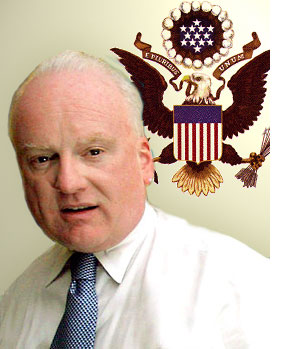
MEDIA ROOTS- Richard Clarke, former anti-terrorism chief under Bush, has given a new account of the 9/11 story that implicates the CIA for intentionally obstructing
the investigation and withholding vital information that would have likely prevented the attacks. His testimony smashes a hole in the government’s ‘incompetence’ theory that rationalized their inaction. It also invalidates the mindset of ‘oh well, there was so much intelligence coming in that we couldn’t
differentiate the real threats from the fake ones’, by pointing out that someone from the inside must have been purposefully obstructing him
from doing his job.
The filmmakers of 9/11: Press for Truth interview Richard Clarke about the revelations.
There are numerous things very telling about Clarke’s sudden revival with this information. His new, more frustrated demeanor hints at something deeper
that he could suspect or possibly know to be true about the attacks. Clarke suggests that Saudi intelligence was involved, further connecting the dots between Bandar Bush and the Saudi Royal Family
to 9/11.
Al Qaeda on US Government Payroll
Shockingly, Clarke also theorizes that the CIA tried to recruit a member of Al
Qaeda who later turned out to be one of the 19 hijackers, proving that the CIA was well aware of Al Qaeda ‘cells’ prior to the attacks. His allegations add credibility to the theory that some of the hijackers could have possibly been on the US government payroll.
If one studies the JFK case, there are eerily similar consistencies with Lee Harvey Oswald’s background as a Russian intelligence agent or potential double agent working for the US. Oswald listed his address in the same New Orleans building as CIA Bay of Pigs co-organizer, Guy Banister. Similarly, five of the 19 hijackers were trained at secure US military installations in the 90s, and three of them listed their addresses at the Pensacola naval base in Florida.
Clarke astoundingly divulges a theory that George Tenant, along with up to 40 CIA agents (by his estimate), knew about attempts to get one of the hijackers on the CIA payroll as an informant up to four months before 9/11.
We don’t know for certain whether Clarke is telling the truth, but what we do know is that over time insiders like Clarke might feel safer revealing more
pieces of the 9/11 puzzle. Possibly he is plagued with a
guilty conscious, or maybe the US government is
still using him to spread conflicting propaganda in order to manipulate the narrative.
Unsurprisingly, the corporate press hasn’t touched the explosive allegation. What is surprising, however, is the lack of coverage from the so-called ‘alternative’ media sites like Salon, Slate, and Wired. There seems to be an active campaign among both the progressive media establishment and the corporate news to censor such a revelatory story.
Who is Richard Blee?
The name Richard Blee comes up multiple times throughout Clarke’s video interview. He points the finger at Blee and accuses him of being a key player in withholding information that could have prevented the attacks. As more investigating is done into this case, hopefully Blee will be further questioned. For now, George Tenant, Blee and others accused by Clarke have already written a rebuttal to his allegations of the ‘lady doth protest too much’ varietal.
Investigative journalism like that done by Secrecy Kills and the 9/11: Press for Truth crew is rare. We give high
honors to the people who dug deep into this story and look forward to their future revelations. Make
sure to visit their website Secrecy Kills and listen to an hour long podcast detailing much more than what is discussed here.
MEDIA ROOTS- It seems relatively obvious– legally buying medical marijuana at a dispensary eliminates the need to deal with street drug dealers, which diminishes the risk factor for crime. However, law enforcement agencies continue to argue that the cash troves on site boost crime by attracting thieves who resell the drugs.
Research from a recent report by the RAND Corporation supports the former– crime rates rose significantly in Los Angeles neighborhoods after hundreds of medical marijuana dispensaries in the vicinity were forced to shut down.
Researchers gathered information and crime reports from 600 dispensaries in Los Angeles County, of which 430 were ordered to close by City Council. They then looked at the 10 days prior to when the ordinance took effect (June 7, 2010) and the 10 days after the shutdown. They found a 59% increase in crime within three-tenths of a mile of the closed dispensaries and 24% increase within six-tenths of a mile.
“If medical marijuana dispensaries are causing crime, then there should be a drop in crime when they close,” said Mireille Jacobson, the RAND study’s lead author and senior economist. Researchers went on to explain that open dispensaries probably strengthened the security of the immediate area, if anything, due to their security cameras and guards, as well as an increase in foot traffic and trumping illegal street sales of marijuana.
One of things that piqued my curiosity most about the study is that
the RAND Corporation, the company that conducted the research and released the report, is one of the most powerful globalist think tanks in the world. Its members have written extensive policy prescriptions on the militarization of society in a post 9/11 world, and they proudly display a giant mushroom cloud sculpture constructed out of chain links outside of their LA headquarters.
A report released Tuesday by the RAND Corp., a Santa Monica-based think tank, revealed that after hundreds of medical marijuana dispensaries were forced to close in Los Angeles last year, crime rates rose significantly in nearby neighborhoods.
Law enforcement agencies have long been after these dispensaries, arguing that the large amounts of cash are a magnet for thieves, who often go on to resell marijuana. Yet, after what investigators are calling “the most rigorous independent examination of its kind” of LA dispensaries, it appears that the city might need to rethink their position.
Researchers gathered information and crime reports from 600 dispensaries in Los Angeles County, of which 430 were ordered to close by City Council. They then looked at the 10 days prior to when the ordinance took effect (June 7, 2010) and the 10 days after the shutdown. They found a 59% increase in crime within three-tenths of a mile of the closed dispensaries and 24% increase within six-tenths of a mile.
“If medical marijuana dispensaries are causing crime, then there should be a drop in crime when they close,” said Mireille Jacobson, the RAND study’s lead author and senior economist. Researchers went on to explain that open dispensaries probably strengthened the security of the immediate area, if anything, due to their security cameras and guards, as well as an increase in foot traffic and trumping illegal street sales of marijuana.
While the Los Angeles Police Department isn’t completely convinced, they also reveal that much of the complaints from neighbors of the dispensaries deal with issues of loitering, double parking and noise, rather than actual crime.



 MEDIA ROOTS- Ralph Nader continues to be one of the most
honest U.S. political analysts, despite being
such an influential public citizen.
MEDIA ROOTS- Ralph Nader continues to be one of the most
honest U.S. political analysts, despite being
such an influential public citizen. 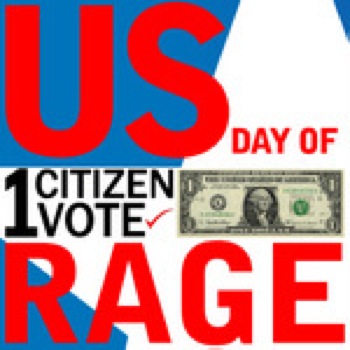 By
contrast, groups like US Day of Rage, which co-organized the OWS actions from
the outset, focus on electoral reform and propose an Article V Constitutional
Convention outlining concrete steps, such as restoring representative democracy, abolition of corporate personhood, and the overturning of the Citizens
United case.
By
contrast, groups like US Day of Rage, which co-organized the OWS actions from
the outset, focus on electoral reform and propose an Article V Constitutional
Convention outlining concrete steps, such as restoring representative democracy, abolition of corporate personhood, and the overturning of the Citizens
United case. 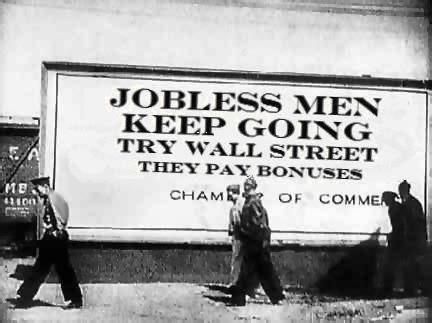 MEDIA ROOTS- Obama’s jobs bill amounts to nothing more than a prop that his apologists will use to promote his re-election. His progressive critics, on the other hand, will bemoan its inadequacy, as they demand an FDR-like program of direct governmental employment. And so the sorry spectacle we have witnessed for the past several years will continue, all leading nowhere. Or rather, leading to further dire consequences for tens of millions.
 Shockingly, Clarke also theorizes that the CIA tried to recruit a member of Al
Qaeda who later turned out to be one of the 19 hijackers, proving that the CIA was well aware of Al Qaeda ‘cells’ prior to the attacks. His allegations add credibility to the theory that some of the hijackers could have possibly been on the US government payroll.
Shockingly, Clarke also theorizes that the CIA tried to recruit a member of Al
Qaeda who later turned out to be one of the 19 hijackers, proving that the CIA was well aware of Al Qaeda ‘cells’ prior to the attacks. His allegations add credibility to the theory that some of the hijackers could have possibly been on the US government payroll. 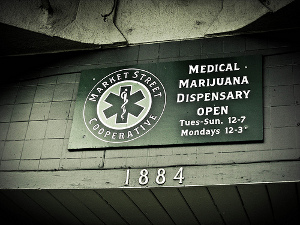 MEDIA ROOTS- It seems relatively obvious– legally buying medical marijuana at a dispensary eliminates the need to deal with street drug dealers, which diminishes the risk factor for crime. However, law enforcement agencies continue to argue that the cash troves on site boost crime by attracting thieves who resell the drugs.