PBS Frontline Documentary: United States of Secrets

XaIWseY

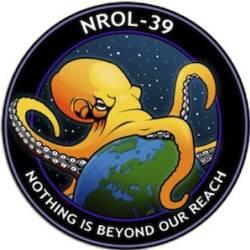
logo taken from an actual NSA spy satellite exterior called: NROL-39

PBS’ United States of Secrets is a stunning, must watch documentary covering the detailed history of the post 9/11 NSA mass surveillance program.

The two part series lets state officials prop up the narrative that such spying is needed amidst a ‘War on Terror’, but juxtaposes their rhetoric with stories from NSA whistleblowers’ who were targeted for speaking out.

Incidentally, the history of ‘The Program’ derives in large part from an internal leaked document, which outlines how former Attorney General Alberto Gonzales helped shield the Bush administration from the illegality of dragnet spying. After Obama inherited Bush’s spying apparatus, he charged multiple whistleblowers with espionage for leaking information about ‘The Program’ to the press.

United States of Secrets puts the Snowden leaks in context with the NSA’s sordid past, and cogently outlines how the surveillance state got to where it is today.

MR

**

You can watch United States of Secrets on You Tube, albeit in lower quality than PBS:


United States of Secrets Part 1 of 2

**


United States of Secrets Part 2 of 2

**

Media Roots Radio – Snowden, Greenwald, Wikileaks & the NSA

This broadcast was recorded before whistleblower Edward Snowden’s first US television interview with NBC’s Brian Williams.*

Earlier this month, journalist Glenn Greenwald released No Place to Hide, a book describing in detail how he met Snowden and started making regular NSA disclosures on The Guardian and later The Intercept. 

In this episode of Media Roots Radio, Robbie and Abby Martin detail the history of the NSA’s ‘Program’ as told in PBS’ State of Secrets and the whistleblowing by Thomas Drake, Bill Binney and eventually Edward Snowden. They examine several of the criticisms coming towards Greenwald and Snowden from the left leaning alternative-media and more ‘fringe’ circles of the Internet, such as ‘there’s nothing new in the documents’ and that ‘they aren’t releasing them fast enough’.

They also discuss the near death of Net Neutrality, Uruguay’s badass president and the dark underbelly of corporate surveillance.

The above timeline is interactive. Scroll through it to find out more about the show’s music and to resources mentioned during the broadcast. To see a larger version of the timeline with clickable resources go to the soundcloud link below the player.

If you would like to directly download the podcast click the down arrow icon on the right of the soundcloud display. To hide the comments to enable easier rewind and fast forward, click on the icon on the very bottom right.

This Media Roots podcast is the product of many long hours of hard work and love. If you want to encourage our voice, please consider supporting us as we continue to speak from outside party lines. If you donate, we want to thank you with your choice of art from AbbyMartin.org. Much of the music you hear on our podcasts comes from Robbie’s imprint Record Label Records, and Abby’s art reflects the passion and perspective that lead her to create Media Roots.org.

$40 donation: One 8×10 art print and one RLR release (You choose! Tell us in the Paypal notes.)

$80 donation: Two 8×10 art prints and two RLR releases (You choose!)

$150 donation: Four 8×10 art prints and four RLR releases (You choose!)

Even the smallest donations are appreciated and help us with our operating costs.

Thanks so much for your support!

Listen to all previous episodes of Media Roots Radio here.

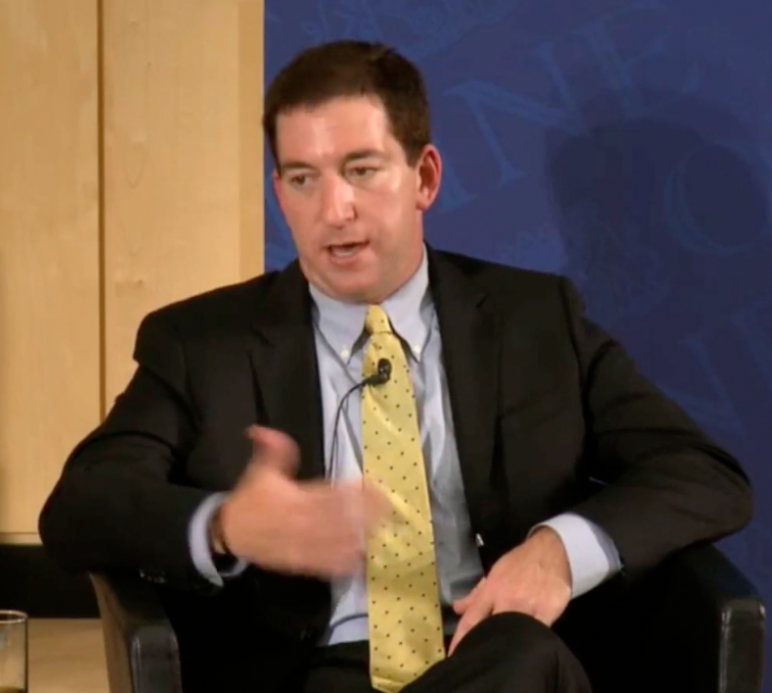
Glenn Greenwald’s Chutzpah

QC5wydyGlenn Greenwald was asked all-too-familiar stock questions on mainstream programs like Meet the Press and Charlie Rose during his book tour for No Place to Hide. Although he was put on the defense in almost every segment, Greenwald held firm and consistent when combating the adversarial tone of US establishment journalists.

Over the course of his high profile interviews, many may have missed his lengthier and more candid talks in Hamburg, Amsterdam and at Harvard. Here’s some of our favorite quotes from those lectures that you probably won’t hear on the corporate media.

Obama’s NSA Lies 

“I think [Obama is] due a lot of credit because it really is impressive that he’s able to say those things with a straight face and not bursting out in laughter, I find that skill really really extraordinary, and he’s very good at it and I think we ought to acknowledge it in fairness.”

CIA Assesses Senator Obama

“The greatest hope for saving America’s war fighting ability and to stem the tide of anti-war sentiment in Europe was for then-Senator Barack Obama to become president, because what that would do is transform these wars from George Bush’s face, which the world had grown increasingly tired of and had been viewed as this kind of swagger and unilateral cowboy that was particularly hated in Europe, into this kind, sophisticated, progressive face of Barack Obama.”

“And by making Obama the face of these wars it would transform all this anti-war sentiment into people who were willing to acquiesce to the war if not outright support it. [The CIA] knew that he would continue all of these policies, but his branding was so pleasant and especially in Western Europe, so beloved that it would be an immense asset for the National Security State.”

Obama’s European Branding Power 

“There’s so much rhetoric about the US government, [and Obama is] an effective salesmen around the world for this myth of American greatness. I think one of the principal things that this debate over the last year has done is open people’s eyes about the reality of president Obama vs. the image.”

Global Obama Tarnishing

“I live in Brazil where he had been beloved and across every Brazilian newspaper is very menacing pictures of him connecting him with spying.”

The Democrats

“We have been criticized very predictably and very inconsequentially from what I will call for just  lack of a better term: ‘the Right’, which is, you know, primarily Democrats who voice this critique that our disclosures are going to help the terrorists and result in the deaths of innocent people and all of that. I was on CSPAN two days ago, and every time the host said ‘And now we’re going to go to the Democrat line’ I knew I was about to be called a traitor. It was completely reliable.”

Snowden = Russian False Flag

“Those very same people who had been saying just two weeks earlier that [Snowden] was clearly a Chinese spy suddenly switched on a dime saying obviously this is an operation by Vladimir Putin.”

“It’s really remarkable how seriously all of that has been taken despite the fact that there’s zero evidence to support any of it and mountains of evidence to negate it.”

Russia is Scary

“There is this amazing dynamic in American political discourse which is that certain words drive Americans instantly into hysteria and irrationality. One of them is terrorism, the minute you say that everybody screams and jumps under the bed, not quite as much as they did before but still.”

“The much scarier word for people is Russia, this is a word that if you really want to scare an American and make them go away just whisper Russia in their ear and they’ll start running down the street.”

“On television every interviewer would say to me ‘well what about Edward Snowden he must be completely miserable, i mean he’s in Russia‘ I guess they assume that all 160 million people who live in Russia are instantly and automatically miserable from the time of their birth until they die like it’s just one big gulag.”

The Role of Journalism

“The Washington Post, New York Times and other media outlets have been more aggressive because they would have been shamed if they hadn’t been.”

Passion in Journalism

“I think it’s much more powerful as a journalist to be honest about the way you see the world and the assumptions that you’re making than it is to try and deceive your readers into pretending that you float above opinion. I think that passion and vibrancy and soul are necessary for good journalism, the attempt to drain all that out of it has made journalism not just weak but boring and sort of neutered.”

Coordinated Scripts

“I’ve been pretty scornful of the notion that there is this active plotting among journalists and media outlets to coordinate their storyline.”

“Within 24 to 48 hours literally after we first introduced Snowden to the world, there was this immediate consensus among all these media elites that they were completely capable of taking this person that they had never heard of before and didn’t know the first thing about and were diagnosing him, like clinically diagnosing him, psychologically assessing all of his pathologies. They all settled on this coordinated script that he was a ‘fame seeking narcissist’  If you Google it you will find this phrase over and over again.”

“Where did that come from, that ‘fame seeking narcissist’ thing, I really want to know.”

Pretend Respect

“There’s all these unwritten rules that govern the ways journalists are supposed to behave.”

“You’re not supposed to be too aggressive in condemning the government, you’re supposed to pretend to have respect for their fearmongering claims about why you shouldn’t be publishing.”

Exploiting Sexual Vulnerabilities

“I never used to be able to understand why in response to the leaking of the Pentagon papers the response of the Nixon administration was to break into the office of his [Daniel Ellsberg’s] psychiatrist in the hope of obtaining his psycho-sexual secrets. It never made any sense to me. It seemed like the ultimate non sequitur, ‘Oh look we have documents showing that the US government has been systematically lying to us for years about the Vietnam war’ and the response would be ‘well Daniel Ellsberg is a swinger’.”

“It’s an incredibly effective means of excluding somebody from decent company, and making everything they say instantly dismissed for that reason.”

Privacy/Encryption

“There are chat programs such as Pidgin and OTR that provide relatively good protection, there’s the TOR browser that lets you use the internet anonymously, the Tails operating system.”

“The problem is all these names are pretty daunting to people who haven’t heard them before…I think the tech community needs to develop these tools to make them much more friendly…Once that happens and that will happen, encryption will become the default means of how people communicate on the internet.”

Email Privacy

“I do use PGP email, and in part I use it because I happen to have read a lot of NSA documents talking about how frustrated they are at their inability to invade it.”

“If you use PGP email, the NSA actually looks for the people who are using encryption, because in their twisted minds, your desire to shield our communications from their prying eyes is evidence that you are suspicious.”

Laura Poitras’ Snowden Film 

Amazingly [Laura Poitras] filmed virtually everything that took place in Hong Kong, our interaction with Snowden, all of the conversations we had, which is going to be in a documentary she releases in the Fall.”

**

Check out Greenwald’s lengthiest and best public appearances so far in May 2014:

Glenn Greenwald and Noam Chomsky on Edward Snowden & The Surveillance State 

**

 Glenn Greenwald at CATO Institute: No Place to Hide

**

 The John Adams Institue Presents Glenn Greenwald: No Place to Hide

**

Richard Bacon Interviews Glenn Greenwald on BBC 

**

 Glenn Greenwald on The Kojo Nnamdi Show: State Surveillance & The Snowden Story

**

 TV Brazil’s Alberto Dines Interviews Glenn Greenwald on NSA

**

Written and compiled by Robbie Martin AKA @FluorescentGrey

The Next Four Months Will Determine the Future of the Internet

InternetRock1997.jpgTwo weeks ago, an internal Federal Communications Commission (FCC) memo was leaked, calling to remake today’s neutral Internet into a ‘pay to play’ system like cable TV. If set in motion, these rules would abolish the Internet’s longstanding the concept of Net Neutrality, or nondiscriminatory access online.
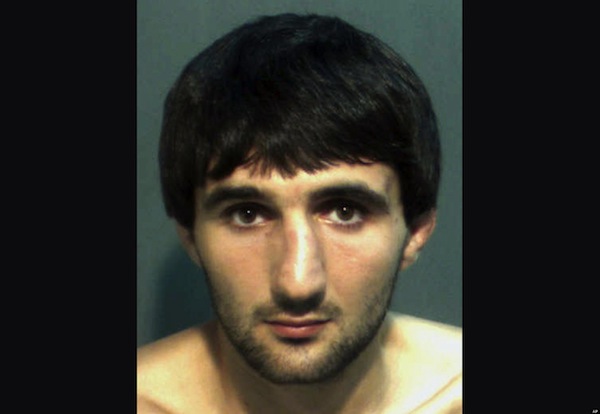
After the document was leaked, hundreds of thousands of Internet advocates flooded the FCC with calls and emails to oppose the pro-business proposal. Putting words to action, dozens of activists also formed a “People’s Firewall” for eight days outside the FCC to demand an Internet free from corporate corruption.

The people’s strong response forced the corporate media to finally cover the issue. As TIME Magazine reported:

“The Internet has become a new public utility, many Net-neutrality advocates argue, and should be treated as such. The nation’s largest cable and phone companies fiercely oppose that idea — fearing greater regulation — and are mobilizing their lobbyists and allies on Capitol Hill to push back.

“The FCC’s eighth-floor executive office has been thrown into chaos amid a mounting backlash that shut down its phone lines as a growing number of open-Internet advocates camp out in front of their office.”

FCC chair Thom Wheeler even stopped by the camp to declare his support for an “open” Internet. Unfortunately, his rules benefit no one but giant telecommunications corporations. We must force the FCC to change these rules by reclassifying the Net as a common carrier so it can be regulated to protect Net Neutrality.

Thankfully, enormous people’s pressure has already forced the FCC to consider implementing the Internet common carrier status. But we need to work together to push the commission to cement the notion of Net Neutrality once and for all.

Over the next four months, the FCC is hosting a public comment section through its official channels. During this time, education will be key to develop a national consensus that the Internet should operate as a public utility, with equal access to all.

Check out Abby Martin’s interview with Matt Wood, Director of Free Press, about why you should care about the death of Net Neutrality:

Matt Wood of Free Press on the Death of Net Neutrality

**

Another must watch piece is Breaking the Set‘s coverage of the FCC protests and interview with Casey Rae, Director of Future of Music Coalition, about why Net Neutrality means so much to independent artists and musicians (Segment starts at 2:24).

Breaking the Set on the Fight to Save Internet Freedom

**

Take Action Now

Submit your comment to the FCC here.

Here’s a blueprint:

“I urge you to reject the rules proposed on May 15, 2014 and restore online nondiscrimination by reclassifying broadband as a telecommunications service.

The FCC claims it wants an open Internet without fee based tiers, but the court has made it clear this can only be accomplished by reclassifying the Internet as a common carrier. This label is consistent with what the Internet is: a public utility where people have equal access to all sites and all sites are treated equally.

Please cement Net Neutrality into law.”

Written by Kevin Zeese and Margaret Flowers. Edited by Abby Martin, photo by Internet Rock

FBI Agent Who Executed Ibragim Todashev is a Corrupt Ex-Oakland Cop

Ibragim TodashevThe city of Boston was shaken last year when its marathon was tragically bombed, leaving three people dead and 264 others injured. The alleged mastermind behind the deadly attacks, Tamerlan Tsarnaev, was killed in a shootout with Boston police. His little brother and alleged co-perpetrator, Dzhohar, is now awaiting trial and will potentially face execution.
Amidst the insanity ensuing from last year’s horrors, one story was largely swept under the rug: the bizarre execution of 27 year old Chechan-American Ibragim Todashev. A month after the bombings, Todashev was interrogated by state and federal officials at his Orlando apartment about his alleged association with the Tsarneavs and his purported role in the Waltham triple murders of 2011.

According to official reports, Todashev was in the process of writing a confession to the Waltham homicides when for no apparent reason, he ‘flipped out’ and propelled a coffee table into the air, striking the agent on the back of his head. He then ran to the kitchen area of his apartment and armed himself with a red pole/broom handle. The unnamed FBI agent shot Todashev seven times, once in the head.

Earlier this year, an internal FBI investigation and Florida State Attorney cleared the FBI agent who fatally shot Ibragim Todashev of any wrong doing. Prosecutor Jeffrey L. Ashton ruled the shooting was reasonable in that: ‘the actions of the Special Agent of the FBI were justified in self-defense and in defense of another’.

Aaron McFarlane

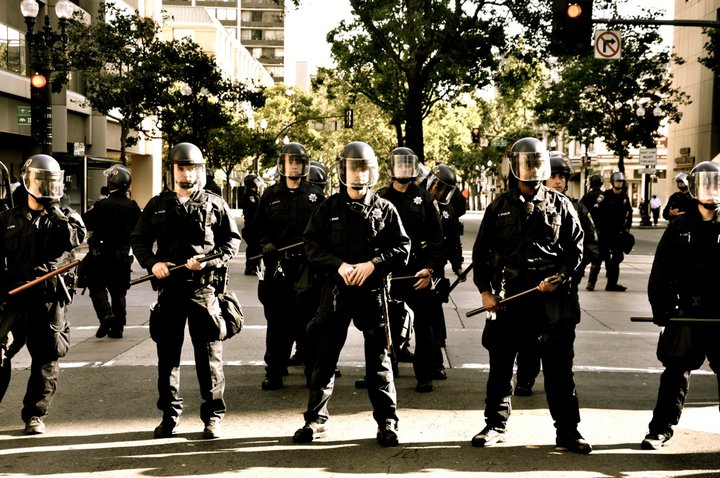
Recent unredacted documents reveal the unnamed agent to be Special Agent Aaron McFarlane, an ex-Oakland police officer with quite a controversial record in his short stint on the force.

The ‘Riders’ case was the biggest police corruption scandal ever witnessed by Oakland Police Department. It cost the Department nearly $11 million to settle civil lawsuits by 119 people who claimed they were falsely arrested, beaten, and had evidence falsified against them. The plaintiffs also alleged that Oakland Police Department turned a blind eye to the police misconduct.

Officers Clarence Mabanag, Jude Siapno, and Matthew Hornung stood accused of 26 counts including kidnapping, assault, conspiracy, false arrests and lying in police reports. McFarlane testified in defense of Mabanag, stating that he had always taught him how to write accurate police reports. However, under cross-examination it was alleged that McFarlane had falsified his own reports at the request of the group’s leader. Once he was faced with evidence proving his guilt, McFarlane pled the fifth.

After five years and two mistrials, the charges were dismissed against the three officers. McFarlane was never charged in connection with falsifying police reports or potentially lying on the witness stand. Regardless, he ended up in legal trouble for committing the same types of actions as the riders.

Oakland PoliceIn November 2003, a man named Aaron Girard filed a civil suit against Aaron McFarlane and his Oakland PD colleague, Steven Nowak, for aggravated battery, false arrest, violation of his civil rights and emotional distress. Girard stated he had witnessed McFarlane and Nowak physically beating an individual who had already been subdued in front of a hospital. Girard took a photograph of the incident and when McFarlane and Nowak realized, they attacked him. The plaintiff alleged he was beaten, kicked and punched around the body, suffering injuries to his shoulder, arm, knee and neck. He claimed he was then falsely arrested by McFarlane and Nowak. Neither McFarlane nor Nowak ever faced charges over the incident.

Additionally, both officers were previously sued by a man named Michael Cole, who filed his complaint on March 26 of the same year (2003). The full details of the complaint are unavailable, although the pair were accused of beating the plaintiff with a ‘hand foot and billy club’ before falsely imprisoning him.

After serving only four years in the police force, Macfarlane retired on disability with a leg injury, collecting a pension of more than $52 thousand dollars annually for the rest of his life.

In his short time as an officer, McFarlane had been accused of falsifying police reports, lying under oath, aggravated battery, making false arrests, violating the rights of suspects, assault with a weapon and false imprisonment, yet was never convicted of any charges.

Other than the questionable circumstances surrounding the death of Ibragim Todashev, it is not known if Aaron McFarlane has ever been involved in any other incident after leaving the Oakland Police Department. And it’s not likely to be known, considering the agency’s secrecy surrounding the release of his identity.

According to Carol Rose, executive director of ACLU of  Massachusetts,

“We still don’t know what happened…nor why the explanations from those who were present at the shooting death have been inconsistent, suggesting at various times that Mr. Todashev allegedly threatened agents, including with a knife, a pipe, a stick or pole, an agent’s gun, the deceased’s martial arts training, or even a samurai sword.”

Unfortunately, the investigators on the case weren’t able to interview McFarlane himself about what happened, and had to rely only on prewritten statements.

This alone should prove the report is inconclusive, and prompt the investigation to re-open. However, a New York Times FOIA request reveals that between 1993 and 2011, FBI agents fatally shot about 70 subjects and wounded 80 others, and in every single case, the agent’s use of force was determined to be justified.

When a federal agency coordinates with so many forces to try to suppress the truth, there’s usually something to hide.

**

Watch Abby Martin break down Aaron McFarlane’s track record and the case of Ibragim Todashev starting at 14:45:

 Abby Martin Breaks the Set on Ibragim Todashev’s Ex Oakland Cop Killer

***

Written by Joanne Potter and Abby Martin

Posted in Uncategorized | 1 Reply
Page 25 of 82<<...2324252627...>>