The Pentagon’s Christmas Present

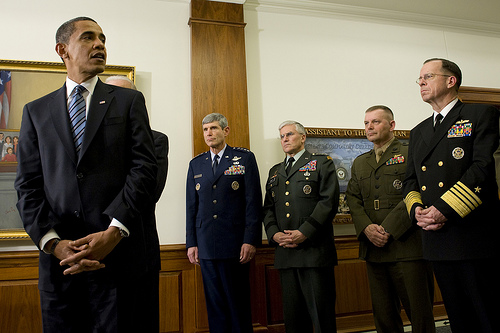
OP-ED NEWS– On December 22, both houses of the U.S. Congress unanimously passed a bill authorizing $725 billion for next year’s Defense Department budget.

The bill, the National Defense Authorization Act for Fiscal Year 2011, was approved by all 100 senators as required and by a voice vote in the House.

The House had approved the bill, now sent to President Barack Obama to sign into law, five days earlier in a 341-48 roll call, but needed to vote on it again after the Senate altered it in the interim.

The proposed figure for the Pentagon’s 2011 war chest includes, in addition to the base budget, $158.7 billion for what are now euphemistically referred to as overseas contingency operations: The military occupation of Iraq and the war in Afghanistan.

The $725 billion figure, although $17 billion more than the White House had requested, is not the final word on the subject, however, as supplements could be demanded as early as the beginning of next year, especially in regard to the Afghan war that will then be in its eleventh calendar year.

Even as it currently is, the amount is the highest in constant dollars (pegged at any given year’s dollar and adjusted for inflation) since 1945, the final year of the Second World War. With recent U.S. census figures at 308 million, next year the Pentagon will spend $2,354 for every citizen of the country at the $725 billion price tag alone.

Last year’s Pentagon budget, by way of comparison, was $680 billion, a base budget of $533.8 billion and the remainder for operations in Afghanistan and Iraq. In July of this year Congress approved the 2010 Supplemental Appropriations Act which contained an additional $37 billion for the wars in Afghanistan and Iraq.

Read full article about the Pentagon’s Christmas Present: Largest Military Budget Ever here.

Written by Rick Rozoff

Russia Today Reports on the Largest Military Budget Increase Ever 

Photo by Flickr user US Army
Why Washington Won’t Allow Democracy in Haiti

photo by US Army/flckrTHE GUARDIAN UK – The polarisation of the debate around WikiLeaks is pretty simple, really. Of all the governments in the world, the United States government is the greatest threat to world peace and security today. This is obvious to anyone who looks at the facts with a modicum of objectivity. The Iraq war has claimed certainly hundreds of thousands, and, most likely, more than a million lives. It was completely unnecessary and unjustifiable, and based on lies. Now, Washington is moving toward a military confrontation with Iran.

As Lawrence Wilkerson, former chief of staff to Colin Powell, pointed out in an interview recently, in the preparation for a war with Iran, we are at about the level of 1998 in the buildup to the Iraq war.

On this basis, even ignoring the tremendous harm that Washington causes to developing countries in such areas as economic development (through such institutions as the International Monetary Fund and World Trade Organisation), or climate change, it is clear that any information which sheds light on US “diplomacy” is more than useful. It has the potential to help save millions of human lives.

You either get this or you don’t. Brazil’s president Lula da Silva, who earned Washington’s displeasure last May when he tried to help defuse the confrontation with Iran, gets it. That’s why he defended and declared his “solidarity” with embattled WikiLeaks founder Julian Assange, even though the leaked cables were not pleasant reading for his own government.

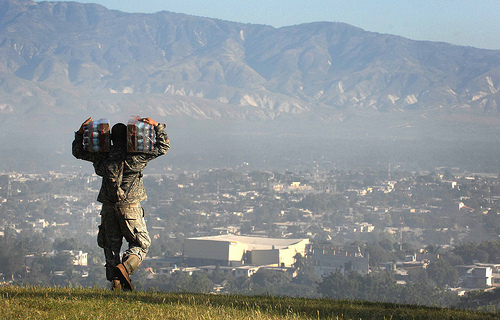
One area of US foreign policy that the WikiLeaks cables help illuminate, which the major media has predictably ignored, is the occupation of Haiti. In 2004, the country’s democratically elected president, Jean-Bertrand Aristide, was overthrown for the second time, through an effort led by the United States government. Officials of the constitutional government were jailed and thousands of its supporters were killed.

The Haitian coup, besides being a repeat of Aristide’s overthrow in 1991, was also very similar to the attempted coup in Venezuela in 2002 – which also had Washington’s fingerprints all over it. Some of the same people in Washington were even involved in both efforts. But the Venezuelan coup failed – partly because Latin American governments immediately and forcefully declared that they would not recognise the coup government.

Read full article about Why the US Won’t Allow Democracy in Haiti.

© Guardian News and Media Limited 2010

Mark Weisbrot is Co-Director of the Center for Economic and Policy Research (CEPR), in Washington, DC.

US House Passes Anti-Palestine Bill

AL-JAZEERA– At last the United States is responding to Israeli Prime Minister Binyamin Netanyahu’s refusal to freeze settlements and re-start negotiations with the Palestinians.

Congressman Howard Berman (D-CA), chair of the House Foreign Affairs Committee, rushed to the House floor with a resolution drafted by the American Israel Public Affairs Committee [AIPAC] condemning the Palestinians for publicly suggesting that, in the wake of Netanyahu’s refusal to freeze settlements and negotiate, they will consider a unilateral declaration of statehood.

Congress passed the Berman bill, drafted only this week, on Wednesday. When it comes to pleasing AIPAC, there are simply no limits.

This remains true even though AIPAC is embroiled in an espionage/sex scandal that has it scrambling to find $20m to pay off a former top employee who is threatening to produce documents exposing the lobby.

Washington lobbying

The Berman bill passed overwhelmingly because that is how things work in a city where policy is driven by campaign contributions — and not just on this issue.

The only difference between how AIPAC lobbyists dictate US Middle East policy and pretty much every other major lobby is that AIPAC works to advance the interests of a foreign country.

In other words, comparisons to the National Rifle Association [NRA] would only be applicable if the gun owners that the NRA claims to represent lived in, say, Greece. Oh, and NRA-backed bills usually take longer than a day to get to the House floor.

And here you have the root of the problem. And it is not just an American problem. It is just as much an Israeli problem, a Palestinian problem, and an international problem.

There is only one reason that Israeli-Palestinian negotiations collapsed. It is the power of the “pro-Israel lobby” (led by AIPAC) which prevents the United States from saying publicly what it says privately: that resolution of a conflict which is so damaging to US interests is consistently being blocked by the intransigence of the Netanyahu government and its determination to maintain the occupation.

Read full article about the US passing an anti-Palestinian bill here.

© COPYRIGHT AL JAZEERA, 2010

Afghans Dying of Starvation Despite $52bn in US Aid

INDEPENDENT– The most extraordinary failure of the US-led coalition in Afghanistan is that the expenditure of tens of billions of dollars has had so little impact on the misery in which 30 million Afghans live. As President Barack Obama prepares this week to present a review of America’s strategy in Afghanistan which is likely to focus on military progress, US officials, Afghan administrators, businessmen and aid workers insist that corruption is the greatest threat to the country’s future.

In a series of interviews, they paint a picture of a country where $52bn (£33bn) in US aid since 2001 has made almost no impression on devastating poverty made worse by spreading violence and an economy dislocated by war. That enormous aid budget, two-thirds for security and one-third for economic, social and political development, has made little impact on 9 million living in absolute poverty, and another 5 million trying to survive on $43 (£27) a month. The remainder of the population often barely scrapes a living, having to choose between buying wood to keep warm and buying food.

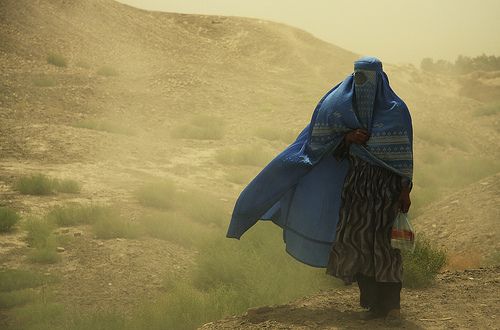
Afghans see a racketeering élite as the main beneficiaries of international support and few of them are optimistic about anything changing. “Things look all right to foreigners but in fact people are dying of starvation in Kabul,” says Abdul Qudus, a man in his forties with a deeply lined face, who sells second-hand clothes and shoes on a street corner in the capital. They are little more than rags, lying on display on the half-frozen mud.

Read full article about Afghanis dying of starvation.

Photo by flickr user AfghanistanMatters

© COPYRIGHT INDEPENDENT, 2010

US Funds Terror Groups to Sow Chaos in Iran

TELEGRAPH– America is secretly funding militant ethnic separatist groups in Iran in an attempt to pile pressure on the Islamic regime to give up its nuclear programme.

In a move that reflects Washington’s growing concern with the failure of diplomatic initiatives, CIA officials are understood to be helping opposition militias among the numerous ethnic minority groups clustered in Iran’s border regions.

The operations are controversial because they involve dealing with movements that resort to terrorist methods in pursuit of their grievances against the Iranian regime.

In the past year there has been a wave of unrest in ethnic minority border areas of Iran, with bombing and assassination campaigns against soldiers and government officials.

Such incidents have been carried out by the Kurds in the west, the Azeris in the north-west, the Ahwazi Arabs in the south-west, and the Baluchis in the south-east. Non-Persians make up nearly 40 per cent of Iran’s 69 million population, with around 16 million Azeris, seven million Kurds, five million Ahwazis and one million Baluchis. Most Baluchis live over the border in Pakistan.

Funding for their separatist causes comes directly from the CIA’s classified budget but is now “no great secret”, according to one former high-ranking CIA official in Washington who spoke anonymously to The Sunday Telegraph.

Read full article about the US Funding Terror Groups.

Photo by flickr user Tom Chambers

© COPYRIGHT TELEGRAPH, 2010

Page 59 of 79<<...5758596061...>>