6 Revolts the Corporate Media Overlooked in 2010

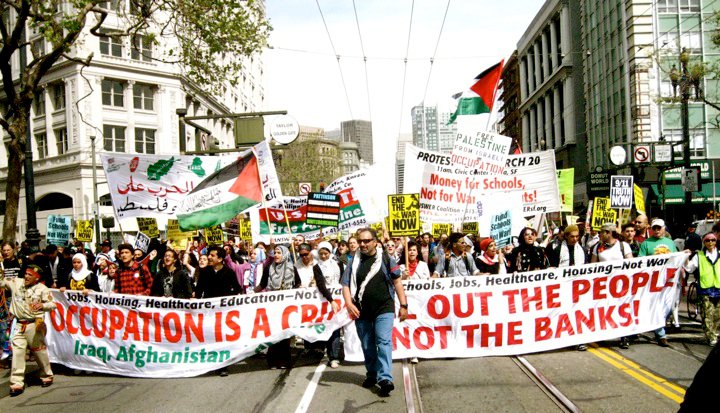
ALTERNET–  Some of the most undercovered stories of 2010 were actions taken by ordinary people standing up for a more just and equitable society. People are taking to the streets on a regular basis across the country, but unlike the corporate-sponsored Tea Party — whose spokespeople can’t answer basic questions about the deficit they claim to be so worried about — those who believe in health care, affordable housing, economic justice, education, a living wage, and a better life for all rarely, if ever, get the attention they deserve. Instead, the media, even the alternative media, spent the better part of last year obsessing over the Tea Party and manufactured personalities like Sarah Palin, while ignoring people like 85-year-old Julia Botello.

Last month, Botello was among 22 people arrested for blocking the doors of a Chase Bank branch in downtown Los Angeles. Over 200 people, many of them homeowners facing foreclosure and eviction, took part in the action organized by Home Defenders League and the Alliance of Californians for Community Empowerment.

According to the Alliance, these families have never participated in an event or protest before, but they have exhausted all other options. Imagine if over 200 Tea Partiers took part in a similar action. Imagine if an 85-year-old Tea Party member was photographed being led away by two cops, one holding each arm. Not only would this video footage be shown over and over again on the cable shows, Julia Botello would be bombarded with interview requests, but because she’s standing in solidarity with people who are losing their homes, she’s only been contacted by two other reporters.

“If we’re united, we’re a better force. We need to stand together,” she says. “I use my voice for the people. I know all of the councilmen and councilwomen in my area. I’m not afraid to speak and ask for better conditions for my community.”

Botello found her voice 10 years ago after falling and hurting her knee on a routine walk home. Her South Central Los Angeles neighborhood was usually dark because the street lights rarely worked. “We usually had only one light that worked, so I went to local council meetings and raised my voice. Why are our streets dark? We need light. My neighborhood hasn’t been dark since.” She’s been going strong ever since. If there’s an action focusing on an issue she cares about, she will do whatever it takes to be there, even if it means rescheduling an overdue eye surgery. “I still have time and I want to keep going.”

In addition to the Chase Bank action last month, several other grassroots actions failed to receive the attention they deserve. These actions, no matter how small, should not be discounted. Let’s hope these voices and demands become too loud to ignore in 2011.

Continue reading about the 6 Revolts the Tea Party-Obsessed Corporate Media Overlooked.

Photo by Abby Martin

© COPYRIGHT ALTERNET, 2011

Egypt’s Muslims Protect Threatened Christians

AHRAM ONLINE – Egypt’s majority Muslim population stuck to its word Thursday night. What had been a promise of solidarity to the weary Coptic community, was honoured, when thousands of Muslims showed up at Coptic Christmas eve mass services in churches around the country and at candle light vigils held outside.

From the well-known to the unknown, Muslims had offered their bodies as “human shields” for last night’s mass, making a pledge to collectively fight the threat of Islamic militants and towards an Egypt free from sectarian strife.

“We either live together, or we die together,” was the sloganeering genius of Mohamed El-Sawy, a Muslim arts tycoon whose cultural centre distributed flyers at churches in Cairo Thursday night, and who has been credited with first floating the “human shield” idea.

Click to continue reading Egypt’s Muslims serving as a “human shield” for Egypt’s Christains.

Article by Yasmine El-Rashidi

© COPYRIGHT AHRAMONLINE.BETA, 2011

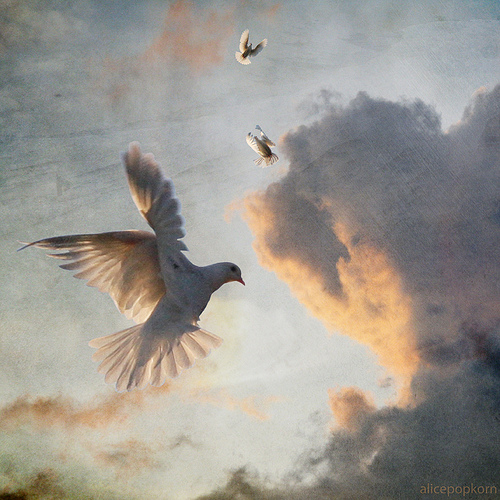
Photograph by AlicePopkorn

MR Original – Surfacing Your Inner Revolt

MEDIA ROOTS– “I think we all have a little voice inside us that will guide us…if we shut out all the noise and clutter from our lives and listen to that voice, it will tell us the right thing to do.” – Christopher Reeve

After several scores of human history, contrary to popular belief, the human race as a whole is still not free. Many of us claim that we are free, but we are rather enslaved by our perishable pleasures and appetites (perishable pleasures not to be confused with engaging in your passions). We carry on the charade of freedom while deep down we are still locked in prisons of fear and ignorance – gagged, shackled and blindfolded. Is there a way out, one asks? It feels like there isn’t, and many of us tend to believe that we were made to spend eternity being slaves at the behest of a mercenary.

I am aware that many of you reading this have been through tunnels of trials and tribulations. I understand that there are many of you that want positive, peaceful and lasting change in this world, but are constantly inflamed by thoughts and emotions that dictate that nothing will change in an environment that strips you of that opportunity. I believe many of you want to rise up and live your destiny – only to find discouragement weighing down on you like a ton of bricks.

One can only endure this type of perception for so many years before the time of questioning comes: questioning of the calamity, the malaise, the resentment, the bitter and bloody rivalries. Is this all there is? Let me ask once more: Is this all there is?

I recall a scene from the popular movie The Matrix where Morpheus is sitting down with Neo in a room draped in shadows and desolation. At one point, Morpheus offers Neo two different pills: a blue one and a red one. Should Neo take the blue one, he will return to his slumber and convince himself that his calling was but a mere dream. Should he take the red one, Morpheus will then fulfill his promise to take Neo down the rabbit hole far beyond what he can imagine, in order to discover his true self and to learn the true nature of reality.

The discovery of oneself – therein lays the key. However, embarking on the journey can be a very fearful thing. Down the rabbit hole, you cannot see what is ahead and there is a surprise around every corner. Once you go deep down, there is no turning back and it is either prosperity or peril. The red pill may be bitter and tough to swallow, but it is something one must do in order to discover his/her true salvation, prosperity and destiny.

You have to leave it all behind…all the falsehoods that you have been told and raised upon – by the mainstream media, by “religious leaders”, by those in authority and perhaps your parents and peers. Your worst enemy down the rabbit hole is not the termites, not the earthworms nor the reptiles – but rather your own ego that keeps your brain in a cell.

But why is it so hard to take the red pill? Why do so many us choose to live out our lower nature and refuse to acknowledge higher levels of intelligence and intuition? Why do we approve of, or are even grateful for, our own chains, despite their fierce and intense limitations? I believe there is a big reason as to why so many of us refuse to be awakened…

It is a fear that manifests on an unconscious level.

The fear of what other people think of us.
 
It is more than just a simple matter of peer pressure going way beyond what you experienced in high school. I believe most people want to speak out and have an idea of how they want to go about it, only to be ensnared by fear of public opinion. It is the single, most crushing thing to the revolutionary spirit and couldn’t come at a time where dissent is needed the most.

Why is it that we promote free speech, encourage discussion and the right to be different when at the same time we slander those actions whenever they are committed by a creative, peaceful and thoughtful individual? The fact is that we create enemies amongst ourselves and most of us do not respect each other for our differences, especially when it comes to a revolutionary act. In other words, we only entertain differences established by the standards of authority over public opinion such as mainstream television shows, movies and sitcoms. It reminds me of a quote by late comedian Bill Hicks: “You are free to do as we tell you.”

We live in this dream world buying the illusion that we are free. We are rendered less inclined to question the nature of the system that we live in, by the relentless propaganda and fanfare of mainstream glamour that consistently holds our attention so. We believe that this reality is the absolute and despite any glimpse of the long-term misery and suffering it brings. So how then can we be free?

It is all about looking at the world around you – realizing what type of world we’re becoming, let alone what we already are. Look deep inside of yourself, deep down, and realize what you’re sick and tired of, what angers you, what enrages you – and get up and doing something about it. What is it you value? What change do you want to see…for yourself…and for others? Once you reconnect with your intuitive capabilities, then, and only then, will real change come into play. As Gandhi once said, “You must be the change you want to see in the world.” Doing things the other way around will have catastrophic effects.

Don’t let peer pressure win you over. Look around you. Why are so many people in debt? Why are so many people getting divorced? Why all the various health problems, including diabetes and heart attacks striking young adults? Why the rising crime? Why the gradual loss of our liberties and the mounting injustice around the world? All of these can be traced back to a peer pressure or groupthink of some kind. Every action we perform creates a reaction (or “domino effect”) in our surroundings and these reactions play out in various forums and ways. Open your mind and you will immediately notice this taking place. We are connected and the more we let our influences and egos get the better of us, the more negative change we will see expressed around us. If we wait, it will be far too late.

If you choose to not become conscious and give into the herd mentality, you’ll be taking a great risk – a risk that has consequences that far outweighs the benefits. If you want to make a difference but choose to remain idle, I must ask you: What price are you willing to pay?

What price are you willing to pay for not thinking for yourself?

What price are you willing to pay for not sending your voice out into the universe and making a creative contribution to put an end to this nonsense and tyranny on the planet?

What price are you willing to pay for letting fear run your life?

What price are you willing to pay for ignoring your revolutionary duty to stand up in the face of tyranny and injustice?

What price are you willing to pay for leaving the decisions to the elite in power, only to find months down the road that your neighbors have been grossly unrepresented and impoverished as more people die for the gain of a few people at the top?

What price are you willing to pay for giving up and walking away, letting the system get the best of you while people close to you suffer greatly as a result?

It is surprising what can happen when one person becomes enraged and starts doing something about it. Look back through history for just a moment. Who was it that changed the course of history? Was it a group, a mob or a committee? In the vast majority of cases, it was an individual who got the ball rolling and these individuals came from all walks of life. They woke up and realized, through creative insight that the system, whatever conditions they lived under, was doing humanity a great disservice – so they decided to act. They intuitively knew full well that sitting back and pretending things were okay would lead to absolute disaster.

Martin Luther King, Jr. and Mohandas Gandhi are two outstanding examples of individuals whose efforts amassed a movement to epic proportions that eventually changed the course of history forever. The individual can begin a movement but it is the group that sustains it. Martin Luther King once stated that it wasn’t him that made the Civil Rights Movement effective, it was the people – the people were the change, not some government.

It is interesting to note that Martin Luther King, Gandhi and others like them, always stood up against tyranny, not terrorism. Tyranny, often occurring on their own soil, was at the root of the problem and the only way to medicate it was to stand up with the passion and determination to change things – a determination powerful enough to move mountains.  Shortly after, people followed in response.

Marianne Williamson stated this brilliantly in her famous poem Our Deepest Fear: “…and as I let my own light shine, I unconsciously give other people permission to do the same…” (my emphasis). It is your energy, the energy that you radiate out into the universe without conscious awareness, which has a ripple effect among your fellow human beings. If you really know what you need and change is burning at your core, you will automatically summon others to your cause. I know, I’ve experienced it and have seen others do the same.

We want hospitality rather than hostility.

Truth rather than trauma.

Forgiveness rather than frustration.

Serenity rather than segregation.

Reconciliation rather than racism.

Liberty rather than libel.

Peace rather than pestilence.

Ingenuity rather than isolation.

And equality rather than extermination.

You will have to endure the slander of your fellow men. But please remember that there are others out there just like you and they are there to support your efforts while permitting others to do the same – all you have to do is open your mind and your heart…and they will come.

Written by Shawn Bent

Photographs by BlaisOne

A Precedent Setting Year in the Fight Against Coal

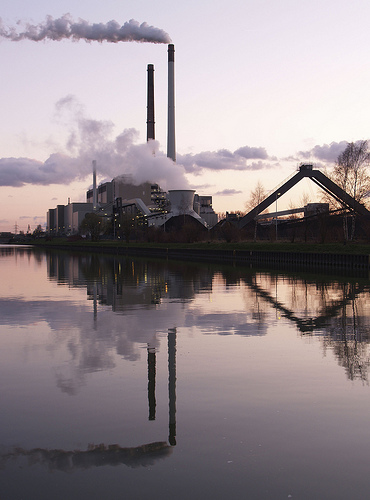
ALTERNET – It was another tough year for the coal industry. In the last 25 months not one coal-fired power plant broke ground for construction in the United States. In 2010 alone a total of 38 proposed plants were erased from the drawing board, the most ever recorded in a single year. Utilities also announced 12,000 MW in coal plant retirements — or enough power to bring electricity to a whopping 12 million American households. And even Massey Energy’s infamous henchman Don Blankenship is set to retire, effective next month.  

Indeed coal executives got what they deserved in their stockings this holiday season — big lumps of black coal. “I predict historians will point at 2010 as the year that coal’s influence peaked and began declining,” says Bruce Nilles, deputy conservation director of the Sierra Club, whose organization released a year-end report on coal in the U.S.  

Nilles is correct; the coal boom out west looks to be over, as companies like Arch and Peabody scramble to figure out what to do with their vast reserves while U.S. markets begin to dwindle. The EPA has also not been as friendly to this portion of the energy sector as in years past, placing most coal permits for mountaintop removal on hold and even recommending a veto of the proposed Spruce Mine in West Virginia, which would be the largest of its kind in the country.

Click to continue reading about the fight against coal.

Article by Joshua Frank / AlterNet

Photograph by flickr user eutrophication&hypoxia


10 Most Hopeful Stories of 2010

YES! MAGAZINE – It was a tough year. The economy continued its so-called jobless recovery with Wall Street anticipating another year of record bonuses while most Americans struggle to get work and hold on to their homes. The wars in Iraq and Afghanistan continued, and spilled over into Pakistan and Yemen, and more American soldiers died by suicide than fighting in Afghanistan. And it was a year of big disasters, some of them indicators of the growing climate crisis.

World leaders, under the sway of powerful corporations and banks, have been unable to confront our most pressing challenges, and one crisis follows another.

Nonetheless, events from 2010 also contain the seeds of transformation. None of the following stories is enough on its own to change the momentum. But if we the people build and strengthen social movements, each of of these stories points to a piece of the solution.

photo by by david parker flickr1.    Climate Crisis Response Takes a New Direction. After the failure of Copenhagen, Bolivia hosted a gathering of indigenous people, climate activists, and grassroots leaders from the global South—those left out of the UN-sponsored talks. Their solution to the climate crisis is based on a new recognition of the rights of Mother Earth. Gone are notions of trading the right to pollute (which gives a whole new meaning to the term “toxic assets”). Instead, life has rights, and we can learn ways to live a good life that doesn’t require degrading our home.

The official climate agreement that came out of Cancún was weak and disappointing, although it did represent a continued commitment to work to address the challenge. But the peoples’ mobilizations, and the solutions born in Cochabamba, continue to energize thousands.

Meanwhile, Californians voted to uphold their ambitious climate law, despite millions spent by oil companies to rescind the measure in November’s election. And cities—Seattle, for one—are moving ahead with their own plans to reduce, and even zero-out, their climate emissions.

2.    Wikileaks Lifts the Veil. The release of secret documents by Wikileaks has lifted the veil on U.S. government actions around the world. While the insights themselves don’t change anything, they do offer grist for a national dialogue on our role in the world—especially at a time when our federal budget crisis may require scaling back on our hundreds of foreign military bases, our protracted overseas wars, and our budget-busting weapons programs. Likewise, the traumas inflicted on civilian populations and on our own military are spurring fresh thinking. We now have data points for a bracing, reality-based conversation on the future of war—the kind of conversation that makes democracy a living reality.

3.    Momentum is Building for the Abolition of Nuclear Weapons. The ratification of the START Treaty is an important step in the right direction. And the National Council of Churches, the U.S. Conference of Catholic Bishops, the U.S. Conference of Mayors, and others from across the political spectrum have joined UN Secretary-General Ban Ki-moon in calling for an even more ambitious goal: the end of nuclear weapons.

4.    Resilience is the New Watchword. As familiar sources of security erode, people are rebuilding their communities to be green and resilient. Detroit, a city abandoned by industry and many of its former residents, now has over 1,000 community gardens, a six-block-long public market with some 250 independent vendors, and a growing support network among small businesses. Around the country, faith groups and others are forming Common Security Clubs to help members weather the recession and consider more life-sustaining economic models. Communities are becoming Transition Towns as a means to prepare for breakdowns in society that may result from any combination of the triple crises of climate change, an end to cheap fossil fuels, and an economy on the skids.

5.    Health Care—Still in Play. The passage of the Obama health care package seemed to lock us into a reform package that maintains the expensive and bureaucratic role of private insurance and props up the mega-profits of the pharmaceuticals industry. But the story is not over. The decision by U.S. District Judge Henry Hudson to strike down the individual mandate in the health care reform may begin unraveling the new health care system.

As insurance premiums continue their steep climb, some are advocating expansion of Medicare to cover more people—or everyone. Thom Hartmann points out this could be done with a simple majority vote in Congress—expanding Medicare to everyone was what its founders had in mind in the first place, he says.

Vermont is exploring instituting a statewide single-payer healthcare system. The United States may wind up following Canada’s path to universal coverage, which began when the province of Saskatchewan made the switch to single-payer health care, and the rest of Canada, seeing the many benefits, followed suit.

6.    Corporate Power Challenged. Small businesses are distancing themselves from the Chamber of Commerce, which promotes the interests of mega-corporations over Main Street businesses. And there are more direct confrontations to corporate power. The citizens of Pittsburgh, Penn., passed a law prohibiting natural gas “fracking,” and declaring that the rights of people and nature supersede the rights of corporations. Other towns and cities are adopting similar laws. The biggest challenge will be undoing the damage of the Citizens United decision, which opened the floodgates to wealthy special interests to spend what they like on elections. Groups around the country are gearing up to take on the issue, with a constitutional amendment just one of the potential fixes.

7.    A local economy movement is taking off as it becomes clear that the corporate economy is a net drain on our well-being, the environment, communities, and even jobs.  A “Move Your Money” campaign inspired thousands to close their accounts with predatory big banks, and instead, to open accounts at credit unions and locally owned banks. Schools, hospitals, local retailers, and families are increasingly demanding local food. Farmers markets are spreading. Independent, local stores have huge cachet as people look local for a sense of community. And the experience of one state with a budget surplus and very low unemployment is capturing the imagination of other states—North Dakota’s state bank is creating a buzz.

8.    Cooperatives Make a Comeback. A new model for local, just, and green job creation is gaining national attention. Leaders in Cleveland, Ohio, created worker-owned cooperatives with some of the strongest, local institutions (a hospital and university) promising to be their customers. The result: formerly low-income workers now own shares in their workplace and earn family-supporting wages. They can plan for their families’ futures, knowing that their jobs can be counted on not to flee the country. The model is spreading, and people now talk about how to bring “the Cleveland model” to their cities.

9.    A Turn Away from Homophobia. The revoking of Don’t Ask, Don’t Tell is just the most dramatic sign that the country has turned away from homophobia. A widespread anti-bullying campaign sparked by the suicide of Rutgers freshman Tyler Clementi led to an “It Gets Better” campaign with videos created by celebrities and others.

10.   Social Movements Still Our Best Hope. Thousands gathered in Detroit in June for the second US Social Forum, an event that galvanized grassroots social movements from across the United States. In Toronto, the meeting of the G20 was greeted by thousands of protesters, many of whom were subjected to police beatings and gassing. The Cancún climate talks brought caravans of farmer/activists and global justice activists as well as greens to press for a meaningful response to the climate crisis. Social movements are alive and well, even though they are disparaged or ignored by the corporate media, which choose to instead shower attention on the well-funded Tea Party. And movement leaders are connecting the dots between Wall Street’s plunder, growing poverty, and the climate crisis, and setting priorities instead for people and the planet.

The turbulence of our lives is increasing, spurred by the crises in the economy and the environment, growing inequality and debt, military overreach, deferred peacetime investments, and species extinctions. Turbulent times are also times when rigid belief systems and institutions are shaken, and change is more possible. Not automatic, and definitely not easy, but possible. The question of our time is how we use these openings to work for a better world for all life.

Sarah van Gelder is co-founder and executive editor of YES! Magazine, a national, independent media organization that fuses powerful ideas with practical actions for a just and sustainable world. Sarah is executive editor of YES!

photograph by flicker user daveparker

Page 31 of 36<<...2930313233...>>