Why Democracy Only Works When People Are in Charge

The Story of Citizens United v. FEC: Why Democracy Only Works When People Are in Charge

THE STORY OF STUFF PROJECT – The Story of Citizens United v. FEC is being released to support the growing movement for a constitutional amendment. The Story of Stuff Project will hold over 500 house parties around the country for participants to learn more about the Supreme Court’s decision and to organize in support of a constitutional amendment.

The Story of Citizens United v. FEC companion website (www.storyofcitizensunited.org) will serve as an interactive launch pad for information and activism. The site offers viewers additional educational resources, including an annotated script and FAQs, as well as ways to get involved in the constitutional amendment campaigns of Public Citizen, Free Speech for People and People for the American Way.

© Copyright The Story of Stuff Project, 2011

MR Exclusive – Interview with Jeanmarie Simpson

MEDIA ROOTS-  In 2002, Jeanmarie Simpson co-adapted the book, Amigas: Letters of Friendship and Exile, a chronicle of correspondence between two Chilean friends separated during the Pinochet era. The theatre adaptation, Amigas, won a 2003 grant from the National Endowment for the Arts.

Later that year, Simpson stumbled across a reference to Jeannette Rankin, lifelong pacifist and the first and only US Congresswoman who voted against US entry into both world wars. Her discovery of Rankin led to the production of A Single Woman, a play that toured worldwide and was subsequently made into a a film featuring the talents of Martin Sheen, Patricia Arquette, Peter Coyote, Judd Nelson and Joni Mitchell.

In 2008 Simpson co-adapted another book called Powder: Writing by Women in the Ranks from Vietnam to Iraq into a solo piece called Coming in Hot. She has performed the show dozens of times in Arizona, California, Washington and Nevada and has garnered rave reviews on Huffington Post. A documentary film about the play is currently in production.

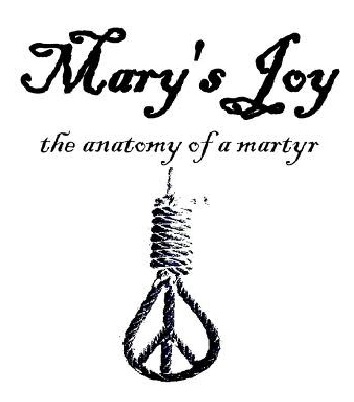
Simpson’s newest solo play, Mary’s Joy: The Anatomy of a Martyr, is ready to meet the public and has already been performed at a school at CU Boulder. I had the honor of sitting down with Jeanmarie Simpson and getting some insight on her work, art, and what it means to be a self proclaimed “artivist”.

***

Cynthia Schwartz: How do you choose your characters? How do you decide whose lives are expansive enough, or interesting enough that you could step inside them and actually become that person on stage?

Jeanmarie Simpson: I guess it’s my enthusiasm for clarity and justice and my feminist heart that leads me to the characters I want to write about and play. I love that these women speak for me, they’re a joy to make a case for, as an artist, because I am so moved by them and their lives.

CS: When you get something back from the audience, does that feed you not only as an actor, but do the characters respond differently during different performances?

JS: Absolutely. My work is deeply responsive to the energy in a room. When the audience is lively and engaged from the get-go, then so is the character. When an audience is more subdued, the performance will be sensitive to that and not seek to overwhelm them right off the bat. That’s the beauty of live performance. It’s an intimate communication. I feel so honored every time anyone is willing to sit and watch and/or listen to me for two hours.

CS: Tell us about Mary Dyer. She was hanged for being a Quaker?

JS: Yes. She was hanged on June 1, 1660, for being a Quaker in Boston, specifically. She had been banished and kept returning.

CS:  The play is subtitled “the anatomy of a martyr.” Can you dissect that for us?

JS: Sure. Whenever an event as dramatic as an execution happens, people become very interested in the “why” of it, and become really curious about the background of the person. We, as a species, seem to be fascinated by criminals who are killed by the state – I mean look at all the documentaries and TV shows that go over every little detail of their childhoods, etc. In Mary’s case, I was deeply intrigued by the notion of a colonial woman with six living children, one of them an infant, getting on a ship alone and going back to England for seven years. I knew she was one of the first Quakers and that she was hanged by the Puritans in Boston, but it’s her relationship with her husband and children that really hooked me- the trajectory of her life led to such a scary ending. She was incredibly determined to get through to the authorities, to turn their hearts, and that determination kept her moving forward. She believed that if she kept advancing in the struggle, something really beautiful would happen.

CS: Almost sounds like a suicide bomber.

JS: Hmmm. Yes. Maybe so, in terms of dying and believing in something beyond death, but she didn’t take anyone else with her. She wasn’t a killer.

CS: Many people view suicide as a selfish act. I can see how some might say that Mary Dyer is profoundly selfish, leaving a husband and all of those children behind to miss her and be left with such horrible images of her death.

JS: True. That’s a theme that is very true, no matter when it happens, today or 350 years ago. Without giving too much away, I think when people see the show and hear Mary’s story, they’ll maybe gain some understanding and a bit more compassion towards people who may be dealing with depression or suicidal thoughts. To label those people as selfish is really too easy. There is a community of complex human beings who suffer from mental diseases and they are really punished for it, by society in general. The stigma is much more powerful than is the the movement to make sure there’s plenty of help for troubled people. So many things can trigger chemical changes in the brain that can lead to all kinds of disorders. I think anyone who lived the life Mary Dyer lived would have been hard pressed not to become disturbed.

CS: Is it also a religious play? Will I walk away wanting to become a Quaker?

JS: (Laughs) I don’t know- I don’t think so. It’s much more about tolerance than it is any kind of missionary piece. Mary was always driven by a deep belief that love and grace are more appropriate expressions by clergy than totalitarianism marked by torture and execution. She had an intense moral compass and couldn’t accept the status quo. I hope that you’ll get a chance to see the show and meet her. She’s really something.

CS: At this point you’re doing a series of dramatic readings rather than a full-blown production, is that correct?

JS: Yes. We’re going to be doing readings, collecting donations and raising the money to stage the show in a theatre. We’re looking at several different spaces. Meanwhile, we can raise a bit of awareness about the Quakers and the Rocky Mountain Peace and Justice Center, here in Boulder. They have been doing such great work for so long and they’re always in need of support. Half of the proceeds will go to them, and the other half will go to Universal Arts Boulder, a new company that a group of us have started. This is a very exciting time of life for me, that’s for sure.

***

Written by Cynthia Schwartz

Playwright and actor Jeanmarie Simpson’s one-woman show is called Mary’s Joy: The Anatomy of a Martyr and it’s currently playing in Boulder, Colorado. For more information please visit universalartsboulder.wordpress.com or jeanmariesimpson.wordpress.com.

Corporate Control? Not in These Communities

YES! MAGAZINECan local laws have a real effect on the power of giant corporations?

Mt. Shasta, a small northern California town of 3,500 residents nestled in the foothills of magnificent Mount Shasta, is taking on corporate power through an unusual process—democracy.

The citizens of Mt. Shasta have developed an extraordinary ordinance, set to be voted on in the next special or general election, that would prohibit corporations such as Nestle and Coca-Cola from extracting water from the local aquifer. But this is only the beginning. The ordinance would also ban energy giant PG&E, and any other corporation, from regional cloud seeding, a process that disrupts weather patterns through the use of toxic chemicals such as silver iodide. More generally, it would refuse to recognize corporate personhood, explicitly place the rights of community and local government above the economic interests of multinational corporations, and recognize the rights of nature to exist, flourish, and evolve.

Mt. Shasta is not alone. Rather, it is part of a (so far) quiet municipal movement making its way across the United States in which communities are directly defying corporate rule and affirming the sovereignty of local government.

Since 1998, more than 125 municipalities have passed ordinances that explicitly put their citizens’ rights ahead of corporate interests, despite the existence of state and federal laws to the contrary. These communities have banned corporations from dumping toxic sludge, building factory farms, mining, and extracting water for bottling. Many have explicitly refused to recognize corporate personhood. Over a dozen townships in Pennsylvania, Maine, and New Hampshire have recognized the right of nature to exist and flourish (as Ecuador just did in its new national constitution). Four municipalities, including Halifax in Virginia, and Mahoney, Shrewsbury, and Packer in Pennsylvania, have passed laws imposing penalties on corporations for chemical trespass, the involuntary introduction of toxic chemicals into the human body.

These communities are beginning to band together. When the attorney general of Pennsylvania threatened to sue Packer Township this year for banning sewage sludge within its boundaries, six other Pennsylvania towns adopted similar ordinances and twenty-three others passed resolutions in support of their neighboring community. Many people were outraged when the attorney general proclaimed, “there is no inalienable right to local self-government.”

Bigger cities are joining the fray. In November, Pittsburgh’s city council voted to ban corporations in the city from drilling for natural gas as a result of local concern about an environmentally devastating practice known as “fracking.” As city councilman Doug Shields stated in a press release, “Many people think that this is only about gas drilling. It’s not—it’s about our authority as a municipal community to say ‘no’ to corporations that will cause damage to our community. It’s about our right to community, [to] local self-government.”

What has driven these communities to such radical action? The typical story involves a handful of local citizens deciding to oppose a corporate practice, such as toxic sludge dumping, which has taken a huge toll on the health, economy, and natural surroundings of their town. After years of fighting for regulatory change, these citizens discover a bitter truth: the U.S. environmental regulatory system consists of a set of interlocking state and federal laws designed by industry to serve corporate interests. With the deck utterly stacked against them, communities are powerless to prevent corporations from destroying the local environment for the sake of profit.

Enter the Community Environmental Legal Defense Fund, a nonprofit public interest law firm that champions a different approach. The firm helps communities draft local ordinances that place the rights of municipalities to govern themselves above corporate rights. Through its Democracy School, which offers seminars across the United States, it provides a detailed analysis of the history of corporate law and environmental regulation that shows a need for a complete overhaul of the system. Armed with this knowledge and with their well-crafted ordinances, citizens are able to return to their communities to begin organizing for the passage of laws such as Mt. Shasta’s proposed ordinance.

The Community Environmental Legal Defense Fund is collaborating with Global Exchange, an international environmental and workers’ rights organization, to help supporters of the Mt. Shasta ordinance organize. In an interview for this article, I asked Shannon Biggs, who directs Global Exchange’s Community Rights Program, if she expected ordinances of this type to be upheld in court. Biggs was dubious about judges “seeing the error of their ways” and reversing a centuries-old trend in which courts grant corporations increased power. Rather, she sees these ordinances as powerful educational and organizing tools that can lead to the major changes necessary to reduce corporate power, put decision-making back in the hands of real people rather than corporate “persons,” and open up whole new areas of rights, such as those of ecosystems and natural communities. Biggs connects the current municipal defiance of existing state and federal law to a long tradition of civil disobedience in the United States, harkening back to Susan B. Anthony illegally casting her ballot, the Underground Railroad flouting slave laws, and civil rights protesters purposely breaking segregation laws.

But the nascent municipal rights movement offers something new in the way of political action. These communities are adopting laws that, taken together, are forming an alternative structure to the global corporate economy. The principles behind these laws can be applied broadly to any area where corporate rights override local self-government or the well-being of the local ecology. The best place to start, I would suggest, is with banning corporations from making campaign contributions to local elections.

The municipal movement could provide one of the most effective routes to building nationwide support for an Environmental and Social Responsibility Amendment to the U.S. Constitution. In fact, the movement is already expanding. In Pennsylvania, people are now organizing on the state level and similar stirrings have been reported in New Hampshire.

What about your community?


Allen D. Kanner, Ph.D., is a cofounder of the Campaign for a Commercial-Free Childhood, co-editor of Psychology and Consumer Culture and Ecopsychology, and a Berkeley, California child, family, and adult psychologist.

This article originally appeared in © Tikkun.

Photography by ThreadedThoughts

Posted in Uncategorized | 1 Reply

MR Original – Some Better This World Through Film

MEDIA ROOTS – The ability to combine audio and visuals to tell a compelling narrative makes documentary films a powerful means of storytelling. They are education through entertainment and, at their best, a persuasive and motivating push to action. It is no surprise that the Bay Area, teeming with political and artistic thought, is a documentary film capitol of the world. As an aspiring documentarian, encouraged by the learning potential from this rich network, I began seeking out insight from local filmmakers.
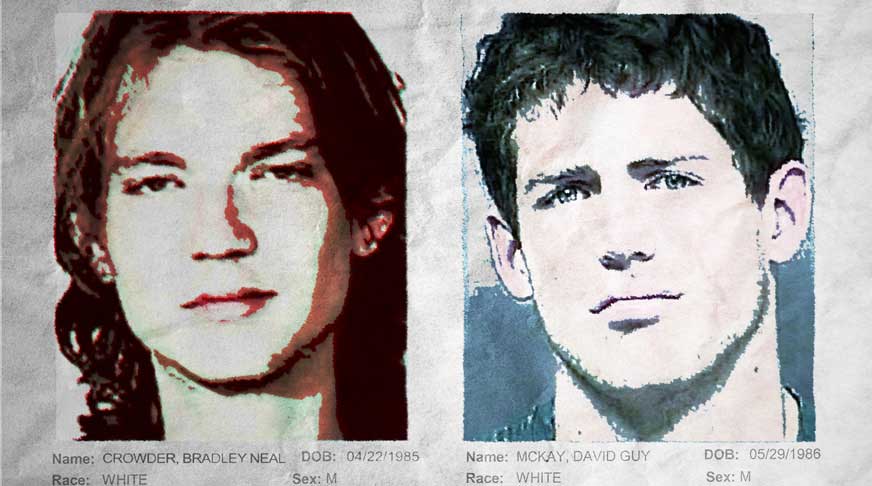
Following a tip from a friend, I came across Better This World – a film in post-production about two young men from Midland, Texas who are facing multiple domestic terrorism charges after manufacturing and bringing Molotov cocktails, or petrol bombs, to the 2008 Republican National Convention. What drew me into the story, and the filmmakers themselves, was the government’s star witness in the case – a controversial and unsuspected FBI informant.

Many of the stories behind the ‘foiled’ terrorist plots of the past few years share in common the trend of an undercover paid FBI informant that often times held a facilitating role in the group– a detail that frequently goes missing from mainstream media reports. (You can find more information on a few of these cases here, here and here.) Knowing this, I became eager to speak with the filmmakers who are taking on such an important and overlooked story.

Loteria Films, the local non-profit production company behind the film, is run by two women, Kelly Duane de la Vega and Katie Galloway. Kelly’s background in still photography and photojournalism, and Katie’s, in radio and print journalism, drew both women to film for what it could accomplish by blending these mediums.

When we met, Kelly recounted the restriction she felt in conveying people’s amazing personal stories as a photographer. “I think there are photographers whose photographs blow my mind, even more than a story. But I wasn’t feeling that about mine. I became so hungry for people to know the story. I knew there was another step.“

For Katie, filmmaking was a natural progression out of her love for working with audio and the depth and intimacy it brought to storytelling. While apprenticing at Frontline under documentarian, Ofra Bickle, criminal justice became her passion.
It was a blurb that Katie found in the Federal Court section of the New York Times that set the two women in pursuit of their first film together. Katie believed the story of two young men facing terrorism charges against the word of an FBI informant was a “really sexy, boiled down way into a story that is my life work so far – examining the criminal justice system and the problems with it.”

The trial was starting a week later, leaving not a moment for second-guessing.

“You say ‘I’m never going to do this on my credit card again. I’m never going to just start spending my own money again.’ But no one is going to give you money in a week’s turn around,” Katie explained with a smile reflecting love for the thrill and risk of chasing a good story. “It’s a gamble, its like going to Vegas.”

Better This World presents tough questions about the balance between liberty and safety in the face of post 9/11 domestic security. “The common thread in many of these [foiled terrorism] cases is some sort of political aspiration and an informant or a government agent who they hook up with and spend a lot of time with, and then at other end, the terrorism case. The question is what happened? Was it entrapment?”

Somewhat tongue-in-cheek Katie went on to ask, “What happens when you have so many resources going into the domestic security apparatus and not necessarily enough terrorists to go around?”

“In the FBI they call it ‘aspirational and not necessarily operational’,” she added.

In a recent interview by Reuters, filmmaker and award winning journalist, John Pilger described a mindset of reporters that says, “only authority can really determine the ‘truth on the news’,” and which leads to a dangerous form of embedding in government and official versions of events.  “Authority has its place, but the skepticism about authority must be ingrained in people,” he said.

And so it seems to be among documentarians.

It is the often skeptical and critical voice of documentary film that has shaped its long and growing legacy of critiquing the status quo while motivating people to educate themselves and take action.

Filmmakers do not face the same time constraints that can lead print and broadcast journalists to regurgitate the press releases handed to them by government, military and business leaders. Instead, they use a richly layered medium to tell the deeper story that hasn’t been told before, or to tell it differently. “Otherwise, what’s the point?” asked Katie.

Kelly pointed to the lack of a concrete power structure, or system, for documentaries to pander to.  “There isn’t a central authority figure in documentary filmmaking. There isn’t a central voice. There isn’t an outlet that is determining what we get to see and don’t get to see – except for PBS and HBO and A&E, but there are ways to get your film out if you are not in those venues.

In some ways it is a much more democratic universe than mainstream journalism. We’re already so far out of the system in some ways.”

One consequence of being outside of the ‘system’ is the struggle of fundraising. As an educational nonprofit, Loteria Films can apply for grants. It has been fortunate for the support it has received so far – the Independent Television Service, the biggest grant maker nationally for documentary films, is funding Loteria’s current project but only funds 1-2% of projects that come in its door.

“When you look at all the labor and heart and soul and money that goes into independent projects and the struggle…” Katie reflected.

“We went a year and a half with very little funding. You know, begging, borrowing and stealing. That’s really the life of an independent unless you’ve made it and have money coming in regularly for projects. We’re not there yet. We’ve been really lucky raising money through grants and so forth.”

But, funding is only part of the equation. Kelly attributes the success of the partnership to their base of trust and respect, calling it the “bedrock” of their collaboration.

“When the other person is talking you know that you respect the way they think as a creative person and as a story teller. So, if they are challenging your idea it is something you have to listen to because it very well might be right. When you and your partner are both able to do that for one another it deepens your respect and base trust.”

Comparing the partnership positively to a marriage Kelly added, “It’s a long intimate journey. Its pretty damn intense – you are really committing so much to each other.”

When I asked what advice the activist filmmakers had for aspiring documentarians, Kelly’s words resonated with my pull to the medium.

“I feel like there are certain people who don’t have a choice in life, who just are going to do something creative whether it makes good sense or not…I think you have to have something inside of you that is somewhat predetermining your fate, that is driving you, that is making you choose something that is difficult. You can’t be materialistic. You have to be the kind of person that gets pride from the good their work does, or the quality and pleasure of their work.”

Just as Katie had, Kelly was sure not to gloss over the financial struggles that, more often than not, accompany the production of an independent film, while highlighting that flexibility is key in overcoming those challenges.

“Sometimes you might have to take a commercial job and that sucks because it might not be at the core of where your values are. But unless you are from a financial situation where you aren’t forced to have that choice I think you have to be okay with that – moving in and out of those worlds to tell a bigger, larger more important story. You have to figure out how to keep yourself viable so you can raise the seed money to do the thing that matters.

You just have to go for it and at the end of the journey you know whether you can do it again. Whether it was great or if it was too hard.”


Better This World
will be premiering at SXSW in March. Stay tuned to Loteria Films for an upcoming trailer of the film.


Article by alicia roldán, editor for Media Roots

Image © Copyright of Loteria Films

MR Original – Some Better This World Through Film

MEDIA ROOTS – The ability to combine audio and visuals to tell a compelling narrative makes documentary films a powerful means of storytelling. They are education through entertainment and, at their best, a persuasive and motivating push to action. It is no surprise that the Bay Area, teeming with political and artistic thought, is a documentary film capitol of the world. As an aspiring documentarian, encouraged by the learning potential from this rich network, I began seeking out insight from local filmmakers.

Following a tip from a friend, I came across Better This World – a film in post-production about two young men from Midland, Texas who are facing multiple domestic terrorism charges after manufacturing and bringing Molotov cocktails, or petrol bombs, to the 2008 Republican National Convention. What drew me into the story, and the filmmakers themselves, was the government’s star witness in the case – a controversial and unsuspected FBI informant.

Many of the stories behind the ‘foiled’ terrorist plots of the past few years share in common the trend of an undercover paid FBI informant that often times held a facilitating role in the group– a detail that frequently goes missing from mainstream media reports. (You can find more information on a few of these cases here, here and here.) Knowing this, I became eager to speak with the filmmakers who are taking on such an important and overlooked story.

Loteria Films, the local non-profit production company behind the film, is run by two women, Kelly Duane de la Vega and Katie Galloway. Kelly’s background in still photography and photojournalism, and Katie’s, in radio and print journalism, drew both women to film for what it could accomplish by blending these mediums.

When we met, Kelly recounted the restriction she felt in conveying people’s amazing personal stories as a photographer. “I think there are photographers whose photographs blow my mind, even more than a story. But I wasn’t feeling that about mine. I became so hungry for people to know the story. I knew there was another step.“

For Katie, filmmaking was a natural progression out of her love for working with audio and the depth and intimacy it brought to storytelling. While apprenticing at Frontline under documentarian, Ofra Bickle, criminal justice became her passion.
It was a blurb that Katie found in the Federal Court section of the New York Times that set the two women in pursuit of their first film together. Katie believed the story of two young men facing terrorism charges against the word of an FBI informant was a “really sexy, boiled down way into a story that is my life work so far – examining the criminal justice system and the problems with it.”

The trial was starting a week later, leaving not a moment for second-guessing.

“You say ‘I’m never going to do this on my credit card again. I’m never going to just start spending my own money again.’ But no one is going to give you money in a week’s turn around,” Katie explained with a smile reflecting love for the thrill and risk of chasing a good story. “It’s a gamble, its like going to Vegas.”

Better This World presents tough questions about the balance between liberty and safety in the face of post 9/11 domestic security. “The common thread in many of these [foiled terrorism] cases is some sort of political aspiration and an informant or a government agent who they hook up with and spend a lot of time with, and then at other end, the terrorism case. The question is what happened? Was it entrapment?”

Somewhat tongue-in-cheek Katie went on to ask, “What happens when you have so many resources going into the domestic security apparatus and not necessarily enough terrorists to go around?”

“In the FBI they call it ‘aspirational and not necessarily operational’,” she added.

In a recent interview by Reuters, filmmaker and award winning journalist, John Pilger described a mindset of reporters that says, “only authority can really determine the ‘truth on the news’,” and which leads to a dangerous form of embedding in government and official versions of events.  “Authority has its place, but the skepticism about authority must be ingrained in people,” he said.

And so it seems to be among documentarians.

It is the often skeptical and critical voice of documentary film that has shaped its long and growing legacy of critiquing the status quo while motivating people to educate themselves and take action.

Filmmakers do not face the same time constraints that can lead print and broadcast journalists to regurgitate the press releases handed to them by government, military and business leaders. Instead, they use a richly layered medium to tell the deeper story that hasn’t been told before, or to tell it differently. “Otherwise, what’s the point?” asked Katie.

Kelly pointed to the lack of a concrete power structure, or system, for documentaries to pander to.  “There isn’t a central authority figure in documentary filmmaking. There isn’t a central voice. There isn’t an outlet that is determining what we get to see and don’t get to see – except for PBS and HBO and A&E, but there are ways to get your film out if you are not in those venues.

In some ways it is a much more democratic universe than mainstream journalism. We’re already so far out of the system in some ways.”

One consequence of being outside of the ‘system’ is the struggle of fundraising. As an educational nonprofit, Loteria Films can apply for grants. It has been fortunate for the support it has received so far – the Independent Television Service, the biggest grant maker nationally for documentary films, is funding Loteria’s current project but only funds 1-2% of projects that come in its door.

“When you look at all the labor and heart and soul and money that goes into independent projects and the struggle…” Katie reflected.

“We went a year and a half with very little funding. You know, begging, borrowing and stealing. That’s really the life of an independent unless you’ve made it and have money coming in regularly for projects. We’re not there yet. We’ve been really lucky raising money through grants and so forth.”

But, funding is only part of the equation. Kelly attributes the success of the partnership to their base of trust and respect, calling it the “bedrock” of their collaboration.

“When the other person is talking you know that you respect the way they think as a creative person and as a story teller. So, if they are challenging your idea it is something you have to listen to because it very well might be right. When you and your partner are both able to do that for one another it deepens your respect and base trust.”

Comparing the partnership positively to a marriage Kelly added, “It’s a long intimate journey. Its pretty damn intense – you are really committing so much to each other.”

When I asked what advice the activist filmmakers had for aspiring documentarians, Kelly’s words resonated with my pull to the medium.

“I feel like there are certain people who don’t have a choice in life, who just are going to do something creative whether it makes good sense or not…I think you have to have something inside of you that is somewhat predetermining your fate, that is driving you, that is making you choose something that is difficult. You can’t be materialistic. You have to be the kind of person that gets pride from the good their work does, or the quality and pleasure of their work.”

Just as Katie had, Kelly was sure not to gloss over the financial struggles that, more often than not, accompany the production of an independent film, while highlighting that flexibility is key in overcoming those challenges.

“Sometimes you might have to take a commercial job and that sucks because it might not be at the core of where your values are. But unless you are from a financial situation where you aren’t forced to have that choice I think you have to be okay with that – moving in and out of those worlds to tell a bigger, larger more important story. You have to figure out how to keep yourself viable so you can raise the seed money to do the thing that matters.

You just have to go for it and at the end of the journey you know whether you can do it again. Whether it was great or if it was too hard.”


Better This World
will be premiering at SXSW in March. Stay tuned to Loteria Films for an upcoming trailer of the film.


Article by alicia roldán, editor for Media Roots

Image © Copyright of Loteria Films

Page 30 of 36<<...2829303132...>>