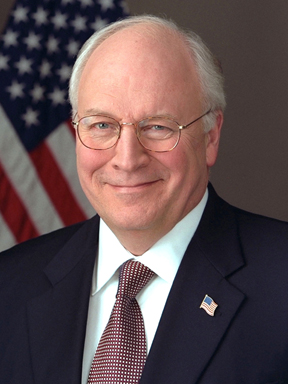
MEDIA ROOTS — In a 2004 campaign stop for George W. Bush, former vice president and war criminal Dick Cheney was asked what he thought about same sex couples. He responded with the following:
“Lynne and I have a gay daughter, so it’s an issue our family is very familiar with….With the respect to the question of relationships, my general view is freedom means freedom for everyone. … People ought to be free to enter into any kind of relationship they want to…..The question that comes up with the issue of marriage is what kind of official sanction or approval is going to be granted by government? Historically, that’s been a relationship that has been handled by the states. The states have made that fundamental decision of what constitutes a marriage.”
In 2004, Obama took a similar position when he was an Illinois state senator. However, his position changed when he began his presidential bid in 2007. Obama’s stance ‘evolved’ into a wishy-washy proclamation of the acceptance of same-sex couples while refraining from classifying it as traditional marriage. Over the years, Obama’s ‘faith’ played more of a factor.
“I’m not in favor of gay marriage. I’m in favor of civil unions.” –Obama, 2007
“I believe that marriage is the union between a man and a woman. I’m not somebody who promotes same-sex marriage.” –Obama, 2008
To the surprise of many, he just reversed his position to officially endorse same sex marriage in an ABC news interview—this time as sitting president. It is a curiously timed announcement, right at the beginning of his re-election campaign. Could it be in part an attempt to gain back some of the liberal base he lost with his first term continuation of Bush policies?
Some gay advocacy groups say that if they hadn’t put continuous pressure on the president about the issue, that nothing would have been accomplished, and Obama would continue to remain ‘unsure.’ If this is indeed the case, it points to the need for every activist group to continue putting pressure on Obama. Instead of taking a ‘hands off’ approach to ensure the safety of his second term and hoping that only then will he create change, they should be actively lobbying to him for their cause.
Other groups say that Obama simply hasn’t gone far enough and that leaving it up to the states is effectively a cop-out. States can still choose to ban gay marriage if they wish. Regardless, at Media Roots we can’t deny the positive symbolic power and sweeping effect this will have on the LGBT as well as homophobic sectors of the United States population.
Robbie Martin for Media Roots
***
MOTHER JONES — A president endorsing, even as a “personal position,” marriage equality for gays and lesbians is, as Vice President Joe Biden once said, a big fucking deal. But Obama has endorsed marriage equality federalism—not the notion that marriage for gays and lesbians is a fundamental right guaranteed by the Constitution that can never be taken away. Obama has adopted the same position that Vice President Dick Cheney did in 2004, when Cheney said he believed in marriage equality but that the states should be allowed to decide by a show of hands, as North Carolina did Tuesday, whether gays and lesbians have the same rights as everyone else.
Cheney served in an administration that was extremely hostile to gay rights. With the repeal of Don’t Ask Don’t Tell, the administration’s refusal to defend in court the federal ban on same-sex marriage, and Wednesday’s endorsement of same-sex marriage federalism, Obama is the most pro-LGBT rights president in US history. Nevertheless, the position he articulated today accepts the legitimacy of states like North Carolina subjecting the rights of gays and lesbians to a popular vote.
In other words, Obama has left room for more evolution.
MEDIA ROOTS —A pair of internet archivists who call themselves ‘Neuro Linguistic Programming’ have uploaded Part one out of forty US corporate media print publications from the immediate days and weeks following 9/11. The duo plans to post multiple full issues of Time and Newsweek as well as other timely magazines that are filled with blatant fearmongering and propaganda about terrorism.
Following 9/11, news media accelerated at an amazing rate, and most companies soon adopted internet versions of their paper or magazines. Before this was commonplace, many interesting pieces of information printed about that day most likely were never reprinted again–due to false information or just abandonment by the propagandists. As we know, many government narratives and unfounded claims about 9/11 were re-printed without any journalistic investigation.
Part One gives us a look at a ‘Terrorism Survival Guide,’ an actual print magazine which was distributed and sold at grocery stores around the country. We especially like the bio-terror section displaying little girl in a hazmat suit holding a gasmasked Barbie. We hope that these archivists continue this fascinating project, it could uncover aspects of the ‘War on Terror’ that most journalists and researchers have completely forgotten about. Above all, it reveals the extent of the conditioning the American people were subject to immediately after the traumatization of our nation.
Robbie Martin for Media Roots
***
Note: The ‘Terrorism Survivlal Guide’ slide show looks best at full screen by clicking the box in the right corner. Click play to start viewing the ‘Terrorism Survival Guide.’ Click the pause button to stop the slide show from progressing automatically.
MEDIA ROOTS —Media Roots contributor Chris Musgrave documented and edited inspiring and moving footage in the Downtown and Fruitvale areas of Oakland to capture the festive and optimistic spirit of engaged citizenry petitioning their government for a redress of grievances on May Day, May 1, 2012, under the universal banner of the Occupy Movement and in solidarity with immigrant and non-immigrant workers—under-, unemployed, employed, organised, or otherwise—and their need for improved wages and working conditions. The decision was, apparently, made by regional Occupy General Assemblies to stand in support with labour picket lines, rather than attempt to shut down the Golden Gate Bridge, reflecting an increasing working-class consciousness among the northern California Occupy Movement.
While the event was mostly peaceful, the isolated instances of property damage were magnified by most media outlets, including public media. Also, standards of criminalising demonstrators seemed to be worsening, as even chalk writing, an activity children on my street engage in everyday, was being criminalised. And, of course, once the sun set and many were unable to continue demonstrating, Oakland police, alongside multiple police agencies began firing tear gas and taking other repressive measures to stamp out remaining demonstrators.
Messina
***
***
UPDATE (4 MAY 2012 17:55 PDT):
KPFA/PACIFICA RADIO — “Again, May Day actions have begun around the world, around the nation, and in California [today May, 1, 2012]. And in a little bit we’ll be checking in to Los Angeles. But, of course, all eyes were also, today, on San Francisco and what was gonna happen with the Golden Gate Bridge. There were previous reports about trying to shut the bridge down over the weekend. The unions said they did not want that to happen. The union is in contract dispute and trying to get contract for their workers with the Golden Gate employers. But they said, at the last moment, not to shut down the Bridge, but instead to hold a major picket.
(c. 12:31) “Apparently, or reportedly, the Ferries have been shut down. And we have this report from Pacifica correspondent John Hamilton from the San Francisco Ferry Building.”
“[Brass Liberation Orchestra plays] As the Brass Liberation Orchestra provided a soundtrack, about a hundred striking Golden Gate Ferry workers and their supporters picketed at San Francisco’s iconic Ferry Building this morning [May, 2012]. Notably, absent was the usual hustle and bustle at the Ferry terminal where boats operated by the Golden Gate Bridge Highway and Transportation District.
“[Sounds of Demonstrators’ Call and Response Chanting] Get back! (Get Back!) Go away! (Go Away!) Fight Back! (Fight Back!)”
(c. 13:10) “All service on the Ferries, which normally shuttle thousands of commuters and tourists from Larkspur and Sausalito to and from San Francisco, has been shut down until 2:15 this afternoon [May 1, 2012] in response to the strike.
Michael Villeggiante (c. 13:30): “They’re on strike. They’re trying to negotiate their healthcare plan. And they’re not negotiating in good faith. The deal that they have on the table is outrageously high for the working-class persons. They’ve already given concessions. And that they’re in the middle of trying to get what they need. And this is just a show of solidarity with the workers that they need to come to the table and bargain and make the deal.”
John Hamilton (c. 13:57): “[Demonstrators and Picketers Chanting] The Inlandboatmen’s Union is just one of several unions comprising the Golden Gate Labor Coalition, whose workers have gone since July without a contract. The Golden Gate Bridge District wants to force workers to pay up to 8% of their salary to cover health benefits, which are now provided free of charge. Robert Irminger is Strike Captain of today’s picket line in San Francisco.”
Robert Irminger (c. 14:23): “The workers, that are on strike today are the terminal assistants who work in these terminals, they’re jobs are up for elimination. The Bridge District last year eliminated Ticket Sellers, which has created mass confusion for, particularly, tourists trying to buy tickets from machines. And now they’re trying to do the same with the people in the terminal, who help maintain the terminal and also answer the questions for the tourists. So, that is the immediate reason we have a strike. And, of course, when those brothers put up a picket line, the other bargaining units on the Ferry boats as well as the captains belong to the Marine Engineers’ Beneficial Association wouldn’t cross those picket lines.”
John Hamilton (c. 15:05): “The IBU and its sister unions had initially planned an informational picket this May Day at the Golden Gate Bridge, but shifted the pickets to Ferry terminals with today’s strike. The Golden Gate Labor Coalition convinced members of the Occupy Movement to call off plans to shut down the Golden Gate Bridge and to, instead, join picket lines. Clarence Thomas is a Member and former Officer with ILWU Local 10, representing longshore and warehouse workers in the [S.F.] Bay Area. He’s also active in the Occupy Oakland Movement.”
Clarence Thomas (c. 15:34): “It’s very, very important that we take these actions today, International Workers’ Day, because this is the day, that celebrates the struggle for the eight-hour workday in this country. It’s also a day, that celebrates worker independence. Workers need to be independent. They need to be able to organise, mobilise in their own name. And they need to be able to use direct action and general strike in order to gain victory.”
John Hamilton (c. 16:00): “Now, the Occupy Movement, which you’ve been a part of in the Bay Area, had initially called to shut down the Golden Gate Bridge today. And then it changed its plans to join an informational picket when requested by the union coalition representing all the Golden Gate Bridge workers. And then that call was since changed to here.
“I do know that there was some frustration within the Occupy Movement that the large signature action was no longer going to occur today. Your thoughts on that dynamic.”
Clarence Thomas (c. 16:25): “Well, I’m like you. I just found out that there was not going to be an action on the Golden Gate Bridge last night. I don’t want to speculate, as to why that happened. But I do want to say this: The whole idea for reclaiming the history and tradition of May Day has not come from the labour bureaucracy. It’s come from the rank and file. And I would imagine that the rank and file was really the segment of the union that was really interested in taking this direct action at the Golden Gate Bridge. I would not imagine that the labour bureaucracy would have been in favour of that. And I say that because historically there’s been a great deal of influence of the Democrat Party over labour. And I believe that when we talk about taking this kind of action, this kind of direct action, it’s coming from the rank and file because the rank and file is getting pretty tired of what’s going on with labour.
(c. 17:20) “Labour in the private sector is only represented by 7% of the workforce. That’s the lowest since 1900. So, the rank and file wants to see much more direct action.The rank and file wants to see strikes when appropriate. And, as a matter of fact, that is the reason the California Nurse’s Association are going out [to strike]—4,500 nurses at nine different Sutter hospitals are going out on strike. And they will be out on strike for five days.
“So, I think that sort of like gives you some indication of what’s going on in the labour movement, in my opinion. I’m not speaking for the [ILWU] Local [10]. These are my own thoughts.”
John Hamilton (c. 18:03): “Meanwhile, there are May Day actions across San Francisco today, including a 10am immigrants’ rights march underway in the Mission District and plans for a march to Occupy the Financial District and public sector workers, with SEIU Local 1021, plan a rally against downtown greed inside City Hall today until quote ‘they kick us out.’
“Reporting from Downtown San Francisco, I’m John Hamilton, Pacifica Radio, KPFA.”
Transcript by Felipe Messina for Media Roots and KPFA/Pacifica Radio
MEDIA ROOTS — Independent journalists have a passion to get information out to individuals who might not otherwise receive it and most often require supplementary sources of income to survive. Here at Media Roots, life’s no different.
My second line of work is operating a pedicab, a three-wheeler that helps shuttle tourists to various monuments, memorials, and museums in the nation’s capital. Pedicabs have been in operation here for over five years and boast a perfect safety record and a near-perfect customer satisfaction record. And while 38 police departments now claim jurisdiction within the District, only the U.S. Park Police find issue with the hard-working and generally light-hearted independents operating on the National Mall.
Most pedicabbers have other lines of work, like indy journalists, and are typically rather articulate and rational. The majority have never had previous issue with the law and are not looking to create any unnecessary trouble for law enforcement. But after only a few hours at the third-most popular tourist attraction in the United States, anyone can witness how the aggressors wear an official costume, while the pacifists cruise around accepting gratuities.
While peddling on Sunday, March 25, I found myself pulling up to the Smithsonian Natural History Museum at approximately 3:00 pm. Another pedicab appeared to have been abandoned in front of the museum. And nearby was a Park Police cruiser. In order to prevent the missing operator from having to pay the $195 to recover the cab from the impound lot, I briefly attempted to cart the empty cab back to our shop downtown.
Almost immediately, Officer Blake of the U.S. Park Police, the same officer whom had issued me a previous citation just weeks before (only to be dismissed by DC adjudication services), appeared and ordered me to not take the human-powered vehicle. I immediately complied and moved approximately 20 feet from the scene. Blake would follow me and continued to instruct me I couldn’t stop where I had – in front of a parked tour bus.
“Where would you like me to go?” I asked.
“Off the Mall,” he would reply with an unlawful attempt to exile me from over 300 acres of public property.
Unsure how to respond, I steered my pedicab to what appeared to be a legal parking spot a motor vehicle had just vacated. Again, the officer was hot on my trail.
“Give me your ID. You’re getting a ticket.” I complied with no hesitation. In order to maintain a level of accountability, I also pulled out my video camera to capture the scene.
“Put your camera away,” he continued.
“I don’t have to put my camera away.” After all, I am the organizer for DC CopBlock and quite familiar with the First Amendment.
“Put your hands behind your back.”
I had officially been placed under arrest, despite the fact that two other pedicabbers were seemingly ignored by officer Blake. I was in utter disbelief that not only was I getting arrested again (the first arrest in November, also a charge for resisting arrest, was eventually dismissed by federal prosecutors), but I was now getting arrested for a Constitutionally-protected act.
As the handcuffs were aggressively placed on my already-sore wrists, I became dizzy and uncertain about the officers’ intentions. They screamed orders at me, even though I was not talking back nor were there any loud noises nearby. A tourist and his son a few feet away were visibly traumatized by the incident with the younger crying and his father yelling at the police for their blatant display of excessive force.
“Stop resisting,” Officer Hiatt continued to yell at me, even though he was close enough to kiss me.
“I’m not resisting,” I calmly replied, uncertain what else to say.
The officer then slammed me down to the gravel. Because I was already cuffed, I couldn’t break my fall and ended up landing face-first. The fall knocked me out for a minute and the trauma to my shoulder is still present to this day. But the emotional damage of a tyrannical police force, operating without regard to the law or morality might take years to recover from.
Oskar Mosco is a regular contributor for Media Roots
***
TBD — Two Park Police officers bend down to look at another groaning black-haired pedicab operator, his face against the grass and lying on his stomach on the National Mall. They talk into their radio. On the street is a little green pedicab, abandoned. One officer fastens handcuffs on the young man, a manager at National Pedicabs.
This pedicab operator calls himself Oskar Mosco and is the same one who was arrested last fall and formed the D.C. Pedicab Operators’ Association to advocate for operators amid the evolving regulations and allegations of harassment that have come up in the last year. He was last arrested in November, but the case was dismissed earlier this year. The National Park Service controls the pedicab territory of the National Mall, and Park Police enforce the rules. Yet the NPS is still developing its formal pedicab regulations, which will apparently mirror those the District Department of Transportation released last year. The Park Police note that D.C. traffic regulations apply, however, and regularly write tickets to the region’s pedicabbers.
Mosco attempts to ask what orders he disobeyed.
“We are no longer discussing this,” the Park Police officer tells him. “You are under arrest.”
The two officers pull Mosco to his feet and escort him to a police car, in which a second pedicab operator sits, as Mosco shouts that he was arrested for videotaping the police. “You should not get arrested for videotaping a police officer!” Mosco yelled to onlookers in front of the Natural History Museum. “This is a free country, not a police state!”
Pedicabs are a human-powered transportation option that fill a unique demand in an increasingly petroleum-dependent society. They have proven to be safe and fun in areas that demand a variety of transportation options. The very survival of America’s emerging pedicab industry depend on a population that is informed, and concerned, with the what else can be possible. Those interested in following the development of American pedicab culture can follow the page Everything Pedicab.
MEDIA ROOTS — Many well educated and politically aware people in the United States would like to believe that the so-called ‘War On Terror,’ a false war against a tactic, will have no effect on their personal lives. As long as it’s not affecting you, it’s not a problem, right? Well, the problem is that many people who have chosen to lead politically active lifestyles have encountered, on a regular basis, the totalitarian weight of the ‘War On Terror,’ not because they are overly sensitive civil libertarians, but because they are being targeted specifically on U.S. soil for their political activism. Political documentary filmmaker Laura Poitras is one such individual.
Written by Robbie Martin
***
SALON — [Poitras’ next film] will examine the way in which The War on Terror has been imported onto U.S. soil, with a focus on the U.S. Government’s increasing powers of domestic surveillance, its expanding covert domestic NSA activities (including construction of a massive new NSA facilityin Bluffdale, Utah), its attacks on whistleblowers, and the movement to foster government transparency and to safeguard Internet anonymity. In sum, Poitras produces some of the best, bravest and most important filmmaking and journalism of the past decade, often exposing truths that are adverse to U.S. government policy, concerning the most sensitive and consequential matters (a 2004 film she produced for PBS on gentrification of an Ohio town won the Peabody Award and was nominated for an Emmy).
But Poitras’ work has been hampered, and continues to be hampered, by the constant harassment, invasive searches, and intimidation tactics to which she is routinely subjected whenever she re-enters her own country. Since the 2006 release of “My Country, My Country,” Poitras has left and re-entered the U.S. roughly 40 times. Virtually every time during that six-year-period that she has returned to the U.S., her plane has been met by DHS agents who stand at the airplane door or tarmac and inspect the passports of every de-planing passenger until they find her (on the handful of occasions where they did not meet her at the plane, agents were called when she arrived at immigration). Each time, they detain her, and then interrogate her at length about where she went and with whom she met or spoke. They have exhibited a particular interest in finding out for whom she works.
She has had her laptop, camera and cellphone seized, and not returned for weeks, with the contents presumably copied. On several occasions, her reporter’s notebooks were seized and their contents copied, even as she objected that doing so would invade her journalist-source relationship. Her credit cards and receipts have been copied on numerous occasions. In many instances, DHS agents also detain and interrogate her in the foreign airport before her return, on one trip telling her that she would be barred from boarding her flight back home, only to let her board at the last minute. When she arrived at JFK Airport on Thanksgiving weekend of 2010, she was told by one DHS agent — after she asserted her privileges as a journalist to refuse to answer questions about the individuals with whom she met on her trip — that he “finds it very suspicious that you’re not willing to help your country by answering our questions.” They sometimes keep her detained for three to four hours (all while telling her that she will be released more quickly if she answers all their questions and consents to full searches).
Poitras is now forced to take extreme steps — ones that hamper her ability to do her work — to ensure that she can engage in her journalism and produce her films without the U.S. Government intruding into everything she is doing. She now avoids traveling with any electronic devices. She uses alternative methods to deliver the most sensitive parts of her work — raw film and interview notes — to secure locations. She spends substantial time and resources protecting her computers with encryption and password defenses. Especially when she is in the U.S., she avoids talking on the phone about her work, particularly to sources. And she simply will not edit her films at her home out of fear — obviously well-grounded — that government agents will attempt to search and seize the raw footage.



 MEDIA ROOTS — In a 2004 campaign stop for George W. Bush, former vice president and war criminal Dick Cheney was asked what he thought about same sex couples. He responded with the following:
.jpg) MEDIA ROOTS — A pair of internet archivists who call themselves ‘Neuro Linguistic Programming’ have uploaded Part one out of forty US corporate media print publications from the immediate days and weeks following 9/11. The duo plans to post multiple full issues of Time and Newsweek as well as other timely magazines that are filled with blatant fearmongering and propaganda about terrorism.
MEDIA ROOTS — A pair of internet archivists who call themselves ‘Neuro Linguistic Programming’ have uploaded Part one out of forty US corporate media print publications from the immediate days and weeks following 9/11. The duo plans to post multiple full issues of Time and Newsweek as well as other timely magazines that are filled with blatant fearmongering and propaganda about terrorism.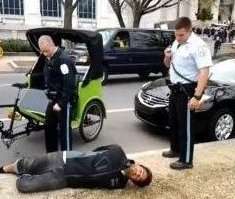 MEDIA ROOTS — Independent journalists have a passion to get information out to individuals who might not otherwise receive it and most often require supplementary sources of income to survive. Here at Media Roots, life’s no different.
 MEDIA ROOTS — Many well educated and politically aware people in the United States would like to believe that the so-called ‘War On Terror,’ a false war against a tactic, will have no effect on their personal lives. As long as it’s not affecting you, it’s not a problem, right? Well, the problem is that many people who have chosen to lead politically active lifestyles have encountered, on a regular basis, the totalitarian weight of the ‘War On Terror,’ not because they are overly sensitive civil libertarians, but because they are being targeted specifically on U.S. soil for their political activism. Political documentary filmmaker Laura Poitras is one such individual.