Pine Ridge: Where Despair Meets Hope

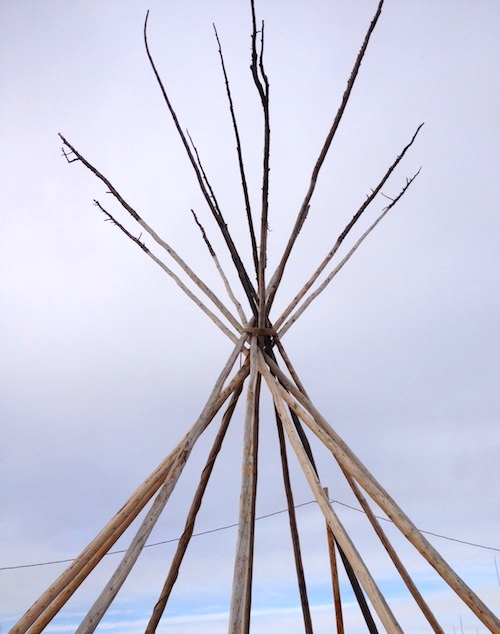
pineridgeteepeePine Ridge, South Dakota, is the eighth largest Native American reservation in the U.S. and is home to the Oglala Sioux, one of the seven subtribes of the Lakota people. With gorgeous rolling hills and untamed wilderness, it’s no wonder why the land is held so sacred.

Yet, as beautiful as it is, Pine Ridge has also been deemed one of capitalism’s ‘sacrifice zones,’ because of the price the area has paid for centuries of endless capitalist expansion and Western commercialization of natural resources.

Pine Ridge Reservation is the second poorest community in America, and its state of helplessness has led to mind boggling statistics that are more in line with third world countries than the richest nation on earth – there’s an unemployment and alcoholism rate of around eighty percent, an annual per capita income of four thousand dollars, eight times the rate of diabetes than the national average and three times the rate of infant mortality.

Much of the despair among the indigenous population of North America could be attributed to having never recovered from the West’s utter evisceration of their culture, forced destruction of their people and mass genocide against their ancestors. It also doesn’t help that there is nothing for miles outside of the reservation, limiting job opportunities for Pine Ridge residents.

However, despite the multitude of problems facing a community that depends on federal funding to survive, many Sioux members have taken it upon themselves to empower the Lakota nation to a secure a brighter future. It was a honor to spend several days at Pine Ridge, and I left greatly humbled and inspired by the people I met.

Breaking the Set dedicated two episodes to shed light on the neglected plight of America’s indigenous population to cover the failure by the federal government to provide adequate social services, uphold centuries old treaties, and to allow the sovereignty of Native American communities to prosper.

Abby 

***

Breaking the Set sits down with Oglala Lakota Nation Tribal Council to discuss the poor state of the reservation and the optimism the elders have about the future. Yvonne “Tiny” DeCory, BEAR program founder and youth activist, talks about her efforts to fight the suicide epidemic at Pine Ridge.

Pine Ridge Reservation Part I: Where Despair Meets Hope

***

Breaking the Set talks to Treaty Council Elder, Floyd Looks For Buffalo Hand, about the mentality of the West and the basic principles the Lakota people live by. Henry Red Cloud, 5th generation descendant of Chief Red Cloud, discusses renewable energy and its future on the reservation, as well as ancient wisdom that needs to be applied to the modern world.

Pine Ridge Reservation Part II: From Broken Treaties To Future Sustainability

***

Photo by Abby Martin | @AbbyMartin

Art is a Reflection of the Soul – Abby Martin Speaks at the Zeitgeist Media Festival

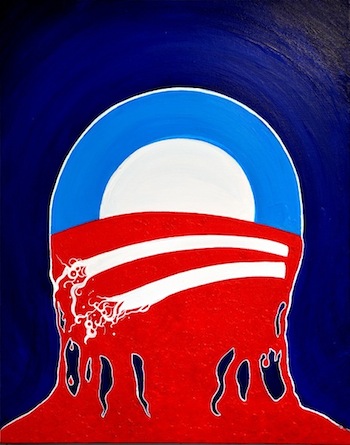
killinghopeArt is not just about catharsis, self-expression, and relaying powerful messages through symbolism – it also entails our imagination to mold art in its most natural form. By actively engaging with each other and harmonizing with the earth, we can cultivate a better path for future generations.

The Zeitgeist Media Festival is an annual event that bridges art and activism together in order to inspire and unify alternative communities. Being both an artist and activist myself, it was an honor to relay my political beliefs and artistic philosophy to such an open, energetic crowd.

Abby

***

Abby Martin at the 2013 Zeitgeist Media Festival 

http://zeitgeistmediafestival.org/

***

Omega Point: Abby Martin on the Artist’s Task

***

Follow me on twitter @AbbyMartin, check out my art at http://abbymartin.org/

BP’s PR Machine & Toxic Enterprise of Criminal Negligence

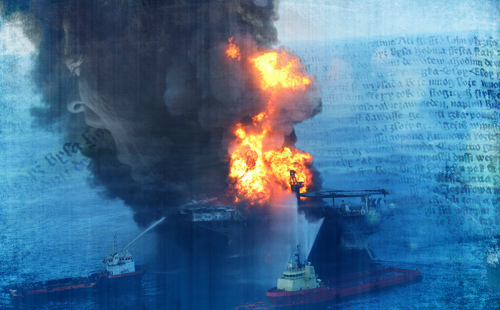
BPoilFlickrWiselyWovenThe BP Deepwater Horizon oil spill dumped 172 million gallons of crude oil into the Gulf of Mexico and caused a holocaust of sea creatures. As a result, tens of thousands of Gulf residents are now suffering – both emotionally due to a loss of livelihood and physically due to contamination.

Earlier this month, Gulf victims won a major battle against BP concerning the access to compensation funds. For over a year, the oil company had claimed that the settlement process was unfair, because individuals that suffered no harm were allegedly scamming the company out of billions of dollars. Thankfully, the 5th Circuit Court rejected the corporation’s appeal, but BP’s moral bankruptcy goes far beyond blocking compensation payouts.

Investigative journalist Dahr Jamail cites former BP officials who are disgusted with how the company has reneged on its pension promises to employees and warn Deepwater Horizon oil spill victims to expect the same kind of treatment.

Russell Stauffer, a former BP head of finance for the Gulf of Mexico, says that the company has cut hundreds of employee pensions by up to 75% from what they were originally promised back in 1987. Another former employee, Kirk Wardlaw, compared the pension situation to the plight of the Gulf oil spill victims, saying:

“Those depending on BP to do the right thing in the Gulf of Mexico should be aware of BP’s unfair and callous treatment of…employees, failure to adhere to their own Code of Conduct and the willingness to hide behind a standard of ‘we did what was technically legal.'”

It would be one thing if this was a struggling mom and pop business failing to compensate its employees and victims of its own gross incompetence – but this is a multinational money hoarding machine. The corporation rakes in billions of dollars per year and remains one of Pentagon’s premiere oil and gas providers.

Even more frustrating is how BP hasn’t felt prompted to step up its safety standards after causing one of the worst environmental crisis in US history. Only nine months ago, the Petroleum Safety Authority in Norway said that the lack of maintenance and management of BP’s oil platform in the North Sea lead to a leak of about 125 barrels of oil. This after the same agency had already discovered that the platform had inadequate fire and explosion protection which could have caused another major accident.

One would think that bad press would have cut into BP’s profits by now, but the company posted record profits last year of $20 billion in just the first quarter. Perhaps the millions of dollars the company is spending on PR to control the narrative is helping maintain its image of ‘responsibility.’

Since the disaster, investigative journalist Dahr Jamail has dedicated much of his fantastic journalistic efforts towards revealing the truth behind the crisis and pressuring to hold the guilty parties accountable. Jamail joined Breaking the Set to elucidate BP’s hostile tactics to silence dissent, from blocking scientists who are reporting on affected areas to hiring a company to employ online trolls to harass critics.

Abby Martin

***

Dahr Jamail on BTS: BP Pays PR Trolls to Threaten Online Critics

***

AM: Talk about the PR firm Ogilvy & Mather that BP hired to silence its enemies online.

DJ: They were hired primarily to run BP America Facebook page. That’s what they did in addition to basically doing the general PR effort for BP through the disaster; to manage the message, as they put it themselves, and they did this very effectively. For example, when Tony Hayward made that gaff of saying, ‘I want my life back,’ it was Ogilvy that was in charge of basically doing disaster control on that. So, they came in and started becoming BP apologists and making it appear as though, ‘Oh, it was taken out of context,’ on all of BP’s social media; BP’s Twitter feed, as well as BP’s America Facebook page.

AM: Let’s talk about specific examples of what was happening when people were expressing concerns on the Facebook page. 

DJ: Problems arose when people were using the page as it was set up. It was to give BP feedback, positive and negative—mostly negative—about how they were handling the oil spill. One woman goes by the alias ‘Marie’ because she feels she is under direct threat from people working for BP and Ogilvy, says that people were coming on the pages and harassing those who were making regular, critical comments against BP. Internet trolls is what they are referred to as, and they are people who go in cause disruption in chat rooms, and in comments sections and meeting places online. Marie started receiving bellicose, derogatory remarks, degrading remarks, and then this escalated to over-threats. Trolls posting pictures of side arms, and even arsenals of semi-automatic weapons. Even as much as contacting people at their workplaces and causing disruption there. This was happening not just to her but to several other people as well. Marie ended up collecting reams of data, screenshots, tracking down the Facebook profiles of these people, and then carrying it all the way to directly linking them to people already working directly for BP or Ogilvy. Marie believes, as does the law firm that she’s hired to investigate this further that BP and Ogilvy have hired these trolls directly to harass and silence critics of BP.

AM: Breakdown really quickly again what evidence is there to show that these trolls do indeed work for the PR firm or BP directly.

DJ: Marie found the Facebook profiles of the people making threats and went through their friends’ lists. She found out people who work for BP or Ogilvy directly, had interactions with these friends. She found in other instances some of the trolls that were friends and associates worked very closely now, as well as in the past, with people directly employed with BP.

AM: We know about the ‘sock puppet’ accounts that you can host up to ten different accounts and make it look like totally legitimate Facebook profiles, which could be the case here. Let’s talk about outside the Internet. Scientists have also been blocked from oil spill access zones to do their jobs and make proper assessments. Can you elaborate on that part of the story?

DJ: Right. There’s a woman I spoke with, she’s an Associate Professor of Entomology at Louisiana State University. Linda Hooper-Bui is her name. Dr. Hooper-Bui told me that early on in the spill she was going out and collecting data to survey how the ecology was going to be impacted. Specifically, insects and spiders. How are these populations in the marsh areas around the impact zone being impacted? She had started to collect data, and her studies are going well, and then she started running into a problem with the Sheriff’s departments, people working for the U.S. Coast Guard, as well as people working for Fish & Wildlife. People from these services would come out—all of them always accompanied by someone working directly for BP—and they were barring her from going back into these areas where she had previously collected data; barring her from going back in to continue her studies, despite the fact that she had permits issued from the relevant states where she was carrying out her research that granted her access into these areas.

Dr. Hooper-Bui took this up with them and said, ‘Look, I have the proper permits. I’m a scientist just trying to do my research for my major university here,’ they said, ‘Look, we can have you arrested if you if you try to push this matter.” So, she was literally barred from continuing that on. This prompted her out of frustration to write a rather searing op-ed for the New York Times on this matter criticizing BP for doing just what I mentioned, and being afraid of the data that she was producing, which was showing deleterious impacts on these insect and spider populations that she was studying from the oil spill. That same morning that she published this op-ed with the New York Times, she received a call from a Chief Financial Officer from BP, asking her how much money she would need to be quiet. This came in the form of, ‘How about we hire you and pay you whatever amount you want to ask for.’ She refused to do so and made very public statements about exactly what was happening. She was never contacted by that person again.  

AM: Is this sort of intimidation still going on to this day, or was this only in the immediate aftermath of the spill?

DJ: Well, the online intimidation, according to Marie, who continues to track these things, says that there was enough pressure applied through the Deputy Ombudsman of BP. A woman named Billie Garde. Garde then eventually took up the issue with BP. When the government accountability project got involved shortly after that, the Ombudsman finally replied to the government accountability project and Marie, and most of the trolling and harassment stopped. But she said there do still appear to be two of the trolls that were active from the beginning that still make a presence known on the BP America Facebook page. So, it has declined rather dramatically, but it does still continue at least to a certain extent. There’s also the harassment that goes on and the people targeted are people who have compensation claims against BP. For example, financial compensation claims. Several of these people around the Gulf Coast have talked to me about instances where they have received harassment from people, but they haven’t been able to directly tie them to BP itself.

AM: BP is fighting tooth and nail to not provide those compensation claims. We’ll get into that a little bit later. It seems counterproductive for a ‘public relations’ firm. It’s the opposite of what they should be doing, which is galvanizing support for the company. What’s different about what BP’s doing? If you’re a giant corporation and you have the money, I feel like a lot of people would engage in these kind of tactics. What’s different about this?

DJ: Clearly they have enough money—hundreds of millions to be exact—and enough resources at their disposal that they felt running a big enough spin campaign the day after the oil spill of non-stop TV, newspaper ads, radio ads would be enough to convince everybody that things are better than they really are. Another instance I outline is Steven Marino. Marino worked for Ogilvy, the PR firm that convinced BP to set up the BP America Facebook page and then let them run it, and he gave a very interesting talk at University of Texas-Austin exactly two years after the spill. Almost to the day. Marino spoke to a class of business students about the PR machine that BP ran. He was very specific about the types of things that they would do. He gave the example of the BP TV commercial where we see an African-American woman named ‘Iris’ who claims to be from New Orleans. She appears to be working for BP and she’s standing there with a BP shirt on and says, ‘I’m from New Orleans. I’m here with BP, and we’re not going to leave until we make things right.’ Marino said that they would run these ads, track the immediate impact of them via Facebook and Twitter, gauge audience response, recut the ads based on that response, and run them again immediately in order to, quote unquote, “target the constituents more effectively.” This was the insidious and precise level that they were functioning on, and continue to function on today.

AM: Dahr, you’ve been investigating the Gulf since the Deepwater Horizon oil spill in 2010. As you just mentioned, if we watch the BP commercials, it’s a birdwatchers paradise. ‘The Gulf’s fine! Come on down! Eat the seafood! It’s all good!’ Can you talk about the reality on the ground as it stands today?

DJ: This is really a silent disaster. Silent, not because it’s not happening, but because of, the media and government silence that surrounds what’s going on. First and most obvious, there’s been dramatic ongoing impact on the ecosystem. For example, just this year from March to August, three million pounds of oil debris washed up on the shores of the state of Louisiana. That is twice the amount in the same time period for last year. Every time there’s a storm, when there’s seasons changing, there’s just this constant barrage of oil debris washing up not just in Louisiana, but in Alabama, Mississippi and Florida as well. There are pictures widely available as evidence, today.

As a result, we see a fishing industry that is in crisis. I’ve talked to fisherman during my last visit and they’re saying, ‘Look, one of the problems we’re seeing is there’s no babies. We’re not seeing baby fish. We’re not seeing baby crabs. We’re not seeing baby shrimp.’ So, what we’re worried about is while we’re still catching fish and fish numbers are declining slightly, there’s still no new fish coming into replace what we’re catching. That’s very distressing to them, particularly considering that we’re about three and a half years past the origin of the disaster. We have to remember that in the wake of Exxon Valdez in 1989, in Alaska, it took four years for the herring population to collapse. We need to keep that in context. That’s why this is one of the big issues going on down in the Gulf. People are obviously concerned about.

AM: We’re not going to see the real effects for generations. This is a whole ecosystem that’s connected to a lot of different things, Dahr. Then there’s Corexit, the highly toxic dispersant that BP sprayed all over the surface of the water to make it look like there was less oil. Who knows what that’s doing? Let’s talk really quickly since we are almost out of time about the state of compensation claims in the Gulf. BP originally predicted total payouts to be around eight billion dollars, and they’ve surpassed that. But do you think that they’ve been punished enough? As we know, BP was still one of the main oil and gas providers for the Pentagon. Did the government do enough to punish this corporation?

DJ: Absolutely not. They’ve been very tight on paying out compensation claims. They’ve paid out only a few. A handful of health related compensation claims. None for psychological damage, even though there’s a mess—another silent disaster down there. There’s a massive amount of psychological trauma, PTSD, alcoholism and drug abuse happening because of economic distress of people. The fishing industry is in a state of collapse and problems related to that. They’ve not paid out one compensation claim dealing with any of that, and they’ve taken a defensive tactic with the ongoing federal trial in New Orleans, saying, ‘Well, we’re being taken advantage of. People are filing too many false claims.’ So, they’re doing everything they can to effectively weasel out of paying compensation that is due. The federal government is not helping the people that have these claims against BP. The people with the claims are saying, ‘Look, we are not getting any help.’

***

Follow @DahrJamail on twitter and read his work here.

Transcript by Juan Martinez, Photo by flickr user Wisely Woven

Moby: Make Information Free & Stop Punishing Piracy

MobyFlickrJustinWiseIt’s not often you find a Grammy Award-nominated musician on the front lines of political activism. One of those exceptions simply goes by the name Moby.

The L.A. based electronic musician spends every iota of his free time making it count. When he’s not making music, he’s promoting music therapy as a board member of the Institute for Music and Neurologic Function.

He’s also taken Washington to bat, by testifying on the Hill about Net Neutrality and standing up to the ever powerful Recording Industry Association of America or the RIAA.

Recently Moby sat down with Abby Martin on Breaking the Set to discuss the problems with making piracy illegal, and why the freedom of information is so important in today’s digital age.

MR

***

Moby Breaks the Set on the Freedom of Information

***

AM: What is the corporate music industry’s biggest failure?

MOBY: I think one of the biggest failings is that music business and record companies have treated listeners terribly for a long time. Overcharging for CDs in an era of CDs, and punishing people for downloading music, and basically trying to make people feel guilty for listening to music. I just think it’s created a very sort of strange and very unhealthy climate around the release of music.

AM: You’ve also stood up to the Recording Industry Association of America and called for the group to be disbanded in 2009 for its two million dollar lawsuit against a mother who illegally downloaded music. What prompted you to go after the RIAA?

MOBY: The whole reason I make music—and maybe I’m stating the obvious—is because I love making music and I love the idea of people listening to the music that I’ve made. The idea of punishing the audience, even if they’re downloading music illegally, I don’t think and audience should be punished, nor should the RIAA take litigious action against soccer moms who are just downloading music because they want to listen to it. It seems very self-evident to me that if you’re trying to generate goodwill, suing the people who are ultimately patronizing your business is not the best way to go about that.

AM: Let’s talk about your new album “Innocents”. Why did you choose that name and how is it different from your previous work?

Moby: I’m going to try and not give a long-winded self-involved grad student answer, ‘cause I’m really good at long-winded, self-involved grad student answers…but when I was in college, I was a philosophy major and I’d just been obsessed with the simple question of: What does it mean to be human in the Universe that’s 15 billion years old? What significance do our lives have? And when I look at our collective response to the human condition, I see a lot of confusion, a lot of fear, a lot of sadness, and–in a strange way–a lot of innocence, ‘cause the truth is none of us really know what we’re doing. You know, we might put on a brave face when we go out in public, but at the end of the day we all get old, we all die, we’re all confused, and I feel like, collectively, even though at times we’re not necessarily doing the best things, we still have a quality of innocence to us and that’s what the title of the album comes from.

AM: And you’re also—this is really fascinating–you’re a board member for the Institute for Music and Neurologic Function, which studies the effects of music on the brain. Talk about this. What have you learned as part of that organization, and how can music be used in therapeutic ways?

MOBY: Well, it’s funny ‘cause I’ve dedicated my life to making music, and I always thought music was something I loved and was really fun, but I never thought it actually had anything beyond a very sort of frivolous utility. Dr. Oliver Sacks and Dr. Connie Tomaino are two amazing brain neuroscientists and they started this institute for Music and Neurologic Function. What they’ve seen is that music is a remarkably powerful healing modality. When I talk about the sort of healing effects of music it almost sounds like I’m indulging in hyperbole, but it’s truly miraculous. People who are aphasiac, who’ve had strokes, when they listen to their favorite music from childhood, even if they’ve lost the ability to walk or speak, they can still dance and sing. I know that sounds like the most absurd claim, but Dr. Sacks and Dr. Tomaino have documented this and they’re going before Congress to try and get more money for music therapy because really it is phenomenal healing. The only problem is it’s hard to make money from it, so clearly the pharmaceutical companies aren’t too thrilled about a non-profit powerful healing modality.

AM: I know that you testified in front of Congress in 2006 about Net neutrality. When are you going to get out there and testify about the music therapy?

MOBY: Hopefully soon. The funny thing about talking about music therapy is you don’t have to convince anyone of its power. All you have to do is say ask anyone how they respond to their favorite song. If you even right now think of your favorite song you could almost feel like a physiological and neurochemical change, and the truth is, it’s a real change. It promotes healing and it decreases stress hormones like norepinephrine, and adrenaline and cortisol, so in the future I think people will look at music not just as something fun, but as a really, really powerful healing modality.

AM: It’s also a revolutionary tool, which is why it’s such a travesty that it’s the first thing cut from public education; music and arts. I mentioned that you did testify in front of Congress about net neutrality. Let’s talk about that. What did you tell them back then, and are you worried about the current circuit court lawsuit that could entirely abolish the concept?

MOBY: Yeah. I was a little bit confused, because in 2006, and now, the Internet seems to be working fine the way it is. I don’t understand the idea of—to an extent and very broad terms—privatizing the Internet, when it’s this fantastic, egalitarian, granted chaotic, but democratic institution that serves everybody equally. So when you have these big corporations who want to get involved and try to monetize it and privatize it; I just don’t understand why they would mess around with something that works so flawlessly the way it is.

AM: How much do you think the music industry is a part of that push? I mean, we know that SOPA was obviously trying to implement a lot of seizure on net neutrality as well.

MOBY: In some ways I’m the wrong person to ask, because I love what I referred to as, the democratic chaos of the Internet. I love the fact that it is strangely self-regulating; it kind of polices itself, and I’ve also been a life-long member of the ACLU, so, I’m just a huge proponent of the free and uninhibited dissemination of information.

AM: I love that about the militant egalitarian method that the Internet started out as, and unfortunately we are seeing that going by the wayside. It’s really important that we cement that notion quick. Let’s talk about another thing that the ACLU is really big on, Chelsea Manning. You are also part of the I Am Chelsea Manning Video a few months back. Why is this case so important to you?

MOBY: It’s a tricky thing to talk about, because I’m a musician,  I live in L.A., so, if I worked for the NSA or had worked for the NSA, I might have a different perspective—but it seems like sometimes governments, including our own, are interested in restricting information, because it is actually sensitive and to disseminate it would be compromising. But other times governments almost restrict information either because it’s embarrassing or it’s just a knee jerk reaction. You know, this feeling like it’s their job to restrict access to information, and that’s why I thought the Chelsea Manning case was so important, because she was drawing attention to the seemingly arbitrary way in which the government was trying to restrict access to ostensibly classified information.

AM: It’s also a crime to over-classify. We see things just being classified just for the sake of classifying them. Of course, we know that no one was actually hurt by the release of those documents. What are your thoughts on other whistleblowers in the public spotlight right now, like, Edward Snowden?

MOBY: Again, it’s tricky because everything I say has to be qualified with the caveat that I am a college dropout, and I make music and I live in L.A., so, my opinions are vaguely informed at best. But I’m just a fan of openness and I can’t think of too many instances where airing on the side of openness has done harm. In fact, quite the opposite. We live in a culture where it’s becoming increasingly difficult for anyone to restrict access to information which, personally, I think is great. I’d much rather have a few instances where potentially sensitive information is released, but as a result you have so much information that the public benefit is released as well.

AM: You keep saying that your opinions are vaguely informed at best. You’d be shocked at how uninformed Americans are. I think it’s very important to voice your opinion because you wield a lot of influence in this industry, and it’s unfortunate that others don’t. Why do you think that not other musicians and entertainment people speak out about these issues?

MOBY: I think probably because they’re getting much better advice than I am, because what I’ve found is by being an opinionated loudmouth as I am, I do often times run the risk of alienating a lot of people. So, I think that a lot of musicians, actors, whomever, are getting good management-career advice, and their managers are saying, “Keep your opinions to yourself ‘cause you’ll sell more records.” I unfortunately never got that advice, and I was raised by progressive hippies who told me that if you have the ability to reach people and communicate, you might was well try and say something that has some value or some merit to it. Or at least try to do so.

AM: I agree with your parents, Moby. Let’s talk about veganism. You’re a vegan. You even released a book critiquing the modern meat industry. What lead you to the decision to practice veganism, and what are your biggest frustrations right now with factory farms?

MOBY: I’ve been a vegan now for 26 years, and an animal rights activist for about 30 years, and what informs my veganism and animal rights activism is pretty simple. I love animals and I don’t want to be involved in any process that contributes to their suffering. I guess looked at objectively death is inevitable, but suffering isn’t. I think that we have the ability to treat other creatures with respect and dignity and ameliorate their suffering, and I just wonder why we don’t make more of an effort to do so. Why collectively we’re comfortable to contributing to the suffering of—literally—tens of billions of creatures who are all incredibly sensitive. I think it was I think it was either Albert Schweitzer or Einstein said the questions isn’t ‘Do animals have an intellectual life?’, the question is ‘Do they have an emotional life?’, and anyone who’s ever been around animals knows full well animals have incredibly profound emotional lives, are incredibly sensitive, and I just feel like it’s incumbent upon me and hopefully the rest of us to sort of like decrease the amount of suffering we cause while we are alive.

AM: Right, and we’re so detached from the food that we eat and I think that if people really saw the suffering they would be absolutely horrified. The food industry has so much autonomy, so much political influence. I mean, just look at Monsanto alone. How could we ensure that the food we are eating is safe and not destructive to the environment and doesn’t contribute to the suffering of creatures?

MOBY: When we put out the movie “Gristle”, which is about factory farming, I was asked that question. What one thing could we do that would make factory farming either go away or become a lot better, and one thing would be end subsidies to meat production, ‘cause meat production—and I’m not even saying people shouldn’t eat meat–but I’m just saying the production of meat decimates the animals, it decimates the workers, it decimates the communities, and the end result is a product that causes diabetes, arteriosclerosis, heart disease, obesity, etcetera. So, just end all subsidies to it and let meat actually cost what it should cost. Truth is, without government subsidies, a pound of hamburger would cost around thirty dollars. And I have a feeling if you just let meat cost what it should cost, all of the sudden you see people eating a lot less meat.

AM: Very well put. Totally agree. Thank you so much for your input on that, and so much more. Moby, artist, activist; really appreciate you coming to the studio.

***

Transcript by Juan Martinez, Photo by Flickr User Justin Wise

How Opium is Keeping US in Afghanistan: CIA’s Shady History of Drug Trafficking

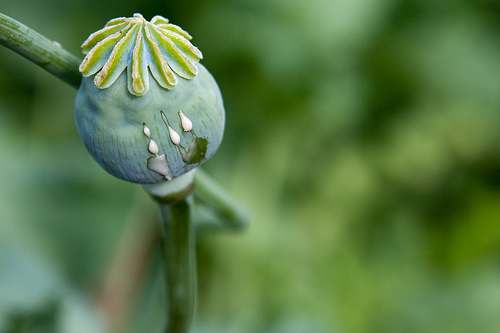
opiumByBeggsEven though present-day Afghanistan flies under the news radar, it remains to be the longest military quagmire in US history. Aside from troops still occupying the country, thousands of private contractors are on the ground that the Pentagon can’t even account for. Considering how Obama’s foreign policy strategy has been to replace ground troops with drone strikes, the administration’s logic behind continuing the occupation remains unclear.

War has always been about resources and control. Alongside the supposed surprise discovery of Afghanistan’s $1 trillion wealth of untapped minerals, the Taliban had successfully eradicated the opium crop in the Golden Crescent before the US invasion. Now, more than 90% of the world’s heroin comes from the war torn country.

As reported by Global Research:

“Immediately following the October 2001 invasion, opium markets were restored…By early 2002, the opium price (in dollars/kg) was almost 10 times higher than in 2000. In 2001, under the Taliban opiate production stood at 185 tons, increasing  to 3400 tons in 2002 under the US sponsored puppet regime of President Hamid Karzai.”

After more than twelve years of military occupation, Afghanistan’s opium trade isn’t just sustaining, it’s thriving more than ever before. According to a recent report from the UN Office on Drugs and Crime, 2013 saw opium production surge to record highs:

“The harvest this May resulted in 5,500 metric tons of opium, 49 percent higher than last year and more than the combined output of the rest of the world.”

Wow, that’s a lot of opium – and a lot of money being made. So, who is reaping the spoils?

***

How Opium Greed is Keeping US Troops in Afghanistan

Many people outright dismiss the notion of the CIA overseeing the trade of illegal drugs as crazy talk. However, history shows that it’s crazy not to entertain such a notion, especially during times of war profiteering.

In 2012, a Mexican government official from Juarez told Al Jazeera that the CIA and other international security forces “don’t fight drug traffickers” and that instead, the agency tries to “manage the drug trade.”

Back in the fifties, the CIA turned a blind eye to drug trafficking through the Golden Triangle while training Taiwanese troops against Communist China. As William Blum reports in Rogue State: 

“The CIA flew the drugs all over Southeast Asia, to sites where the opium was processed into heroin, and to trans-shipment points on the route to Western customers.”

These are far from isolated incidents. During the eighties, the CIA financially and logistically backed anti-communist contras in Nicaragua who also happened to be international drug traffickers.

Former Representative Ron Paul elaborated on the CIA’s notorious corruption when speaking to a group of students about Iran-Contra:

“[Drug trafficking] is a gold mine for people who want to raise money in the underground government in order to finance projects that they can’t get legitimately. It is very clear that the CIA has been very much involved with drug dealings. We saw [Iran-Contra] on television. They were hauling down weapons and drugs back.”

Surprisingly, mainstream publications still regard the Iran-Contra CIA drug trafficking scandal as a ‘conspiracy theory.’ I explain why it’s not on Breaking the Set:

***

Iran-Contra and the CIA’s Cocaine Trafficking

Circumstantial evidence aside, there is no conclusive proof that the CIA is physically running opium out of Afghanistan. However, it’s hard to believe that a region under full US military occupation – with guard posts and surveillance drones monitoring the mountains of Tora Bora – aren’t able to track supply routes of opium exported from the country’s various poppy farms (you know, the ones the US military are guarding).

In today’s globalized world of rule-for-profit, one can’t discount the role that multinational corporations play in US foreign policy decisions either. Not only have oil companies and private military contractors made a killing off the occupation, big pharmaceutical companies, which collectively lobby over 250 million dollars annually to Congress, need opium latex to manufacture drugs for this pill happy nation. As far as the political elite funneling the tainted funds, the recent HSBC bank scandal exposed how trillions of dollars in black market sales are brazenly being laundered offshore.

Multinational corporations are in it for the long haul, despite how low public support is for the war. A little mentioned strategic pact has already been signed that will allow a US troop presence to remain in Afghanistan until 2024.

The US’ goal of sustained warfare to oversee the world’s opium trade has been alleged by many, including foreign military officials. In 2009, a former commander in the Russian invasion of Afghanistan, General Mahmut Gareev, said to RT:

“Americans themselves admit that drugs are often transported out of Afghanistan on American planes. Drug trafficking in Afghanistan brings them about 50 billion dollars a year – which fully covers the expenses tied to keeping their troops there…[the US military doesn’t] have any planned military action to eliminate the [Taliban].” 

The unwinnable nature of the war becomes more apparent when learning that the US government was paying Taliban insurgents to protect supply routes and “switch sides” in an attempt to neutralize the insurgency. The logic of funding both sides of the war to “win” is too incomprehensible a concept to grasp. Clearly, this war is meant to be sustained.

Baseless rhetoric aside, here’s the hard, hypocritical truth: this government is fighting a multi-billion dollar ‘War on Drugs’ worldwide, resulting in thousands of deaths every year and millions of nonviolent drug users rotting away in prison. Yet, the US is at the very least protecting the largest source of the deadliest and most addictive drug on the planet. If not for the obvious, then why?

Written by Abby Martin for Media Roots 

Follow me @AbbyMartin

Photo by Flickr user Beggs, thanks to Sherwood Ross for the quotes

Page 28 of 55<<...2627282930...>>