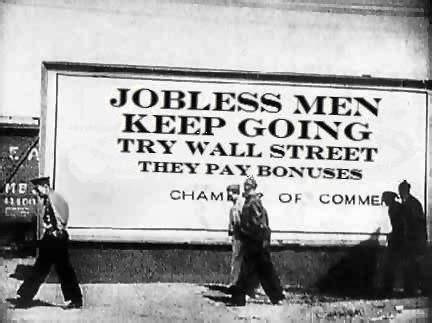
MR Original – The Well of Discontent

MEDIA ROOTS- “In yet another sign of the times, 85% of college graduates surveyed have reported that they will be moving home after they get their degrees: Stubbornly high unemployment – nearly 15% for those ages 20–24 – has made finding a job nearly impossible. And without a job there’s nowhere for these young adults to go but back to their old bedrooms, curfews and chore charts. Meet the boomerangers.

“This recession has hit young adults particularly hard,” according to Rich Morin, senior editor at the Pew Research Center in DC. So hard that a whopping 85% of college seniors planned to move back home with their parents after graduation last May according to a poll by Twentysomething Inc., a marketing and research firm based in Philadelphia. That rate has steadily risen from 67% in 2006.”Marc Slavo, Oct 17th

As a member of this generation, I feel confident in asserting that ten years ago, most college-bound teens were hoping for, if not expecting, some general circumstances by the benchmark age of thirty.

Most of us were nurtured in the belief that by obeying the law, staying in school and working hard, we would soon have our careers on track, make a decent living wage, be able to purchase a home and raise our families with a standard of living comparable to the middle class during the 1990s.

Instead, what we see today is 15% unemployment among 20-24 year-olds, and a substantial number of “underemployed”, working part-time jobs in retail or settling for far lower salaries than they were told to expect in their fields.

Young aspirants in the workforce have always had an uphill battle to fight, but no era in recent history has presented such a dark horizon. The Great Depression ended after a World War and accompanying industrial explosion; but in an America with most of its manufacturing jobs exported and factories closed, the greatest historical wealth machine has ground to a halt. This has left bartending, store-clerking and the like as some of the only options for many trying to find their place in the world.

The money isn’t coming in, it’s only going out, or circling the drain as it passes from one employee of a service “industry” to the next. If we add 150,000 jobs to the domestic economy every month until 2020 (double what we’ve been doing), we will only maintain the current unemployment rate, barring any further calamities. This is why things will undoubtedly get worse before they get better. However, there are socio-political repercussions to these ugly numbers that have begun to manifest themselves, and may crescendo in the near future. 

History shows that large numbers of educated, unemployed youth living in troubled nations often become the catalyst for revolution. In a decade that has seen more than two-thirds of American college graduates move back in with their parents in the face of a credit crunch, bleak jobs market and housing crisis, many in this generation see their American Dream washed out to sea. According to the Bureau of Labor Statistics, 16% of bartenders have at least a Bachelor’s degree, as do nearly 25% of amusement and recreation attendants. Half a million college graduates are working in customer service, 300,000 more as waiters. Not all of these people will be content with mediocrity forever.

While the 25 year-old Marketing major may wince at the thought of moving back in with Mom, he’ll maintain his good humor as he heads off to another shift at the nightclub. At 35, the same man, now stocking shelves at Wal-Mart to feed his child, won’t likely be singing “Que Sera” with the same zest.  Some of the frustration building in America’s youth will manifest itself politically. Arguably the first result of this political manifestation was the election of President Barack Obama in 2008, when he took in 66% of the under 30 vote. What did Obama promise during his campaign? Honest diplomacy, an end to the foreign wars, money for education, a revitalized economy, and the vague slogans of “hope” and “change”. Of course he was able to enthrall the pie-in-the-sky left, but his campaign’s ability to mobilize the long politically apathetic, disillusioned youth around these more practical issues was astounding.

Fewer than two years into this administration’s reign, and the lapdog Congress that was ushered in along with it, people are hopping mad. Economically, there are no signs of real improvement. The wars have not ended. College has not become more affordable, and even if it had, there are no jobs to take up once the degree is earned. Discontent is back in a big way, and we see many young people involved again, running against incumbents, carrying Rand and Ron Paul to celebrity status, backing dissent from all sides. Abused, deceived and growing desperate, the American people are sick of both major parties, as they ought to be, and are abandoning one while attempting to foment a revolution in the other.

This is the time to appeal to that discontent, because it arises from valid grievances. The causes of the current malaise run deep. There can be no more pandering, and no more half-measures against our problems. Time is just about up to deal with our fiscal, economic and civil crises, and if most of the people don’t know it, they feel it. The well of discontent will not stay closed- we have a real chance to awaken people to the issues and put them into context. The political opportunists are well-versed in the art of hijacking grassroots movements and offering false solutions. We can’t let them do it to us this time. This is why I want to speak for the truth, for the Constitution that protects us from the usurpation of life, liberty and property, and for the rights of individuals to choose their own destinies.

There was little mention in Obama’s rhetoric about the importance of adherence to the Constitution, individual responsibility, or grassroots local government; but these are the real solutions, born of our free tradition, that connect with voters. The Constitution in Article I section 8 lays forth simple and direct war powers that have been abused and perverted over the decades in order to bring us war. Diplomacy, as envisioned by George Washington, left America without “entangling alliances” and left us free to follow our best interests. Education and health care are now made more expensive and are complicated by government control. Our economy might still be the juggernaut it was in 1949, when we help more gold in our treasury than any other nation on earth, had we not been betrayed by suicidal trade agreements, excessive taxation and regulation, and the hijinks of the unconstitutional Federal Reserve. There is a window of opportunity to set the scales equal again by empowering the people, not with false promises, identity politics or government programs, but with knowledge and the courage that grows with individual freedom and personal responsibility.

If the free-thinking patriots of this country can bring that message rationally and even-handedly to mainstream voters, without cheesy taglines and Soviet-style propaganda posters, the fight might yet be ours to win. If the swelling ranks of America’s unfulfilled young generations can be awakened, they will prove a potent political force for whatever cause stirs them. Realistic goals, honest dialogue and courageous defense of our liberties and economic power could bring them out for the good.

Malcolm

I am a junior enlisted man in the US Army and serve as an aviation mechanic. I have never been deployed. My unit is currently slated for an Afghanistan deployment in the not-too-distant future, but this is subject to change. I care about our country’s future because, well, we live there, and because our Constitutional government is/was the pinnacle of human achievement in the centuries-old struggle between freedom and tyranny. We’re losing it, and that would be a crime against all those who labored and died for it, and against the billions of our children who will live with the consequences if we fail.

Photo by Mike Licht

MR Original – Light Up Your Grill

10/28/10

“When in the course of human events, it becomes necessary for one people to dissolve the political bands which have connected them with another, and to assume among the powers of the earth, the separate and equal station to which the laws of nature and of nature’s God entitle them, a decent respect to the opinions of mankind requires that they should declare the causes which impel them to the separation.

We hold these truths to be self-evident, that all men are created equal, that they are endowed by their Creator with certain unalienable rights, that among these are life, liberty, and the pursuit of happiness” – Action of Second Continental Congress, July 4, 1776 The Unanimous Declaration of the Thirteen United States of America

MEDIA ROOTS- We have major challenges ahead that are unlike anything the average American today can imagine- challenges that the next 20 years of presidential regimes can’t solve. There isn’t a chirp in the trees, and the stillness in the air is just enough to hear a storm rumbling on the horizon.

It’s time to confront the fact that we have forgotten what freedom is. Do we even remember what being free means?

Freedom is not licensing, it’s not a social security number, and it’s not welfare. It’s neither Medicaid nor Medicare. It is not the CPS, the IRS, the FDA, the Department of Indoctrination (Education), and certainly not bailouts. Freedom is not any of the 90+ taxes created that didn’t exist less than a hundred years ago.

Now let’s talk about what freedom is. It is your sheriff, your city council, and your place of worship – even if that place is simply around your dinner table with your family. It is failure when your ideas don’t work. It is helping others when their farm burns down. It is the right to contract freely, pay what you feel is fair, and charge what you know is right. It is to walk, drive, fly, or slide wherever your heart desires, and without a license. Of course with this freedom comes accountability to the equal rights of others.

Freedom is the feeling that you get when you look your family, friends, and neighbors in the eye, and know you can really trust each other, because of the time you spent together backing each other up and making things happen for yourselves. So how did we wind up here, so far from this?

We’ve been sold the idea of a massive social empire, rather than separate sovereign states. Washington is too out of touch with the problems of average Americans to make effective decisions with our money, and they are too far out of reach to be accountable to the taxpayers. This is why the founders designed mechanisms to prevent an insidious development of a coercive Empire into the founding documents. They knew Washington D.C. would inevitably seek to throne itself, promising heaven on earth if we agreed to sign on the dotted “taxation without representation” line.  The founders believed that you were naturally only subject to your need for food, water, shelter, defense, and personal accountability. 

How free are we without having control over the means of food production? How free can we be if the material essential to our existence come from China, er Wal-mart?  Even the currency in our monetary system is legally counterfeited – it subjects you to the will of a select few, making you dependent as any slave ever was.

Stalin’s 5 year plans; Mao’s “Great Leap Forward”; grand ideas of collectivization resulted in the death of 120 million farmers. Never before in history had so many locally self sufficient people found an early grave at the hands of so few. It was made possible by them subscribing to the myth of a utopia and voluntarily surrendering their means of production. Now we’ve done the same.

What techniques did Hitler, Stalin, and Mao implement to affect the totalitarianism described in our history books? If those at the top are to bring about a massive social state, how on earth do they affect the thinking of millions to agree with a group of central planners? 

In order to bypass free expression, societies indoctrinate their population. Step one in the United States is to subvert the first amendment, which was ratified to protect the ideas despised most. History has shown us time and time again that we must subject ourselves to a polarization of opinion. 

Woodrow Wilson campaigned to steer us clear of the war in Europe. At the same time, the German embassy had placed ads in papers throughout the US, including the New York Times, urging the US to steer clear of the dangerous waters surrounding Britain. Then the ammo laden ocean cruise-ship Lusitania sunk, and over one thousand civilian passengers died. Americans seethed while Germans state-side experienced persecution like never before. Lynching became common-place as Americans sent 100,000 sons to their deaths in Europe.

Franklin Delano Roosevelt’s campaign rhetoric assured America that, “If we face the choice – the choice of profit or peace – this nation will answer, this nation must answer. We choose peace.” 

After he took office, FDR immediately initiated a policy to starve the Japanese of oil. Admiral Richardson begged to bring his fleet in Hawaii back home to San Diego, claiming that they were undermanned, and over-exposed.  He was fired. Ten months later, 3,000 Americans are slaughtered at Pearl Harbor in “a day that will live in infamy,” 150,000 Japanese-Americans are jailed in internment camps, and American parents send 400,000 sons to die in the Second World War.

Is it adding up yet? War promotes and sensationalizes the myth that our individual safety is dependent upon a larger government. War centralizes people around a leader. The bigger the threat, the more they centralize. In order to convince a country to mobilize for such hell, governments must stifle polarizing opinions, and promise heaven will follow. 

The Constitution provides Washington the ability to act as a conduit for the states to rally together in the face of a threat too large for any one; the states have strength in numbers for national self-defense while maintaining freedom for their individuals. Why haven’t we managed to do this? How have we come to accept warrantless wiretappings, unreasonable searches, and incarcerations?

As Habeas Corpus and Posse Comitatus melt in the face of judicial review, we have to ask: what are we getting ready for? Why have we surrendered integral freedoms in the pursuit of defense? 

The answer is that we are not defending freedom. Instead, we’re picking a fight with an individual decision to experience terror, a war within our own minds.

Right now we have cartels over running the southwest, ranchers getting killed, Iraqi veteran sheriffs with bounties on their heads, and states being sued by the Federal government. Meanwhile you and your spouse are working your asses off, your kids are never home, your extended family is spread all over the globe, your television continuously lies to you, and you barely have time to mow the lawn you should be cultivating. No wonder we feel so powerless.

We let this happen. We’ve subjected ourselves to unconstitutional taxing, banking, currency, corporations, welfare programs, military growth, and imperial expansion. We’ve outsourced labor and material from tyrannical third world nations, and have bought into an education system that requires us to incur massive personal debt for a degree no one needs. Yet we’re looking around, confused? 

We have sold ourselves out!  We abandoned the belief in our own communities, the true source of our wealth, and traded it for the scraps of Washington’s printing press.  Are you going to throw your sons and daughters into the infernos of the next Great War based on promises from congressional critters?  Do you have any idea how far down this road we’ve gone? 

This country is about to drive off a cliff, and this is our last chance to put the brakes on before there is no avoiding the freefall into the jagged ravine below.  The wealthiest are jumping ship and dealing with the scraps they get as Washington taxes 70 plus percent of their transfers to the far-east. All of this is happening as you continue to struggle daily to make ends meet. Still think everything’s going to work itself out after these next elections? 

The time has passed to be able to affect change in our federal government. It’s over. Let all the unscrupulous history go. Forget about trying to understand “the issues”. You’ll never understand 2000 pages of unconstitutional healthcare reform. 

If you really want your life, your street, and your town to be better, it starts by understanding that you are the answer! Whoever is seated in the Presidential throne isn’t supposed to matter, but whoever holds your sheriff’s position does. Those who represent your state in the federal seat of government have failed you. The system is not working right now. On the other hand, your city council can work for you.  Every time you vote for a president you get screwed. You don’t need to understand everything to know things are fucked up. So what can “We the People” do about it? 

Rally. Find your neighbors. Have BBQs. Talk about things. Make it normal to have serious conversations.

I will get out there and say “no John, I’m not saying collectivism is bad. It’s just as natural as individualism, but there’s a time for both. No one argues against helping those who can’t help themselves. The real question is at what level do we collectivize to do so? For what reasons should we mobilize to deal with challenges? Shouldn’t we have the right to abstain from a collective effort if we don’t support? Whether we rally around Washington, our state capital, our town, or this grill, a government isn’t of the people through involuntary servitude.” 

Having a government of the people is not a spectator sport. It’s a contact sport. If you’re retired, get off the golf course. We need you. If you’ve lost your job, or can’t find one, then regroup with your family, and look for a leader.  If you can’t find one guess what? It’s you. I know…. scary, huh? The founders felt the same way. No one in their right mind should seek out public service. What I’m describing is exactly what happened in 1776, only they had something we don’t- the ability to survive locally. Chances are, you don’t have this ability. But you have something they didn’t, something they thought worth fighting for, worth dying for: The Constitution of the Republic of the United States of America. And they certainly paid for it.

So what can this document do for us legally? It can fix everything almost immediately. In the face of recent armed raids on organic food stores, illegal federal searches of political activists’ homes, unconstitutional firearms regulations, taxes levied for enumerated powers, random IRS audits, we can re-assume the state sovereignty that is articulated in the 10th Amendment, and we can reclaim the natural rights implied by the 9th Amendment by demanding that your sheriff, your city council, and your town justice serve you by keeping their word to be American and to follow the Constitution!

If you don’t care about your natural rights, your local sovereignty, and the radically liberating ideas upon which our Republic was founded, then clearly America is over. However if you do care, and haven’t learned what these documents can do for you and your family, it’s less than 20 pages long – read it while it’s still here. You will quickly see how these ideas have led us to be the most industrious, most innovative, most charitable culture in human history since July 4th, 1776 – in spite of the constant attacks on our civil liberties from within since day one.  This has been a 234 year civil rights revolution, and for it to survive and thrive it must be firmly planted in a fertile mind, a mind that truly believes in itself.  Please spend time with your wonderful neighbors around the grill, peacefully rally for sovereignty, and find the answers to heaven on earth closer to home.

“I, state your name, do solemnly swear that I will support and defend the Constitution of the United States against all enemies, foreign and domestic; that I will bear true faith and allegiance to the same; and that I will obey the orders of the President of the United States and the orders of the officers appointed over me, according to regulations and the Uniform Code of Military Justice; So help me God.”

“Oath of enlistment into the United States Armed Forces,” Title 10, US Code; Act of 5 May 1960 replacing the wording first adopted in 1789, with amendment effective 5 October 1962

“I, state your name, hereby declare, on oath, that I absolutely and entirely renounce and abjure all allegiance and fidelity to any foreign prince, potentate, state, or sovereignty of whom or which I have heretofore been a subject or citizen; that I will support and defend the Constitution and laws of the United States of America against all enemies, foreign and domestic; that I will bear true faith and allegiance to the same; that I will bear arms on behalf of the United States when required by the law; that I will perform noncombatant service in the Armed Forces of the United States when required by the law; that I will perform work of national importance under civilian direction when required by the law; and that I take this obligation freely without any mental reservation or purpose of evasion; so help me God.”

“Oath of Allegiance,” 8 C.F.R. Part 337 (2008), taken by all immigrants who wish to become United States citizens

Yossarian.

Photo by Beverly & Pack

MR Original – Marriage: Find Your Own Meaning

MEDIA ROOTS- When my fiancé proposed two years ago, it took until the euphoria of the engagement had passed to realize that I had never fully developed my own thoughts about marriage.

As many people do, I accepted marriage as if it were as fundamental to life’s trajectory as birth or death- without ever really questioning if, or why, I wanted it.

Realizing that I had never critically examined the meaning of entering into a lifelong monogamous commitment to someone, I set out to discover what it means for my fiancé and I. What resulted was a personal journey that I had not seen coming.      

Raised in the era of booming divorce rates, I know plenty of people who say they will never marry. Some believe that true love is a farce or that monogamous dedication to one person for eternity is a recipe for a life built on lies and fading happiness. But as a deeply passionate romantic myself, I always believed in being swept off my feet into an all-absorbing vortex of everlasting, heart-racing love. What I did not initially understand is that my view of marriage was on the opposite end of the same simplified spectrum as those who reject it. Both perceptions are fed by cultural stereotypes – one of a fated fairy-tale love, and the other of a bachelor’s freedom lost to a ball and chain. 

The significance of an eternal union and the commitment it entails are simplified through and through in our society, crafting expectations that can be destructive to the relationship and family. The media, in the form of television, movies and tabloids, sensationalizes relationships to provide the most possible drama, ultimately painting black and white over the dynamics of marriage and reinforcing one extreme over the other – either a tumultuous love broken, or a star-crossed love sustained.  In family and religious contexts marriage is often portrayed as an end to abstinence, the fulfillment of a cultural expectation, or the means to a healthy family.   

Rarely is it explained to people growing up that marriage is different for everyone. Perhaps such a conversation seems like stating the obvious because, of course, marital outcomes are different. Yet marriage is often regarded as something that couples succeed or fail at, as if the factors and dynamics are the same for every pair. Also, rarely is it explained that this eternal and legal union serves different purposes and meanings for different people. The consequence of simplifying something that can take various forms is that people with different expectations and understandings of what marriage is, commit to it without consideration of what it means in very real, personal and practical terms.   


My fiancé is an exceptional person who embodies everything I want and need. There was never a doubt that the connection we share is unique and our ability to communicate and be real with each other, enviable. Yet, I was unclear about what it personally meant to marry someone. We had planned for a long engagement and in that time my relentlessly critical and questioning mind went to work diving into thoughts I had never before considered.  What would that kind of commitment be like for us, and how would we maintain it despite the challenges that repeatedly arise in life and relationships? How do we keep our relationship that we encounter every day from growing old? Is it possible to stay in sync with another person forever? The answers revealed themselves clearly over time; however, a couple trains of thought gave me considerable pause.

Naturally, I spent significant time contemplating monogamy. As animals, monogamy strikes me as unnatural. Marriage is a life path created by culture, not nature. This was an important realization in my process because I could not justify marriage as the natural progression of a relationship in love. I had to dig deeper to powerfully strengthen my personal understanding of marriage.       

Part of that process entailed figuring out if, and why, I want to be a part of a unit for the rest of my life. Did I still want time to grow on my own and apart from another? When was the last time that I got to just focus on myself? Months of introspection revealed that my doubt was not a matter of commitment to my fiancé. It centered on our timing and what it meant for my independence as a young person in my early twenties. It hit me, that in a culture bent on rugged individualism and every-man-for-himself independence, how important other people are for our growth is left heavily under-emphasized. Instead of recognizing the powerful impetus for growth that a relationship provides, I had questioned if I would be weak for not spending an extended period of my life with only myself to depend on.

Then I remembered a quote that had strongly resonated with me. It is a quote that speaks to something that I hear so little of in discussions about marriage- the opportunity that an eternal union provides for spiritual growth through introspection and self-betterment.

“In former times, if people wanted to explore the deeper mysteries of life, they would often enter a monastery or hermitage far away from conventional family ties. For many of us today, however, intimate relationship has become the new wilderness that brings us face to face with our gods and demons. It is calling on us to free ourselves from old habits and blind spots, to develop a full range of our powers, sensitivities and depths as human beings- right in the middle of every day life.” (John Welwood, Love and Awakening, 1996)

Rediscovering this passage landed me in the certainty and personal truth I had been seeking. I discovered that for us, marriage is a journey and the love that led my fiancé and I to this life-long commitment is what will shape and evolve us.

I learned that giving your full love and true commitment to one person is one of the most incredible and challenging adventures a human can embark on. How two partners move through changes together, and independently, continually shapes the possibilities and mood of their shared future. We reveal sides of ourselves to our long term partners that few, if any, ever see. As a result we are forced to deal head on with the consequences, good and bad, of who we are – our behavior and actions.

It becomes impossible to deny that the way we live and the energy we emit are inextricably linked to the feelings and well being of others, especially those who we share in love with. A union that is sustained by happiness and deep fulfillment requires that we are loving to ourselves yet firm in the understanding that we each make mistakes and feel a need to be heard and respected.      

A lifelong commitment of love is not easy because love alone is not enough. It takes bravery to fully expose yourself to, and to fully receive, someone. It takes courage and compassion to admit the ‘demons’ inherent in all of us and to take on the challenge of transcending those weaknesses. But the beauty of this challenge is that it is made possible through love. Love does not trap or imprison people. Love, free of the selfish ego, liberates us from our pain, our ‘old habits and blind spots’ by giving us the space to discover and grow while also illuminating the beauty in life that allows life to continue and flourish. When you can feel that you are fully loved and accepted for all the positive and negative that you are, it becomes easier to let go of the ego that holds you back from bettering yourself as well as the community.                     

It struck me that perhaps so many marriages end in divorce because it is an institution that people take for granted- many people do not create their own meaning and understanding of marriage and instead base their expectations on the experiences of others. Just as no two people are the same, no two relationships are identical. What is created when two people come together is something built and shaped over time. No relationship just spontaneously flourishes, or combusts – relationships become what their parts create.

This means that each relationship has the potential to be only what the people in it are willing to make it through dedication, focused attention and effort. A happy union requires a shared willingness to compromise and grow; an ability to admit when we are wrong and the willingness to critically reflect on, and take responsibility for, ourselves. We must be humble, generous and compassionate, always remembering the love that is shared and its true intention. As I often tell my fiancé, “We are on the same team. We can’t forget that.”            

If two people who truly, selflessly love each other can embark on the journey of a committed life together, I believe the reward is the most fulfilling, deeply felt and eternally lasting partnership. Yet, whether or not a partnership enters into marriage should be something determined by the pair alone, for reasons of their very own. For my fiancé and I, marriage is the path we will take, making it our eternal promise to always fully love and support each other in the life we share, constantly striving to understand and love one another more deeply and completely so that we may emanate love’s peace and goodness into the world around us. 

Written by alicia, editor for Media Roots

Photo by Brenna Finn

MR Original – Journalistic Integrity


Laura NaderMEDIA ROOTS- While at UC Berkeley I took two anthropology courses taught by Dr. Laura Nader, which transformed my perspective and approach to the social and political issues that I intended to pursue as a journalist. In these classes I learned not only about studying other cultures, but about the vital importance of critically examining my own society, culture, beliefs and perceptions.

I was taught how to question the basic assumptions of my own, and of those around me. For instance, in the United States, the idea of “progress” commonly means expanding wealth, technological advancement, political power and perpetual abundance of good. But how are such ideas created and by whom? What are the implications of the thoughts and beliefs we hold? Are there alternatives, and do we seriously consider them?

Dr. Laura Nader, one of the world’s leading anthropologist of law, founded the study of controlling processes, or the mechanisms by which ideas become unquestioned assumptions or institutionalized belief systems that influence and persuade people to participate in their own manipulation. It is a field of analysis that spans across disciplines into every arena of life from the interpersonal realm to the professional, from business, to science and the state. The processes of control include, but are not limited to, law and conceptions of order, language, war, political power, trade, coercive persuasion, sex, and gender roles.

Studying methods of cultural control taught me that a journalist’s most important job is to make the connections that uncover these processes at play in our societies. Every day our lives are shaped by mechanisms of influence and control that we are often unaware of because the mainstream media fails to provide us with the information we, as citizens, need to adequately counteract such forces. Dr. Nader wrote that in the United States “a strong belief in free will often impedes understanding of how lives are changed by cultural practices that are external to the individual and intended to modify individual behavior, for example, through political propaganda or economic marketing.”

The mass media is society’s source of information and is a central means by which these behavior and perception altering practices permeate our lives. The media produces the material that shapes our judgments, actions, and expectations. This is illustrated in the use of the media to carry out psychological operations on the US population to boost support for the Iraq and Afghanistan wars; or as the forum for relentless advertising, even to young children, that promotes a culture based in the perception of ever expanding ‘needs,’ and the binds of debt.

Identifying such mechanisms of influence and control requires taking an analytical approach to the world around you, an approach that is ethnographic, historical and reflexive.  Ethnography reveals the embedded customs that make control difficult to detect. For instance, our culture’s reverence for science leads many to defer to scientific experts as the ultimate bearers of truth without considering the political context or funding of such scientific work. History is important because it connects us with the past that shapes and gives context to our present experience. The political, economic and social structures of today’s society cannot be productively discussed without first understanding the history of industrialization and the shift from regional to corporate capitalism. Finally, the reflexive approach enables us to be aware of culturally dominant or ideologically tainted, perceptions and analysis. For example, our cultural views on breast implants provide the illusion of free choice but are instead the product of indoctrination to a specific beauty ideology and social imperative.

Various independent and alternative media sources offer a diversity of information and viewpoints that illuminate critical ethnographic and historical reflections on society. Conversely, the corporate controlled mainstream media does not provide enough context to allow for the development of independent, free thought. When General Electric, the owner of NBC Universal, is also the producer of weapons and aircraft engines for military contracts, the danger is that the news coverage on its networks will simplify, give little attention to, or omit information critical of war efforts. The end result is that people are inhibited from thinking critically. Tom Fenton, former CBS correspondent, highlights the media’s control over public thought in his admission that,

        “Americans are too broadly under-informed to digest nuggets of information that seem to contradict what they know of the world… Instead, news channels prefer to feed    Americans a constant stream of simplified information, all of which fits what they already know. That way they don’t have to devote more airtime or newsprint space to explanations or further investigations… Politicians and the media have conspired to infantilize, to dumb down, the American public. At heart, politicians don’t believe that Americans can handle complex truths, and the news media, especially television news, basically agrees.”

Good journalism will not shy away from such complexity but work to understand it. The simplified information the mainstream media provides incessantly espouses the same set of basic principles as unquestionable truth; principles that further the status quo of a shattered society by promoting relentless excessive consumption, war as means to peace, and perpetual fear of the ‘other,’ whether its Arabs, immigrants or manifestations of “socialism.” This dogmatism, or adherence to a set of principals deemed by some authority as incontrovertibly true, is essential for any journalist or engaged citizen to reject. Dogmatism reinforces control by refusing to question its own basic assumptions and how they were created. There is no room for critical analysis, self-reflection or common sense in dogma’s narrow scope.

Refraining from dogmatism’s black and white framing of the world necessitates a humble recognition of the fact that the world is a complex set of systems in which different people operate daily bringing forward their own layered and diverse experience. Our knowledge and understanding of the world is always evolving whether about social issues, science, economics or politics. Believing that one set of principles holds the claim to ultimate truth is foolish and restricts a productive, open and thoughtful exchange of facts and ideas.

Bias, on the other hand, is essential to be aware of though impossible to fully eliminate because the human mind develops values and opinions that form the lenses through which we see the world. To minimize heavily biased reporting, journalists must carefully choose the language and tone they use to reiterate fact because language holds the tremendous power to influence. It is at the core of all manipulation. Just as words trigger thoughts and emotions, they can shape lasting impressions and judgments. As journalists we must be real and clear about the difference between a fact and our interpretation of it. Furthermore, we must be willing to ask questions and seek out information that challenges our bias, rather than avoiding or ignoring it.

Citizens and consumers are not passive actors. They must take into account who produces our knowledge, how, and to what benefit or interest. The few media corporations that control what is broadcast over the airwaves share many of the same members of their board of directors with a variety of other large corporations including banks, investment companies, oil companies, health care and pharmaceutical companies and technology companies. This is significant because the role of a board member is to act in the best interest of the company it directs, setting its policies and objectives. They are, after all, held responsible for the company’s performance.

With this conflict of interest in mind, the organization Fairness and Accuracy in Reporting (FAIR) has appropriately asked, would someone sitting on a media company’s board object to coverage that is damaging to another company that board member directs? As the highest management authority in a corporation, it is possible that the influential presence of specific board members would likely suffice to make media executives think twice about covering certain stories or reporting them honestly.

This is one example of important connections that the mainstream media doesn’t illuminate for its audience resulting in widespread ignorance among well-intentioned people of how the consolidation of the mainstream media greatly restricts, and otherwise discourages, independent and freethinking citizens. Only by seeking information from various sources, independent and mainstream, can the power dynamics and cultural controls in society be detected. Without taking an analytical approach emphasizing history and reflecting on the embedded customs and assumptions of society, we remain obliviously lost and misdirected due to manipulation by hidden patterns of control. Only by illuminating the different interests at play in the present, can we begin to see the full range of possibilities for the future.

Quite simply — information empowers. People will take different action based on what knowledge is made available to them. The media is a well-recognized mechanism of power and yet control through corporate media is a normalized, subtle means of control. Luckily, this is a pattern of control that we have the power to break from. As Noam Chomsky has said, it doesn’t require extraordinary skill or understanding to break the system of illusions and deceptions that conceals our understanding of reality. All it takes is the willingness to apply skepticism and the analytical skills that almost all people have.

Independent and alternative media sources provide an important break from the profit driven coverage of the mainstream media by giving voice to the interests and concerns of common people. These sources don’t hold the ultimate truth but many do add to the critical analysis of society required for understanding and reclaiming the mechanisms of control that shape our lives and the possibilities for our future. But the responsibility is not on journalists alone. Just as we must be honest in our bias and illuminate the connections and complexities of the world, it is the reciprocal job of citizens and consumers to critically think and engage with the world around them.

Written by Alicia

Photo of Laura Nader

Posted in Uncategorized | 1 Reply

MR Original – A Military Aviator

This is the first in a series of articles from a soldier’s perspective that I am writing for Media Roots.  These articles will provide an inside look at the military, war, the players involved, and my own personal take on it all.  While I’ll try not to overly indulge myself in biographical reverie, I feel it will be important for the reader to know a little about me.

As a young boy I remember visiting the Smithsonian Air & Space Museum and indoctrinating myself with aviation. I was in love with it. There is no clear place in my evolution where I can remember thinking that I really wanted to fly military aircraft, it was just always  there. Smithsonian imagery no doubt played a part. 

I wonder, in every person I meet doing what I do, what that thing was for them when they were young. But here we are now, young military pilots, the best of the best flying army gunships in the night.

My perspective of this experience, and the path leading up to it, has opened myself to questions I might not otherwise have entertained, and forced me to examine core beliefs and basic assumptions within myself. That has been a good thing, a very good thing – hastening thought processes within myself.

This and subsequent articles are my attempt to give the reader a different perspective, my take on what might actually be going on in the world. I don’t mean at any point to be presumptuous, condescending, or inconsiderate. In fact, I truly believe that your right to your personal beliefs and the freedom to express those beliefs is why I’m here. But do you really know what your beliefs are? Are they really your beliefs? What is in YOUR mind?

The war I want is a war of the minds – a mental jousting match followed by respect and a better understanding and openness to original ideas. My father taught me to begin with the assumption that you are, in fact brainwashed.  In other words, take everything you think you know and question it mightily, peeling the layers back.  Therefore, my opening question shall be: Who will wake up and step up to participate?  Will you truly exercise this innate human faculty? 

I am a warrior.  I swore to ‘defend and uphold the Constitution of the United States against all enemies foreign and domestic.’  My job is to kill, lose fellow soldiers, and to continue functioning exceptionally well physically and mentally, in spite of all that.  However, in doing this, I have come to believe there is no just war, only just defense.  That means that if I am defending my life, or the life of my nation, I am innocent.  Have you asked yourself if your country is conducting a war of defense?  Do you have the information required to decide if you support what your young country men and women are tasked to do? 

As an officer, and proud member of my unit in the United States Army, I fly gunship helicopters. Yes, the kind so many of you have seen shooting people to pieces – literally.  I am not here to openly question my chain of command.  That remains within the chain, just as your family’s business remains internal, or should at least. 

My purpose in writing is to invigorate the cause of freedom as the Constitution of the United States of America intended, a document and concept to which I am sworn and bound to defend and uphold.  I implore you to drop what you think you know about it and read it. Develop a fresh understanding of its purpose. Why was it written the way it was?  Then simply compare that doctrine to the actions of your current representation and system of laws. I want you to understand that freedom of expression is the first and most important one to consider, especially during  times of war.

I spent thirteen months flying over enemy in Iraq. I was a creature of the night – a young man who stares at people through a powerful infrared camera for six to ten hours a night, followed by head-bobbing a helicopter back to base as the sun was rising. Redbull was my friend. I helped give ground commanders the leverage they needed, tools that ensured the preservation of lives, not only of young American soldiers, but of innocent civilians as well. 

Before I became a military aviator, I was a totally different person. I experienced a typical middle class upbringing. Before twelve, family was everything, Christmas was magic, and my neighborhood was candy land.  JV and Varsity years pulled my attention to girls, grades, sports, and working random jobs to fill my gas tank, drink alcohol, and pay even more attention to girls. I was the typical middle class male, basically trying to have a good time and not kill myself while preparing for higher education.

My folks had limited financial means to support me in college.  Fortunately, I was able to deal with this burden without their help.  Clearly, the middle class is under financial attack when it comes to tuition. If you’re wealthy, obviously paying for school isn’t an issue in the first place but universities don’t pay their bills off the affluent few.  If you’re poor, you’ll get the financial assistance you need.  If you’re middle class, you’ll likely be crushed with six-figure debt per child.  In any event, I decided to finance my college education with running my own professional business.  It worked and it also set me apart from all the other students.

I figured out early on that college was a sham. The classes were kind of bullshit. I could do a lot at home, without any aid. Many students didn’t give a shit. Many professors didn’t either. No one knew why they were there.  If you spoke about any social issue in a way that was inconsistent with the crowd (and faculty), you were in trouble. Better to be outwardly politically correct no matter what you actually think. I mistakenly thought it was an environment that welcomed debate, flexing the grey matter, but in practice that wasn’t really true.  As I made money, connections, and experienced firsthand how the business world actually worked, I began looking at my schooling in a different and more cautious light.

I became by degree an engineer.  The co-op portion of my program put me into real-world industrial environments where often my stark “book-based” learning process came up short of the practical world’s real problems of an applied technology, business concerns and how one engineer might fit in and provide value.  School had not prepared me for the thought processes required for dealing with the reality of industry. One of the most valued engineers at the mill I worked at had no degree. He kept trying to retire but management needed his skills so badly they just kept offering him more money until he’d say okay to another few years. He was truly a legacy. While the co-op aspect of the program intended to give an appreciation of all of this, I was nonetheless amazed at  the level of indifference real business and industry had towards academia.

Ultimately, people are hired based on their true ability and skill.  All around me I see people putting their faith in a diluted form of education to which we now must subscribe to in order to be considered for any well-paying job. Kids pay a hundred thousand dollars and up only to end up slowly paying off outrageous debt working at Home Depot, Best Buy, TGI Fridays, or in their field using relatively little of what they studied with no creativity.  I began to see the whole system as an over-priced shake down of the middle class.  Why do I bring this up?

Our culture really believes in that diploma. So do the soldiers. Many young soldiers joined the military for college money. We are so entrenched with the idea that we need to shell out large sums of money in order to learn skill sets to survive and prosper in the economy that we will actually risk getting blown up to get that money!?  Ridiculous!

Despite my growing awareness of a system that seemed to punish the middle class, regulate speech through PC pressure, and propogate a cultural myth in which an expensive 4-year college experience was more important than anything else, I was still wistfully dreamed about being a military aviator.

9/11 did nothing to increase or decrease my desire to fly.  The desire just was.  I remember saying I wanted to do something for my country in response to the tragedy but was only a small part of me. I wanted the glory.  I wanted to do this thing I thought was heroic.  I sold my business, and when I was finally within weeks of leaving for flight school, my father told me that I was entering into something  dangerous, and that this decision could mean that in just a matter of a few years, I could very easily be dead.  He was right in the case of two friends.  And equally important, he said  I would likely take the lives of others.  He asked me if I really understood what that meant and if I thought the cause was just.

I was angry at him.  He was ex-Army, and his father had fought in WW2 and survived – with lasting physical and mental effects. But we took pride in his service. His older brother flew two tours in Nam and was highly decorated.  His uncle flew Air Force One under President Ford.  How could my father expound upon our family’s participation in the US military and then question my motives?  How could he allow me to watch every war movie ever made, and then not understand why I wanted to join?

I simply remarked back that I could die on the highway tomorrow, and that I wanted to do something for my country.  If 18 year olds were going to be risking their lives and dying, than I should help.  He basically backed me down until I admitted that I was joining more for the glory of being a military pilot, than for any of the altruistic reasons I was touting.  He was right and I was pissed, but I joined anyways. 

Not to spite him, but because I was so excited… to become an Army aviator!

Yossarian.

Photo by flickr user US Army