MEDIA ROOTS – Standing for “truth, justice, and the American way” just took a giant leap into the twenty-first century with Clark Kent leaving the Daily Planet newspaper. In next week’s issue, to be released by DC Comics, Clark is expected to stand up in front of staff and mourn how mainstream “journalism has given way to entertainment,” according to the comic’s writer Scott Lobdell. He continues to explain how the superhero’s alter ego will now “start speaking an unvarnished truth” possibly by creating an independent outlet similar to that of Drudge Report.
This could be a huge, albeit indirect, opportunity to support independent news outlets such as Media Roots. Or it could be just another way for the establishment to mislead the public into thinking comic books will become a new frontier for reliable information. A current example of how the corporate entertainment industry poses as a source for reliable news is The Daily Show,whose host is one of the twenty most influential media personalities now influencing this year’s presidential election.
Clark’s decision is still worthy of note in that a fictional superhero is acting on a crisis that is affecting the citizenry every day. This is not the first time in recent history that Superman has stood up for contemporary political issues. Just last year, he threatened to renounce his U.S. citizenship before the United Nations because of he was tired of his “actions being construed as instruments of U.S. policy.” While he didn’t actually renounce, the episode created heated discussion among both supporters and dissenters of America’s modern role in the global community.
MEDIA ROOTS — Jason Forrest‘s name used to be synonymous with the electronic music genre breakcore and with expert remixing and plunderphonics under his own name as well as the alias, “Donna Summer” (possibly to confuse unsuspecting Donna Summer fans in record stores). For the last decade, Forrest has run his own record label ‘Cock Rock Disco.’ He now resides in Germany and has founded, and now maintains, with the help of many volunteer workers, the net’s best curated internet video repository, Network Awesome.
Jason Forrest: “Network Awesome is a website that broadcasts six video programs a day. These programs can be collections of music based on a theme, or whole movies, or documentaries, or anything else. All the shows then go into an archive that’s organized by theme, type, style, etcetera. Or, in other words, we’re like a TV station, but online, free, and damn good.”
MR: “I heard of you in the form of ‘Donna Summer’ when I first visited New York. I asked the store clerk at Kim’s Video if they carried any really good local electronic music and she handed me a copy of your CD—”This Needs To Be Your Style.”
Jason Forrest: “Wow! That’s so cool to hear! I don’t think I ever really got any love from those guys before, so that feels nice!”
MR: “Since then you’ve been running a record label, Cock Rock Disco, and continuing with your own musical projects.
“Most recently, I have been seeing a lot about Network Awesome and watching it myself, without realizing it was ran by none other than Jason Forrest.
“How did Network Awesome start? Was it a gradual build or was there a lot of pre-planning involved?”
Jason Forrest: “I started thinking about what was to become Network Awesome back in the summer of 2010. After doing a lot of research on both broadcast TV Networks and also investigating a lot of online video sites (especially what works and what doesn’t work), I reached out to a friend, Greg Sadetsky, to develop the idea. Then, in a mad flurry, we built the basic version of the site in about five weeks and launched it on January 1st, 2011. For the first few months we were both doing a lot of other stuff, but around May of last year we started to really focus on the site. And since then it’s been one exciting thing after another!”
MR: “At first glance Network Awesome seems like a really sophisticated Youtube playlist; what makes it different than a playlist?”
Jason Forrest: “It’s more like a library filled with books and each book is made of lists. We currently have over 4,200 shows that extend in pretty much all areas of culture and entertainment.”
MR: “Was your history as a crate-digger/sample-sleuth valuable for scouring the internet for obscure content?”
Jason Forrest: “Great question, it actually didn’t dawn on me until a few months into the project that Network Awesome acts very much in the same way that my previous music did. But while we do play a lot of lesser-known media, I know that it is not our agenda at Network Awesome to be obscure.”
Jason Forrest: “Some were, like the Awesome Drummers show. But Network Awesome actually has something like 148 volunteers who work on the site. So, there’s so many ideas flying around that I can’t claim them all! Haha!”
MR: “You just answered one of my next questions. I imagine if you would do it yourself it would be a full-time job to find constant content. Any obstacles when having that much content coming in?”
Jason Forrest: “Network Awesome is getting to the point where we have so much great content that it’s become a problem to organize and present it efficiently to the viewer. We just made a major design update, which has made the site so much better to stumble upon great stuff, but it’s possible to improve still.”
MR: “With the introduction of high end consumer multimedia, Blueray and other media players and Apple TV that have access to Netflix, Vudu, Amazon, do you think there is a place for Network Awesome in this arena? A lot of these players come with Youtube built in, but the navigation to different videos is cumbersome.”
Jason Forrest: “‘Cumbersome‘ – haha! I think of Youtube as an unbelievable public database, and while their search functions are very good, it’s not an enjoyable experience. I think Network Awesome can be both compatible and competition to the sites you mentioned. And, if we continue to grow at this rate, we’ll also become a force for a better quality of content as well.”
MR: “By cumbersome, I was referring to the way wireless network-capable TVs and DVD players now commonly have a Youtube feature that requires a numerical remote control to search through it.
“It feels ‘half-hearted’ because it’s far easier to just search for a video on your computer with a alphabetical keyboard. If someone just simply had a ‘Network Awesome‘ button on this interface it would make the experience 100 times more enjoyable.
“Do you ever ponder the idea that Network Awesome is such a good concept, a big company may base a commercial product off of it?”
Jason Forrest: “That’s what we’re actively working towards, but we also have the belief that it’s possible to make a profitable company that also supports interesting content. I think the idea that advertisers are only interested in the broadest definition of the mass market is not really true anymore. We’re already starting to produce original content in collaboration with sponsors, so we feel there’s a lot of potential there!”
MR: “Network Awesome caused me to have a paradigm shift where I first saw the ideal use of ‘on demand’ content; in the right hands, it can be an extremely powerful cultural tool. Do you agree that Network Awesome, even though it doesn’t host new mainstream reality TV episodes (why would it), is one of the best curated and most complete ‘niche’ streaming video databases on the entire internet?
If you are too humble about the word ‘best,’ how would you describe it yourself?”
Jason Forrest: “It’s funny; even though I started Network Awesome, I don’t see it as an extension of my ego. So, I’m happy to tell people how great we are! Haha! If you take a look at the quality of what we show every day – and you compare it to the absolutely horrible state of much of broadcast TV and the many sites that focus exclusively on viral videos, then you might say we’re the best thing on the internet. I mean, I like it. Haha.”
MEDIA ROOTS- Kevin Martin is a songwriter based in San Diego, CA that identifies his music as ‘throwback pop’, combining his love of performance flair with vintage piano-pop stylings. His song ‘TV News’ was written as a result of his waking up to corporate media brainwashing.
Kevin Martin performs ‘TV News’ outside of the Civic Center at Occupy San Diego.
KM: Television had
become a part of my conscience– it told me what to think
and how to think it. When I was watching it the most, I felt completely
divided within myself. The moment I connected this inner division to my mass
media consumption, I wrote the song ‘TV news’.
The corporate media
surpressed its coverage of the Occupy Wall Street
movement for weeks, and when it did cover the mass protests it
either downplayed them or cast them in a negative light. I decided to perform ‘TV
News’ at Occupy San Diego and hope this video will help inspire others
to join the movement.
MEDIA ROOTS– I remember
singing Paul Revere with fifteen year old Giovanni Giusti as a freshman in our high
school art class.
Now I’m hearing his
band The Limousines get introduced on the radio in the same breath as the legendary
Beastie Boys.
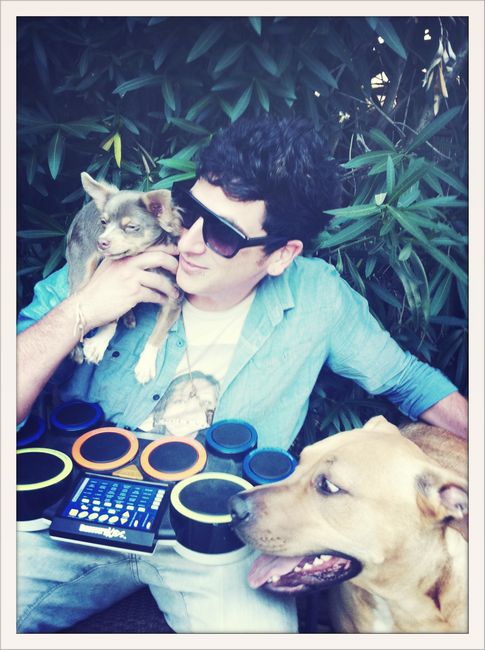
In school, I knew Giovanni as a witty, sarcastic, Italian kid who loved hip hop and
breakdancing. It’s through that lifestyle that he got into turn-tabling, where he
developed his passion for building, breaking down and reconstructing beats.
Gio studied
music at Expressions, a bay area music and visual arts college, where he
was able to master his engineering skills and perfect his sound. Under the
name Nozebleed, he released his first solo album called Heart Beats
Digital which consists of experimental hip hop beats and beautiful ethereal
melodies built upon hundreds of samples taken from him and others. The album is
a whimsical candy land for electronic music- it’s girly and fun, light hearted
yet multi-layered.
His second
release, Romantics of the Rhino, also embodies the imaginative style and playful
yet heart felt quality as Heart Beats, but Romantics contains a darker, more
passionate build up and feel. The album is most likely a reflection of his mind
state during its development and production. As an artist, Giovanni wears his
heart on his sleeve, and isn’t afraid to express his emotions or display heartbreak
through his work. He processes his life through music and also embraces it as his
therapy to overcome his personal struggles.
After
releasing Romantics, Gio once again decided to challenge himself by
tapping into the art of lyricism and writing with his third release– Apology
Accepted. Admittedly not gifted with natural singing abilities, he didn’t
hold back from adapting the emerging technological capabilities of autotune to
manipulate his voice to coincide with his fresh beats. It was a totally
different style for his fans, but he doesn’t regret the exploration into new creative
avenues, since it all has made him who he is today.
Giovanni’s
beats gained a lot of notoriety in different circles, including jumps on Adult
Swim and spots on numerous television shows. Once Eric Victorino of Strata
heard Gio’s music, he was drawn in. They started to collaborate their creations,
and the rest is history in the making.
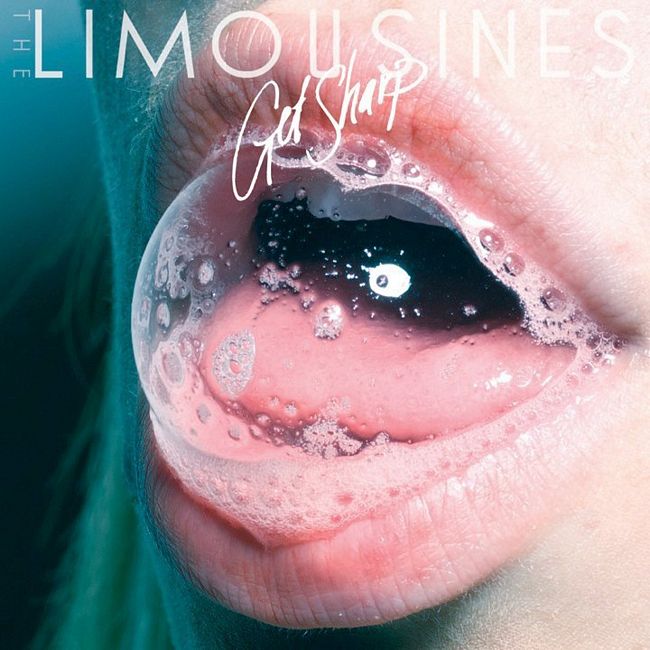
The Limousines’s
first full length album, Get Sharp, is slick and extremely catchy electronic pop– the kind that worms itself into your dreams and you wake
up singing the lyrics to.
Eric’s voice is strong
and melodic, and he carries Gio’s beautifully smooth yet complicated beats effortlessly.
The Limousines are gaining a ton of attention all over the world and they’re
lining up tour dates left and right. They already have two hit singles off the
album- ‘Very Busy People’, and ‘Internet Killed the Video Star’, and that’s just
the beginning.
Media Roots
recently sat down with Gioi for an exclusive interview about his music
and whirlwind journey as The Limousines.
***
MR: Who are some of your biggest musical
influences?
GG: My influences range from early jazz like Dave Brubeck and Wes Montgomery, Miles Davis, Al Green,
Van Morrison, to newer stuff like Bat For Lashes, Daft Punk, New Order, Friendly Fires, Yeasayer, Calvin Harris, Chromeo, Vampire Weekend, Phoenix, Lady Gaga, and Kanye West.
MR: How did you get into beat making?
GG: My buddy
Todd and I used to scratch on turntables all the time, and through doing that I
got more interested in the beats stuff, because I was scratching over the beats
and they were just more intriguing to me. I wanted to learn how to do that, so
I Googled it. Then I bought a MPC out of college and started just sampling
records and figuring it out.
MR: What was the musical transition for
you from mixing records to developing the beats of Heart Beats Digital and
Romantics of the Rhino?
GG: I was
doing hip hop stuff which was mostly sampling old records and chopping those
up, but with Heart Beats it was pivotal because I was incorporating synth sounds
over the samples and was creating new melodies and new music through that- like
I would find a key of a song through what I am sampling, but then I would build
it into something else. It was a really good learning experience for me.
MR: Did you get a lot of good
feedback from both those albums?
GG: Totally,
people still love it. Then I started to get into the more electro emo shit,
which I kinda laugh at now. But there are fads in music and you have to go
through them, you have to always be changing. It’s weird for me when an artist doesn’t
ever evolve their music.
MR: People have to respect the fact
that your talent is versatile. Apology Accepted was such a different sound for
you, was that you trying to evolve your style?
GG: Yea. I
think if I didn’t go through that phase I wouldn’t have the Limousines, because
the Limousines blends that style but it’s more serious. I wanted to do ridiculous,
poppy ass shit, just as another outlet. And I can’t sing which is why
I used autotune. You
should’ve heard me from my bedroom, my roommates would be like “Wow, Giovanni
is singing again and it’s terrible”- the dogs were barking and shit. But
seriously, it totally helped me with my music writing skills and chorus to
verses stuff.
MR: All your albums before have been
associated with love in their themes, it seems like you are pretty in touch
with your emotions and you aren’t afraid to put it out with your music. A lot of artists
make songs about love that are overplayed. But your music seems to take
electronic music into the route that Atmosphere was taking hip hop with God
Loves Ugly in the sense that you made it more playful, sexy and more relatable
to women.
GG: That’s
awesome.
MR: Sample wise, where do you find
most of your beats and sounds?
GG: I have
my own library of beats. I recorded a lot of sounds from my room and archived
them all into categories of synth and drum sounds– it’s a mess.
MR: Do you still work out of a studio
from your house?
GG: I have
my studio in my garage right now. I record Eric’s vocals with Todd from this
hip hop studio in Fremont called Street Symphony and we do stuff there, but I also
jump around from studio to studio. You don’t need expensive gear to make
something sound cool. I engineered a lot of the record too. It not what you
got, it’s how you use it.
MR: Damn straight. Were you a fan of
Strata before you met Eric?
GG: I honestly
had no idea who they were. I got introduced to Eric by a colleague who showed him
my Jay-Z remix album. Eric was going through the band bullshit. They were touring constantly
and barely breaking even every night. He wanted another outlet. So he’s like I
gotta make an album with this guy but it was hip hop, and I didn’t really know
what he wanted to do at first.
Then I heard
his music and I was like wow this guy’s lyrics are amazing and he can really
sing. So he hit me up on AIM and he created a Myspace page called “The Panic
Room”. We started working stuff out together. I showed him all the new experimental
music I was doing and he dug it. Then we would just start sending melodies back
and forth…
I met him in
a studio in Oakland for the first time to record Scrapbook EP. It was more down
tempo Postal Service, kind of softer stuff and now we have evolved into a crazy
poppy darker style. So ya, that’s the love story. We fell in love too.
MR: Tell me about the artwork on
Scrapbook.
GG: Scrapbook
EP is a little white 7’’ on vinyl. It’s really cool and the artwork is super
special. The cover of the album is a photo of my parents getting married on a
rooftop in Hawaii- the photo is really epic.
Each picture is from a different memory
and in every corner of the photos there are little notes scribbled about that
memory, like one of Eric and his brother hugging and looking at a blank
television. All of the songs represent time passing us by.
I grew up on
vinyl, my dad had a huge vinyl collection, and to hold your own music on vinyl
is really awesome.
MR:
There is a fuzzy quality produced by vinyl that is unmatched by anything
else. So how did you start gaining so much popularity as The Limousines? Was it
with the Scrapbook EP?
GG: We showed
it to Eric’s friend and he played the song New Year’s Resolution on Sound Check
on Live 105 where new local music is introduced every Sunday. We started
getting more attention, and it was cool to see our initial sound pick up even before
Very Busy People.
MR: How did you guys develop Get Sharp?
GG: We didn’t
even really know each other when we were starting this album, and Get Sharp
evolved from learning each other’s ways. I would send him a dark beat and a
happy beat. It was really cool because our styles would juxtapose perfectly together.
I would send him a dark beat and he would sing happy lyrics over it, or I would
send him a happy beat and he would sing some fucked up depressing lyrics over
it like in The Future.
MR: So Eric writes the lyrics?
GG: Yes,
100%. But I have some input. If I think something isn’t good we’ll throw it out.
Eric is a genius with that- whatever he spits out is either catchy, important
or something you have to think about. It sets us apart from other pop acts who only
sing about the clubs or the hos. We are deeper with that aspect of pop. There are
a lot of different elements going on.
MR: When I knew you as Nozebleed, I
remember you saying that you were nervous to play live. How does it feel to now
headline packed venues and open for groups like Matt and Kim?
GG: It’s weird.
The one thing I still have insecurities about is that I create all this music
in my studio at home, like a baseline, drums and then melodies on top of that.
So it’s like how do you recreate that live and represent? We started out by just
throwing parties and playing behind a table with crazy lights. It was fun. I
started to get more confident.
MR: The live show of yours was really
impressive. It was a totally different sound, more gritty and raw with the live
drummer. The venue was huge but you guys pulled it off, the whole room was
raging and the bass was bumping.
GG: Ya, I
was sweating all over my gear, it was terrible. But no, we are all for incorporating
other people like live drummers into shows and we are also cool with playing
sweaty dance parties just as Eric and I.
MR: What’s next for the Limousines?
GG: Mostly we want to keep
going with shows and get a tour going, but with the economy right now a lot of
people aren’t going to see shows and you see labels collapsing. We are going to
go no matter what though even if a label doesn’t jump on board with us. Bands like
Metric and Tech Nine did it by themselves with the right networks, which I
believe we have. It’s just the difference of Eric and I promoting the album instead
of 40 employees at a label doing it for you.
It’s really
cool being number one Manila in the Philippines. No one goes out there and we really
want to go out and play. But right now, we are just busy pushing the album,
playing shows and working on some cool new covers.
***
Giovanni
knows that the ride could be a fast one that might end at any time- his
attitude is one of pure appreciation and reciprocation of love from his
explosive new fanbase. Most importantly, he’s having fun. The music industry is a cut throat world and he isn’t
expecting anything more than what he is getting day by day, anything new is
just a bonus.
He always
had a unique style and an inspiring artistic depth and flow that I knew would
take him places, but the thing I respect the most about him is his love for his
friends and family that has kept him humble and true to his roots.
You can check
out and buy every Nozebleed album on Itunes. To learn more about The Limousines,
visit them at http://thelimousines.com/
or find them on Twitter or Facebook.
Abby Martin
Check out the video for The Limousines’s most recent single, ‘Internet Killed the Video Star’.



 MEDIA ROOTS – Standing for “truth, justice, and the American way” just took a giant leap into the twenty-first century with Clark Kent leaving the Daily Planet newspaper. In next week’s issue, to be released by DC Comics, Clark is expected to stand up in front of staff and mourn how mainstream “journalism has given way to entertainment,” according to the comic’s writer Scott Lobdell. He continues to explain how the superhero’s alter ego will now “start speaking an unvarnished truth” possibly by creating an independent outlet similar to that of Drudge Report.
 MEDIA ROOTS —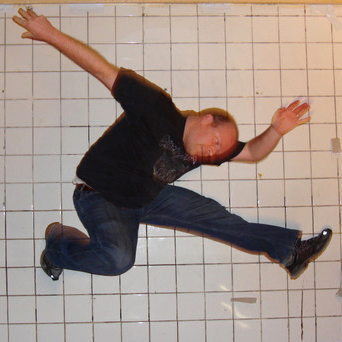
 The Limousines’s
first full length album, Get Sharp, is slick and extremely catchy electronic pop– the kind that worms itself into your dreams and you wake
up singing the lyrics to.
The Limousines’s
first full length album, Get Sharp, is slick and extremely catchy electronic pop– the kind that worms itself into your dreams and you wake
up singing the lyrics to. 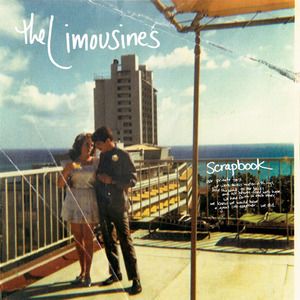 MR: Tell me about the artwork on
Scrapbook.
MR: Tell me about the artwork on
Scrapbook.