Antipsychotics – Mass Psychosis in the US

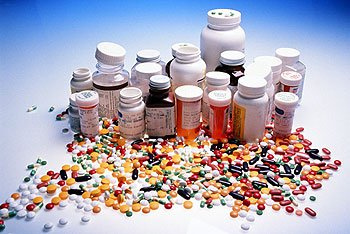
AL JAZEERA– Has America become a nation of psychotics? You would certainly think so, based on the explosion in the use of antipsychotic medications. In 2008, with over $14 billion in sales, antipsychotics became the single top-selling therapeutic class of prescription drugs in the United States, surpassing drugs used to treat high cholesterol and acid reflux.

Once upon a time, antipsychotics were reserved for a relatively small number of patients with hard-core psychiatric diagnoses – primarily schizophrenia and bipolar disorder – to treat such symptoms as delusions, hallucinations, or formal thought disorder. Today, it seems, everyone is taking antipsychotics. Parents are told that their unruly kids are in fact bipolar, and in need of anti-psychotics, while old people with dementia are dosed, in large numbers, with drugs once reserved largely for schizophrenics. Americans with symptoms ranging from chronic depression to anxiety to insomnia are now being prescribed anti-psychotics at rates that seem to indicate a national mass psychosis.

It is anything but a coincidence that the explosion in antipsychotic use coincides with the pharmaceutical industry’s development of a new class of medications known as “atypical antipsychotics.” Beginning with Zyprexa, Risperdal, and Seroquel in the 1990s, followed by Abilify in the early 2000s, these drugs were touted as being more effective than older antipsychotics like Haldol and Thorazine. More importantly, they lacked the most noxious side effects of the older drugs – in particular, the tremors and other motor control problems.

The atypical anti-psychotics were the bright new stars in the pharmaceutical industry’s roster of psychotropic drugs – costly, patented medications that made people feel and behave better without any shaking or drooling. Sales grew steadily, until by 2009 Seroquel and Abilify numbered fifth and sixth in annual drug sales, and prescriptions written for the top three atypical antipsychotics totaled more than 20 million.  Suddenly, antipsychotics weren’t just for psychotics any more.

Read more about Mass Psychosis in the US

© 2011 Al Jazeera

Flickr photo by Tampa Bay Informer
Johnson & Johnson Fined for Bribing Doctors

RAW STORY– US authorities fined cosmetics and drugs giant Johnson & Johnson $70 million on Friday for bribing doctors in Europe and paying kickbacks for contracts under a UN relief program in Iraq.

The Department of Justice and Securities and Exchange Commission said since 1998 the firm had paid doctors and hospital administrators in Greece, Poland and Romania for contracts and to promote its drugs and medical devices.

Johnson & Johnson also paid kickbacks between 2000-2003 for 19 contracts under the UN Oil for Food Program, which provided humanitarian supplies to Iraqis while the country, still ruled by Saddam Hussein.

Read full article about Johnson & Johnson Fined for Bribing Doctors.

© 2011 Raw Story

Photo by flickr user Be Futureproof

Drug Firms Drove Swine Flu Pandemic Warning to Recoup Billions

DAILY MAIL– Drug companies manipulated the World Health Organisation into downgrading its definition of a pandemic so they could cash in on a swine flu outbreak, it is claimed.

An inquiry heard yesterday that the WHO allegedly softened its criteria for declaring a H1N1 flu pandemic last spring – just weeks before announcing there was a worldwide outbreak. Critics said the decision was driven by pharmaceutical companies desperate to recoup the billions of pounds they had invested in researching and developing pandemic vaccines after the bird flu scares in 2006 and 2007.

As a result, millions of people have been vaccinated against a mild illness, and money that could have been used to prevent and treat major killers such as heart disease has been squandered. The claims, which emerged during the first of several Council of Europe hearings into the handling of the swine flu pandemic, were strongly rejected by the WHO.

Following the organisation’s declaration of a pandemic, the Department of Health warned of 65,000 deaths, set up a special advice line and website, and suspended normal rules so anti-flu drugs could be given without prescription.

But with just 250 or so deaths in Britain and 14,000 worldwide, the WHO is being asked to account for its actions. The Government is now trying to off-load millions of jabs it ordered at the height of the scare. Sources say it is even considering giving some doses away for free.

Wolfgang Wodarg, former head of health at the Council of Europe, the Strasbourg-based ‘senate’ responsible for the European Court of Human Rights, said vaccine contracts were put in place in 2007, when it was feared the more lethal bird flu virus would mutate into human form.

Drug companies, which spent up to £2.5billion developing a vaccine, then pushed their interests within the WHO, leading to the definition of a pandemic being softened and an outbreak declared.

Continue reading about Drug Companies Driving Swine Flu.

© DAILY MAIL, 2010

Did World Health Organization Experts Fuel Swine Flu Scare?

TIMES OF INDIA– Even as questions are being raised about whether the swine flu scare was exaggerated to benefit pharma companies, evidence has surfaced that several members of the World Health Organization’s (WHO) vaccine board which pushed countries to buy the H1N1 vaccine have had significant ties with pharma companies.

This fact, which is bound to raise issues of conflict of interest, was exposed by Danish daily ‘Information’ last month. TOI attempted to get WHO’s response, but several emails sent to the office of the WHO director-general on January 9 met with no response.

Documents acquired through the Danish Freedom of Information Act revealed that Prof Juhani Eskola, a Finnish member of the WHO board on vaccines, ‘Strategic Advisory Group of Experts’ (SAGE), received almost 6.3 million euros in 2009 for his vaccine research programme, THL, from the vaccine manufacturers, GSK, qualifying GSK as THL’s main source of income. SAGE advises WHO chief Margaret Chan and recommends which vaccines and how much of it member countries should purchase, pointed out the Danish newspaper.

Apart from Prof Juhani Eskola, who received almost 6.3 million euros for his vaccine research programme, Danish journalists reported on six other members of ‘Strategic Advisory Group of Experts’ (SAGE) with financial ties to various pharmaceutical companies. These include Dr Peter Figueroa, Dr Neil Ferguson, Prof Malik Peiris, Dr Arnold Monto, Dr Friedrich Hayden and Dr Albert Osterhaus. Barring Dr Figuero, who revealed that he had accepted a research grant from Merck, none of the others made any disclosures.

Many of the pharmaceutical companies with which the vaccine board members had ties, are also the manufacturers of vaccines including the H1N1 vaccine like GlaxoSmithKline (GSK), Novartis, Solvay, Baxter, MedImmune and Sanofi Aventis. None of the WHO members on the vaccine board, barring one, declared any conflict of interest despite having extensive financial ties with the pharmaceutical companies in the form of research grants and consultancies.

In a statement issued on December 3, 2009, WHO claims that numerous safeguards are in place to manage possible conflicts of interest or their perception. “Members of SAGE are required to declare all professional and financial interests, including funding received from pharmaceutical companies or consultancies or other forms of professional engagement with pharmaceutical companies.

The names and affiliations of members of SAGE and of SAGE working groups are published on the WHO web site, together with meeting reports and declarations of interest submitted by the experts. Allegations of undeclared conflicts of interest are taken very seriously by WHO, and are immediately investigated,” says the statement. However, there is no such disclosure by these SAGE members on the WHO website.

© TIMES OF INDIA, 2010

Photo by flickr user Y

Harvard Medical School in Ethics Quandary

NEW YORK TIMES– In a first-year pharmacology class at Harvard Medical School, Matt Zerden grew wary as the professor promoted the benefits of cholesterol drugs and seemed to belittle a student who asked about side effects.

Mr. Zerden later discovered something by searching online that he began sharing with his classmates. The professor was not only a full-time member of the Harvard Medical faculty,

“I felt really violated,” Mr. Zerden, now a fourth-year student, recently recalled. “Here we have 160 open minds trying to learn the basics in a protected space, and the information he was giving wasn’t as pure as I think it should be.”

Mr. Zerden’s minor stir four years ago has lately grown into a full-blown movement by more than 200 Harvard Medical School students and sympathetic faculty, intent on exposing and curtailing the industry influence in their classrooms and laboratories, as well as in Harvard’s 17 affiliated teaching hospitals and institutes.

They say they are concerned that the same money that helped build the school’s world-class status may in fact be hurting its reputation and affecting its teaching.

The students argue, for example, that Harvard should be embarrassed by the F grade it recently received from the American Medical Student Association, a national group that rates how well medical schools monitor and control drug industry money.

Continue reading about Harvard’s Ethics Quandary.

© COPYRIGHT NY TIMES, 2009

Photo by Be.Futureproof flickr user