Monsanto Hid Decades of Pollution

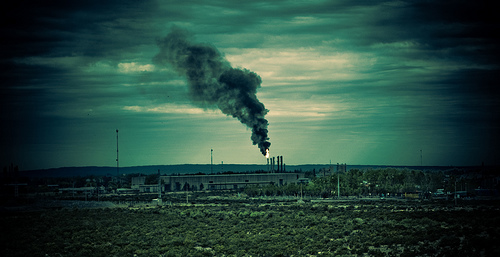
WASHINGTON POST– On the west side of Anniston, the poor side of Anniston, the people ate dirt. They called it “Alabama clay” and cooked it for extra flavor. They also grew berries in their gardens, raised hogs in their back yards, caught bass in the murky streams where their children swam and played and were baptized. They didn’t know their dirt and yards and bass and kids — along with the acrid air they breathed — were all contaminated with chemicals. They didn’t know they lived in one of the most polluted patches of America.

Now they know. They also know that for nearly 40 years, while producing the now-banned industrial coolants known as PCBs at a local factory, Monsanto Co. routinely discharged toxic waste into a west Anniston creek and dumped millions of pounds of PCBs into oozing open-pit landfills. And thousands of pages of Monsanto documents — many emblazoned with warnings such as “CONFIDENTIAL: Read and Destroy” — show that for decades, the corporate giant concealed what it did and what it knew.

In 1966, Monsanto managers discovered that fish submerged in that creek turned belly-up within 10 seconds, spurting blood and shedding skin as if dunked into boiling water. They told no one. In 1969, they found fish in another creek with 7,500 times the legal PCB levels. They decided “there is little object in going to expensive extremes in limiting discharges.” In 1975, a company study found that PCBs caused tumors in rats. They ordered its conclusion changed from “slightly tumorigenic” to “does not appear to be carcinogenic.”

Monsanto enjoyed a lucrative four-decade monopoly on PCB production in the United States, and battled to protect that monopoly long after PCBs were confirmed as a global pollutant. “We can’t afford to lose one dollar of business,” one internal memo concluded.

Lastmonth, the Environmental Protection Agency ordered General Electric Co. to spend $460 million to dredge PCBs it had dumped into the Hudson River in the past, perhaps the Bush administration’s boldest environmental action to date. The decision was bitterly opposed by the company, but hailed by national conservation groups and many prominent and prosperous residents of the picturesque Hudson River Valley.

In Anniston, far from the national spotlight, the sins of the past are being addressed in a very different way. Here, Monsanto and its corporate successors have avoided a regulatory crackdown, spending just $40 million on cleanup efforts so far. But they have spent $80 million more on legal settlements, and another lawsuit by 3,600 plaintiffs — one of every nine city residents — is scheduled for trial next Monday. David Carpenter, an environmental health professor at the State University of New York at Albany, has been a leading advocate of the EPA’s plan to dredge the Hudson, but he says the PCB problems in Anniston are much worse.

“I’m looking out my window at the Hudson right now, but the reality is that the people who live around the Monsanto plant have higher PCB levels than any residential population I’ve ever seen,” said Carpenter, an expert witness for the plaintiffs in Anniston. “They’re 10 times higher than the people around the Hudson.”

The Anniston lawsuits have uncovered a voluminous paper trail, revealing an unusually detailed story of secret corporate machinations in the era before strict environmental regulations and right-to-know laws. The documents — obtained by The Washington Post from plaintiffs’ attorneys and the Environmental Working Group, a chemical industry watchdog — date as far back as the 1930s, but they expose actions with consequences that are still unfolding today.

Officials at Solutia Inc., the name given to Monsanto’s chemical operations after they were spun off into a separate company in 1997, acknowledge that Monsanto made mistakes. But they also said that for years, PCBs were hailed for preventing fires and explosions in electrical equipment. Monsanto did stop making PCBs in 1977, two years before a nationwide ban took effect. And the current scientific consensus that PCBs are harmful, especially to the environment, masks serious disputes over just how harmful they are to people.

Today, the old plant off Monsanto Road here makes a chemical used in Tylenol. It has not reported a toxic release in four years. Robert Kaley, the environmental affairs director for Solutia who also serves as the PCB expert for the American Chemistry Council, said it is unfair to judge the company’s behavior from the 1930s through 1970s by modern standards.

“Did we do some things we wouldn’t do today? Of course. But that’s a little piece of a big story,” he said. “If you put it all in context, I think we’ve got nothing to be ashamed of.”

But Monsanto’s uncertain legacy is as embedded in west Anniston’s psyche as it is in the town’s dirt. The EPA and the World Health Organization classify PCBs as “probable carcinogens,” and while no one has determined whether the people in Anniston are sicker than average, Solutia has opposed proposals for comprehensive health studies as unnecessary. And it has not apologized for any of its contamination or deception.

In the absence of data, local residents seem to believe the worst. The stories linger: The cancer cluster up the hill. The guy who burned the soles off his boots while walking on Monsanto’s landfill. The dog that died after a sip from Snow Creek, the long-abused drainage ditch that runs from the Monsanto plant through the heart of west Anniston’s cinder-block cottages and shotgun houses. Sylvester Harris, 63, an undertaker who lived across the street from the plant, said he always thought he was burying too many young children.

“I knew something was wrong around here,” he said.

Opal Scruggs, 65, has spent her entire life in west Anniston, the last few decades in a cottage in back of a Waffle House behind the plant. But in recent years, Monsanto has bought and demolished about 100 PCB-tainted homes and mom-and-pop businesses nearby, turning her neighborhood into a virtual ghost town. Now she has elevated PCB levels in her blood — along with Harris and many of their neighbors — and she believes she’s a “walking time bomb.”

“Monsanto did a job on this city,” she said. “They thought we were stupid and illiterate people, so nobody would notice what happens to us.”

Continue reading about Monsanto Hiding Decades of Pollution.

© 2002 The Washington Post Company

Photo by flickr user A6U571N
Another Monsanto Man in Key USDA Post?

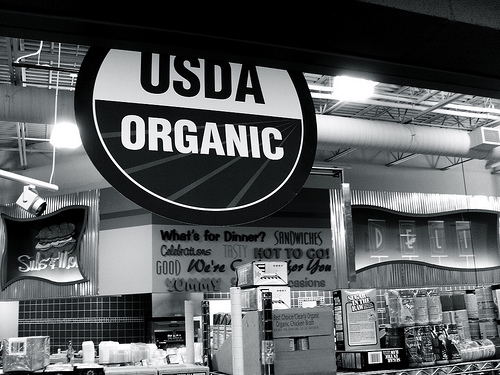
GRIST– Like a tractor driven by a drunk, the Obama administration keeps zigzagging on food/ag policy–sometimes veering in the direction of progressive change, other times whipping back toward the agrichemical status quo.

In the last couple of days, there’s been a sharp turn toward the status quo. As I reported yesterday, Obama plucked Islam “Isi” Siddiqui from the nation’s most powerful agrichemical lobby group and made him our chief negotiator on ag issues in global trade talks. This is a major coup for Big Ag. Ramming open foreign markets for our cheap food commodities and pricey ag inputs is critical to the industry’s future profits–and perilous for global food security and the environment.

And today, Obama’s Big Ag side got the best of him again. He tapped Roger Beachy, long-time president of the Danforth Plant Science Center, as chief of the USDA’s newly created National Institute of Food and Agriculture (NIFA). A creation of the 2008 Farm Bill, the NIFA “replaces the Cooperative State Research, Education, and Extension Service, which distributes $200 million in competitive grants and about $280 million in ‘formula funding’ to land-grant universities,” Science blog reports.

Science continues:

The Farm Bill adds another $106 million annually of competitive funding for research into organic farming, biomass, and fruits and vegetables. It also calls for a “distinguished scientist” to be appointed for a 6-year term as director.

So this is a critical post. If the sustainable farming movement is going to scale up and really start providing a large portion of the nation’s calories–and deliver on its potentially huge environmental promises–than we’re going to need a significant commitment of federal research dollars.

And what are we getting with the appointment of Beachy? The Danforth Plant Science Center, nestled in Monsanto’s St. Louis home town, is essentially that company’s NGO research and PR arm. According to its website, the center “was founded in 1998 through gifts from the St. Louis-based Danforth Foundation, the Monsanto Fund (a philanthropic foundation), and a tax credit from the State of Missouri.”

Continue reading about Another Monsanto Man in USDA Post.

Photo by flickr user Tim Psych

© COPYRIGHT GRIST, 2010

Monsanto and Fox: Partners in Censorship

(Video Below) June, 1998

PR WATCH– By all accounts, Jane Akre and Steve Wilson are tough, bulldog reporters–the sort of journalists you’d expect to make some enemies along the way.

That, according to Florida TV station WTVT, was why it hired the husband-and-wife team with much fanfare in November 1996 to head the station’s “news investigative unit.” Now, in the wake of their firing barely a year later, the Fox network affiliate is accusing them of theft for daring to independently publish the script of the story that they were never allowed to air.

“This is really not about a couple of disgruntled former reporters whining that their editors wouldn’t let them do a story they thought was important,” Wilson said in announcing that he and Akre are suing WTVT for breach of contract. “Jane and I have each spent more than 20 years in the news business. . . . It doesn’t take that long for every reporter to learn that every now and then–usually when the special interest of your news organization or one of its friends is more important than the public interest–stories get killed. That’s bad enough, but that’s not what happened here. . . . Fox 13 didn’t want to kill the story revealing synthetic hormones in Florida’s milk supply. Instead, as we explain in great detail in our legal complaint, we were repeatedly ordered to go forward and broadcast demonstrably inaccurate and dishonest versions of the story. We were given those instructions after some very high-level corporate lobbying by Monsanto (the powerful drug company that makes the hormone) and also, we believe, by members of Florida’s dairy and grocery industries.”

The hormone in question is genetically-engineered recombinant bovine growth hormone (rBGH), the flagship product in Monsanto’s campaign to take command of the ultra-high-stakes biotechnology industry. Injections of rBGH (sold under the brand name Posilac®) induce higher milk production in dairy cows, but critics warn of potential health risks to both cows and humans.

The Florida dispute offers a rare look inside the newsroom at the way stories get spun and censored. It is also cracks the facade that Monsanto has erected through a highly effective, multi-million-dollar PR offensive aimed at preventing the news media from reporting the views of rBGH critics.

Continue reading about Monsanto and Fox: Partners in Crime.

A version of this article appeared in the June 1998 issue of The Progressive magazine. Further information about the Akre-Wilson lawsuit is available on their website at http://www.foxBGHsuit.com


Clip from The Corporation: Unsettling Accounts


© COPYRIGHT PR WATCH, 1998

Serious Concerns Raised over Monsanto GM Maize Variety

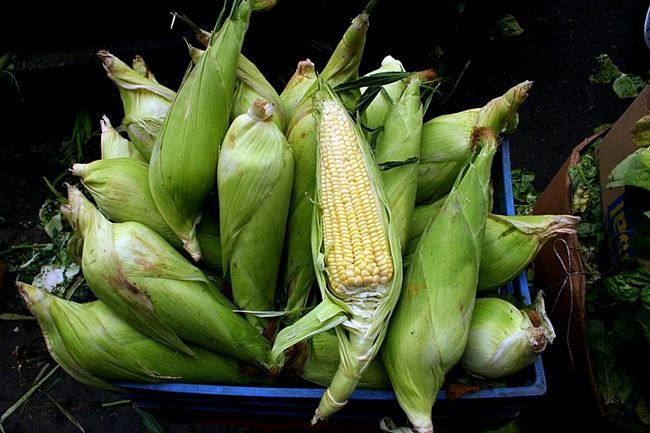
FOOD PRODUCTION DAILY– Monsanto’s genetically modified maize MON863, authorised for human consumption since 2006, showed signs of liver and kidney toxicity in a rat study, raising concerns about its safety.

The study, performed by French researchers from the independent CRIIGEN (Committee for Independent Research and Genetic Engineering), based at the University of Caen reports that rats fed the maize for three months showed signs of liver and kidney toxicity, as well as differences in weight gain between the sexes.

“Our counter-evaluation show that there are signs of toxicity and that nobody can say scientifically and seriously that consumption of the transgenic maize MON863 is safe and good for health,” lead author of the study, Professor Gilles Eric Séralini told France’s TF1 television station.

MON863 is a transgenic maize genetically modified to express the Bt-toxin (Cry3Bb1) which enables the plant to be insect repellent against the corn rootworm pest. It is different from other GM corns of the market since these express the Cry1Ab toxin which is toxic to the European corn borer.

The study, published on-line in the peer-review journal Archives of Environmental Contamination and Toxicology, fed young adult Sprague-Dawley-derived rats (aged six weeks at the start of the experiment) diets containing 11 or 30 per cent MON863, or diets containing non-GM corn for 90 days.

At the end of the study, Séralini and his team found signs of toxicity in the liver and kidneys of rats fed the MON863 maize, as well as changes to weight between the sexes. Indeed, male rats were found to have lost, on average, 3.3 per cent of their body weight, while females gained 3.7 per cent.

Triglyceride levels also increased by between 24 and 40 per cent in females, phosphorous and sodium excretion decreased in males.

“We have the first signs of toxicity that appear at the level of body weight, the kidneys, and the liver, and that are also different between the sexes indicating deeper effects at the hormone level,” said Séralini.

The researchers raised concerns over the methods used by Monsanto to initially show the safety and non-toxicity of the corn, saying that the statistical methods used were insufficient to observed any possible disruptions in biochemistry.

The mechanism behind the apparent toxicity is not known, but there is some evidence that the Bt-toxin may perforate blood cells, they said.

“Considering that the human and animal populations could be exposed at comparable levels to this kind of food or feed that has been authorised by several countries, and that these are the best mammalian toxicity tests available, we strongly recommend a new assessment and longer exposure of mammals to these diets, with cautious clinical observations, before concluding that MON863 is safe to eat,” concluded the researchers.

Environmental group Greenpeace has demanded an immediate and complete recall of MON863 from the global market, and also called on an urgent reassessment of all other authorised GM foods by governments.

“It is the first time that independent research, published in a peer-review journal, proves that a GMO authorised for human consumption presents signs of toxicity,” said Arnaud Apoteker from Greenpeace France.

“We must review urgently the authorisation of MON863, even more so because we do not know is this maize is present in the French market and if it is used for animal feed or for producing foods destined for humans.”

Monsanto France has rejected the concerns. Yann Fichet, Monsanto France’s director of external relations told TF1: “[MON863] has already been examined by competent authorities and scientific experts in more than 10 countries worldwide, including the European Union and France, and all the experts concluded unanimously that the maize in question is as safe as traditional maize.”

The corn is authorised in Australia, Canada, China, the EU, Japan, Mexico, the Philippines and the USA.

Source: Archives of Environmental Contamination and Toxicology

Published on-line ahead of print, doi: 10.1007/s00244-006-0149-5

“New analysis of a rat feeding study with a genetically modified maize reveals signs of hepatorenal toxicity”

Authors: G.-E. Séralini, D. Cellier, J. Spiroux de Vendomois

© FOOD PRODUCTION DAILY, 2007

Photo by alicia

Monsanto’s Harvest of Fear

May 2008

VANITY FAIRGary Rinehart clearly remembers the summer day in 2002 when the stranger walked in and issued his threat. Rinehart was behind the counter of the Square Deal, his “old-time country store,” as he calls it, on the fading town square of Eagleville, Missouri, a tiny farm community 100 miles north of Kansas City.

The Square Deal is a fixture in Eagleville, a place where farmers and townspeople can go for lightbulbs, greeting cards, hunting gear, ice cream, aspirin, and dozens of other small items without having to drive to a big-box store in Bethany, the county seat, 15 miles down Interstate 35.

Everyone knows Rinehart, who was born and raised in the area and runs one of Eagleville’s few surviving businesses. The stranger came up to the counter and asked for him by name.

“Well, that’s me,” said Rinehart.

As Rinehart would recall, the man began verbally attacking him, saying he had proof that Rinehart had planted Monsanto’s genetically modified (G.M.) soybeans in violation of the company’s patent. Better come clean and settle with Monsanto, Rinehart says the man told him—or face the consequences.

Rinehart was incredulous, listening to the words as puzzled customers and employees looked on. Like many others in rural America, Rinehart knew of Monsanto’s fierce reputation for enforcing its patents and suing anyone who allegedly violated them. But Rinehart wasn’t a farmer. He wasn’t a seed dealer. He hadn’t planted any seeds or sold any seeds. He owned a small—a really small—country store in a town of 350 people. He was angry that somebody could just barge into the store and embarrass him in front of everyone. “It made me and my business look bad,” he says. Rinehart says he told the intruder, “You got the wrong guy.”

When the stranger persisted, Rinehart showed him the door. On the way out the man kept making threats. Rinehart says he can’t remember the exact words, but they were to the effect of: “Monsanto is big. You can’t win. We will get you. You will pay.”

Scenes like this are playing out in many parts of rural America these days as Monsanto goes after farmers, farmers’ co-ops, seed dealers—anyone it suspects may have infringed its patents of genetically modified seeds. As interviews and reams of court documents reveal, Monsanto relies on a shadowy army of private investigators and agents in the American heartland to strike fear into farm country. They fan out into fields and farm towns, where they secretly videotape and photograph farmers, store owners, and co-ops; infiltrate community meetings; and gather information from informants about farming activities. Farmers say that some Monsanto agents pretend to be surveyors. Others confront farmers on their land and try to pressure them to sign papers giving Monsanto access to their private records. Farmers call them the “seed police” and use words such as “Gestapo” and “Mafia” to describe their tactics.

When asked about these practices, Monsanto declined to comment specifically, other than to say that the company is simply protecting its patents. “Monsanto spends more than $2 million a day in research to identify, test, develop and bring to market innovative new seeds and technologies that benefit farmers,” Monsanto spokesman Darren Wallis wrote in an e-mailed letter to Vanity Fair. “One tool in protecting this investment is patenting our discoveries and, if necessary, legally defending those patents against those who might choose to infringe upon them.” Wallis said that, while the vast majority of farmers and seed dealers follow the licensing agreements, “a tiny fraction” do not, and that Monsanto is obligated to those who do abide by its rules to enforce its patent rights on those who “reap the benefits of the technology without paying for its use.” He said only a small number of cases ever go to trial.

Some compare Monsanto’s hard-line approach to Microsoft’s zealous efforts to protect its software from pirates. At least with Microsoft the buyer of a program can use it over and over again. But farmers who buy Monsanto’s seeds can’t even do that.

Continue reading about Monsanto’s Harvest of Fear.

Donald L. Barlett and James B. Steele are Vanity Fair contributing editors.

Photo by Melvyn Calderon/Greenpeace HO/A.P. Images.

© COPYRIGHT VANITY FAIR, 2008