
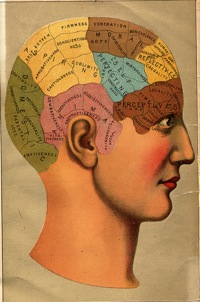
IBM Researchers Create the Most Detailed Brain Map Yet

brainPOPSCI– Researchers at IBM have created the most complex neurological map ever seen, detailing the comprehensive long-distance network that makes up the macaque monkey brain in unprecedented detail. Such a roadmap through the brain’s complex networking processes could have major implications for attempts at reverse-engineering neural networks and creating cognitive computer chips that “think” as powerfully and efficiently as the biological brain.

Focusing on a long-distance network connecting 383 brain regions and 6,602 long-distance connections that function like highways to connect disparate regions of the brain. Shorter, more localized connections were found to carry signals within regions.

But most importantly, they found what they describe in a paper published in PNAS as a “tightly integrated core” that might be they key to cognition in higher-thinking biological creatures. That core might be what gives us consciousness (we won’t get into the philosophical implications there). Further, the core isn’t located in one, or even two regions. The researchers found it stretches through the premotor cortex, prefrontal cortex, temporal lobe, thalamus, visual cortex and a handful of other regions.

Continue reading about IBM Researchers Create the Most Detailed Brain Map Yet.

© POPSCI, 2010

Photo by flickr user ky_olsen
Zeitgeist: Addendum – Documentary

Zeitgeist: Addendum, sequel to Zeitgeist: The Movie, was created as a Not-for-Profit expressions to communicate what the author felt were highly important social understandings which most humans are generally not aware of. The movie attempts to locate the root causes of this pervasive social corruption, while offering a solution.

This solution is not based on politics, morality, laws, or any other “establishment” notions of human affairs, but rather on a modern, non-superstitious based understanding of what we are and how we align with nature, to which we are a part. The work advocates a new social system which is updated to present day knowledge, highly influenced by the life long work of Jacque Fresco and The Venus Project.

http://www.zeitgeistmovie.com/

http://thezeitgeistmovement.com/


Cover photo by flickr user Zeitgeist Granada

Zeitgeist: The Movie – Documentary

Zeitgeist: The Movie is a 2007 documentary film by Peter Joseph that examines Christianity, the 9/11/01 terrorist attacks and the Federal Reserve bank. It was created as a Not-for-Profit expression to communicate what the author felt were highly important social understandings which most humans are generally not aware of. Zeitgeist: The Movie focuses on suppressed historical & modern information about currently dominant social institutions, while also exploring what could be in store for humanity if the power structures at large continue their patterns of self-interest, corruption, and consolidation.

http://www.zeitgeistmovie.com/

http://thezeitgeistmovement.com/


Food of the Gods – Book Review

drugsBUZZFLASH– I took some drugs today to help me write this review. Specifically, a xanthine-family drug called caffeine that appears in the berries of a largely equatorial bush, along with a few weaker xanthine-family alkaloids that aren’t as well known but are also present in the coffee bean.

Last night before going to bed, I took another drug. Fermented from the fruit of a vine grown in the south of France, the alcohol in the glass of wine I drank altered my consciousness in a way I found pleasant, while the raw juice (wine is not heated) contains, its promoters say, some other chemicals that may be good for my heart.

Fact is, we’re a society of drug-takers. Outside of Mormons, Seventh Day Adventists and Jehovah Witnesses (and a few other smaller mostly Christian sects), we as a society nearly all take drugs specifically to alter consciousness. We use the most addictive drug known to human kind — five times more addictive than heroin — in a way that earns the tobacco barons billions of profits every year. The three primary drugs of our culture — caffeine, nicotine, and alcohol — are ubiquitous. As are other drugs McKenna takes aim at — sugar, chocolate, and television.

And, says Terence McKenna, they’re the wrong drugs for us to be using. Or at least some of us.

Continue reading about Food of the Gods- Book Review.

© Buzzflash, 2007

Reviewed by Thom Hartmann

Photo by flickr user digitalbob8

Satyagraha – Gandhi’s Philosophy of Nonviolence

D FONG– Basic Concepts of Gandhi’s ‘Satyagraha’ Philosophy of Nonviolence from the APT Nonviolence Trainer’s Manual.

I. “Sat”which implies openness, honesty, and fairness: Truth.

A) Each person’s opinions and beliefs represent part of the truth.

B) In order to see more of the truth we must share our truths cooperatively.

C) This implies a desire to communicate and a determination to do so, which in turn requires developing and refining relevant skills of communication.

D) Commitment to seeing as much of the truth as possible means that we can not afford to categorize ourselves or others.

Continue reading about Satyagraha- Gandhi’s Philosophy of Nonviolence.

Photo by flickr user Ben Sutherland
