Regulation of Animal-Human Hybrids Needed

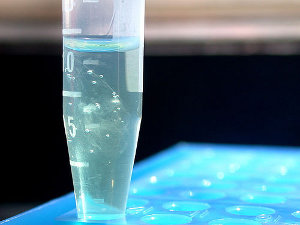
INTERNATIONAL BUSINESS TIMES– Experiments that create animal-human hybrids by implanting human material in lab animals should be more rightly regulated, a group of British scientists said in a new report.

It may sound like something from a horror movie, but implanting a small number of human genes or cells in animals is nothing new: scientists have already made strides in medical treatment by testing cancer drugs on mice engineered to have human DNA, by seeing how human stem cells behave in rats, and by studying a blood clotting problem through goats with a human protein in their milk. But a report issued by the UK’s Academy of Medical Sciences recommended creating a government body to advise whether certain tests should be permissible.

“There are a small number of future experiments, which could approach social and ethically sensitive areas which should have an extra layer of scrutiny,” said Martin Bobrow, a professor of medical genetics at the University of Cambridge  chair of the group who wrote the report. “There are good reasons for doing these experiments because they lead you to a better understanding of really important questions, but we need to go slowly and it needs to be regulated in a way that’s open, and transparent and looks very carefully at each step.”

2008 experiment in which British researchers created a human-animal embryo sparked considerable controversy, with religious groups condemning the experiment. Bobrow and his colleagues wrote that most experiments should be allowed to proceed, but they elaborated a small number of experiments that could cross the line.

“Where people begin to worry is when you get to the brain, to the germ [reproductive] cells, and to the sort of central features that help us recognize what is a person, like skin texture, facial shape and speech,” Bobrow told reporters. “The closer [an animal brain] is to a human brain, the harder it is to predict what might happen,” he added.

The report references the issue’s powerful resonance, addressing what the authors dub the “‘Frankenstein fear’ that the medical research which creates ‘humanised’ animals is going to generate ‘monsters.'” A poll included in the study found that a majority of respondents supported the idea of research using animals that contained human material, so long as it was to advance medicine. But people were wary of anything that would sacrifice the mental capacities that separate humans from animals.

Read more about Report Calls for Regulation of Animal-Human Hybrid Experiments

© 2011 International Business Times

Photo by Flickr user Gravitywave

Largest, Oldest Water Mass Discovered in Universe

MSNBC– Astronomers have discovered the largest and oldest mass of water ever detected in the universe — a gigantic, 12-billion-year-old cloud harboring 140 trillion times more water than all of Earth’s oceans combined.

The cloud of water vapor surrounds a supermassive black hole called a quasar located 12 billion light-years from Earth. The discovery shows that water has been prevalent in the universe for nearly its entire existence, researchers said.

“Because the light we are seeing left this quasar more than 12 billion years ago, we are seeing water that was present only some 1.6 billion years after the beginning of the universe,” study co-author Alberto Bolatto of the University of Maryland said in a statement. “This discovery pushes the detection of water one billion years closer to the Big Bang than any previous find.” 

Read more about the Largest, Oldest Water Mass Discovered in Universe.

© 2011 MSNBC

Photo by NASA/ESA

Posted in Uncategorized | 1 Reply

Experiments Suggest Life Not One-Time Deal

HUFFINGTON POST– We think we die and rot into the ground, and thus must squeeze everything in before it’s too late. If life — yours, mine — is a just a one-time deal, then we’re as likely to be screwed as pampered. But experiments suggest this view of the world may be wrong.

The results of quantum physics confirm that observations can’t be predicted absolutely. Instead, there’s a range of possible observations each with a different probability. One mainstream explanation, the “many-worlds” interpretation, states that there are an infinite number of universes (the “multiverse”). Everything that can possibly happen occurs in some universe. The old mechanical — “we’re just a bunch of atoms” −- view of life loses its grip in these scenarios.

Biocentrism extends this idea, suggesting that life is a flowering and adventure that transcends our ordinary linear way of thinking. Although our individual bodies are destined to self-destruct, the “me” feeling is just energy operating in the brain. But this energy doesn’t go away at death. One of the surest principles of science is that energy never dies; it can neither be created nor destroyed. When we die, we do so not in the random billiard ball matrix but in the inescapable life matrix. Life has a non-linear dimensionality −- it’s like a perennial flower that returns to bloom in the multiverse.

A series of landmark experiments show that measurements an observer makes can influence events that have already happened in the past. One experiment (Science 315, 966, 2007) confirmed that flipping a switch could retroactively change a result that had happened before the switch was flipped. Regardless of the choice you, the observer, make, it’ll be you who will experience the outcomes −- the universes −- that will result.

Read more about Do You Only Live Once? Experiments Suggest Life Not One-Time Deal.

© 2011 Huffington Post

Photo by Flickr user Smithsonian

Space-Time Cloak Could Make Events Disappear?

NATIONAL GEOGRAPHIC– It’s no illusion: Science has found a way to make not just objects but entire events disappear, experts say.

According to new research by British physicists, it’s theoretically possible to create a material that can hide an entire bank heist from human eyes and surveillance cameras.

“The concepts are basically quite simple,” said Paul Kinsler, a physicist at Imperial College London, who created the idea with colleagues Martin McCall and Alberto Favaro.

Unlike invisibility cloaks—some of which have been made to work at very small scales—the event cloak would do more than bend light around an object.

Instead this cloak would use special materials filled with metallic arrays designed to adjust the speed of light passing through.

In theory, the cloak would slow down light coming into the robbery scene while the safecracker is at work. When the robbery is complete, the process would be reversed, with the slowed light now racing to catch back up.

If the “before” and “after” visions are seamlessly stitched together, there should be no visible trace that anything untoward has happened. One second there’s a closed safe, and the next second the safe has been emptied.

Read more about Space-Time Cloak Possible, Could Make Events Disappear?

© 2011 National Geographic

Photo by Flickr user hembergler

Howard Zinn: Human Nature and Aggression

MEDIA ROOTS Howard Zinn challenges the philosophy that acts of aggression are integral to human nature and discusses how one’s society and surrounding environment is what creates of hostility. The excerpt is taken from the documentary You Can’t Be Neutral On a Moving Train.

Howard Zinn, “On Human Nature and Aggression.” From You Can’t Be Neutral On a Moving Train, 2004.

DVD available from firstrunfeatures.com.


Page 9 of 24<<...7891011...>>