IBM Researchers Create the Most Detailed Brain Map Yet

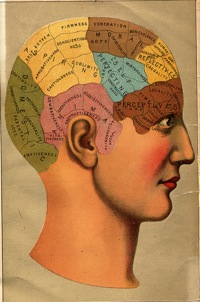
brainPOPSCI– Researchers at IBM have created the most complex neurological map ever seen, detailing the comprehensive long-distance network that makes up the macaque monkey brain in unprecedented detail. Such a roadmap through the brain’s complex networking processes could have major implications for attempts at reverse-engineering neural networks and creating cognitive computer chips that “think” as powerfully and efficiently as the biological brain.

Focusing on a long-distance network connecting 383 brain regions and 6,602 long-distance connections that function like highways to connect disparate regions of the brain. Shorter, more localized connections were found to carry signals within regions.

But most importantly, they found what they describe in a paper published in PNAS as a “tightly integrated core” that might be they key to cognition in higher-thinking biological creatures. That core might be what gives us consciousness (we won’t get into the philosophical implications there). Further, the core isn’t located in one, or even two regions. The researchers found it stretches through the premotor cortex, prefrontal cortex, temporal lobe, thalamus, visual cortex and a handful of other regions.

Continue reading about IBM Researchers Create the Most Detailed Brain Map Yet.

© POPSCI, 2010

Photo by flickr user ky_olsen

Plants ‘Can Think and Remember’

BBC– Plants are able to “remember” and “react” to information contained in light, according to researchers. Plants, scientists say, transmit information about light intensity and quality from leaf to leaf in a very similar way to our own nervous systems.

These “electro-chemical signals” are carried by cells that act as “nerves” of the plants. The researchers used fluorescence imaging to watch the plants respond.

In their experiment, the scientists showed that light shone on to one leaf caused the whole plant to respond. And the response, which took the form of light-induced chemical reactions in the leaves, continued in the dark.

This showed, they said, that the plant “remembered” the information encoded in light.

“We shone the light only on the bottom of the plant and we observed changes in the upper part,” explained Professor Stanislaw Karpinski from the Warsaw University of Life Sciences in Poland, who led this research.

He presented the findings at the Society for Experimental Biology’s annual meeting in Prague, Czech Republic.

“And the changes proceeded when the light was off… This was a complete surprise.”

Continue reading about Plants ‘Can Think and Remember’.

© BBC, 2010

Photo by Abby Martin

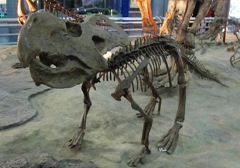
Old Bones Yield a New Age of Dinosaurs in Thailand

dinosaur fossilsNY TIMES– When the rains come and the rivers swell, giant bones tend to wash up in this remote rice-farming corner of Thailand.

Giant tyrannosaur footprints were found in Baan Na Kum. For years, farmers did not know what they were or what to do with them.

The superstitious buried them. Others brought them to Buddhist temples, where monks collected them alongside artifacts and other curios.

Now the message is out: Don’t throw away the dinosaur bones.

“It used to be a taboo — people didn’t want to bring them home,” said Varavudh Suteethorn, a paleontologist who has spent the last three decades leading dinosaur excavations. “After we worked for about 10 years in the area, people started to know more about it.”

Thailand is known for its beaches, great food and, more recently, its propensity for political protests, but not much for dinosaurs. It turns out that the creatures of prehistory, like the tourists of today, found certain parts of Thailand very hospitable.

Paleontologists say that the Khorat Plateau of northeastern Thailand was teeming with dinosaurs starting about 200 million years ago (Bangkok was under the sea at the time), and that the proof is in the frequency with which villagers find dinosaur bones and other fossils.

Continue reading about Old Bones Yield a New Age of Dinosaurs in Thailand.

© NY Times, 2010

Photo by flickr user Ivan Walsh

Pluto Set for Further Humiliation

3 NEWS– Pluto lost its position as a planet in 2006, and now looks set for further humiliation.

Currently considered a dwarf planet alongside four others – Eris, Ceres, Haumea and Makemake – new research suggests there could be at least 50 more in the club, which no longer seems so exclusive.

”It’s like being a member of the Qantas Club,” astronomer Charley Lineweaver told the Sydney Morning Herald. “You think you’re elite until you realise everyone else at the airport has a Qantas Club card too.”

To be considered a dwarf planet, a celestial body must have attained hydrostatic equilibrium – another way of saying there are no gravitational imbalances in its structure. Generally, bodies that have attained equilibrium are spherical – Haumea is the only currently-known exception.

Dr Lineweaver and Dr Marc Norman calculated that objects smaller than 400km in diameter are in some cases able to be in hydrostatic equilibrium, and observed small, icy moons in the outer reaches of the solar system that had done so.

Continue reading about Pluto Set for Further Humiliation.

© 3 News, 2010

Photo by flick user Lunar and Planetary Institute

Phoenix Lights Investigation Re-Opens Mystery

alienEXAMINER– Witnesses to the March 1997 mass UFO sightings wave that became known as the Phoenix Lights are coming forward with previously unreported accounts, thanks to the broadcast of American Paranormal: UFOs Over Phoenix on the National Geographic Channel.

That broadcast repeats tonight and Monday morning and is expected to provoke even more witnesses to come forward. The result is that a new understanding is forming of the events of that night.

The investigation, conducted by the Phoenix UFO Examiner for Base Communications, presented a broad outline of the still unexplained mass sightings events as detailed by three iconic witnesses: Tim Ley, Mike Fortson and Michael Kryzston. 

These witnesses characterize both the first wave of shockingly big objects (craft?) that drifted across the state in the 8:00 PM time frame and the more enigmatic and contoversial lights that were observed and recorded around 10:00 south of the greater metropolitan Phoenix area. 

Continue reading about National Geographic Phoenix Lights Investigation Re-Opens Mystery.

© Larry Lowe, 2010

Photo by flickr user jervetson

Page 19 of 24<<...1718192021...>>