Gulf Oil Spill – Cleaning Wetlands May Be Impossible

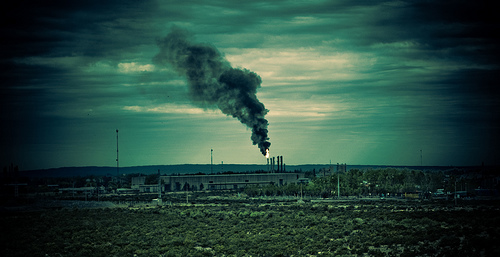
HUFFINGTON POST– The gooey oil washing into the maze of marshes along the Gulf Coast could prove impossible to remove, leaving a toxic stew lethal to fish and wildlife, government officials and independent scientists said.

Officials are considering some drastic and risky solutions: They could set the wetlands on fire or flood areas in hopes of floating out the oil.

They warn an aggressive cleanup could ruin the marshes and do more harm than good. The only viable option for many impacted areas is to do nothing and let nature break down the spill.

More than 50 miles of Louisiana’s delicate shoreline already have been soiled by the massive slick unleashed after the Deepwater Horizon rig burned and sank last month. Officials fear oil eventually could invade wetlands and beaches from Texas to Florida. Louisiana is expected to be hit hardest.

On Saturday, a major pelican rookery was awash in oil off Louisiana’s coast. Hundreds of birds nest on the island, and an Associated Press photographer saw some birds and their eggs stained with the ooze. Nests were perched in mangroves directly above patches of crude.

Plaquemines Parish workers put booms around the island, but puddles of oil were inside the barrier.

“Oil in the marshes is the worst-case scenario,” said Coast Guard Adm. Thad Allen, the head of the federal effort to contain and clean up the spill.

Also Saturday, BP told federal regulators it plans to continue using a contentious chemical dispersant, despite orders from the Environmental Protection Agency to look for less toxic alternatives. BP said in a letter to the EPA that Corexit 9500 “remains the best option for subsea application.”

Read full article HERE.

© COPYRIGHT HUFFINGTON POST, 2010

Private Corporations Profit From Occupation of Palestine

PROJECT CENSORED– Israeli and international corporations are directly involved in the occupation of Palestine. Along with various political, religious and national interests, the Israeli occupation of the West Bank, Gaza, and the Golan Heights is fueled by corporate interests.

These occupying companies and corporations lead real estate deals, develop the Israeli colonies and infrastructure, and contribute to the construction and operation of an ethnic separation system, including checkpoints, walls and roads. They also design and supply equipment and tools used in the control and repression of the civilian population under occupation.

An extensive, on-going grassroots investigation, which exposes hundreds of international companies and corporations involved in the occupation, is being conducted and posted online at http://www.whoprofits.org by the Israeli group Coalition of Women for Peace.

The project currently focuses on three main areas of corporate involvement in the occupation: the settlement industry, economic exploitation, and control of the population. At this stage they are not investigating the vast industry of military production and arms trade (see story # 9).

The ongoing business of construction in the occupied territories of the West Bank and Golan Heights includes housing developments as well as extensive infrastructure projects such as roads and water systems for the exclusive use of Israeli settlers, on lands confiscated from Palestinians. The construction industry includes real estate dealers, contractors, planners, suppliers of materials, as well as security, surveillance, and maintenance services.

While the US government has on numerous occasions affirmed the illegality of Israeli settlements on Palestinian land, it encourages American support by providing tax deductions for donations to these settlements, which have nearly doubled within a year and are rapidly accelerating. An audit conducted by Reuters of American tax records found that thirteen tax exempt groups linked explicitly to settlements managed to collect more than $35 million in the past five years alone.  Secretary of State Condoleeza Rice defended the tax incentives as “humanitarian,” and rejected any comparison to Palestinian charities facing US sanctions for suspected links with Islamic parties, such as Hamas.

Israeli industrial zones within the occupied territories hold hundreds of companies, ranging from small businesses serving the local Israeli settlers to large factories that export their products worldwide. Settlement production benefits from low rents, special tax incentives, lax enforcement of environmental and labor protection laws, and other governmental supports. Palestinians employed in these industrial zones work under severe restrictions on movement, on organization, and with almost no government protections. These “advantages” often result in the exploitation of Palestinian labor, Palestinian natural resources, and the Palestinian consumer market.

All Palestinian imports and exports are controlled, restricting competition with Israeli producers, and making Palestinian consumers a captive market for Israeli goods. Restrictions are imposed on the development of Palestinian businesses, and all utilities and basic services are routed through Israeli firms.

Severe restrictions on movement of Palestinian labor and products inside the occupied territories and to neighboring areas have further increased the dependency of the Palestinian economy on Israeli companies as employers and retailers. The growing network of checkpoints and walls has all but destroyed Palestinian local production and the Palestinian labor bargaining power.

Eighteen months ago, outraged when the Palestinians of Gaza voted for the leadership of Hamas in democratic elections, Israel imposed a total lockdown on the entire population of Gaza. The Palestinians, determined to continue to resist occupation, found a way to circumvent total starvation. Author Sara Flounders notes, “The Israeli blockade led to a new economic structure, an underground economy. The besieged Palestinians have dug more than 1,000 tunnels under the totally sealed border. Many thousands of Palestinians are now employed in digging, smuggling or transporting, and reselling essential goods.” Smuggling constitutes approximately 90 percent of economic activity in Gaza, according to Gazan economist Omar Shaban.

The tunnels connect the Egyptian town of Rafah with the Palestinian refugee camp of the same name inside Gaza. They have become a fantastic, life-sustaining network of corridors dug through sandy soil. Tunnels are typically three-tenths of a mile long, approximately forty-five to fifty feet deep. They cost from $50,000 to $90,000 and require several months of intense labor to dig.

Food is towed through on plastic sleighs. Livestock are herded through larger tunnels. Flour, milk, cheese, cigarettes, cooking oil, toothpaste, small generators, computers, and kerosene heaters come through the tunnels. Every day 300 to 400 gas canisters for cooking come through the lines. On the Egyptian side, the trade sustains the ruptured economy, while corrupt or sympathetic guards and officers look the other way.

The Israeli siege of Gaza, followed by twenty-three days of systematic bombing and invasion, has created massive destruction and scarcity. Food processing plants, chicken farms, grain warehouses, UN food stocks, almost all of the remaining infrastructure, and 230 small factories were destroyed. At the time of this printing, hundreds of trucks packed with essential supplies from international and humanitarian agencies sit outside the strip, refused entry to Gaza by Israeli guards.

As soon as the Israeli bombing ended, work on the tunnels resumed.

However, Ann Wright, retired US Army colonel, former State Department official, and current peace activists, asks, “How do you rebuild 5,000 homes, businesses and government buildings when the only way supplies come into the prison called Gaza is through tunnels?  Will the steel I-beams for roofs bend 90 degrees to go through the tunnels from Egypt?  Will the tons of cement, lumber, roofing materials, nails, drywall, and paint be hauled by hand, load after load, seventy feet underground, through a tunnel 500 to 900 feet long, and then pulled up a seventy-foot hole and put into waiting truck in Gaza?”

For the people of Gaza, rebuilding their homes, businesses, and factories is on hold.  Over 5,000 homes and apartment buildings were destroyed and hundreds of government buildings, including the Parliament building, were smashed. Two cement factories in northern Gaza were completely destroyed by Israeli bombs.

Building supplies, cement, wood, nails, glass will have to be brought in from outside Gaza. Israel controls 90 percent of the land borders to Gaza, including the northern and eastern borders and 100 percent of the ocean on the west side of Gaza.  Egypt controls the southern border with Gaza.

Wright concludes, “The Israelis who bombed Gaza will be the primary financial beneficiaries of the rebuilding of Gaza. They bombed it and now will sell construction materials to rebuild what they have bombed, exactly like the United States has done in Iraq.”

Update by Sara Flounders
Much has been written about the suffering of the Palestinians, and most of it is true. What gives the history of Palestine its special potency is not the suffering, however, but the indomitable will of the people to continue fighting, even when it seems impossible. This part of the story—suffering and determination—has continued in the six months since the massive Israeli bombing of Gaza ended last January.
The Israeli invasion laid waste to much of the Gaza’s fragile infrastructure. The siege of Gaza continues, reducing the entire strip to a prison economy with all the desperation that implies. Every effort is being made to increase the isolation. The Israelis have forbidden the entry of even the most basic building materials that are essential to reconstruct the thousands of homes that Israeli bombs destroyed during the December/January assault on Gaza’s population.

Tens of millions of dollars of medical, food, clothing and other everyday aid has been collected from people from all around the world to send to the 1.5 million Palestinians living in Gaza, the largest open-air prison of the world. The great bulk of this aid is stalled at the border crossing points, prevented by the Israeli occupation authorities from entering.

My article, “The Tunnels of Gaza,” written last February, was about the 1,000 tunnels that the Palestinians courageously dug and maintained to bring material in from Egypt. These tunnels built during the months of siege and reopened after the invasion continue to be an important lifeline for Gaza’s population and a symbol of continued resistance. Now, they have even become a source of desperately needed building materials.

Some Gazans have turned to making dried mud bricks, a homebuilding material from an ancient age, to rebuild their bombed homes. And the best mud comes from the tunnels themselves, as an article in Bloomberg on June 3 pointed out. Again, a source of possible despair has become a story to inspire confidence in ultimate victory.

But it is important that the rest of the world refuse to allow the systematic isolation and total destruction of Gaza. One way to do this is to join in the work of Viva Palestina, one of several Gaza Solidarity Campaigns determined to bring in a small portion of supplies needed by the Gazans, and what is perhaps even more important, to keep world attention upon the continuing Israeli siege.

An MP in Britain, George Galloway, organized the first Viva Palestina caravan that took off from London and in twenty-three days crossed North Africa to deliver to Gaza 107 vehicles—including ambulances and a fire engine—255 people, and $2 million of aid last March. Now Galloway and Vietnam anti-war veteran Ron Kovic are organizing a similar caravan starting from the United States that aims to bring 500 vehicles and $10 million in aid—and to impact US political policy toward Palestine and Gaza (see vivapalestina-us.org).

The International Action Center is helping the Viva Palestina effort, and hopes that more and more people and organizations from all over the world will join to help lift the siege of Gaza and show solidarity with the Palestinian people, who once again are showing that they won’t give up.

Sources:
WhoProfits.org
Title: “Who Profits? Exposing the Israeli Occupation Industry”
Authors: The Coalition of Women for Peace

Palestine News Network, August 26, 2008
Title: “US Tax Breaks Support Israeli Settlers”

Workers World Newspaper, February 9, 2009, and Global Research, February 11, 2009
Title: “The Tunnels of Gaza, An underground economy and resistance symbol”
Author: Sara Flounders

CommonDreams.org, February 24, 2009
“Can Gaza Be Rebuilt Through Tunnels? The Blockade Continues-No Supplies, No Rebuilding”
Author: Ann Wright

Student Researchers: April Rudolph, Natalie Dale, and Kerry Headley
Faculty Evaluator: Jeff Baldwin, PhD
Sonoma State University

Photo flickr user frecklebaum

Monsanto Hid Decades of Pollution

WASHINGTON POST– On the west side of Anniston, the poor side of Anniston, the people ate dirt. They called it “Alabama clay” and cooked it for extra flavor. They also grew berries in their gardens, raised hogs in their back yards, caught bass in the murky streams where their children swam and played and were baptized. They didn’t know their dirt and yards and bass and kids — along with the acrid air they breathed — were all contaminated with chemicals. They didn’t know they lived in one of the most polluted patches of America.

Now they know. They also know that for nearly 40 years, while producing the now-banned industrial coolants known as PCBs at a local factory, Monsanto Co. routinely discharged toxic waste into a west Anniston creek and dumped millions of pounds of PCBs into oozing open-pit landfills. And thousands of pages of Monsanto documents — many emblazoned with warnings such as “CONFIDENTIAL: Read and Destroy” — show that for decades, the corporate giant concealed what it did and what it knew.

In 1966, Monsanto managers discovered that fish submerged in that creek turned belly-up within 10 seconds, spurting blood and shedding skin as if dunked into boiling water. They told no one. In 1969, they found fish in another creek with 7,500 times the legal PCB levels. They decided “there is little object in going to expensive extremes in limiting discharges.” In 1975, a company study found that PCBs caused tumors in rats. They ordered its conclusion changed from “slightly tumorigenic” to “does not appear to be carcinogenic.”

Monsanto enjoyed a lucrative four-decade monopoly on PCB production in the United States, and battled to protect that monopoly long after PCBs were confirmed as a global pollutant. “We can’t afford to lose one dollar of business,” one internal memo concluded.

Lastmonth, the Environmental Protection Agency ordered General Electric Co. to spend $460 million to dredge PCBs it had dumped into the Hudson River in the past, perhaps the Bush administration’s boldest environmental action to date. The decision was bitterly opposed by the company, but hailed by national conservation groups and many prominent and prosperous residents of the picturesque Hudson River Valley.

In Anniston, far from the national spotlight, the sins of the past are being addressed in a very different way. Here, Monsanto and its corporate successors have avoided a regulatory crackdown, spending just $40 million on cleanup efforts so far. But they have spent $80 million more on legal settlements, and another lawsuit by 3,600 plaintiffs — one of every nine city residents — is scheduled for trial next Monday. David Carpenter, an environmental health professor at the State University of New York at Albany, has been a leading advocate of the EPA’s plan to dredge the Hudson, but he says the PCB problems in Anniston are much worse.

“I’m looking out my window at the Hudson right now, but the reality is that the people who live around the Monsanto plant have higher PCB levels than any residential population I’ve ever seen,” said Carpenter, an expert witness for the plaintiffs in Anniston. “They’re 10 times higher than the people around the Hudson.”

The Anniston lawsuits have uncovered a voluminous paper trail, revealing an unusually detailed story of secret corporate machinations in the era before strict environmental regulations and right-to-know laws. The documents — obtained by The Washington Post from plaintiffs’ attorneys and the Environmental Working Group, a chemical industry watchdog — date as far back as the 1930s, but they expose actions with consequences that are still unfolding today.

Officials at Solutia Inc., the name given to Monsanto’s chemical operations after they were spun off into a separate company in 1997, acknowledge that Monsanto made mistakes. But they also said that for years, PCBs were hailed for preventing fires and explosions in electrical equipment. Monsanto did stop making PCBs in 1977, two years before a nationwide ban took effect. And the current scientific consensus that PCBs are harmful, especially to the environment, masks serious disputes over just how harmful they are to people.

Today, the old plant off Monsanto Road here makes a chemical used in Tylenol. It has not reported a toxic release in four years. Robert Kaley, the environmental affairs director for Solutia who also serves as the PCB expert for the American Chemistry Council, said it is unfair to judge the company’s behavior from the 1930s through 1970s by modern standards.

“Did we do some things we wouldn’t do today? Of course. But that’s a little piece of a big story,” he said. “If you put it all in context, I think we’ve got nothing to be ashamed of.”

But Monsanto’s uncertain legacy is as embedded in west Anniston’s psyche as it is in the town’s dirt. The EPA and the World Health Organization classify PCBs as “probable carcinogens,” and while no one has determined whether the people in Anniston are sicker than average, Solutia has opposed proposals for comprehensive health studies as unnecessary. And it has not apologized for any of its contamination or deception.

In the absence of data, local residents seem to believe the worst. The stories linger: The cancer cluster up the hill. The guy who burned the soles off his boots while walking on Monsanto’s landfill. The dog that died after a sip from Snow Creek, the long-abused drainage ditch that runs from the Monsanto plant through the heart of west Anniston’s cinder-block cottages and shotgun houses. Sylvester Harris, 63, an undertaker who lived across the street from the plant, said he always thought he was burying too many young children.

“I knew something was wrong around here,” he said.

Opal Scruggs, 65, has spent her entire life in west Anniston, the last few decades in a cottage in back of a Waffle House behind the plant. But in recent years, Monsanto has bought and demolished about 100 PCB-tainted homes and mom-and-pop businesses nearby, turning her neighborhood into a virtual ghost town. Now she has elevated PCB levels in her blood — along with Harris and many of their neighbors — and she believes she’s a “walking time bomb.”

“Monsanto did a job on this city,” she said. “They thought we were stupid and illiterate people, so nobody would notice what happens to us.”

Continue reading about Monsanto Hiding Decades of Pollution.

© 2002 The Washington Post Company

Photo by flickr user A6U571N

BP Enjoys Lobbying Strength as Investigation Looms

COMMON DREAMS– On Thursday, oil giant BP asked for U.S. government assistance in cleaning up massive amounts of crude oil ominously approaching the coast of Louisiana — the messy results of a recent oil rig explosion 40 miles off-shore.

In response, the Obama administration promised support in both clean up and containment of the environmental crisis. The president also sent clear signals indicating a potential federal investigation to determine cause and responsibility for the accident.

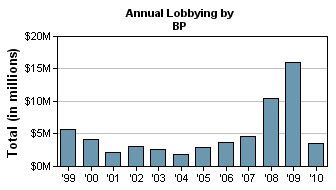
If BP faces heavy federal scrutiny, it’s well-positioned to fight back: The London-based company has consistently spent top dollar to influence legislative and regulatory activity in Washington, D.C., the Center for Responsive Politics finds.

During the 2008 election cycle, individuals and political action committees associated with BP — a Center for Responsive Politics’ “heavy hitter” — contributed half a million dollars to federal candidates. About 40 percent of these donations went to Democrats. The top recipient of BP-related donations during the 2008 cycle was President Barack Obama himself, who collected $71,000.

BP regularly lobbies on Capitol Hill, as well. In 2009, the company spent a massive $16 million to influence legislation. During the first quarter of 2010, it spent $3.53 million on federal lobbying efforts, ranking it second (behind ConocoPhillips) among all oil and gas industry interests.

Its registered lobbyists include a number of former federal government and high-ranking political campaign officials, including longtime political operative Tony Podesta, former congressional chief of staff Bob Brooks, former congressional legislative director David Pore and vice presidential aide Michael S. Berman, the Center’s research shows. 

The oil and gas industry, of which BP is a member, reported $169 million in 2009 lobbying expenditures.

Comparatively, the entire environmental industry spent $22 million on lobbying in 2009 — not much more than BP alone spent for the year. The most active member of the environmental industry, the Nature Conservancy, reported $2.2 million in 2009 expenditures. Last year, BP was active lobbying on the American Clean Energy Leadership Act of 2009, which allows increased oil and gas leasing in the Gulf of Mexico, in areas closer to shore than current law allows.

The bill also calls for additional research and inventory of oil and gas reserves in the U.S. Outer Continental Shelf. The bill is sponsored by Sen. Jeff Bingaman (D-N.M.), who has received $14,000 in campaign donations during the past two decades from those associated with BP, the Center finds.

In 2009, BP also lobbied on the Oil Spill Prevention Act of 2009 and the Clean Water Restoration Act.

The oil spill, which has yet to be remedied, was caused by an explosion on a BP-leased oil rig on April 20.

A state of emergency has since been enacted in Louisiana, and the White House has designated it an event of “national significance.” The oil well is reportedly leaking between 1,000 and 5,000 barrels a day, and rescue crews are trying to eliminate  the oil by setting it on fire, breaking it up with chemicals and skimming it off the surface of the ocean. Already, questions are being asked about cause and responsibility.

Upon hearing the cry for help in the Gulf of Mexico, Rep. Henry A. Waxman (D-Cal.), chairman of the House Energy and Commerce Committee, called for a “full blown investigation.”

In 2009, individuals and political action committees associated with BP donated $16,000 to members of the House Energy and Commerce Committee.

In addition, five of the all-time top 10 recipients of BP money in the House of Representatives sit on the House Energy Committee: John D. Dingell (D-Mich.) Joe Barton (R-Tex.), Ralph M. Hall (R-Tex.), Roy Blunt (R-Mo.) and Fred Upton, (R-Mich.).

All have received upward of $13,000 from BP-related individuals and political action committees during the past two decades. Dingell, the second most favored recipient of BP money in the House, has received $31,000.

Written by Cassandra LaRussa

© COPYRIGHT COMMON DREAMS, 2010

War Contractors Spent $27 Million Lobbying at Time of Surge

HUFFINGTON POST– The ten largest defense contractors in the nation spent more than $27 million lobbying the federal government in the last quarter of 2009, according to a review of recently-filed lobbying records.

The massive amount of money used to influence the legislative process came as the White House announced it would ramp up military activity in Afghanistan and Congress considered appropriations bills to pay for that buildup. All told, these ten companies, the largest revenue earners in the industry, spent roughly $7.2 million more lobbying in the fourth quarter of 2009 (October through December) than in the three months prior.

Such an increase in lobbying expenditures is partly a reflection of just how profitable the business of waging war can be. Each of these companies earned billions of dollars in defense contracts this past year. As the U.S. ramps up its military activities overseas, and the army is stretched thin by other ventures, it stands to reason that the contracts won’t dry up any time soon.

In mid-December, Congress passed a defense appropriations bill that totaled more than $635 billion. Shortly thereafter, the firm Northrop Grumman moved its corporate office to the Washington D.C. region to be closer to the heart of legislative action. Among the issues on which these ten firms lobbied, “appropriations” was the most frequently cited in lobbying forms.

“We’ve built Rome,” one longtime good-government official said of the symbiosis between contractors and the government.

On a related note, the Congressional Research Service released a report on Thursday, which showed that the number of private security contractors has bulged in the wake of Obama’s Afghanistan-surge announcement. Currently, contractors in Afghanistan make up between 22 percent and 30 percent of armed U.S. forces in Afghanistan.

Below is a breakdown of the military contractor, lobbying expenditures and the amount of money the company earned in contracts last year.

Company: Boeing
Lobbying In Fourth Quarter: $6.13 million
Lobbying In Third Quarter: $3.71 million
Federal Contracts in FY08 (according to fedspending.org): $23,547,610,878

Company: United Technologies
Lobbying In Fourth Quarter: $3.66 million
Lobbying In Third Quarter: $1.39 million
Federal Contracts in FY08: $8,973,091,375

Company: Lockheed Martin
Lobbying In Fourth Quarter: $3.16 million
Lobbying In Third Quarter: $3.1 million
Federal Contracts in FY08: $35,729,713,235

Company: Honeywell International
Lobbying In Fourth Quarter: $1.94 million
Lobbying In Third Quarter: $1.66 million
Federal Contracts in FY08: $2,439,634,130

Company: Northrop Grumman
Lobbying In Fourth Quarter: $5.43 million
Lobbying In Third Quarter: $3.62 million
Federal Contracts in FY08: $24,921,637,857

Company: General Dynamics
Lobbying In Fourth Quarter: $3,000,697
Lobbying In Third Quarter: $2,496,308
Federal Contracts in FY08: $14,244,546,441

Company: Raytheon
Lobbying In Fourth Quarter: $2.19 million
Lobbying In Third Quarter: $1.9 million
Federal Contracts in FY08: $14,276,349,843

Company: L3
Lobbying In Fourth Quarter: $1.05 million
Lobbying In Third Quarter: $990,000
Federal Contracts in FY08: $7,464,053,901

Company: Textron
Lobbying In Fourth Quarter: $460,000
Lobbying In Third Quarter: $890,000
Federal Contracts in FY08: $2,858,396,315

Company: Goodrich
Lobbying In Fourth Quarter: $447, 098
Lobbying In Third Quarter: $425,529
Federal Contracts in FY08: $490,224,761

© COPYRIGHT HUFFINGTON POST, 2010

Page 23 of 29<<...2122232425...>>