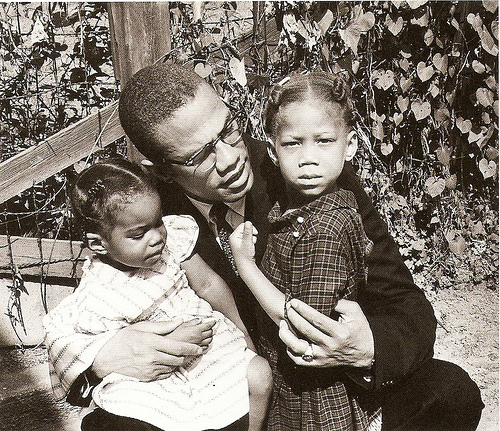
Malcolm X Killer Thomas Hagan Released After 44 Years

TIMES NEWSLINE– Thomas Hagan, 69, the sole confessor of Malcolm X killing has finally been granted parole. He was released Tuesday at 11 a.m. from minimum-security Lincoln Correctional Facility.

Since 1984, he has appealed to the parole board 14 times and each time his appeal has been turned down. His plea for freedom was based on the request to go back to his family and become a substance abuse counselor.

In his appeal to the Parole Board on the 3rd of March he said, “I have deep regrets about my participation in that,” “I don’t think it should ever have happened.” Hagan,69, will finally be released on Wednesday.

He was found guilty of killing Malcolm X and was sentenced to 20 years of imprisonment after his trial in 1966. However, he has been in a full-time work release program that gave him the opportunity to live with his family five days a week and report to the prison for two days.

His release was conditional of the fact that he would secure a job and support his children and also abide by curfew. He also had to undergo random drug tests during his stay outside the prison. Hagan was pronounced guilty of killing Malcolm X who was known as the leader of the Nation of Islam for whom whites were “blued eyed devils”. In his latter part of life Malcolm had a change of opinion about the whites and also feared an attack on his life from the nation of Islam because of his views.

Malcolm X and Dr. Betty Shabazz Memorial and Educational center is now housed at the same ballroom where he was killed. The Chairman of the Board Zead Ramadan said, “I personally find it strange that for a couple decades any person convicted in the assassination of such an iconic figure would be allowed such leniency,”

Malcolm X was on the dais of Audubon Ballroom with his wife Betty when he was fired at by the assailants. He was 39 at the time of his death. “Minister Malcolm was slaughtered like a dog in front of his family,” A. Peter Bailey, one of Malcolm X’s closest aides, told The New York Times on the 40th anniversary of the killing. His was killed soon after he accused Nation of Islam founder Elijah Muhammad of infedility and left them.

Continue reading about Malcolm X’s Killer Being Released.

© COPYRIGHT TIMES NEWS ONLINE, 2010

Photo by flickr user ProfAlliRich

One in Every 100 Americans Are in Jail

POST GAZETTE– Pennsylvania had the largest prison population growth in the Northeast last year, part of a national trend of proliferating prison populations in which more than one in 100 American adults now is incarcerated, according to a study released yesterday by the Pew Center’s Public Safety Performance Project.

In spite of the sobering statistics behind the highest imprisonment rate in American history, the report concluded that efforts to reduce incarceration and recidivism have proved effective in some states.

“We’ve crossed this statistical and psychological threshold, but we don’t have to keep heading down this path,” said the project’s director, Adam Gelb, in a news teleconference.

Pennsylvania added about 1,600 prisoners to its state prison population in 2007 — a 3.7 percent increase from the previous year – and totaled 46,028 on Jan. 1. While that was the highest numerical growth in the Northeast, it was far behind increases in Florida’s and Georgia’s incarcerations, which grew by 4,447 and 2,413, respectively.

Texas’ prison population – 171,790 – is the nation’s highest, according to the study.

The study concluded that much of the growth in prison populations has to do with “a wave of policy choices that are sending more lawbreakers to prison and, through popular ‘three-strikes’ measures and other sentencing enhancements, keeping them there longer.”

Alfred Blumstein, a criminologist at Carnegie Mellon University, said it has a lot to do with politics. In the early ’80s, Dr. Blumstein predicted that the prison population in Pennsylvania would continue to rise until the end of the decade and flatline at about 8,000 inmates.

Today, there are about 46,000 inmates. What he did not anticipate, he said, was a dramatic shift in the political paradigm in the early ’90s that led politicians to push for stricter penalties for all offenders, bloating the prison population.

“The political system took over,” he said. “As the public became increasingly concerned about crime, the politicians and particularly the Legislature responded by instituting a variety of tougher legislation such as mandatory minimum sentencing.

“It doesn’t necessarily work in reducing crime but it did work in satiating the public,” he said.

The study included some startling statistics.

Men are about 10 times more likely to be incarcerated, but the female population is growing at a faster rate. The study also found that age limits jail time. One in every 53 people in their 20s is in prison, but above age 55 that falls to one in 837. Even so, between 1992 and 2001, the number of state and federal inmates aged 50 and older rose from 41,586 to 113,358, a jump of 173 percent.

Continue reading about how 1 out of every 100 Americans are in jail.

Article written by Moriah Balingit

© COPYRIGHT POST GAZETTE, 2008

China Tries to Sterilize 10,000 Parents Over One Child Rule

TIMES ONLINE– Doctors in southern China are working around the clock to fulfil a government goal to sterilise — by force if necessary — almost 10,000 men and women who have violated birth control policies. Family planning authorities are so determined to stop couples from producing more children than the regulations allow that they are detaining the relatives of those who resist.

About 1,300 people are being held in cramped conditions in towns across Puning county, in Guangdong Province, as officials try to put pressure on couples who have illegal children to come forward for sterilisation. The 20-day campaign, which was launched on April 7, aims to complete 9,559 sterilisations in Puning, which, with a population of 2.24 million, is the most populous county in the province.

A doctor in Daba village said that his team was working flat out, beginning sterilisations every day at 8am and working straight through until 4am the following day. Zhang Lizhao, 38, the father of two sons, aged 6 and 4, said that he rushed home late last night from buying loquats for his wholesale fruit business to undergo sterilisation after his elder brother was detained. His wife had already returned so that the brother would be freed.

Mr Zhang said: “This morning my wife called me and said they were forcing her to be sterilised today. She pleaded with the clinic to wait because she has her period. But they would not wait a single day. I called and begged them but they said no. So I have rushed back. I am satisfied because I have two sons.”

Thousands of others have refused to submit and officials are continuing to detain relatives, including elderly parents, to force them to submit to surgery. Those in detention are required to listen to lectures on the rules limiting the size of families.

On April 10 The Southern Countryside Daily reported on about 100 people, mostly elderly, packed into a damp 200sq m (2,150sq ft) room at a township family planning centre. The newspaper said: “There were some mats on the floor but the room was too small for all people to lie down and sleep, so the young ones had to stand or squat. Owing to the lack of quilts, many cuddled up to fight the cold.”

Among those being held was the 68-year-old father of Huang Ruifeng, who has three daughters. Mr Huang said: “Several days ago a village official called me and asked me or my wife to return for the surgery. Otherwise they would take away my father.” He said that he was too busy to go and did not have confidence in village medical techniques. In any case, he wanted his wife to give birth to a son first.

An official at the Puning Population and Family Planning Bureau, who declined to be identified, told The Global Times: “It’s not uncommon for family planning authorities to adopt some tough tactics.”

In Puning county couples with illegal children and their relatives who apply for permits to build a house are rejected. Illegal children are refused residency registration, a penalty that denies them access to healthcare and education. Authorities have discovered, however, that those methods have less success than rounding up relatives. One official said that an investigation would be launched to establish whether authorities in Puning had exceeded their remit.

A state-level regulation stipulates that couples who violate the family planning policy must not be punished without proper authorisation and family members may not be penalised to put pressure on couples. In the years after China launched its strict “one couple, one child” family planning policy in the late 1970s abuses such as forced late-term abortions, sterilisations and even the killing of newborn babies were widely reported. Such practices have diminished in recent years, as the policy has become more widely accepted and exceptions have been introduced.

Officials in Puning are under particular pressure, however: they risk failing in their bid for promotion to a second-tier county if they cannot meet all quotas. That includes keeping the number of births within government limits. The county is under criticism from Guangdong authorities, who want to slow a population growth that is reflecting badly on the entire province. One reason for Puning’s large population is that families in the mainly rural region often have up to three or four children.

Many of those with extra children have left to find factory jobs along the more developed coast, taking advantage of being away from local government surveillance to give birth outside the quotas. Rules in Puning, as throughout rural China, allow farmers to have a second child if the first is a daughter. After that couples must stop. By the morning of April 12 Puning officials said that they had achieved, in a mere five days, about half of their sterilisation goal after their “education” persuaded people to comply.

Family planning

• China is the world’s most populous country with about 1.3 billion people. By 2025 the population is expected to exceed 1.4 billion

• The birthrate is low at 14 births per 1,000 people every year but the infant mortality rate is also low, at 20.25 deaths per 1,000 live births

• The single-child policy, referred to by the Chinese Government as the family planning policy, was introduced in 1978 to ensure that China could feed all of its people

• The policy stipulates that couples living in cities can have one child, unless one or both are from an ethnic minority or they are both only children. In most rural areas a couple may have a second child after a break of several years

• Despite the policy, it is common to find couples in the countryside, where 80 per cent of the population live, with a large number of children

• Many couples get round the law by sending pregnant women to stay with relatives, then claiming that the baby was adopted or belongs to a friend or relative

• Critics say that the policy has led to the killing of female infants because of the traditional preference for boys

Sources: BBC; CIA World Factbook

© COPYRIGHT TIMES ONLINE, 2010

Photo by Flickr user Benoitflorencon

Control of Public Media as a Social Justice Issue

TRUTHOUT– Media justice organizers at the Center for Media Justice (CMJ) and MAG-Net have recently produced a brilliant campaign plan (“The Campaign for universal broadband”) to win three policies crucial for just and democratic communication: network neutrality, universal broadband and universal service fund reform.

Considering the renewed struggle required to win these goals, and to protect them afterwards, two questions seem particularly important. First, to win media access rights, social justice movements need media access.

So, how do we get the kind of access that can allow us to succeed? Second, as net neutrality and universal broadband are not ends in themselves, but rather the means to enable a just and democratic media system, who should produce that system? Open access to a media system controlled by the status quo will not provide the necessary means for disadvantaged communities and social justice movements to change power relations.

To win and protect the three central policies of the MAG-Net plan, media justice movements must have allies at radio and TV stations – the leading sources of news for most people, especially those without the Internet (Pew Center for People and the Press). Mainstream commercial channels will not provide that access as they are also agents defending corporate power and driving social justice movements to the margins. So, what about public media?

The problem is that too often public broadcasting outlets have boards populated by elite and corporate representatives, who historically have used their power to filter out the very perspectives we seek to extend. However, a movement of active publics could restructure governance at public media and demand democratically elected boards. This change could enable representatives from diverse communities to make decisions about programming and provide new access for marginalized and oppressed social groups to shape and produce content, self-organize and build just social relationships.

So, like network neutrality and universal broadband, should social justice movements also consider control over public media to be a racial and economic justice issue? In the effort to constitute a just and a ubiquitous public media system, should a high priority be to demand direct, democratic community governance of publicly funded outlets, especially local NPR and PBS affiliates? Though flawed, badly funded and commercialized, CPB outlets are the material of an existing system that could – if under community control – be a new means for self-organization by diverse publics.

What do you think the priority is or should be for synergizing isolated community print, online, radio, PEG and other media producers into a new public system – creating a publicly controlled, radically reorganized, public media system that could enable social justice movements to change social conditions?

There are excellent reasons to conceive of network neutrality as a social justice issue. The Center for Media Justice made particularly important contributions to this understanding with their document “Network Neutrality, Universal Broadband, and Racial Justice,” as did CMJ’s Malkia Cyril and co-authors Joseph Torres and Chris Rabb with their statement, “The Internet Must Not Become a Segregated Community.” Both works powerfully clarify that the Internet system envisioned by corporate and state officials would create first- and second-class Netizens. As the net neutrality struggle continues to demonstrate, diverse publics must communicate and act on their own behalf to establish and preserve a policy for digital technology based on equal access.

However, marginalized communities must not hope that a neutral Internet will build a media system to meet their needs. It is time to give up any remaining illusions of technological determinism. There is no political orientation inherent in technology – not even a neutral digital network. Only the creative labor of our communities and our movements can produce the spaces we need to collaboratively create new understandings of ourselves and our purposes; to communicate, coordinate and act. Lacking creative action by our communities and movements, universal broadband would only enable widespread access to a system dominated by the same corporate and racist forces that dominate the current system. After all, war and injustice continue irrespective of Facebook, Twitter and Digg. Though perhaps it seems obvious, it is crucial to remember that it was primarily the culture of the producers – not the users – that shaped the Internet medium (Castells, The Internet Galaxy, 2003).

Historically marginalized communities now, at this crucial juncture, could wield power as producers to shape the Internet into a new media network to increase equity in media access and political participation. Movements for media justice could struggle to develop the Internet as a platform where marginalized communities can speak to themselves and to wider audiences.

As the CMJ’s statements on network neutrality and universal broadband remind us, social justice movements cannot simply trust professionals employed by either corporations or the state to decide which social groups get broadband access or what digital content we can access once online. That same critical logic applies to control over public media and public news production. Unfortunately, it is evident that professional journalists and their allies are organizing to create a revitalized public media system that they, state officials and corporate, elite, station trustees will largely control with little or no role for historically marginalized communities as decision makers or as content producers.

Professional news models of production are collapsing – or rather transforming. Professional journalists themselves are engaged in a desperate struggle to maintain their social position as elite interpreters of daily life through controlling access to the occupation of reporting. As professional journalists seek to reconstruct their gatekeeping authority over online news production, they are also rebuilding barriers to access that historically excluded people of color, the poor and working classes, political dissidents, LGBT communities, and other groups. In short, virtually every emerging model to “save journalism” presented by commercial – and public – media professionals (as well as some academics) reproduces old hierarchies that exclude disadvantaged communities from decision making.

For example, in December of 2009, the Federal Trade Commission (FTC) held a workshop deep within the beltway titled “How Will Journalism Survive the Internet Age?” These meetings attempted to make sure that journalism’s future will be market based. Of course, when market forces shape news production they inevitably shape the content and the political meaning of news. Renowned journalist Edward R. Murrow acknowledged as much when he warned, if “news is to be regarded as a commodity, only acceptable when saleable, then I don’t care what you call it – I say it isn’t news” (Speech to the Radio and Television News Directors Association (RTNDA) convention, Chicago, 10/15/1958). Murrow’s concern over corporate influence on news did not seem to be shared by the many FTC participants, who, instead, struggled to find ways that the government could help shore up the declining commodity value of news.

Even a workshop panel that explored noncommercial options, “Public- and Foundation-Funded Journalism,” (starts at about the 1:18:00 mark here; transcript starts at page 23 here) raised little criticism of corporate influence on news production. Perhaps unsurprisingly, the panel also displayed some of the same exclusions that media activists have critiqued for years, namely a lack of diversity: seven white men, two white women, and one male of color. This translates to 90 percent white, 80 percent male. Lacking representatives from disenfranchised communities, and entertaining no questions from the audience, there was almost no consideration of the issues important to historically marginalized social groups. It was almost as if the panelists had never read the Carnegie Commission report that founded public broadcasting and were unaware of the central role it defined for such groups. The Carnegie report called for a system that will “bring into the home” people’s “protests”; “provide a voice for groups in the community that may otherwise be unheard”; “increase our understanding of the world, of other nations and cultures, of the whole commonwealth of man”; and “help us to see America whole, in all its diversity.”

This is not to say that the word “diversity” was missing from their vocabularies, but that they used the word in restricted ways. The panelists did support a greater diversity of audiences and content. Panelists also advocated for “technological diversity” and the need for government money to fund it, as well as the need for new productive relationships with software developers. But never did they consider the possibility that the diverse communities they view as audiences also have a legitimate role to play making decisions about public media. Nor did panelists consider opening up new productive relationships – and, thus, career paths – to historically marginalized communities.

There was a little critical discussion about the influence of powerful commercial or state funders, but there was virtually no discussion about the difficulty of making journalism accountable to diverse publics. Instead, some of the most powerful representatives of journalism on the panel argued that the old system simply “worked,” and all that’s needed is more public money for journalists and technology. The best kind of accountability, they claimed, was for journalists to govern themselves using professional ethics and a strong “firewall” between the newsroom and funding.

To most of us, a firewall is that impenetrable metal barrier that protects the driver and passengers in a car from a conflagration in the engine compartment. There is no such physical divide when it comes to news production, as evidenced by decades of academic research, the work of groups such as Fairness and Accuracy in Reporting and common experience. Instead of the mythical firewall, a more honest depiction should acknowledge a historic and ongoing social struggle among publishers, journalists, designers, and powerful sources to shape the news to their own vision. Lacking power, disadvantaged communities are largely excluded from this struggle.

Panelist Jon McTaggart, the senior vice president & COO of American Public Media (producer of NPR’s MarketPlace), said, “I think that any serious news organization has a fire wall in place where organizational funding is certainly distinct from the activities of the journalists themselves.”

NPR President and CEO Vivian Schiller went farther and argued that firewalls truly do provide genuine accountability: “Advertising subsidizes the newspaper and all commercial media. You know, does that mean that newspapers have pulled their punches about those advertisers? Certainly not.” Astoundingly, she even claimed that there has never been “any instance in the history, at least, of NPR where a story has been slanted or, you know, favorable to a foundation funder.”

Eric Newton, vice president of the journalism program at the Knight Foundation, also argued that the old system successfully held commercial news media accountable. “It’s about professional ethics. And one of the great things about the commercial newspaper industry is how many hundreds of major newspapers have fantastic codes of ethics that they do hold each other accountable for and the professional organizations and journalism schools do hold them accountable.” He even made false and misleading claims that libraries and schools rely on professional ethics and self-governance to be accountable to their communities. Citizens in voting booths looking at their ballots may disagree. Publicly elected boards often govern public libraries and schools.

Even Josh Silver, executive director of Free Press, did little to challenge the clearly self-serving assertions raised by news producers and industry representatives, but, instead, reinforced their frames and ideas. For example, his statement, “we have to know that the firewall is rock-solid” accepts that firewalls could actually be “rock-solid,” that professional ethics and best practices could truly be a concrete substitute for public participation. Other statements he made further reinforced a conceptual division between expert professionals and the public, this time casting the FTC participants as legitimate decision makers over community needs: “[W]e need to figure out … what do communities really need” so that “we” can “really engage the public.” Who is this “we” that stands apart from the public, yet decides what that public truly needs?

As the only representative from a media activism movement on the panel, Silver should have defended public participation in the public media system. Instead, Silver’s only suggestions for “structural change” were for better ombudsmen, a different appointment process for CPB board members and an abandonment of the appropriations process. But as none of these ideas expose professionals or officials to any meaningful consequences from diverse publics, these ideas would in fact continue to structure public media as a domain of elite control. These changes would, he said, help to insulate public media from too much politics – and on this point he has it all upside down. After all, limiting decision making over public media to officials and insiders is to ensure that it is their political culture that will shape the medium. Should not media justice and democracy activists instead increasingly expose public media to the politics of economic and racial justice and democratic participation?

We need a media system that is partial to justice and the health of our communities. The media justice community and its allies need to critically analyze proposals to remake public media – most importantly those from the Knight Foundation and from Schudson and Downie. Despite the claims of media professionals, industry reps, and some academics, we cannot leave the development of public media to their expertise alone. Professional journalists, corporations, and state officials seem poised to produce a system that represents the relationships they need – not what marginalized communities and social justice movements need. They will give us a marketplace of their ideas and call it just.

(This article was published 4/12/10 as an op-ed at the Editor & Publisher web site.)

Article by Scott Owens and James Sanders

Creative Commons License
This work by Truthout is licensed under a Creative Commons Attribution-Noncommercial 3.0 United States License.

Oil Spill May Be Five Times Bigger Than Expected

COMMON DREAMS– The view from space indicates that the oil may be leaking at a rate of 25,000 barrels a day, dwarfing the figure of 5,000 barrels that US officials and the British oil giant BP have used in recent days.

A Northern Gannet bird, which is covered in oil from a massive spill in the Gulf of Mexico, pokes its head out from under a towel as members of Tri-State Bird Rescue and Research and the International Bird Research Center prepare to hydrate it in Fort Jackson, La., Saturday, May 1, 2010.

That would mean that some nine million gallons may already have escaped from the underwater well following the April 20 explosion that killed 11 rig workers. It suggests the disaster will almost certainly prove greater than the Exxon Valdez tanker spill off Alaska in 1989, which released 11 million gallons and was the worst previous spill at sea.

President Barack Obama will visit the region on Sunday morning, aides have announced. The trip comes amid mounting criticism that the White House has been slow to react to the crisis.

His predecessor, George W Bush, faced similar anger over the federal government’s handling of Hurricane Katrina in 2005. But the government has emphasised that responsibility for the clean-up rests with BP, which leased the rig and initially played down the scale of the leak.

As the administration steps up its operations, the Pentagon will spray the slick with chemical dispersants from military C-130 planes, although environmental groups warned that these could also seriously damage the eco-system.

Menwhile Eric Holder, the country’s attorney general, is dispatching a team of lawyers to New Orleans to assess whether any laws have been broken. BP, which leased the rig and owned the oil rights, had downplayed the possible danger of any spill – predicting “no significant adverse impact” – when it submitted its exploration plan last year.

The scale of the looming catastrophe was still unclear yesterday as strong winds hampered an emergency operation to mop up the 2,200 sq mile slick being blown towards the coast of five US states.

Even BP has acknowledged that the 5,000-barrels-a-day figure for the leak – already a five-fold increase on the 1,000 barrels that it initially gave – is only a “guesstimate”. The Coastguard has also said that that leak rate could turn out to be much greater than 5,000 barrels.

The implications of the higher figures for the fishing waters, wildlife and beaches of the Gulf – and the residents whose livelihoods depend upon them – are potentially devastating.

John Amos, director of SkyTruth, a satellite data monitoring outfit that supplies analysis to environmental groups, told The Sunday Telegraph that the images and information made public by BP indicated that the slick was made up of at least six million gallons of oil.

“That is a conservative estimate and it would mean that oil is leaking at a rate of 20,000 barrels a day,” he said. “That’s a real eye-opener. And I believe the true figure is significantly higher.”

Ian MacDonald, a Florida professor of oceanography who tracks maritime oil seepage, estimated that more than nine million gallons may already have escaped into the sea on the basis of higher industry estimates of the rate of leakage. BP engineers have been desperately and unsuccessfully trying to use unmanned submarines to initiate a failed switch-off device on the well about a mile beneath the surface of the water.

In the absence of such a quick-fix solution, the company is pursuing two other remedies to stop the leak, but both will take weeks or months.

In the medium-term, the company is hoping to cover the leaks with 100-ton steel domes that would capture the escaping oil and funnel it back to a ship at the surface through pipes. The technology has been deployed for leaks at much shallower depths but has never been used for a deep-sea spill.

It has also dispatched a drill ship to the area to begin digging a relief well that would intercept the oil from the existing pipes at about 18,000 feet below the surface. This will allow the company to close off the leaking well, but the process will take at least three months and possibly much longer.

At the same time, investigations have been launched into the two crucial failures – why the rig exploded and then why the automatic switch-off device did not then activate. Oil industry analysts believe the explosion was caused by a “blow-back” when a pressure surge thrust natural gas up to the rig platform. One area under focus is a recently-completed cementing operation by the company Haliburton, which was intended to prevent oil and gas from escaping by filling gaps between the outside of pipes and the inside of the hole drilled into the ocean floor into which they fitted.

According to a 2007 US government report, cementing was a factor in 18 of 39 well blow-outs in the Gulf of Mexico over a 14-year period. And investigators have also been told that cementing was a likely cause of a major 10-week blow-out in the Timor Sea off Australia last year.

Haliburton has declined to comment while the cause of the accident is being investigated and lawsuits are pending.

The second disastrous failure occurred when the rig’s “blowout preventer” – equipment that should have automatically blocked the well when the explosion occurred – failed to work. It has since emerged that the device did not have a remote-control shut-off mechanism – these are commonly required in most offshore oil producing nations, but not the US.

Fifty miles away, on the Louisiana coastline, communities that rely on the sea for their existence are now braced for the worst. Oyster beds could take 20 years to recover and world shrimp supplies will plummet as the Gulf waters are the largest source of the seafood.

There is widespread anger, not just at BP but also the federal government for what is perceived as a hopelessly tardy response. Locals have expressed disbelief that the deployment of booms – special floating barriers – to protect the coast only began nine days after the explosion.

Continue reading about how the Oil Spill May Be Five Times Bigger Than Expected.

© COPYRIGHT COMMON DREAMS, 2010

Photo by flickr user jeferonix.

Page 59 of 62<<...5758596061...>>