Canada’s Police State?


VIMEO– Interesting compilation of footage and informative analysis of the G20 protests in Toronto. The video shows obvious police provocation, negligence and abuse occurring during the summitt. Leaders spent over one billion dollars on security and police for the event.

Photo by Abby Martin

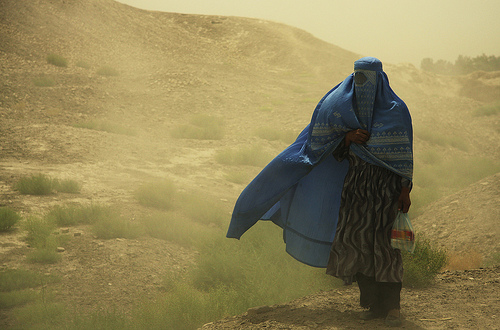
Self-Immolation by Women in Afghanistan Still Common

TIME–  Fawzia felt like she had no way out. Married off to her cousin at age 16, she had been beaten routinely by her husband and in-laws in their poor rural home in Paktia province for the first three years of her marriage. She complained bitterly to her parents, but no solution seemed imminent.

Marriage had become too much for her to bear. Then, after she saw her brother-in-law strike his wife on the head with a gun, Fawzia finally did what she had threatened to do many times before: she doused herself in cooking fuel and struck a match.

Now Fawzia (whose name has been changed because of her age) lies in a hospital bed with third-degree burns covering 35% of her body and ash coating the insides of her lungs. Her physician, Dr. Ahmed Shah Wazir, believes it’s unlikely that she will survive. The terrifying thing is that she is far from the only person in Afghanistan to take such drastic action.

The Ministry of Women’s Affairs has documented a total of 103 women who set themselves on fire between March 2009 and March 2010. No one knows what the real numbers are, given the difficulty of collecting data in the country. “More than 80% [who try to kill themselves in this way] cannot be saved,” says Wazir, who runs the burn unit at Kabul’s Istiqlal Hospital, one of only two such specialized wards in Afghanistan. (See pictures of Muslim women leading a soft revolution.)

Wazir believes that most of his would-be patients never make it to the hospital. In some cases, families are too ashamed or fearful of prosecution to report what happened. “There are many such cases where, because of honor, because of the media, [the families] don’t want to disclose it,” says Selay Ghaffar, director of the Kabul-based NGO Humanitarian Assistance for the Women and Children of Afghanistan (HAWCA). “I’m sure there are many, many cases that are still invisible.” “I have seen a number of instances of women setting themselves on fire in my life,” says Fawzia’s mother, wiping away tears. She insists that there is nothing unusual about her daughter. “Four months ago, someone else from our village lit herself on fire and died.”

In recent years, the dramatic suicide method employed by women in this war-torn country has drawn wide attention, amid speculation that the trend might be growing. Some, like Wazir, blame Iranian TV and cinema for romanticizing suicide by fire. (For example, in the 2002 movie Bemani, a girl uses self-immolation to escape a forced marriage.) He points out that many of his patients, including Fawzia, are refugees who have returned from Iran. Other observers argue that the practice has long existed as a method by which Afghan women try to escape their sorrows and that improved monitoring since the fall of the Taliban has only made it more prominent in public awareness. The Afghan government, however, says that in the past five years, the numbers have dropped.

Read full article about Afghan Women Self Immolation.

Photo by AfghanistanMatters Flickr User

© COPYRIGHT TIME, 2010

New Yorkers Still Living Behind Post-9/11 Checkpoints

SEATTLE TIMES– The street below Danny Chen’s window in lower Manhattan has changed over the last decade from a bustling four-lane thoroughfare to an empty road lined with police barricades.

To get home each day, Chen has to present his ID at a police checkpoint. When the officer lowers the metal gate into the ground to let him in, he drives through as quickly as he can. More than once, the barricade has risen too soon, lifting his wife’s minivan into the air.

Following the Sept. 11, 2001, terror attacks, the New York Police Department barricaded off its headquarters on Park Row. About 2,000 residents in two apartment complexes found themselves living inside a security zone.

Nine years later, they still are. Many vehicles, including commercial traffic, are forbidden on the street, which used to be a key link between the Financial District and Chinatown. “This used to be a bustling area,” said Chen, a 52-year-old software engineer. “Now, it’s ghost-townish.”

In big cities across the country, security planters, metal gates and the concrete slabs called Jersey barriers have sprung up near government buildings. Washington, D.C., is littered with bollards. Nearly half of Los Angeles’ financial district is now partially restricted, according to a study at the University of Colorado Denver. Roads across dams have been closed to traffic for security concerns.

“I don’t want us to lose a way of life that we’ve had, but sometimes we have to consider security, too,” said Pace University Professor Joe Ryan, whose daily commute has been rerouted because of a road closure over the Kensico Dam in Valhalla.

The restrictions are especially noticeable to those sharing a backyard with the NYPD. Park Row residents say ambulance response times have risen and traffic has become bottlenecked since they began living behind barricades.

Read full article about Post 9/11 Checkpoints.

© SEATTLE TIMES 2010

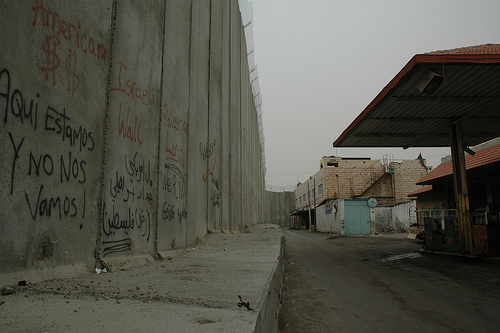
Israel Settlements Cover 42% of West Bank

SEATTLE TIMES– Jewish settlements control more than 42 percent of the West Bank, and much of that land was seized from Palestinian landowners in defiance of an Israeli Supreme Court ban, an Israeli human rights group said Tuesday.

The group’s findings echo what other anti-settlement activists have claimed in the past: That settlements have taken over lands far beyond their immediate perimeters, sometimes from private Palestinians. Israel’s settlements have been a much-criticized enterprise throughout the decades and a major obstacle to peacemaking with the Palestinians.

“The extensive geographic-spatial changes that Israel has made in the landscape of the West Bank undermine the negotiations that Israel has conducted for 18 years with the Palestinians and breach its international obligations,” the B’Tselem group said in a summary of its report.

Settlers disputed the figures and said the report by the B’Tselem group was politically motivated. Israeli officials had no comment. The report was based on official state documents, including military maps and a military settlement database, the B’Tselem said.

Although the actual buildings of the settlements cover just 1 percent of the West Bank’s land area, their jurisdiction and regional councils extends to more than 42 percent, the group added.

Continue reading about Israeli Settlements.

By AMY TEIBEL

Photo by flickr user Frecklebaum

© COPYRIGHT SEATTLE TIMES, 2010

Posted in Uncategorized | 1 Reply

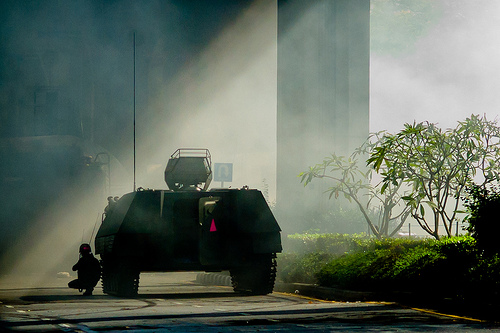
Thailand Extends Emergency Rule

AGENCE FRANCE PRESSE– Thailand on Tuesday extended emergency rule across about one quarter of the country by three months over lingering fears of unrest, despite calls from rights groups for the sweeping powers to be lifted.

The state of emergency, imposed in April after mass opposition protests broke out in the capital, will be maintained in Bangkok and 18 other provinces — out of a total of 76 — but lifted in five others, officials said.

Prime Minister Abhisit Vejjajiva said there were still reports of activity by the anti-government “Red Shirts”, whose protests in Bangkok erupted into the country’s worst political violence in decades.

“The government still needs the tools to ensure peace, order and stability for a while,” he said.

The emergency law bans public gatherings of more than five people and gives security forces the right to detain suspects for 30 days without charge.

The authorities have used the powers to arrest hundreds of suspects — including most of the top leaders of the “Red Shirt” protest movement — and shut down anti-government TV channels, radio stations and websites.

Two months of mass anti-government rallies from mid-March by the Red Shirts, who were seeking immediate elections, sparked outbreaks of violence that left 90 people dead, mostly civilians, and nearly 1,900 injured.

Continue reading about Thailand’s Emergency Rule.

© AGENCE FRANCE PRESS, 2010

Photo by null0 flickr user

Page 52 of 62<<...5051525354...>>