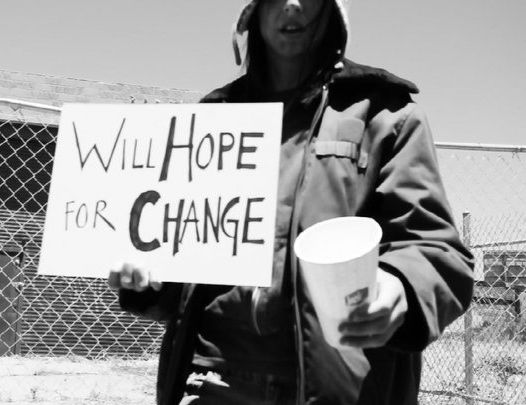
One Million US Public School Students Homeless

WSWS– A report released in July by the advocacy groups National Association for the Education of Homeless Children and Youth (NAEHCY) and First Focus reveals the explosive growth of homelessness among public school students during the economic crisis.

Based on Federal data from the US Department of Education, the number of students identified as homeless by public school districts rose by more than 40 percent between the 2006-2007 school year and 2008-2009, to 956,914. The figure has almost assuredly passed one million in the current school year.

That well over one million public school students are homeless is a damning indictment of the entire social order. The staggering growth in student homelessness took place simultaneously with the transfer of trillions of dollars in public funds to Wall Street, overseen by the administrations of former President George W. Bush and current President Barack Obama.

No part of the country was spared. NAEHCY and First Focus found that 70 percent of school districts reported an increase in homelessness since 2007-2008, and 39 percent reported enrolling more homeless students in the first six months of the 2009-2010 school year than in the entire previous year.

The worst affected states have been Texas and Iowa, with increases of 139 and 136 percent, respectively, between the 2006-2007 and 2008-2009 school year. Other hard-hit states include New Mexico (91 percent), Kansas (88 percent), New Jersey (84 percent), New York and South Dakota (73 percent), and Georgia (72 percent). Of the 50 states plus the District of Columbia, 13 registered increases of child homelessness of 50 percent or more.

In Delaware, one out of every forty students was homeless last year. “These children share bedrooms with extended family, check in to cheap motels, and sleep in cars or shelters,” the Delaware Online reports. “Some are with their parents. Others go it alone.”

School districts in major metropolitan areas like Chicago, Detroit, and New York are especially plagued by high levels of student homelessness. The Chicago Public Schools reported a 28 percent rise in homeless students from November 2007 to November 2008. At the end of the 2007-2008 school year, a record 10,642 CPS students were homeless. (See “Over ten thousand public school students homeless in Chicago”)

The numbers of homeless students are likely higher than the report indicates. “Every year we’re doing a better job at locating [homeless students],” John Elliott of Chesterfield County Public Schools in Virginia said. “[B]ut it’s not something a lot of people want to come forward and talk about, especially if you’ve lost your home in a foreclosure. You don’t really want a lot of people to know about that.”

Chesterfield County public schools saw a 45 percent increase in student homelessness between the last academic year and the current one. “Of the 526 students that the school system identified as homeless last year, most are in families who are ‘doubling up,’ meaning they are living in a temporary situation with friends, relatives or other families and have no permanent address,” according to the Chesterfield Observer. “Ninety-six students spent the school year living in motels. ‘Can you imagine living with parents and three or four children in one motel room…and trying to do homework?’ Elliott asks.”

Other children were living in homeless shelters, and at least one family in each of the county’s schools was living out of cars “or in similarly bleak circumstances.”

The Obama administration temporarily doubled the funding for combating student homelessness through the American Recovery and Reinvestment Act—to the miserly sum of $70 million. Even so, less than one in five of the nation’s school districts received any aid to deal with the growth of homeless students. Limited as it is, this extra funding is all but certain to be removed with the expiration of the federal stimulus.

Concern is growing among educators that none of the underlying causes of student homelessness—access to steady employment, affordable housing, transportation, and healthcare and other vital services—have been addressed. They point to the obvious fact that children who have no homes to return to after school face an enormous obstacle to learning.

“These kids have a lot more stress,” Kathleen Kropf of Macomb County (Michigan) Intermediate School District told The Voice, a local newspaper. “They know what is going on at home, if their parents have lost their jobs or their homes are in foreclosure. How can a child do well in school and on their tests if they have not eaten or are not sleeping or they are sick?” Macomb schools have seen an increase in student homelessness of over 50 percent since 2007.

The rapid growth in student homelessness is no accident. It is the inevitable result of policies consciously pursued by the Obama administration and both big business parties, which have ruled out any measures to address the social crisis, instead adopting policies designed to shift the full burden of the economic crisis onto the working class.

Photo by Neema Sadeghi

© COPYRIGHT WSWS, 2010
Netherlands Closed Prisons for Lack of Criminals

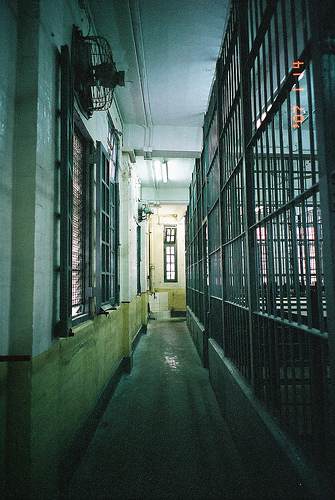
NRC– The Dutch justice ministry has announced it will close eight prisons and cut 1,200 jobs in the prison system. A decline in crime has left many cells empty.

During the 1990s the Netherlands faced a shortage of prison cells, but a decline in crime has since led to overcapacity in the prison system. The country now has capacity for 14,000 prisoners but only 12,000 detainees.

Deputy justice minister Nebahat Albayrak announced on Tuesday that eight prisons will be closed, resulting in the loss of 1,200 jobs. Natural redundancy and other measures should prevent any forced lay-offs, the minister said.

The overcapacity is a result of the declining crime rate, which the ministry’s research department expects to continue for some time.

Belgian prisoners

Some reprieve might come from a deal with Belgium, which is facing overpopulation in its prisons. The two countries are working out an agreement to house Belgian prisoners in Dutch prisons. Some five-hundred Belgian prisoners could be transferred to the Tilburg prison by 2010.

The Netherlands would get 30 million euros in the deal, and it will allow the closing of the prisons in Rotterdam and Veenhuizen to be postponed until 2012.

© COPYRIGHT NRC, 2010

Photo by flickr user Mocvdleung

Ban TV to Protect Children’s Health, Top Psychologist Says

DAILY MAIL– TV should be banned for toddlers and severely rationed for other youngsters to protect their health and family life, a leading psychologist will tell MEPs today. Dr Aric Sigman claims that millions of children spending hours slumped in front of TVs and computers is ‘the greatest unacknowledged health scandal of our time’.

He says it is linked to ills ranging from obesity and heart disease to poor grades and lack of empathy. Some British children spend as much as seven-and-a-half hours a day in front of a screen  –  the equivalent of a full year of 24-hour days by the age of seven.

Dr Sigman, an Associate Fellow of the British Psychological Society, believes that the youngest children, whose brains are undergoing massive development, should not watch any TV at all. From the ages of three to 12, boys and girls should be limited to an hour a day, rising to an hour and a half for teenagers.

The psychologist will tell an EU parliamentary working group on the ‘quality of childhood’ that TVs and computers should be kept out of bedrooms until a child is 15.

‘Governments throughout Europe regularly advise their citizens on the most intimate health matters: from daily grams of salt intake and units of alcohol to number of sexual partners,’ he will say.

‘Yet when it comes to children’s main waking activity, politicians are mysteriously lost for words.

‘Irrespective of what our children are watching or doing on the screen, a clear relationship is emerging between daily hours of screen time and negative medical, psychological, behavioural and educational consequences.

‘The more hours per day, the more likely the risk of these negative consequences and the greater their intensity.

Continue reading about Banning the TV.

Photo by Nathan Janes of UNPLUG THE SIGNAL

© COPYRIGHT DAILY MAIL, 2010

Posted in Uncategorized | 1 Reply

The City That Ended Hunger

YES!– “To search for solutions to hunger means to act within the principle that the status of acitizen surpasses that of a mere consumer.” -CITY OF BELO HORIZONTE, BRAZIL

In writing Diet for a Small Planet, I learned one simple truth: Hunger is not caused by a scarcity of food but a scarcity of democracy. But that realization was only the beginning, for then I had to ask: What does a democracy look like that enables citizens to have a real voice in securing life’s essentials? Does it exist anywhere? Is it possible or a pipe dream? With hunger on the rise here in the United States—one in 10 of us is now turning to food stamps—these questions take on new urgency.

To begin to conceive of the possibility of a culture of empowered citizens making democracy work for them, real-life stories help—not models to adopt wholesale, but examples that capture key lessons. For me, the story of Brazil’s fourth largest city, Belo Horizonte, is a rich trove of such lessons. Belo, a city of 2.5 million people, once had 11 percent of its population living in absolute poverty, and almost 20 percent of its children going hungry. Then in 1993, a newly elected administration declared food a right of citizenship. The officials said, in effect: If you are too poor to buy food in the market—you are no less a citizen. I am still accountable to you.

The new mayor, Patrus Ananias—now leader of the federal anti-hunger effort—began by creating a city agency, which included assembling a 20-member council of citizen, labor, business, and church representatives to advise in the design and implementation of a new food system. The city already involved regular citizens directly in allocating municipal resources—the “participatory budgeting” that started in the 1970s and has since spread across Brazil. During the first six years of Belo’s food-as-a-right policy, perhaps in response to the new emphasis on food security, the number of citizens engaging in the city’s participatory budgeting process doubled to more than 31,000.

The city agency developed dozens of innovations to assure everyone the right to food, especially by weaving together the interests of farmers and consumers. It offered local family farmers dozens of choice spots of public space on which to sell to urban consumers, essentially redistributing retailer mark-ups on produce—which often reached 100 percent—to consumers and the farmers. Farmers’ profits grew, since there was no wholesaler taking a cut. And poor people got access to fresh, healthy food.

When my daughter Anna and I visited Belo Horizonte to write Hope’s Edge we approached one of these stands. A farmer in a cheerful green smock, emblazoned with “Direct from the Countryside,” grinned as she told us, “I am able to support three children from my five acres now. Since I got this contract with the city, I’ve even been able to buy a truck.”

The improved prospects of these Belo farmers were remarkable considering that, as these programs were getting underway, farmers in the country as a whole saw their incomes drop by almost half.

In addition to the farmer-run stands, the city makes good food available by offering entrepreneurs the opportunity to bid on the right to use well-trafficked plots of city land for “ABC” markets, from the Portuguese acronym for “food at low prices.” Today there are 34 such markets where the city determines a set price—about two-thirds of the market price—of about twenty healthy items, mostly from in-state farmers and chosen by store-owners. Everything else they can sell at the market price.

“For ABC sellers with the best spots, there’s another obligation attached to being able to use the city land,” a former manager within this city agency, Adriana Aranha, explained. “Every weekend they have to drive produce-laden trucks to the poor neighborhoods outside of the city center, so everyone can get good produce.”

Another product of food-as-a-right thinking is three large, airy “People’s Restaurants” (Restaurante Popular), plus a few smaller venues, that daily serve 12,000 or more people using mostly locally grown food for the equivalent of less than 50 cents a meal. When Anna and I ate in one, we saw hundreds of diners—grandparents and newborns, young couples, clusters of men, mothers with toddlers. Some were in well-worn street clothes, others in uniform, still others in business suits.

“I’ve been coming here every day for five years and have gained six kilos,” beamed one elderly, energetic man in faded khakis.

“It’s silly to pay more somewhere else for lower quality food,” an athletic-looking young man in a military police uniform told us. “I’ve been eating here every day for two years. It’s a good way to save money to buy a house so I can get married,” he said with a smile.

No one has to prove they’re poor to eat in a People’s Restaurant, although about 85 percent of the diners are. The mixed clientele erases stigma and allows “food with dignity,” say those involved.

Belo’s food security initiatives also include extensive community and school gardens as well as nutrition classes. Plus, money the federal government contributes toward school lunches, once spent on processed, corporate food, now buys whole food mostly from local growers.

“We’re fighting the concept that the state is a terrible, incompetent administrator,” Adriana explained. “We’re showing that the state doesn’t have to provide everything, it can facilitate. It can create channels for people to find solutions themselves.”

For instance, the city, in partnership with a local university, is working to “keep the market honest in part simply by providing information,” Adriana told us. They survey the price of 45 basic foods and household items at dozens of supermarkets, then post the results at bus stops, online, on television and radio, and in newspapers so people know where the cheapest prices are.

The shift in frame to food as a right also led the Belo hunger-fighters to look for novel solutions. In one successful experiment, egg shells, manioc leaves, and other material normally thrown away were ground and mixed into flour for school kids’ daily bread. This enriched food also goes to nursery school children, who receive three meals a day courtesy of the city.
The result of these and other related innovations?

In just a decade Belo Horizonte cut its infant death rate—widely used as evidence of hunger—by more than half, and today these initiatives benefit almost 40 percent of the city’s 2.5 million population. One six-month period in 1999 saw infant malnutrition in a sample group reduced by 50 percent. And between 1993 and 2002 Belo Horizonte was the only locality in which consumption of fruits and vegetables went up.

The cost of these efforts?

Around $10 million annually, or less than 2 percent of the city budget. That’s about a penny a day per Belo resident.

Behind this dramatic, life-saving change is what Adriana calls a “new social mentality”—the realization that “everyone in our city benefits if all of us have access to good food, so—like health care or education—quality food for all is a public good.”

The Belo experience shows that a right to food does not necessarily mean more public handouts (although in emergencies, of course, it does.) It can mean redefining the “free” in “free market” as the freedom of all to participate. It can mean, as in Belo, building citizen-government partnerships driven by values of inclusion and mutual respect.

And when imagining food as a right of citizenship, please note: No change in human nature is required! Through most of human evolution—except for the last few thousand of roughly 200,000 years—Homo sapiens lived in societies where pervasive sharing of food was the norm. As food sharers, “especially among unrelated individuals,” humans are unique, writes Michael Gurven, an authority on hunter-gatherer food transfers. Except in times of extreme privation, when some eat, all eat.

Before leaving Belo, Anna and I had time to reflect a bit with Adriana. We wondered whether she realized that her city may be one of the few in the world taking this approach—food as a right of membership in the human family. So I asked, “When you began, did you realize how important what you are doing was? How much difference it might make? How rare it is in the entire world?”

Listening to her long response in Portuguese without understanding, I tried to be patient. But when her eyes moistened, I nudged our interpreter. I wanted to know what had touched her emotions.

“I knew we had so much hunger in the world,” Adriana said. “But what is so upsetting, what I didn’t know when I started this, is it’s so easy. It’s so easy to end it.”

Adriana’s words have stayed with me. They will forever. They hold perhaps Belo’s greatest lesson: that it is easy to end hunger if we are willing to break free of limiting frames and to see with new eyes—if we trust our hard-wired fellow feeling and act, no longer as mere voters or protesters, for or against government, but as problem-solving partners with government accountable to us.


Frances Moore Lappé wrote this article as part of Food for Everyone, the Spring 2009 issue of YES! Magazine. Frances is the author of many books including Diet for a Small Planet and Get a Grip, co-founder of Food First and the Small Planet Institute, and a YES! contributing editor.

The author thanks Dr. M. Jahi Chappell for his contribution to the article.


(photo by alicia roldan)


Netanyahu Rejects Peace Talks Based on 1967 Borders

HAARTEZ– Prime Minister Benjamin Netanyahu yesterday rejected a Palestinian demand that direct negotiations be based on a statement by the Quartet confirming its position that the future Palestinian state will be based on the 1967 borders.

Meeting in Jerusalem with U.S. envoy George Mitchell, Netanyahu repeated his demand for the renewal of direct talks without preconditions. Mitchell briefed Netanyahu on his meeting on Tuesday with Palestinian Authority President Mahmoud Abbas and gave the prime minister the Palestinian proposal.

According to Palestinian sources, Mitchell did not dismiss Abbas’ proposal. Abbas is demanding a clear framework for the direct talks and an Israeli commitment to cease construction activity in the settlement during the negotiations.

The Quartet – the United States, the United Nations, the European Union and Russia – issued the statement after a meeting in Moscow on March 19. It calls for 24 months of talks between Israel and the PA that would result in an agreement on the establishment of a Palestinian state.

The statement said that the founding of the Palestinian state would end the occupation that began in 1967. It also called on Israel to institute a total freeze of construction in West Bank settlements and to refrain from home demolitions in East Jerusalem. The declaration even went so far as to mention that the international community does not recognize Israel’s annexation of East Jerusalem.

Senior officials in Jerusalem who are involved in the efforts to renew direct peace talks said yesterday that Abbas’ latest formula was unacceptable to Netanyahu because it sought to impose preconditions that the Israeli public would oppose.

Read full article on Netanyahu Rejecting Peace Talks.

© COPYRIGHT HAARTEZ, 2010

Page 49 of 62<<...4748495051...>>