Net Neutrality Advocates Decry FCC ‘False’ Solution

COMMONDREAMS – The media advocacy group Free Press released the following statement in response to actions by the FCC today:

By a 3-2 vote Tuesday, the Federal Communications Commission approved new rules intended to prevent Internet providers like AT&T, Comcast and Verizon from acting as gatekeepers on the Web. The rules, however, heavily favor the industry they are intended to regulate, and leave consumers with minimal protections. Democratic Commissioners Mignon Clyburn and Michael Copps voted with Chairman Julius Genachowski, while Republican Commissioners Robert McDowell and Meredith Attwell Baker voted against.

Free Press Managing Director Craig Aaron made the following statement:

“We are deeply disappointed that the chairman chose to ignore the overwhelming public support for real Net Neutrality, instead moving forward with industry-written rules that will for the first time in Internet history allow discrimination online. This proceeding was a squandered opportunity to enact clear, meaningful rules to safeguard the Internet’s level playing field and protect consumers.

“The new rules are riddled with loopholes, evidence that the chairman sought approval from AT&T instead of listening to the millions of Americans who asked for real Net Neutrality. These rules don’t do enough to stop the phone and cable companies from dividing the Internet into fast and slow lanes, and they fail to protect wireless users from discrimination. No longer can you get to the same Internet via your mobile device as you can via your laptop. The rules pave the way for AT&T to block your access to third-party applications and to require you to use its own preferred applications.

“Chairman Genachowski ignored President Obama’s promise to the American people to take a ‘back seat to no one’ on Net Neutrality. He ignored the 2 million voices who petitioned for real Net Neutrality and the hundreds who came to public hearings across the country to ask him to protect the open Internet. And he ignored policymakers who urged him to protect consumers and maintain the Internet as a platform for innovation. It’s unfortunate that the only voices he chose to listen to were those coming from the very industry he’s charged with overseeing.”


The American Civil Liberties Union released this statement:

The Federal Communications Commission (FCC) today passed a new rule clarifying the legal authority of the FCC to enforce network neutrality principles. Network neutrality principles protect free speech online by prohibiting the owner of a network from prioritizing some content on the Internet while slowing other content.

The rule approved today by the FCC includes full network neutrality protections for the wired Internet, which includes cable and DSL service to homes and businesses, but provides lesser protections for wireless broadband service and may allow wireless broadband providers to block certain applications and services that compete with their own applications and services. The American Civil Liberties Union has called for network neutrality protections on both the wired and wireless Internet as important safeguards for free speech.
 
“Network neutrality principles are essential to protecting the First Amendment rights of Americans who rely on the Internet as a forum for free speech. While the new FCC rule creates stronger network neutrality protections for Americans who use the wired Internet, it fails to provide adequate protections for Americans who rely on wireless broadband service,” said Chris Calabrese, ACLU Legislative Counsel. “By creating two sets of regulations – one for the wired Internet and one for wireless broadband – and failing to ground them in the strongest legal protections available, the FCC has failed to protect free speech and Internet openness for all users. The ACLU will continue to fight for full network neutrality protections. Internet openness is key to protecting our First Amendment rights.”

The rule passed by the FCC today does not reclassify wireless broadband service as a telecommunications service, which the ACLU and other proponents of network neutrality have long urged. Treating broadband access as similar to phone service would have allowed the FCC to rely on its broader regulatory authority under Title II of the Communications Act to enforce network neutrality principles.

Article by CommonDreams

Photograph by Flickr user Sarah G

Senate Approves Repeal of ‘Don’t Ask Don’t Tell’

ABC NEWS– The campaign to repeal “don’t ask, don’t tell,” which bars gays and lesbians from serving openly in the U.S. military, gained a historic victory today with the Senate voting to end the policy and send the bill to President Obama’s desk.

Sixty-five Senators, including six Republicans, voted in favor of the measure. The House approved repeal earlier this week.

Passage of the bill to end “don’t ask, don’t tell” is a major victory for Obama, who has promised to end the 17-year-old law and had come under intense pressure from gay rights groups to do so before Republicans take control of the House in January.

“It is time to close this chapter in our history. It is time to recognize that sacrifice, valor and integrity are no more defined by sexual orientation than they are by race or gender, religion or creed. It is time to allow gay and lesbian Americans to serve their country openly,” Obama said in a statement hailing the historic Senate vote.

Still, advocates cautioned that gay and lesbian service members will not be immediately allowed to serve openly and could still face disciplinary action for revealing their sexual orientation.

The legislative repeal gives military leadership control of a timetable for implementing the change, stipulating that it can only occur after the president, Defense Secretary Robert Gates and Congress “certify” the military is ready. After certification, there would be a 60-day grace period before it takes effect.

Continue reading about the Senate approving the repeal of Don’t Ask Don’t Tell here.

photo by flickr user Essygie

© COPYRIGHT ABC NEWS, 2010

Chris Hedges: US Empire Could Collapse at any Time

RAW STORY– America’s military and economic empire could collapse at any time, but predicting the precise day, week or month of its potential demise is unattainable, according to a former New York Times war correspondent who spoke with Raw Story.

“The when and how is very dangerous to predict because there’s always some factor that blindsides you that you didn’t expect,” Pulitzer-winning journalist Chris Hedges said in an exclusive interview. “It doesn’t look good. But exactly how it plays out and when it plays out, having covered disintegrating societies, it’s impossible to tell.”

He explained that he learned this lesson as events unfolded around him in the fall of 1989. Then, members of the opposition to the Soviet Empire told him that they predicted travel across the Berlin Wall separating East from West Germany would open within the year.

“Within a few hours, the wall didn’t exist,” he said.

Hedges was one of the 131 activists were arrested in an act of civil disobedience outside the White House yesterday, even as Obama was unveiling a new report citing progress in the Afghanistan war.

Speaking to Raw Story on Wednesday night, he said the signs of US collapse are plain to see and compared the country’s course through Afghanistan to Soviet Russia’s.

“We’re losing [the war in Afghanistan] in the same way the Red Army lost it,” he said. “It’s exactly the same configuration where we sort of control the urban centers where 20 percent of the population lives. The rest of the country where 80 percent of the Afghans live is either in the hands of the Taliban or disputed.”

Read more about how the US empire could collapse at any time here.

© COPYRIGHT RAW STORY, 2010

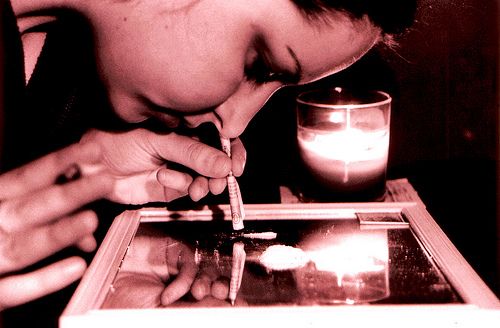
The Cocaine Trade- How it’s Made and How it Moves

The following is an excerpt from an article called The Mystery of the Tainted Cocaine, Part II: How It’s Made, How It Moves, and Who Might Be Cutting It with a Deadly Cattle-Deworming Drug

THE STRANGER Diego was 23 years old, a poor Colombian living in a poor section of Cali, when his girlfriend had the baby. He was broke—everybody was broke—but his grandmother knew where he could earn some money: He could go work the coca plantations in the hinterlands like she had. She could get him a job working for FARC (Fuerzas Armadas Revolucionarias de Colombia, Colombia’s Marxist-Leninist guerrilla army), which was better than working for the right-wing paramilitaries.

Diego is not his real name, and he’s currently living in a different Latin American country—otherwise, he said, he wouldn’t be talking to me.

“Not one person I met out there used cocaine,” Diego said. “We would chew on the leaves—to kill the hunger, the fatigue, to stop the pain of the work. You’d get bit by spiders and scorpions, mosquitoes or snakes, and you’d chew so you wouldn’t feel the pain. Some people believed the coca leaves would stop the poison and save your life.”

At his peak earning period, Diego was making the equivalent of US$600 per month. “Back then, that was good cash and it was fast,” he said. It was incredibly dangerous, too: People would go back home with wads of money, usually to bring to their families, and get robbed and killed along the way, sometimes by the same people they’d been working with in the fields for four or five months. When Diego traveled, he always went with an entourage of uncles or cousins.

After a while, Diego graduated from the fields to the “factory,” which was more like a shed, where he helped turn the raw leaves into cocaine paste. “Making the paste is gnarly,” his girlfriend said. “That’s where the real scars come in.”

“There’s a big pool with all the leaves, a big wood tub,” Diego explained. Workers would pour leaves into the tub, stomp them down, and then add gasoline to extract the cocaine alkaloids. “That’s the easiest way for the government to find the camps,” Diego said. “Gasoline is expensive, and most farmers don’t use that much—sugarcane and bananas are all farmed by hand—so you find whoever’s buying vats and vats of gasoline.”

They’d lay a tarp over the tub for 24 hours, with someone stirring the gasoline-coca stew every four or five hours. Then they’d taste the brew to see if it was strong enough. If it numbed the tongue, it was good. If not, it needed more chemicals. Diego doesn’t remember exactly which chemicals they used: “There were a lot of chemicals.” Eventually, they’d pull the plug on the tubs, collect the cocainized gasoline, add ammonia and sulfuric acid, and chemically reduce the brew into a paste that was taken elsewhere to be turned into cocaine hydrochloride—powder.

Diego and the other workers were encouraged to spit into the tubs holding gas and coca, and even pass spit-mugs around the camp, under the premise that saliva helped the extraction process. Workers were also encouraged to ash their cigarettes into the vats, perhaps because traditional coca chewers sometimes added a dab of quicklime or the ash of burned quinoa plants to their wad of coca. (Diego said he wasn’t sure why.)

Then there were the unauthorized additives. “Sometimes we’d piss or shit in the vats, just to be fuckers,” Diego said. “Only the rich use cocaine, and we thought it was funny.”

The territory where Diego was working—he still isn’t 100 percent sure where they were—was a death zone. The paramilitaries and guerrillas were fighting upriver, and he said that sometimes when he went to fetch water, he’d see dead bodies or severed limbs floating past. “I often heard people say things like ‘Yesterday I saw four bodies going down,'” Diego said. “All the time, people were talking about bodies. A lot of times they were tied together, big groups of people.”

Stories circulated from the guerrillas to the workers about small bands of soldiers who “went to make some business away from the group” and were savaged by larger groups of paramilitaries: “First they cut their hands off, then they cut their legs, and then they’d kill them.” The threat of infighting and defection was constant, as workers felt the tempting urge to abscond with packages of paste and sell them on their own.

Then, of course, there was the guerrilla war. In nearby villages, guerrillas and paramilitaries enforced curfews, telling villagers to “go to bed early, because if we see anyone walking around after 10:00 p.m., we’ll kill them.” They also went from village to village, Diego said, conscripting boys for their armies, sometimes leaving notes under people’s doors ordering them to bring their sons to the town center (the church, the plaza) at a certain time. If anyone refused, the soldiers might return to murder the entire family.

***

Diego never worked on the hydrochloride processing, the most chemically advanced and sensitive part of the process—the stage when the paste is turned into powder and, presumably, the stage at which levamisole, a cattle-deworming medicine that’s been showing up in the world’s cocaine supply, is added. As covered in the first part of this series—”The Mystery of the Tainted Cocaine,” August 19—the DEA reported finding levamisole in 73.2 percent of cocaine seized in the United States in 2009, up from a paltry 1.9 percent in 2005. The DEA has also found levamisole-tainted cocaine in busts in Colombia and even in the plastic laminate on glossy calendars shipped into the U.S.—the laminate itself is impregnated with cocaine. (The DEA has agents working across Latin America.) This indicates that levamisole is being added at the source, in the labs where the paste is turned to powder.

When levamisole is ingested by humans, it can trigger a catastrophic immune-system crash called agranulocytosis; it has led to an unknown number of hospitalizations and multiple deaths among cocaine users in the past two years. Physicians in Seattle have reported seeing the same cocaine users land in the hospital with agranulocytosis on multiple occasions.

Levamisole is an unusual—and unprecedented—cutting agent because it’s more expensive than other cuts, it makes some customers sick, and it’s being cut into the cocaine before it hits the United States. Smugglers typically prefer to move pure product, which is less bulky and results in less chance of detection. “The Mystery of the Tainted Cocaine” offered a few theories about why South American drug manufacturers (mostly Colombian) are cutting their cocaine with levamisole.

A quick review of those theories:

1. Levamisole might produce a cocainelike stimulant effect either on its own or in conjunction with cocaine (in 2004, racehorses treated with levamisole were found to metabolize the deworming drug into an amphetamine-like stimulant called aminorex), meaning the product could produce a more substantial high with less pure cocaine.

2. Levamisole, unlike other cutting agents, retains the iridescent, fish-scale sheen of pure cocaine, making it easier to visually pass off levamisole-tainted cocaine as pure.

3. Levamisole passes the “bleach test,” a quick street test that reveals cuts like sugar or lidocaine (but, because of a chemical anomaly, not levamisole).

4. Levamisole is a bulking agent for crack. Making crack involves purifying cocaine and washing out the cutting agents, but levamisole molecules slip through this process—meaning a dealer can produce more volume of crack with less pure cocaine.

***

Read the full article on The Mystery of the Tainted Cocaine, Part II: How It’s Made, How It Moves, and Who Might Be Cutting It with a Deadly Cattle-Deworming Drug

Written by Brendan Kiley

Photo by Flickr user Andronicusmax

© COPYRIGHT THE STRANGER, 2010

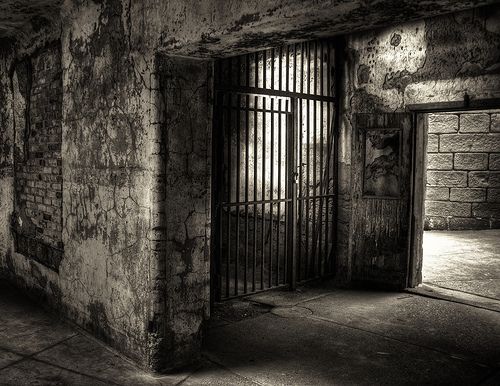
Prison Is No Place for Persons With Mental Illness

Photo by Bob Jagendorf/flickrTHE PROGRESSIVE – Dec. 10 is international human rights day, and one thing we can do in the United States to honor it is to stop incarcerating persons with disabilities.

I was the young, urban teen ribbed for wearing thick glasses and hearing aids.

I was placed in special education classes.

I fought a lot.

And I ended up in the juvenile justice system, where about 70 percent of us had mental health disorders.

I am now a man with a floating diagnosis of schizophrenia and bi-polarity.

And at age 17, I was sentenced to life in prison and quickly ended up in solitary confinement, a condition that added to my mental suspicions, my fears and my frustration at not being able to hear or see well.

You, as a taxpayer, now pay $30,000 a year for my care.

Early, effective community mental health and diversion programs could have helped me become a non-threatening, productive member of society — and could have saved you a lot of money.

I don’t deny that I should be punished for my crime. I do contend it did not need to happen.

We need to provide access to treatment services for all people.

We need to evaluate disabilities early and help families understand the need to get help for their special-needs children.

We need programs to help these families pay for the treatment and glasses or hearing aids or other adaptations their children need.

We need to step beyond the stigmas of mental illness and disability.

We need better communication among treatment providers, our courts and corrections.

If, as Dostoevsky wrote, “The degree of civilization in a society can be judged by entering its prisons,” then we have a long way to go.

Let us start by acknowledging that incarceration is not the answer for persons with disabilities.

Treatment is a human right for people with disabilities.

On international human rights day, we can at least affirm that.

Written by DarRen Morris

© COPYRIGHT THE PROGRESSIVE MAGAZINE, 2010

Photograph by flickr user: Bob Jagendorf

Page 44 of 62<<...4243444546...>>