Revolution: Egypt Protest Death Toll Passes 100

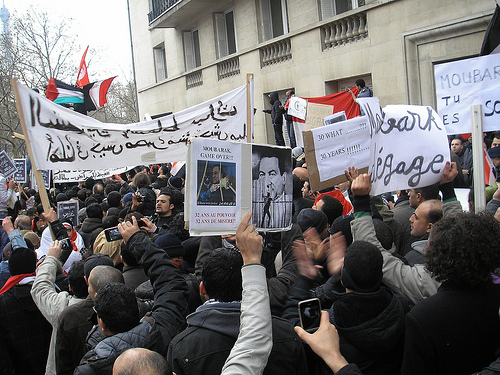
HARAKAH DAILY–  At least 100 Egyptian protesters have been killed during clashes with police as the explosion of anger at President Hosni Mubarak continues to rock the North African country.

Medical sources stated on Saturday that over 100 people, including 23 protesters in the port city of Alexandria have lost their lives in streets fighting with police forces across Egypt since the outbreak of anti-government protests, while 13 people were killed and 75 others injured in the flash point city of Suez, along the strategic Suez Canal.

According to medical sources, at least 1,030 protesters have been injured as mass protests remain unabated across the country for a fifth consecutive day.

The worst unrest in Egypt’s history appeared to be ceaseless and police have reportedly fired tear gas and rubber bullets at the protesters.

The fall-out comes after a curfew from 6 p.m. to 7 a.m. was imposed Friday in Cairo, Suez and Alexandria.

In another development, Mohamed El Baradei, one of Mubarak’s fiercest critics and a former head of the International Atomic Energy Agency, was detained by Egyptian police after appearing on the streets in the capital Cairo.

ElBaradei has promised that the street protests will continue with even more intensity until Mubarak resigns.

Continue reading about the Eqyptian Revolution.

Photo by flickr user Jacques Delarue

© COPYRIGHT HARAKAH DAILY, 2011
Pakistan Floods Crisis Is Far From Over, Says Oxfam

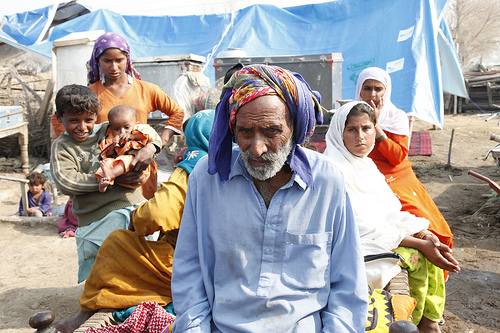
BBC – Six months after Pakistan’s worst monsoon floods in 80 years, Oxfam says the crisis is far from over and could even get worse. 

The UK-based agency says malnutrition levels in the south have soared, and the aid community has only “scratched the surface of human need”.

At least 170,000 people remain in relief camps and swathes of land are still under foul water in the south.

Pakistan’s government is to halt most emergency relief efforts this month.

The UN appeal for $2bn (£1.26bn) to rebuild Pakistan remains only 56% funded.

Click to continue reading about Pakistan’s flood crisis.

BBC © MMXI

Photograph by DFID – UK Department for International Development

Many Students Don’t Learn Critical Thinking in College

ALTERNET– What happens when you fail to invest in education (and no, I don’t mean investment in excessive layers of school administration), the most important single item in our nation’s success or failure? You end up with this result:

An unprecedented study that followed several thousand undergraduates through four years of college found that large numbers didn’t learn the critical thinking, complex reasoning and written communication skills that are widely assumed to be at the core of a college education.

Many of the students graduated without knowing how to sift fact from opinion, make a clear written argument or objectively review conflicting reports of a situation or event, according to New York University sociologist Richard Arum, lead author of the study. The students, for example, couldn’t determine the cause of an increase in neighborhood crime or how best to respond without being swayed by emotional testimony and political spin. […]

Forty-five percent of students made no significant improvement in their critical thinking, reasoning or writing skills during the first two years of college, according to the study. After four years, 36 percent showed no significant gains in these so-called “higher order” thinking skills. Read more: link

By the time our kids get to college it is too late to change habits por learn new skills that should have been taught to them in grade k-12 in my opinion. This study does not merely condemn colleges, it throws a harsh light on our primary education system on this country. In general, the US doesn’t pay our teachers well (compared to other professions and other nations), nor do we reward them for excellence, nor do we often provide them with a system that accurately assesses their efforts (i.e., No child left behind ring any bells?).

Continue reading about Students Not Learning Critical Thinking in College.

Photo by flickr user Shutterhacks

© COPYRIGHT ALTERNET, 2011

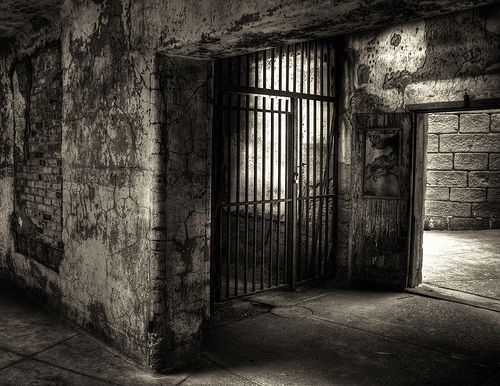
America: Incarceration Up, Education Down

NEWS JUNKIE POST– America incarcerates more of it’s citizens than any other country in the world.  With only 5% of the world population, America has more than 25% of the world’s prisoners.  America is either the country with the most criminals in the world, the country that has become the greatest police state in the world, or the country whom, with profit as the motive for all that is done, has found a way to exploit it’ population through incarceration for monetary gain.

The steep incline in the number of Americans incarcerated began in 1980.  Since that time the number of Americans incarcerated has jumped from under 500,000 people to close to 2,500,000.   The advent of private prisons during that time has created a powerful lobby, on behalf of its Wall Street investors, to lengthen sentences.  Longer sentences means more prisoners.  More prisoners means more prisons.  More prisoners, and more prisons, means more profit.  As a result, Americans now spend almost $70 billion a year on a corrections system (including prison, probation and parole) being run largely for profit.

A similar scheme by lobbyists has resulted in a system that exploits education, and has an equally negative affect on society.  Lobbyists have repeatedly, and successfully, argued for the increase in financial aid to students.  Rather than this assistance being passed on to students, privately run Universities have simply raised tuition.

They are a business — higher ed must be a viewed as a business. Like any other business, what they are all about is making more money..,” states Dr. Marty Nemko, an advisor, career counselor, talk radio host, and prolific blogger, as quoted in the Daily Caller.

In addition to the exploitation of post-secondary school students, elementary and secondary students are hit particularly hard by systemic inequalities which promote self-perpetuating cycles of inadequate education and rising incarceration.  As Steven Hawkins wrote in his article ‘Education vs Incarceration’ last month;

This trade-off between education and incarceration is particularly acute at the community level. In many urban neighborhoods where millions of dollars are spent to lock up residents, the education infrastructure is crippled. As the prison population skyrocketed in the past three decades, researchers began to notice that high concentrations of inmates were coming from a few select neighborhoods — primarily poor communities of color — in major cities. These were dubbed “million — dollar blocks” to reflect that spending on incarceration was the predominant public — sector investment in these neighborhoods. NAACP research shows that matching zip codes to high rates of incarceration also reveals where low-performing schools, as measured by math proficiency, tend to cluster. The lowest-performing schools tend to be in the areas where incarceration rates are the highest. The following [example is] instructive.

Continue reading about Incarceration Rates Going Up as Education Goes Down.

Photo by Flickr user Bob Jagendorf

© COPYRIGHT NEWS JUNKIE POST, 2011

Stopping Rape Used to ‘Cure’ South African Lesbians

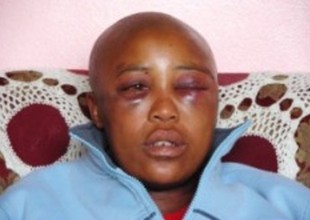
ALTERNET– The photograph is not easy to look at, and it’s not clear at first glance if Millicent Gaika, the woman in the photo, is dead or alive. Huge purple bruises surround both of her swollen eyes, and her neck is crisscrossed by a number of open gashes and scars. By now the bruises have subsided, some of the scars have healed, and in court testimony in November Millicent was able to tell a judge about how the man who raped her said, “I know you are a lesbian. You are not a man, you think you are, but I am going to show you, you are a woman.” That man, Andile Ngoza, is now out on the streets, despite being released and re-arrested after the attack on Millicent. His bail this time, for violating the terms of his parole, was set at 60 Rand, or just under $10 USD.

“To use a very South African term, I was just so hurtful,” Billi du Preez, a volunteer activist with Luleki Sizwe, tells me. Luleki Sizwe, a small, all-volunteer group that campaigns for LGBT people, is based in Capetown’s mostly poor black townships and rural areas. The organization works with and supports women who have been victims of what has fast become a ubiquitous form of  targeted sexual violence in South Africa: “corrective rape” against gay women or women suspected of being gay, as a form of “curing” them. The most disturbing thing about the attack on Millicent is not how rare it is in South Africa—but how common. The organization itself is named after two women who were killed from “corrective rape”-related health complications. One of those women was the fiancé of the organization’s founder, Ndumie Funda.

“These crimes have been going on for years already, and we haven’t been getting anywhere,” says Billi. “Millicent’s case has been put off and put off. When the perpetrator, who’s running free, started threatening Millicent again, I decided enough is enough.”

After years of rallying, marching, and local organizing by members of Luleki Sizwe, what Billi did next was take a shot in the dark. She drafted text to accompany the photo of Millicent’s battered face, and a few weeks ago sent it in as a petition to Change.org, a popular social action platform, demanding that the South African Ministry of Justice declare “corrective rape” a hate crime. What happened next took her, and many others, by surprise. Within a matter of weeks, the petition has garnered over 130,000 signatures from almost every country in the world and is growing quickly, making it the site’s most popular petition to date.

Continue reading about the Campaign to Stop Rape Used to ‘Cure’ South African Women of Homosexuality.

Photo by Luleki Sizwe

© COPYRIGHT ALTERNET, 2011

Page 41 of 62<<...3940414243...>>