Economic Inequality In US Worse Than Egypt

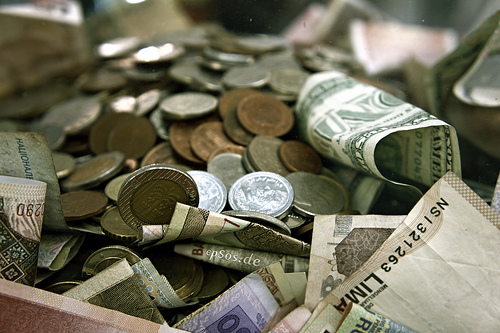
NEWSVINE– According to the CIA World Fact Book, the U.S. is ranked as the 42nd most unequal country in the world, with a Gini Coefficient of 45.

In contrast:

Tunisia is ranked the 62nd most unequal country, with a Gini Coefficient of 40.
Yemen is ranked 76th most unequal, with a Gini Coefficient of 37.7.
And Egypt is ranked as the 90th most unequal country, with a Gini Coefficient of around 34.4.
And inequality in the U.S. has soared in the last couple of years, since the Gini Coefficient was last calculated, so it is undoubtedly currently much higher.
So why are Egyptians rioting, while the Americans are complacent?

Well, Americans – until recently – have been some of the wealthiest people in the world, with most having plenty of comforts (and/or entertainment) and more than enough to eat.

But another reason is that – as Dan Ariely of Duke University and Michael I. Norton of Harvard Business School demonstrate – Americans consistently underestimate the amount of inequality in our nation.

As William Alden wrote last September:

Americans vastly underestimate the degree of wealth inequality in America, and we believe that the distribution should be far more equitable than it actually is, according to a new study.

Or, as the study’s authors put it: “All demographic groups — even those not usually associated with wealth redistribution such as Republicans and the wealthy — desired a more equal distribution of wealth than the status quo.”

The report … “Building a Better America — One Wealth Quintile At A Time” by Dan Ariely of Duke University and Michael I. Norton of Harvard Business School … shows that across ideological, economic and gender groups, Americans thought the richest 20 percent of our society controlled about 59 percent of the wealth, while the real number is closer to 84 percent.

Written by John Russel

© COPYRIGHT NEWSVINE, 2011

Photo by flickr user SOS.de

Why are the rich getting richer while the poor are getting poorer in the United States?


China’s Poor Treated to Fake Rice Made From Plastic

RAW STORY– China’s history with food safety is a rocky one, but even in the annals of robbery and abuse, this will go down in infamy.

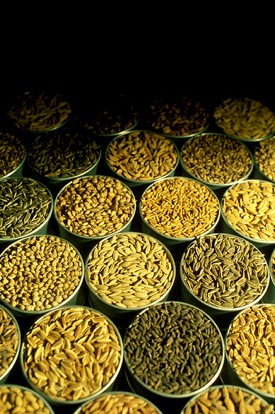
Various reports in Singapore media have said that Chinese companies are mass producing fake rice made, in part, out of plastic, according to one online publication Very Vietnam.

The “rice” is made by mixing potatoes, sweet potatoes and plastic. The potatoes are first formed into the shape of rice grains. Industrial synthetic resins are then added to the mix. The rice reportedly stays hard even after being cooked.

The Korean-language Weekly Hong Kong reported that the fake rice is being sold in the Chinese town of Taiyuan, in Shaanxi province.

“A Chinese Restaurant Association official said that eating three bowls of this fake rice would be like eating one plastic bag. Due to the seriousness of the matter, he added that there would be an investigation of factories alleged to be producing the rice,” Very Vietnam noted.

Unfortunately, it’s not the first time fake rice has been sold in China, according to China’s Global Times.

Read more about China’s Poor Treated to Fake Rice Made From Plastic.

© COPYRIGHT RAW STORY, 2011

Photo by flickr user IRRI Images

Looters Included Undercover Egyptian Police

WASHINGTON POST– Human Rights Watch confirmed several cases of undercover police loyal to Egyptian President Hosni Mubarak’s regime committing acts of violence and looting in an attempt to stoke fear of instability as demonstrations grew stronger Tuesday against the autocratic leader.

Peter Bouckaert, the emergency director at Human Rights Watch, said hospitals confirmed that they received several wounded looters shot by the army carrying police identification cards. They also found several cases of looters and vandals in Cairo and Alexandria with police identification cards. He added that it was “unexplainable” that thousands of prisoners escaped from prisons over the weekend.

“Mubarak’s mantra to his own people was that he was the guarantor of the nation’s stability. It would make sense that he would want to send the message that without him, there is no safety,” Bouckaert said.

Over the past three days, state television has been reporting alarmist news about violence and criminals among the demonstrations in an attempt to discredit the democratic movement.

The rights group’s findings came as pro-democracy demonstrators converged on Tahrir Square in Cairo, vowing to bring 1 million people to the streets of Egypt.

© WASHINGTON POST 2011

Photo by p_a_h

VBS Guide to North Korea


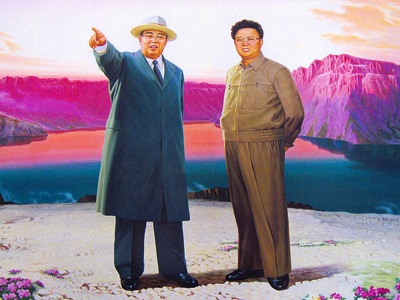
MR: VBS’s guide to North Korea is a disturbing look at inside one of the most closed off, totalitarian societies that exists on earth today. From the second that VBS creator Shane Smith steps foot into Kim Jong Il’s sheltered country, he realizes that everything he is about to encounter is a carefully constructed facade…

VBS– Getting into North Korea was one of the hardest and weirdest processes VBS has ever dealt with. After we went back and forth with their representatives for months, they finally said they were going to allow 16 journalists into the country to cover the Arirang Mass Games in Pyongyang. Then, ten days before we were supposed to go, they said, “No, nobody can come.” Then they said, “OK, OK, you can come. But only as tourists.” We had no idea what that was supposed to mean. They already knew we were journalists, and over there if you get caught being a journalist when you’re supposed to be a tourist you go to jail. We don’t like jail. And we’re willing to bet we’d hate jail in North Korea. But we went for it.

The first leg of the trip was a flight into northern China. At the airport, the North Korean consulate took our passports and all of our money, then brought us to a restaurant. We were sitting there with our tour group, and suddenly all the other diners left and these women came out and started singing North Korean nationalist songs. We were thinking, “Look, we were just on a plane for 20 hours. We’re jet-lagged. Can we just go to bed?” but this guy with our group who was from the LA Times told us, “Everyone in here besides us is secret police. If you don’t act excited then you’re not going to get your visa. So we got drunk and jumped up onstage and sang songs with the girls. The next day we got our visas. A lot of people we had gone with didn’t get theirs. That was our first hint at just what a freaky, freaky trip we were embarking on.

-Shane Smith, Vice Founder

Photo by flickr user yeowatzup

The Torture Career of Egypt’s New Vice President

COMMONDREAMS – In response to the mass protests of recent days, Egyptian President Hosni Mubarak has appointed his first Vice President in his over 30 years rule, intelligence chief Omar Suleiman. When Suleiman was first announced, Aljazeera commentators were describing him as a “distinguished” and “respected ” man. It turns out, however, that he is distinguished for, among other things, his central role in Egyptian torture and in the US rendition to torture program. Further, he is “respected” by US officials for his cooperation with their torture plans, among other initiatives.

Katherine Hawkins, an expert on the US’s rendition to torture program, in an email, has sent some critical texts where Suleiman pops up. Thus, Jane Mayer, in The Dark Side, pointed to Suleiman’s role in the rendition program:

Each rendition was authorized at the very top levels of both governments….The long-serving chief of the Egyptian central intelligence agency, Omar Suleiman,     negotiated directly with top Agency officials.  [Former U.S. Ambassador to Egypt] Walker described the Egyptian counterpart, Suleiman, as “very bright, very realistic,” adding that he was cognizant that there was a downside to “some of the negative things that the Egyptians engaged in, of torture and so on. But he was not squeamish, by the way” (pp. 113).

Stephen Grey, in Ghost Plane, his investigative work on the rendition program also points to Suleiman as central in the rendition program:

To negotiate these assurances [that the Egyptians wouldn’t “torture” the prisoner delivered for torture] the CIA dealt principally in Egypt through Omar Suleiman, the chief of the Egyptian general intelligence service (EGIS) since 1993. It was he who arranged the meetings with the Egyptian interior ministry…. Suleiman, who understood English well, was an urbane and sophisticated man. Others told me that for years Suleiman was America’s chief interlocutor with the Egyptian regime — the main channel to President Hosni Mubarak himself, even on matters far removed from intelligence and security.

Suleiman’s role, was also highlighted in a Wikileaks cable:

In the context of the close and sustained cooperation between the USG and GOE on counterterrorism, Post believes that the written GOE assurances regarding the return of three Egyptians detained at Guantanamo (reftel) represent the firm commitment of the GOE to adhere to the requested principles. These assurances were passed directly from Egyptian General Intelligence Service (EGIS) Chief Soliman through liaison channels — the most effective communication path on this issue. General Soliman’s word is the GOE’s guarantee, and the GOE’s track record of cooperation on CT issues lends further support to this assessment. End summary.

However, Suleiman wasn’t just the go-to bureaucrat for when the Americans wanted to arrange a little torture. This “urbane and sophisticated man” apparently enjoyed a little rough stuff himself.

Shortly after 9/11, Australian citizen Mamdouh Habib was captured by Pakistani security forces and, under US pressure, torture by Pakistanis. He was then rendered (with an Australian diplomats watching) by CIA operatives to Egypt, a not uncommon practice. In Egypt, Habib merited Suleiman’s personal attention. As related by Richard Neville, based on Habib’s memoir:

Habib was interrogated by the country’s Intelligence Director, General Omar Suleiman…. Suleiman took a personal interest in anyone suspected of links with Al Qaeda. As Habib had visited Afghanistan shortly before  9/11, he was under suspicion. Habib was repeatedly zapped with high-voltage electricity, immersed in water up to his nostrils, beaten, his fingers were broken and he was hung from metal hooks.

That treatment wasn’t enough for Suleiman, so:

To loosen Habib’s tongue, Suleiman ordered a guard to murder a gruesomely shackled Turkistan prisoner in front of Habib – and he did, with a vicious karate kick.

After Suleiman’s men extracted Habib’s confession, he was transferred back to US custody, where he eventually was imprisoned at Guantanamo. His “confession” was then used as evidence in his Guantanamo trial.

Click to continue reading the full article on Egypt’s new VP, Omar Suleiman.

Written by Stephen Soldz, psychoanalyst, psychologist, public health researcher, and faculty member at the Boston Graduate School of Psychoanalysis. He edits the Psyche, Science, and Society blog. Soldz is a founder of the Coalition for an Ethical Psychology, one of the organizations working to change American Psychological Association policy on participation in abusive interrogations; he served as a psychological consultant on several Gutanamo trials. Currently Soldz is President of Psychologists for Social Responsibility [PsySR] and a Consultant to Physicians for Human Rights.

© COPYRIGHT COMMONDREAMS, 2011

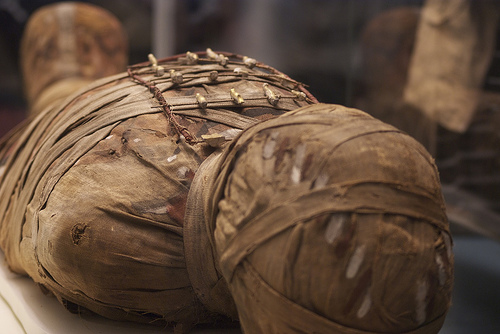
Photograph by hermmermferm

Page 40 of 62<<...3839404142...>>