VBS TV: Pakistan After Bin Laden

VBS TV– For part one of Vice’s recent journey into Pakistan, Vice founder Suroosh Alvi travels to Bin Laden’s infamous compound, chats with Osama’s neighbors, and visits a local university to see what people really think about having lived next to America’s most vilified fugitive for the past five years. Unsurprisingly, their concern lies less with the proximity of Bin Laden than the chaos that his death has sparked.

Although the controversy over whether or not Pakistan was harboring Bin Laden and the “trust deficit” is the primary focus for the American media, Pakistani news is busy covering the onslaught of violence that has broken out since the May 2nd raid. The people have seen a marked increase in American drone attacks, while the Taliban continues its retaliation with a relentless wave of suicide bombings. Anti-American sentiment has never run higher and this turbulent nation clearly has bigger issues than Bin Laden’s death to contend with.


© 2011 VBS TV

Photo by Flickr user ssoosay

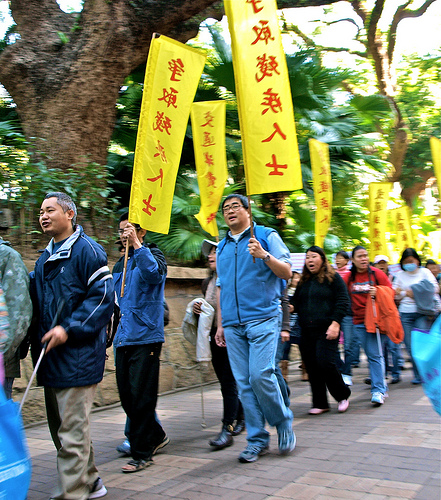
Thousands Join Hong Kong Protest

IRISH INDEPENDENT NEWS– Tens of thousands of people have voiced anger over Hong Kong’s skyrocketing property prices and government policies at an annual march marking the former British colony’s return to Chinese rule.

People blew whistles, beat drums and banged metal cups, and many waved flags calling for improved voting rights while others chanted “down, down with property tycoons” and called for chief executive Donald Tsang to step down.

Since the territory was handed back to China on July 1, 1997, Hong Kong has largely retained its Western-style civil liberties, including press freedom and the right to hold public protests.

But its people still cannot directly elect the city’s chief executive or all legislative members.

One of the big themes of the march marking the 14th anniversary is the growing rich-poor divide in Hong Kong, where soaring property prices have left many homes unaffordable and forced out small shopkeepers.

Some protesters carried large signs depicting Mr Tsang and billionaire Li Ka-shing, Hong Kong’s richest man whose business empire includes a major property developer, with devil horns and vampire fangs. They chanted slogans accusing the government and developers of colluding to establish a monopoly.

Citizens are also upset over a recent government proposal to scrap by-elections and instead fill vacant legislative seats based on previous results.

“The proposal to get rid of by-elections to fill vacancies in the Legislative Council is a crazy idea and insulting to the intelligence of the people of Hong Kong,” said veteran democracy activist Martin Lee.

Hong Kong is the only place in China that enjoys a degree of Western-style adversarial parliamentary politics.

Read more about Thousands Join Hong Kong Protest.

© 2011 Irish Independent News

Photo by Flickr user yip667

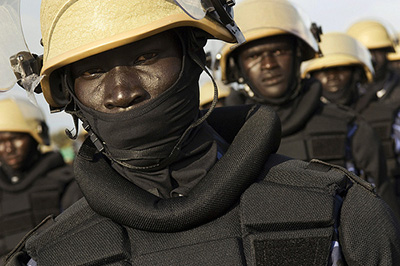
South Sudan, the Newest Nation

NY TIMES– After five decades of guerrilla struggle and two million lives lost, the flags are flapping proudly here in this capital. The new national anthem is blasting all over town. People are toasting oversize bottles of White Bull beer (the local brew), and children are boogieing in the streets.

“Free at Last,” reads a countdown clock.

But from the moment it declares independence on Saturday, the Republic of South Sudan, the world’s newest country and Africa’s 54th state, will take its place at the bottom of the developing world. A majority of its people live on less than a dollar a day. A 15-year-old girl has a higher chance of dying in childbirth than she does of finishing primary school. More than 10 percent of children do not make it to their fifth birthday. About three-quarters of adults cannot read. Only 1 percent of households have a bank account.

Beyond that, the nation faces several serious insurrections within its own sprawling territory and hostilities with northern Sudan, its former nemesis.

It is clearly an underdog story.

So many people here embody the distance traveled and the hopes to come. James Aguto, a former child soldier and longtime guerrilla fighter, now delivers babies. Mr. Aguto is a newly minted clinical officer, working in a government hospital, and his journey from taking life to sustaining it makes him an apt symbol for the transition this country is trying to make.

“There was one night I delivered six babies, six babies in one night!” he said. “I was so happy. I was making development here. I was showing that I had skills.”

Mr. Aguto now wants to be a doctor. “I have that spirit,” he explained.

The nation will certainly need it. More than 2,300 people have been killed in ethnic and rebel violence this year, with at least a half-dozen rebel groups, some with thousands of fighters, prowling the bush, attacking government soldiers, terrorizing civilians, and stealing cattle and even children.

Read the full article about South Sudan, the Newest Nation, Is Full of Hope and Problems.

© 2011 New York Times

Photo by Flickr user UN Photos

Greece In Debt, Eurozone In Crisis

THE NATION– When he was elected prime minister in 2009 at the head of Greece’s Panhellenic Socialist Movement (PaSoK), George Papandreou was going to wipe out corruption, open up politics, rejuvenate the country’s sclerotic economy. “There is money,” he said then, although he must have known there wasn’t any in the public coffers. Less than two years later, he has allowed the “troika” of the European Commission, the European Central Bank (ECB) and the International Monetary Fund to bind him on the horns of an impossible dilemma: either the Greek government implements a second round of austerity measures more savage than any yet endured by a developed country, with deeper cuts and tax hikes and a wholesale, cut-price sell-off of its public assets, or Greece faces default on its sovereign debt and imminent bankruptcy.

Parliament is preparing to vote on the new measures, which are opposed by more than 70 percent of the population. Trade unions have begun a two-day general strike; around Syntagma Square, small bands of agitators in face masks and hoodies—the so-called “known unknowns”—clash with riot police. Choked by clouds of tear gas, thousands of peaceful demonstrators are trying to hold their ground.

Since the end of May, Syntagma has overflowed with Greece’saganaktismenoi (cousins of the indignados who filled Spanish squares this spring), here to refuse the troika’s blackmail and demand their democracy back. The crowd has been huge, politically diverse and overwhelmingly nonviolent. There are people here from all walks of Greek society; at times the rhetoric is that of a national resistance. A neat elderly couple on their first demonstration push through the crush because their pensions have been slashed, prices are rising and they just can’t make ends meet. Vassilis Papadopoulos, a 50-year-old unemployed truck driver living on loans from his mother, has come all the way from Corinth wrapped in a giant Greek flag, with a look of despair in his eyes and saucepans to bang together. This is a movement, he says, against the political system:

“They’ve all cheated us. They destroyed the banks, our pension funds. They invested our social security money in bonds for their own benefit.” Farther down, in the square itself, something entirely new seems to be taking shape: a liberated zone in which an open conversation has been going on for weeks. University professors, passers-by, unemployed laborers, all get their three minutes with the microphone. There’s a medical tent, a “time bank,” a “team to promote calm.” When riot police cleared the square with clubs on the night of June 15, these protesters didn’t fight. They simply walked right back, picked up the rubbish and repaired their neighborhood.

Read full article about Greece In Debt, Eurozone In Crisis.

© 2011 The Nation Magazine

Photo by Flickr user Christina Kekka

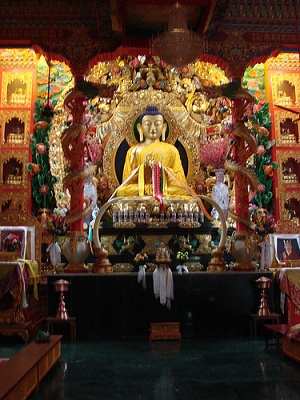
Buried Treasure Discovered Under Indian Temple

NY TIMES– A court-ordered search of vaults beneath a south Indian temple has unearthed gold, jewels and statues worth an estimated $22 billion, government officials said Monday.

The treasure trove, at the 16th century Sri Padmanabhaswamy temple, is widely believed to be the largest find of its kind in India, catching officials in the state of Kerala by surprise and forcing the government to send two dozen police officers to the previously unguarded shrine for round-the-clock security.

The discovery has also revived questions about who should manage the wealth, much of which is believed to have been deposited at the temple by the royal family of the princely state of Travancore, which acceded to India when the country became independent in 1947. Some of the vaults under the temple have not been opened for nearly 150 years, temple officials have said.

Read the full article about Buried Treasure Discovered Under Indian Temple.

© 2011 The New York Times

Photo by Flickr user Watchsmart

Page 31 of 62<<...2930313233...>>