BP Hires Mercenary Force to “Protect Beaches”


CONSUMERIST– This video shows a BP-hired mercenaries working for “Talon Security” trying to keep WDSU-New Orleans reporter Scott Walker from talking to cleanup crews on a public beach. I would normally say something like, “Apparently they didn’t get the memo last week from from National Incident Commander Thad Allen and BP Chief Operating Officer Doug Suttles that the media is to have full access to oil-affected areas and to cleanup workers,” – except that the mercs in the video are perfectly aware of the memos, and yet continue to obstruct the journalist!

Contacted by Yahoo! News for comment, BP spokesman Mark Proegler said, “we can’t force our contractors to work with media if they choose not to.”

If only BP was as effective at keeping oil from hitting the beaches as it was journalists.

© CONSUMERIST, 2010

Photo by flickr user Jeferonix

Private Corporations Profit From Occupation of Palestine

PROJECT CENSORED– Israeli and international corporations are directly involved in the occupation of Palestine. Along with various political, religious and national interests, the Israeli occupation of the West Bank, Gaza, and the Golan Heights is fueled by corporate interests.

These occupying companies and corporations lead real estate deals, develop the Israeli colonies and infrastructure, and contribute to the construction and operation of an ethnic separation system, including checkpoints, walls and roads. They also design and supply equipment and tools used in the control and repression of the civilian population under occupation.

An extensive, on-going grassroots investigation, which exposes hundreds of international companies and corporations involved in the occupation, is being conducted and posted online at http://www.whoprofits.org by the Israeli group Coalition of Women for Peace.

The project currently focuses on three main areas of corporate involvement in the occupation: the settlement industry, economic exploitation, and control of the population. At this stage they are not investigating the vast industry of military production and arms trade (see story # 9).

The ongoing business of construction in the occupied territories of the West Bank and Golan Heights includes housing developments as well as extensive infrastructure projects such as roads and water systems for the exclusive use of Israeli settlers, on lands confiscated from Palestinians. The construction industry includes real estate dealers, contractors, planners, suppliers of materials, as well as security, surveillance, and maintenance services.

While the US government has on numerous occasions affirmed the illegality of Israeli settlements on Palestinian land, it encourages American support by providing tax deductions for donations to these settlements, which have nearly doubled within a year and are rapidly accelerating. An audit conducted by Reuters of American tax records found that thirteen tax exempt groups linked explicitly to settlements managed to collect more than $35 million in the past five years alone.  Secretary of State Condoleeza Rice defended the tax incentives as “humanitarian,” and rejected any comparison to Palestinian charities facing US sanctions for suspected links with Islamic parties, such as Hamas.

Israeli industrial zones within the occupied territories hold hundreds of companies, ranging from small businesses serving the local Israeli settlers to large factories that export their products worldwide. Settlement production benefits from low rents, special tax incentives, lax enforcement of environmental and labor protection laws, and other governmental supports. Palestinians employed in these industrial zones work under severe restrictions on movement, on organization, and with almost no government protections. These “advantages” often result in the exploitation of Palestinian labor, Palestinian natural resources, and the Palestinian consumer market.

All Palestinian imports and exports are controlled, restricting competition with Israeli producers, and making Palestinian consumers a captive market for Israeli goods. Restrictions are imposed on the development of Palestinian businesses, and all utilities and basic services are routed through Israeli firms.

Severe restrictions on movement of Palestinian labor and products inside the occupied territories and to neighboring areas have further increased the dependency of the Palestinian economy on Israeli companies as employers and retailers. The growing network of checkpoints and walls has all but destroyed Palestinian local production and the Palestinian labor bargaining power.

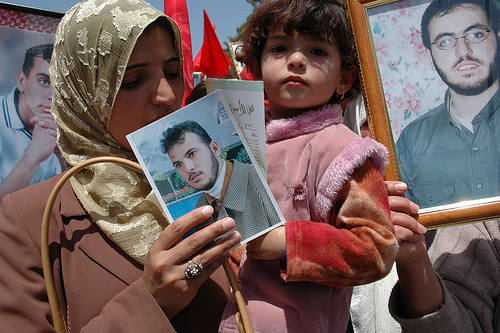
Eighteen months ago, outraged when the Palestinians of Gaza voted for the leadership of Hamas in democratic elections, Israel imposed a total lockdown on the entire population of Gaza. The Palestinians, determined to continue to resist occupation, found a way to circumvent total starvation. Author Sara Flounders notes, “The Israeli blockade led to a new economic structure, an underground economy. The besieged Palestinians have dug more than 1,000 tunnels under the totally sealed border. Many thousands of Palestinians are now employed in digging, smuggling or transporting, and reselling essential goods.” Smuggling constitutes approximately 90 percent of economic activity in Gaza, according to Gazan economist Omar Shaban.

The tunnels connect the Egyptian town of Rafah with the Palestinian refugee camp of the same name inside Gaza. They have become a fantastic, life-sustaining network of corridors dug through sandy soil. Tunnels are typically three-tenths of a mile long, approximately forty-five to fifty feet deep. They cost from $50,000 to $90,000 and require several months of intense labor to dig.

Food is towed through on plastic sleighs. Livestock are herded through larger tunnels. Flour, milk, cheese, cigarettes, cooking oil, toothpaste, small generators, computers, and kerosene heaters come through the tunnels. Every day 300 to 400 gas canisters for cooking come through the lines. On the Egyptian side, the trade sustains the ruptured economy, while corrupt or sympathetic guards and officers look the other way.

The Israeli siege of Gaza, followed by twenty-three days of systematic bombing and invasion, has created massive destruction and scarcity. Food processing plants, chicken farms, grain warehouses, UN food stocks, almost all of the remaining infrastructure, and 230 small factories were destroyed. At the time of this printing, hundreds of trucks packed with essential supplies from international and humanitarian agencies sit outside the strip, refused entry to Gaza by Israeli guards.

As soon as the Israeli bombing ended, work on the tunnels resumed.

However, Ann Wright, retired US Army colonel, former State Department official, and current peace activists, asks, “How do you rebuild 5,000 homes, businesses and government buildings when the only way supplies come into the prison called Gaza is through tunnels?  Will the steel I-beams for roofs bend 90 degrees to go through the tunnels from Egypt?  Will the tons of cement, lumber, roofing materials, nails, drywall, and paint be hauled by hand, load after load, seventy feet underground, through a tunnel 500 to 900 feet long, and then pulled up a seventy-foot hole and put into waiting truck in Gaza?”

For the people of Gaza, rebuilding their homes, businesses, and factories is on hold.  Over 5,000 homes and apartment buildings were destroyed and hundreds of government buildings, including the Parliament building, were smashed. Two cement factories in northern Gaza were completely destroyed by Israeli bombs.

Building supplies, cement, wood, nails, glass will have to be brought in from outside Gaza. Israel controls 90 percent of the land borders to Gaza, including the northern and eastern borders and 100 percent of the ocean on the west side of Gaza.  Egypt controls the southern border with Gaza.

Wright concludes, “The Israelis who bombed Gaza will be the primary financial beneficiaries of the rebuilding of Gaza. They bombed it and now will sell construction materials to rebuild what they have bombed, exactly like the United States has done in Iraq.”

Update by Sara Flounders
Much has been written about the suffering of the Palestinians, and most of it is true. What gives the history of Palestine its special potency is not the suffering, however, but the indomitable will of the people to continue fighting, even when it seems impossible. This part of the story—suffering and determination—has continued in the six months since the massive Israeli bombing of Gaza ended last January.
The Israeli invasion laid waste to much of the Gaza’s fragile infrastructure. The siege of Gaza continues, reducing the entire strip to a prison economy with all the desperation that implies. Every effort is being made to increase the isolation. The Israelis have forbidden the entry of even the most basic building materials that are essential to reconstruct the thousands of homes that Israeli bombs destroyed during the December/January assault on Gaza’s population.

Tens of millions of dollars of medical, food, clothing and other everyday aid has been collected from people from all around the world to send to the 1.5 million Palestinians living in Gaza, the largest open-air prison of the world. The great bulk of this aid is stalled at the border crossing points, prevented by the Israeli occupation authorities from entering.

My article, “The Tunnels of Gaza,” written last February, was about the 1,000 tunnels that the Palestinians courageously dug and maintained to bring material in from Egypt. These tunnels built during the months of siege and reopened after the invasion continue to be an important lifeline for Gaza’s population and a symbol of continued resistance. Now, they have even become a source of desperately needed building materials.

Some Gazans have turned to making dried mud bricks, a homebuilding material from an ancient age, to rebuild their bombed homes. And the best mud comes from the tunnels themselves, as an article in Bloomberg on June 3 pointed out. Again, a source of possible despair has become a story to inspire confidence in ultimate victory.

But it is important that the rest of the world refuse to allow the systematic isolation and total destruction of Gaza. One way to do this is to join in the work of Viva Palestina, one of several Gaza Solidarity Campaigns determined to bring in a small portion of supplies needed by the Gazans, and what is perhaps even more important, to keep world attention upon the continuing Israeli siege.

An MP in Britain, George Galloway, organized the first Viva Palestina caravan that took off from London and in twenty-three days crossed North Africa to deliver to Gaza 107 vehicles—including ambulances and a fire engine—255 people, and $2 million of aid last March. Now Galloway and Vietnam anti-war veteran Ron Kovic are organizing a similar caravan starting from the United States that aims to bring 500 vehicles and $10 million in aid—and to impact US political policy toward Palestine and Gaza (see vivapalestina-us.org).

The International Action Center is helping the Viva Palestina effort, and hopes that more and more people and organizations from all over the world will join to help lift the siege of Gaza and show solidarity with the Palestinian people, who once again are showing that they won’t give up.

Sources:
WhoProfits.org
Title: “Who Profits? Exposing the Israeli Occupation Industry”
Authors: The Coalition of Women for Peace

Palestine News Network, August 26, 2008
Title: “US Tax Breaks Support Israeli Settlers”

Workers World Newspaper, February 9, 2009, and Global Research, February 11, 2009
Title: “The Tunnels of Gaza, An underground economy and resistance symbol”
Author: Sara Flounders

CommonDreams.org, February 24, 2009
“Can Gaza Be Rebuilt Through Tunnels? The Blockade Continues-No Supplies, No Rebuilding”
Author: Ann Wright

Student Researchers: April Rudolph, Natalie Dale, and Kerry Headley
Faculty Evaluator: Jeff Baldwin, PhD
Sonoma State University

Photo flickr user frecklebaum

War Contractors Spent $27 Million Lobbying at Time of Surge

HUFFINGTON POST– The ten largest defense contractors in the nation spent more than $27 million lobbying the federal government in the last quarter of 2009, according to a review of recently-filed lobbying records.

The massive amount of money used to influence the legislative process came as the White House announced it would ramp up military activity in Afghanistan and Congress considered appropriations bills to pay for that buildup. All told, these ten companies, the largest revenue earners in the industry, spent roughly $7.2 million more lobbying in the fourth quarter of 2009 (October through December) than in the three months prior.

Such an increase in lobbying expenditures is partly a reflection of just how profitable the business of waging war can be. Each of these companies earned billions of dollars in defense contracts this past year. As the U.S. ramps up its military activities overseas, and the army is stretched thin by other ventures, it stands to reason that the contracts won’t dry up any time soon.

In mid-December, Congress passed a defense appropriations bill that totaled more than $635 billion. Shortly thereafter, the firm Northrop Grumman moved its corporate office to the Washington D.C. region to be closer to the heart of legislative action. Among the issues on which these ten firms lobbied, “appropriations” was the most frequently cited in lobbying forms.

“We’ve built Rome,” one longtime good-government official said of the symbiosis between contractors and the government.

On a related note, the Congressional Research Service released a report on Thursday, which showed that the number of private security contractors has bulged in the wake of Obama’s Afghanistan-surge announcement. Currently, contractors in Afghanistan make up between 22 percent and 30 percent of armed U.S. forces in Afghanistan.

Below is a breakdown of the military contractor, lobbying expenditures and the amount of money the company earned in contracts last year.

Company: Boeing
Lobbying In Fourth Quarter: $6.13 million
Lobbying In Third Quarter: $3.71 million
Federal Contracts in FY08 (according to fedspending.org): $23,547,610,878

Company: United Technologies
Lobbying In Fourth Quarter: $3.66 million
Lobbying In Third Quarter: $1.39 million
Federal Contracts in FY08: $8,973,091,375

Company: Lockheed Martin
Lobbying In Fourth Quarter: $3.16 million
Lobbying In Third Quarter: $3.1 million
Federal Contracts in FY08: $35,729,713,235

Company: Honeywell International
Lobbying In Fourth Quarter: $1.94 million
Lobbying In Third Quarter: $1.66 million
Federal Contracts in FY08: $2,439,634,130

Company: Northrop Grumman
Lobbying In Fourth Quarter: $5.43 million
Lobbying In Third Quarter: $3.62 million
Federal Contracts in FY08: $24,921,637,857

Company: General Dynamics
Lobbying In Fourth Quarter: $3,000,697
Lobbying In Third Quarter: $2,496,308
Federal Contracts in FY08: $14,244,546,441

Company: Raytheon
Lobbying In Fourth Quarter: $2.19 million
Lobbying In Third Quarter: $1.9 million
Federal Contracts in FY08: $14,276,349,843

Company: L3
Lobbying In Fourth Quarter: $1.05 million
Lobbying In Third Quarter: $990,000
Federal Contracts in FY08: $7,464,053,901

Company: Textron
Lobbying In Fourth Quarter: $460,000
Lobbying In Third Quarter: $890,000
Federal Contracts in FY08: $2,858,396,315

Company: Goodrich
Lobbying In Fourth Quarter: $447, 098
Lobbying In Third Quarter: $425,529
Federal Contracts in FY08: $490,224,761

© COPYRIGHT HUFFINGTON POST, 2010

Animal House in Afghanistan

MOTHER JONES– Drunken brawls, prostitutes, hazing and humiliation, taking vodka shots out of buttcracks— no, the perpetrators of these Animal House-like antics aren’t some depraved frat brothers. They are the private security contractors guarding the US embassy compound in Kabul.

These allegations, and many more, are contained in a letter sent to Secretary of State Hillary Clinton on Tuesday by the Project on Government Oversight, which has been investigating the embassy security contract held by ArmorGroup North America (a subsidiary of Wackenhut, which is in turn owned by the security behemoth G4S).

The contractor was the subject of a congressional probe earlier this summer that found serious lapses in the company’s handling of the embassy security contract, which internal State Department documents said left the embassy compound “in jeopardy.” Nevertheless, the government opted to extend the company’s 5-year, $189 million contract for another year. 

Underscoring the scope of the problems within ArmorGroup’s Afghanistan operation, POGO says that nearly a tenth of the company’s 450-man embassy security force contacted the watchdog group to “express concerns about and provide evidence of a pattern of blatant, longstanding violations of the security contract, and of a pervasive breakdown in the chain of command and guard force discipline and morale.”

Continue reading about Animal House in Afghanistan.

Daniel Schulman is Mother Jones’ Washington-based news editor. For more of his stories, click here. To follow him on Twitter, click here.

© COPYRIGHT MOTHER JONES, 2009

Gang Rape Covered Up By US, Halliburton/ KBR

ABC– A Houston, Texas woman says she was gang-raped by Halliburton/KBR coworkers in Baghdad, and the company and the U.S. government are covering up the incident.

Jamie Leigh Jones, now 22, says that after she was raped by multiple men at a KBR camp in the Green Zone, the company put her under guard in a shipping container with a bed and warned her that if she left Iraq for medical treatment, she’d be out of a job.

“Don’t plan on working back in Iraq. There won’t be a position here, and there won’t be a position in Houston,” Jones says she was told.

In a lawsuit filed in federal court against Halliburton and its then-subsidiary KBR, Jones says she was held in the shipping container for at least 24 hours without food or water by KBR, which posted armed security guards outside her door, who would not let her leave. Jones described the container as sparely furnished with a bed, table and lamp.

“It felt like prison,” says Jones, who told her story to ABC News as part of an upcoming “20/20″ investigation. “I was upset; I was curled up in a ball on the bed; I just could not believe what had happened.”

Finally, Jones says, she convinced a sympathetic guard to loan her a cell phone so she could call her father in Texas.

“I said, ‘Dad, I’ve been raped. I don’t know what to do. I’m in this container, and I’m not able to leave,'” she said. Her father called their congressman, Rep. Ted Poe, R-Texas.

“We contacted the State Department first,” Poe told ABCNews.com, “and told them of the urgency of rescuing an American citizen”  from her American employer.

Poe says his office contacted the State Department, which quickly dispatched agents from the U.S. Embassy in Baghdad to Jones’ camp, where they rescued her from the container.

According to her lawsuit, Jones was raped by “several attackers who first drugged her, then repeatedly raped and injured her, both physically and emotionally.”

Jones told ABCNews.com that an examination by Army doctors showed she had been raped “both vaginally and anally,” but that the rape kit disappeared after it was handed over to KBR security officers.

A spokesperson for the State Department’s Bureau of Diplomatic Security told ABCNews.com he could not comment on the matter. Over two years later, the Justice Department has brought no criminal charges in the matter. In fact, ABC News could not confirm any federal agency was investigating the case.

Legal experts say Jones’ alleged assailants will likely never face a judge and jury, due to an enormous loophole that has effectively left contractors in Iraq beyond the reach of United States law.

“It’s very troubling,” said Dean John Hutson of the Franklin Pierce Law Center. “The way the law presently stands, I would say that they don’t have, at least in the criminal system, the opportunity for justice.”

Congressman Poe says neither the departments of State nor Justice will give him answers on the status of the Jones investigation. Asked what reasons the departments gave for the apparent slowness of the probes, Poe sounded frustrated.

There are several, I think, their excuses, why the perpetrators haven’t been prosecuted,” Poe told ABC News. “But I think it is the responsibility of our government, the Justice Department and the State Department, when crimes occur against American citizens overseas in Iraq, contractors that are paid by the American public, that we pursue the criminal cases as best as we possibly can and that people are prosecuted.”

Since no criminal charges have been filed, the only other option, according to Hutson, is the civil system, which is the approach that Jones is trying now. But Jones’ former employer doesn’t want this case to see the inside of a civil courtroom. KBR has moved for Jones’ claim to be heard in private arbitration, instead of a public courtroom. It says her employment contract requires it.

In arbitration, there is no public record nor transcript of the proceedings, meaning that Jones’ claims would not be heard before a judge and jury. Rather, a private arbitrator would decide Jones’ case. In recent testimony before Congress, employment lawyer Cathy Ventrell-Monsees said that Halliburton won more than 80 percent of arbitration proceedings brought against it.

In his interview with ABC News, Rep. Poe said he sided with Jones. “Air things out in a public forum of a courtroom,” said Rep. Poe. “That’s why we have courts in the United States.”

In her lawsuit, Jones’ lawyer, Todd Kelly, says KBR and Halliburton created a “boys will be boys” atmosphere at the company barracks which put her and other female employees at great risk.

“I think that men who are there believe that they live without laws,” said Kelly. “The last thing she should have expected was for her own people to turn on her.”

Halliburton, which has since divested itself of KBR, says it “is improperly named” in the suit. In a statement, KBR said it was “instructed to cease” its own investigation by U.S. government authorities “because they were assuming sole responsibility for the criminal investigations.”

“The safety and security of all employees remains KBR’s top priority,” it said in a statement. “Our commitment in this regard is unwavering.”

Since the attacks, Jones has started a nonprofit foundation called the Jamie Leigh Foundation, which is dedicated to helping victims who were raped or sexually assaulted overseas while working for government contractors or other corporations.

“I want other women to know that it’s not their fault,” said Jones. “They can go against corporations that have treated them this way.” Jones said that any proceeds from the civil suit will go to her foundation.

“There needs to be a voice out there that really pushed for change,” she said. “I’d like to be that voice.”

© COPYRIGHT ABC, 2007

