A Victory In The War Against Profiteering

MEDIA ROOTS- Considering the escalation of the war against whistleblowers, it’s getting more rare to see a lone wolf sacrifice their standing from within the system to do the right thing. Amy Goodman writes for TruthDig about the case of Bunny Greenhouse, former employee of the US Army Corps of Engineers, who courageously blew the whistle on her agency for awarding Halliburton subsidiary KBR a no bid 7 billion dollar contract before the Iraqi invasion even occurred. Instead of being rewarded for exposing the revolving door criminality of political and corporate profiteering within her agency, she was harassed and demoted from her position.

Abby

***
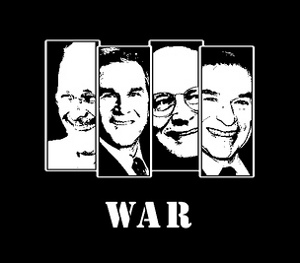
TRUTHDIG– “War is a racket,” wrote retired US Marine Major General Smedley D Butler, in 1935. That statement, which is also the title of his short book on war profiteering, rings true today.

One courageous civil servant just won a battle to hold war profiteers accountable. Her name is Bunnatine “Bunny” Greenhouse. She blew the whistle when her employer, the US Army Corps of Engineers, gave a no-bid $7bn contract to the Halliburton subsidiary Kellogg, Brown and Root (KBR) as the US was about to invade Iraq. She was doing her job, trying to ensure a competitive bidding process would save the US government money. For that, she was forced out of her senior position, demoted and harassed.

Just this week, after waging a legal battle for more than half a decade, Bunny Greenhouse won. The US Army Corps of Engineers settled with Greenhouse for $970,000, representing full restitution for lost wages, compensatory damages and attorneys’ fees.

Her “offence” was to challenge the KBR contract. It was weeks before the expected invasion of Iraq, in 2003, and Bush military planners predicted Saddam Hussein would blow up Iraqi oilfields, as happened with the US invasion in 1991. The project, dubbed “Restore Iraqi Oil”, or RIO, was created so that oilfield fires would be extinguished. KBR was owned then by Halliburton, whose CEO until 2000 was none other than then Vice President Dick Cheney. KBR was the only company invited to bid.

Bunny Greenhouse told her superiors that the process was illegal. She was overridden. She said the decision to grant the contract to KBR came from the office of the secretary of defence, run by VP Cheney’s close friend, Donald Rumsfeld. As Bunny Greenhouse told a congressional committee:

    “I can unequivocally state that the abuse related to contracts awarded to KBR represents the most blatant and improper contract abuse I have witnessed during the course of my professional career.”

The oilfields were not set ablaze. Nevertheless, KBR was allowed to retool its $7bn no-bid contract, to provide gasoline and other logistical support to the occupation forces. The contract was so-called “cost-plus”, which means KBR was not on the hook to provide services at a set price. Rather, it could charge its cost, plus a fixed percentage as profit. The more KBR charged, the more profit it made.

As the chief procurement officer, Greenhouse’s signature was required on all contracts valued at more than $10m. Soon after testifying about the egregious RIO contract, she was demoted, stripped of her top secret clearance and began receiving the lowest performance ratings. Before blowing the whistle, she had received the highest ratings. Ultimately, she left work, facing an unbearably hostile workplace.

After years of litigation, attorney Michael Kohn, president of the National Whistleblowers Centre, brought the case to a settlement. He said:

    “Bunny Greenhouse risked her job and career when she objected to the gross waste of federal taxpayer dollars and illegal contracting practices at the Army Corps of Engineers. She had the courage to stand alone and challenge powerful special interests. She exposed a corrupt contracting environment where casual and clubby contracting practices were the norm. Her courage led to sweeping legal reforms that will forever halt the gross abuse she had the courage to expose.”

The National Whistleblowers Centre’s executive director, Stephen Kohn (brother of Michael Kohn), told me:

    “Federal employees have a very, very hard time blowing the whistle … I hope it’s a turning point. The case was hard-fought. It should never have had to been filed. Bunny did the right thing.”

According to Nobel Prize-winning economist Joe Stiglitz, the cost of the wars in Iraq and Afghanistan alone will exceed $5tn. With a cost like this, why isn’t war central to the debate over the national debt?

Two-time congressional medal of honour winner Maj Gen Smedley Butler had it right, 75 years ago, when he said of war:

    “It is possibly the oldest, easily the most profitable, surely the most vicious [racket] … It is the only one in which the profits are reckoned in dollars and the losses in lives … It is conducted for the benefit of the very few, at the expense of the very many.”

As President Barack Obama and Congress claim it is Medicare, Medicaid and social security that are breaking the budget, people should demand that they stop paying for war.

• Written by Amy Goodman, Denis Moynihan contributed research to this column


© 2011 Amy Goodman; distributed by King Features Syndicate

Photo by Flickr user geekvsmachine

How Corporations Awarded Themselves Legal Immunity

GUARDIAN– Worried about the influence of money in American politics, the huge cash payouts that the US supreme court waved through by its Citizens United decision – the decision that lifted most limits on election campaign spending? Corporations are having their way with American elections just as they’ve already had their way with our media.

But at least we have the courts, right?

Wrong. The third branch of government’s in trouble, too. In fact, access to justice – like access to elected office, let alone a pundit’s perch – is becoming a perk just for the rich and powerful.

Take the young woman now testifying in court in Texas. Jamie Leigh Jones claims she was drugged and gang-raped while working for military contractor KBR in Iraq (at the time, a division of Halliburton). Jones, now 26, was on her fourth day in post in Baghdad in 2005 when she says she was assaulted by seven contractors and held captive, under armed guard by two KBR police, in a shipping container.

When the criminal courts failed to act, her lawyers filed a civil suit, only to be met with Halliburton’s response that all her claims were to be decided in arbitration – because she’d signed away her rights to bring the company to court when she signed her employment contract. As Leigh testified before Congress, in October 2009, “I had signed away my right to a jury trial at the age of 20 and without the advice of counsel.” It was a matter of sign or resign. “I had no idea that the clause was part of the contract, what the clause actually meant,” testified Jones.

You’ve probably done the very same thing without even knowing it. When it comes to consumer claims, mandatory arbitration is the new normal. According to research by Public Citizen and others, corporations are inserting “forced arbitration” clauses into the fine print of contracts for work, for cell phone service, for credit cards, even nursing home contracts, requiring clients to give up their right to sue if they are harmed. Arbitration is a no-judge, no-jury, no-appeal world, where arbitrators are (often by contract) selected by the company and all decisions are private – and final. 

They don’t pay fair wages; they don’t pay their fare share of taxes. They evade liability. What gives? Says Saladoff: “When corporations harm, there should be some way to hold them accountable.”

Read more about How Corporations Award Themselves Legal Immunity

Written by Laura Flanders

© 2011 Guardian

Photo by Flickr user tommyajohansson

The Pentagon and Slave Labor in U.S. Prisons

GLOBAL RESEARCH– Prisoners earning 23 cents an hour in U.S. federal prisons are manufacturing high-tech electronic components for Patriot Advanced Capability 3 missiles, launchers for TOW (Tube-launched, Optically tracked, Wire-guided) anti-tank missiles, and other guided missile systems. A March article by journalist and financial researcher Justin Rohrlich of World in Review is worth a closer look at the full implications of this ominous development. (minyanville.com)

The expanding use of prison industries, which pay slave wages, as a way to increase profits for giant military corporations, is a frontal attack on the rights of all workers.

Prison labor — with no union protection, overtime pay, vacation days, pensions, benefits, health and safety protection, or Social Security withholding — also makes complex components for McDonnell Douglas/Boeing’s F-15 fighter aircraft, the General Dynamics/Lockheed Martin F-16, and Bell/Textron’s Cobra helicopter. Prison labor produces night-vision goggles, body armor, camouflage uniforms, radio and communication devices, and lighting systems and components for 30-mm to 300-mm battleship anti-aircraft guns, along with land mine sweepers and electro-optical equipment for the BAE Systems Bradley Fighting Vehicle’s laser rangefinder. Prisoners recycle toxic electronic equipment and overhaul military vehicles.

Labor in federal prisons is contracted out by UNICOR, previously known as Federal Prison Industries, a quasi-public, for-profit corporation run by the Bureau of Prisons. In 14 prison factories, more than 3,000 prisoners manufacture electronic equipment for land, sea and airborne communication. UNICOR is now the U.S. government’s 39th largest contractor, with 110 factories at 79 federal penitentiaries.

The majority of UNICOR’s products and services are on contract to orders from the Department of Defense. Giant multinational corporations purchase parts assembled at some of the lowest labor rates in the world, then resell the finished weapons components at the highest rates of profit. For example, Lockheed Martin and Raytheon Corporation subcontract components, then assemble and sell advanced weapons systems to the Pentagon.

Increased profits, unhealthy workplaces

However, the Pentagon is not the only buyer. U.S. corporations are the world’s largest arms dealers, while weapons and aircraft are the largest U.S. export. The U.S. State Department, Department of Defense and diplomats pressure NATO members and dependent countries around the world into multibillion-dollar weapons purchases that generate further corporate profits, often leaving many countries mired in enormous debt.

But the fact that the capitalist state has found yet another way to drastically undercut union workers’ wages and ensure still higher profits to military corporations — whose weapons wreak such havoc around the world — is an ominous development.

According to CNN Money, the U.S. highly skilled and well-paid “aerospace workforce has shrunk by 40 percent in the past 20 years. Like many other industries, the defense sector has been quietly outsourcing production (and jobs) to cheaper labor markets overseas.” (Feb. 24) It seems that with prison labor, these jobs are also being outsourced domestically.

Meanwhile, dividends and options to a handful of top stockholders and CEO compensation packages at top military corporations exceed the total payment of wages to the more than 23,000 imprisoned workers who produce UNICOR parts.

The prison work is often dangerous, toxic and unprotected. At FCC Victorville, a federal prison located at an old U.S. airbase, prisoners clean, overhaul and reassemble tanks and military vehicles returned from combat and coated in toxic spent ammunition, depleted uranium dust and chemicals.

A federal lawsuit by prisoners, food service workers and family members at FCI Marianna, a minimum security women’s prison in Florida, cited that toxic dust containing lead, cadmium, mercury and arsenic poisoned those who worked at UNICOR’s computer and electronic recycling factory.

Prisoners there worked covered in dust, without safety equipment, protective gear, air filtration or masks. The suit explained that the toxic dust caused severe damage to nervous and reproductive systems, lung damage, bone disease, kidney failure, blood clots, cancers, anxiety, headaches, fatigue, memory lapses, skin lesions, and circulatory and respiratory problems. This is one of eight federal prison recycling facilities — employing 1,200 prisoners — run by UNICOR.

After years of complaints the Justice Department’s Office of the Inspector General and the Federal Occupational Health Service concurred in October 2008 that UNICOR has jeopardized the lives and safety of untold numbers of prisoners and staff. (Prison Legal News, Feb. 17, 2009)

Read more about The Pentagon and Slave Labor in U.S. Prisons.

© 2011 Global Research

Photo by Flickr user flee the cities

Posted in Uncategorized | 1 Reply

Blackwater Sued for Failing to Pay Benefits

RAW STORY– Four former employees of Blackwater, the scandal-plagued security firm now called Xe, have filed a $60 million class action lawsuit claiming the firm failed to pay health and pension benefits to its employees.

Their lawyer, Scott Bloch, said Wednesday that Xe improperly classified thousands of its employees as independent contractors, allowing the company to avoid “millions of dollars in taxes, withholding and payments of benefits.”

“Blackwater made hundreds of millions of dollars from taxpayers and hired thousands of former veterans of military service and police officers,” said Bloch in a statement.

“It is a grave injustice to them who were mistreated and left without any health insurance or other benefits for their families, and left to fend for themselves in paying into Social Security and Medicare,” he said.

The lawsuit was filed Monday in federal court in Washington, and hopes to recover Social Security, unemployment insurance, health and other benefits for the four plaintiffs, all of whom were injured while working for Blackwater.

Read full article on Blackwater Sued for Allegedly Failing to Pay Benefits.

©2011 Raw Story

Posted in Uncategorized | 1 Reply

Secret Desert Force Set Up by Blackwater’s Founder

NY TIMES– Late one night last November, a plane carrying dozens of Colombian men touched down in this glittering seaside capital. Whisked through customs by an Emirati intelligence officer, the group boarded an unmarked bus and drove roughly 20 miles to a windswept military complex in the desert sand.

The Colombians had entered the United Arab Emirates posing as construction workers. In fact, they were soldiers for a secret American-led mercenary army being built by Erik Prince, the billionaire founder of Blackwater Worldwide, with $529 million from the oil-soaked sheikdom.

Mr. Prince, who resettled here last year after his security business faced mounting legal problems in the United States, was hired by the crown prince of Abu Dhabi to put together an 800-member battalion of foreign troops for the U.A.E., according to former employees on the project, American officials and corporate documents obtained by The New York Times.

The force is intended to conduct special operations missions inside and outside the country, defend oil pipelines and skyscrapers from terrorist attacks and put down internal revolts, the documents show. Such troops could be deployed if the Emirates faced unrest in their crowded labor camps or were challenged by pro-democracy protests like those sweeping the Arab world this year.

Read full article about Secret Desert Force Set Up by Blackwater’s Founder.

© 2011 NY Times

Photo by Flickr user US Army