Another Astonishing Victory: No New Nukes

TRUTHOUT – The atomic energy industry has suffered another astonishing defeat. Thanks to its loss, 2010 again left the “nuclear renaissance” in the Dark Age that defines the technology.

But an Armageddon-style battle looms when Congress returns next year.

The push to build new nuclear plants depends now, as always, on federal subsidies. Fifty-three years after the first commercial reactor opened at Shippingport, Pennsylvania, no private funders will step forward to pay for a “new generation” of nukes.

So the industry remains mired in unsolved waste problems, disturbing vulnerability to terror and error, uninsured liability in case of a major catastrophe and unapproved new design proposals.

Two new reactor construction projects in Europe – one in Finland and the other at Flamanville, France – are sinking in gargantuan cost overruns and multi-year delays. To financiers and energy experts worldwide, it’s a clear indicator that the “rebirth” of this failed technology is a hopeless quagmire.

Meanwhile, the 104 reactors currently licensed in the US are leaking radiation and facing escalating grassroots attack. Vermont’s new governor, Peter Shumlin, is committed to shutting the Yankee plant there, and public demands to close plants, including New York’s Indian Point and New Jersey’s Oyster Creek, among others, have reached a fever pitch.

Most importantly, advances in green technologies are leaving atomic power in the dust. Numerous new studies now show it is significantly cheaper to build new generating capacity with photovoltaics, wind and other renewable solartopian sources than to go nuclear. That gap will only grow in the coming years.

But Barack Obama proposed some $36 billion in new nuke loan guarantees to add to the $18.5 billion set aside by the Bush Administration. Earlier this year, Obama handed $8.33 billion of that money to a Georgia utility that broke ground on two new nukes at the Vogtle site, where two old, trouble-plagued reactors still operate.

The nukes are being built in Georgia – along with two more in South Carolina – because those states’ ratepayers are being forced to foot the bill as construction proceeds. The companies’ returns are guaranteed even if the reactors never operate. Georgia has already suffered crippling rate hikes of $1 billion and more to pay for a construction project likely to wind up as little more than a moribund mausoleum.

Nonetheless, even amidst a major economic crisis, the White House and its pro-nuke allies have been pushing hard to fund still more of these radioactive boondoggles.

Click to continue reading about the fight against Congress’ push for new nukes.

© COPYRIGHT TRUTHOUT, 2010

Article by Harvey Wasserman for Truthout

Posted in Uncategorized | 1 Reply

A Precedent Setting Year in the Fight Against Coal

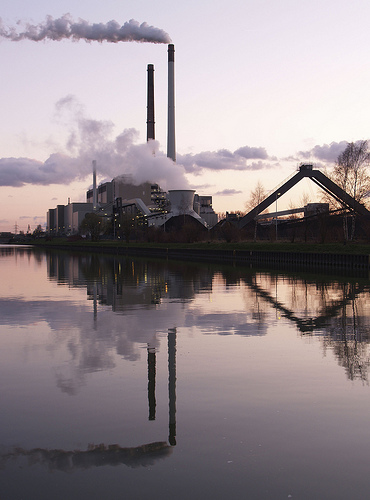
ALTERNET – It was another tough year for the coal industry. In the last 25 months not one coal-fired power plant broke ground for construction in the United States. In 2010 alone a total of 38 proposed plants were erased from the drawing board, the most ever recorded in a single year. Utilities also announced 12,000 MW in coal plant retirements — or enough power to bring electricity to a whopping 12 million American households. And even Massey Energy’s infamous henchman Don Blankenship is set to retire, effective next month.  

Indeed coal executives got what they deserved in their stockings this holiday season — big lumps of black coal. “I predict historians will point at 2010 as the year that coal’s influence peaked and began declining,” says Bruce Nilles, deputy conservation director of the Sierra Club, whose organization released a year-end report on coal in the U.S.  

Nilles is correct; the coal boom out west looks to be over, as companies like Arch and Peabody scramble to figure out what to do with their vast reserves while U.S. markets begin to dwindle. The EPA has also not been as friendly to this portion of the energy sector as in years past, placing most coal permits for mountaintop removal on hold and even recommending a veto of the proposed Spruce Mine in West Virginia, which would be the largest of its kind in the country.

Click to continue reading about the fight against coal.

Article by Joshua Frank / AlterNet

Photograph by flickr user eutrophication&hypoxia


Net Neutrality Advocates Decry FCC ‘False’ Solution

COMMONDREAMS – The media advocacy group Free Press released the following statement in response to actions by the FCC today:

By a 3-2 vote Tuesday, the Federal Communications Commission approved new rules intended to prevent Internet providers like AT&T, Comcast and Verizon from acting as gatekeepers on the Web. The rules, however, heavily favor the industry they are intended to regulate, and leave consumers with minimal protections. Democratic Commissioners Mignon Clyburn and Michael Copps voted with Chairman Julius Genachowski, while Republican Commissioners Robert McDowell and Meredith Attwell Baker voted against.

Free Press Managing Director Craig Aaron made the following statement:

“We are deeply disappointed that the chairman chose to ignore the overwhelming public support for real Net Neutrality, instead moving forward with industry-written rules that will for the first time in Internet history allow discrimination online. This proceeding was a squandered opportunity to enact clear, meaningful rules to safeguard the Internet’s level playing field and protect consumers.

“The new rules are riddled with loopholes, evidence that the chairman sought approval from AT&T instead of listening to the millions of Americans who asked for real Net Neutrality. These rules don’t do enough to stop the phone and cable companies from dividing the Internet into fast and slow lanes, and they fail to protect wireless users from discrimination. No longer can you get to the same Internet via your mobile device as you can via your laptop. The rules pave the way for AT&T to block your access to third-party applications and to require you to use its own preferred applications.

“Chairman Genachowski ignored President Obama’s promise to the American people to take a ‘back seat to no one’ on Net Neutrality. He ignored the 2 million voices who petitioned for real Net Neutrality and the hundreds who came to public hearings across the country to ask him to protect the open Internet. And he ignored policymakers who urged him to protect consumers and maintain the Internet as a platform for innovation. It’s unfortunate that the only voices he chose to listen to were those coming from the very industry he’s charged with overseeing.”


The American Civil Liberties Union released this statement:

The Federal Communications Commission (FCC) today passed a new rule clarifying the legal authority of the FCC to enforce network neutrality principles. Network neutrality principles protect free speech online by prohibiting the owner of a network from prioritizing some content on the Internet while slowing other content.

The rule approved today by the FCC includes full network neutrality protections for the wired Internet, which includes cable and DSL service to homes and businesses, but provides lesser protections for wireless broadband service and may allow wireless broadband providers to block certain applications and services that compete with their own applications and services. The American Civil Liberties Union has called for network neutrality protections on both the wired and wireless Internet as important safeguards for free speech.
 
“Network neutrality principles are essential to protecting the First Amendment rights of Americans who rely on the Internet as a forum for free speech. While the new FCC rule creates stronger network neutrality protections for Americans who use the wired Internet, it fails to provide adequate protections for Americans who rely on wireless broadband service,” said Chris Calabrese, ACLU Legislative Counsel. “By creating two sets of regulations – one for the wired Internet and one for wireless broadband – and failing to ground them in the strongest legal protections available, the FCC has failed to protect free speech and Internet openness for all users. The ACLU will continue to fight for full network neutrality protections. Internet openness is key to protecting our First Amendment rights.”

The rule passed by the FCC today does not reclassify wireless broadband service as a telecommunications service, which the ACLU and other proponents of network neutrality have long urged. Treating broadband access as similar to phone service would have allowed the FCC to rely on its broader regulatory authority under Title II of the Communications Act to enforce network neutrality principles.

Article by CommonDreams

Photograph by Flickr user Sarah G

Senate Approves Repeal of ‘Don’t Ask Don’t Tell’

ABC NEWS– The campaign to repeal “don’t ask, don’t tell,” which bars gays and lesbians from serving openly in the U.S. military, gained a historic victory today with the Senate voting to end the policy and send the bill to President Obama’s desk.

Sixty-five Senators, including six Republicans, voted in favor of the measure. The House approved repeal earlier this week.

Passage of the bill to end “don’t ask, don’t tell” is a major victory for Obama, who has promised to end the 17-year-old law and had come under intense pressure from gay rights groups to do so before Republicans take control of the House in January.

“It is time to close this chapter in our history. It is time to recognize that sacrifice, valor and integrity are no more defined by sexual orientation than they are by race or gender, religion or creed. It is time to allow gay and lesbian Americans to serve their country openly,” Obama said in a statement hailing the historic Senate vote.

Still, advocates cautioned that gay and lesbian service members will not be immediately allowed to serve openly and could still face disciplinary action for revealing their sexual orientation.

The legislative repeal gives military leadership control of a timetable for implementing the change, stipulating that it can only occur after the president, Defense Secretary Robert Gates and Congress “certify” the military is ready. After certification, there would be a 60-day grace period before it takes effect.

Continue reading about the Senate approving the repeal of Don’t Ask Don’t Tell here.

photo by flickr user Essygie

© COPYRIGHT ABC NEWS, 2010

Georgia Prison Strike: A Hidden Labor Force Resists

December 18. 2010

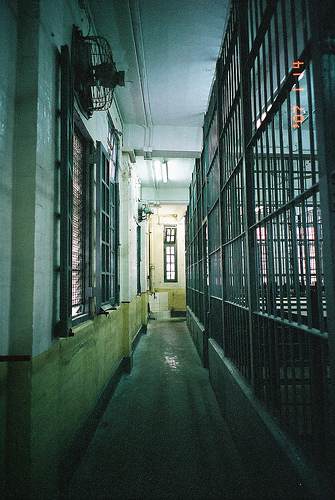
IN THESE TIMES – Last week a diverse group of nonviolent protesters across Georgia stood up for their rights, calling for decent wages, better social services and respect for their civil liberties. It didn’t take long for the government to crack down on the demonstrations, however: the protesters were already in prison.

The uprising of Georgia inmates on December 9 defied the stereotype of the chaotic “prison riot” in the public imagination. Yet neither did “Lockdown for Liberty” fit within the conventional model of civil disobedience or industrial action. But when the inmates in at least six different prisons refused to leave their cells to report to work and other activities that day, a strike began. And it effectively paralyzed a small chunk of the bureaucratic monstrosity of America’s prison system.

The incarcerated have historically filled the dregs of the American workforce, an emblem of racial subjugation often invisible in the politics of labor and social policy. It was against this hidden legacy of exploitation that the Georgia inmates, with the support of the NAACP and other civil rights advocates, raised issues common to incarcerated people nationwide: abusive treatment, degrading living conditions, a lack of accountability in the administration and parole authorities, and a lack of basic educational and social services (see below).

Pointedly invoking the term “slave” to describe the circumstances under which they toiled, the strikers showed how historically entrenched racial divisions play out today in the black-white disparities throughout the criminal justice system. Still, Georgia protesters included Latinos and whites as well as blacks, in a joint effort to resist and challenge structural injustices.

Their demands were hardly radical, but rather, embodied mainstream standards for reasonable and humane treatment: protection from cruel and unusual punishment by officers, affordable medicine when they’re sick, and above all, fair pay for their labor. According to the Atlanta-Journal Constitution, “state law forbids paying inmates except for one limited program.”

Final Call quoted reports trickling out from inmates earlier this week:

One brother told me, ‘We will ride until the wheels fall off,’ and that’s been the sentiment amongst the men when they started this,” said Elaine Brown, a spokesperson for the strike… Part of our purpose for doing this is that Georgia is the only state that does not pay its inmates at all. Some guys in here work seven days a week and they don’t get a dime,” said Dondito, one of the strikers, who requested anonymity.

You can almost hear the zero-tolerance conservatives in Washington now: how dare these criminals demand better treatment from the state? The official reaction was to immediately curtail what few resources the inmates possess. According to news reports, prison staff locked down four facilities, attempted to transfer out the leading troublemakers, cut off the hot water, and revoked cell phone privileges (yes, according to Facing South, “Cell phones are contraband in Georgia’s prisons, but widely available for sale from correctional officers.”)

The strike was called off after six days, following reports of violent crackdowns and rising fears that the situation would escalate. But by then, the inmates had made their mark with one of the largest prison protests in U.S. history. The decision to end the strike, moreover, seems like the beginning of another phase in the inmates’ collective action, now that they’ve caught national political attention. The AJC reported:

an inmate at Smith State Prison in Glenville said in a telephone interview prisoners had agreed to end their “non-violent” protest to allow administrators time to focus on their concerns rather than operating the institutions without inmate labor.

“We’ve ended the protest,” said Mike, a convicted armed robber who was one of the inmates who planned and coordinated the work stoppage. “We needed to come off lock down so we can go to the law library and start … the paperwork for a [prison conditions] lawsuit.

The proactive militancy of the strike organizers underscores the fact that the entire action not only proceeded largely without violence, but also spread rapidly through several institutions thanks to careful planning and clandestine technology–messages spread via cell, expanding the traditional jailhouse grapevine.

It may be a while before we see another prisoner strike going viral, as the potential for prison-based activism remains constrained by the criminal-justice power structure. But the Georgia inmates helped change the public face of Americans who’ve been caught up in the country’s incarceration industry. Under the most oppressive of conditions, they used disciplined strike tactics to align their grievances with broader struggles for human rights.

It makes sense. Prison is the everyday reality lived by a huge swath of the population (roughly one in one hundred, according to recent surveys) Meanwhile, the impact of prison labor leaves a hidden imprint on our economy as well. Noah Zatz of UCLA Law School has estimated that:

well over 600,000, and probably close to a million, inmates are working full time in jails and prisons throughout the United States. Perhaps some of them built your desk chair: office furniture, especially in state universities and the federal government, is a major prison labor product. Inmates also take hotel reservations at corporate call centers, make body armor for the U.S. military, and manufacture prison chic fashion accessories, in addition to the iconic task of stamping license plates.

As a captive workforce and disenfranchised populace, the prison system reaches deep into American society, and the distance between the people on the inside and those on the outside is increasingly a matter of luck–whether you’re unfortuate enough to have been born the wrong color or in the wrong neighborhood. If the movement launched by the Georgia inmates, and their demands for dignity, look surprisingly familiar, there’s a good reason for that: they are us.

For more information, follow the Black Agenda Report’s ongoing coverage of the Georgia prison activists.

The strikers’ demands, which they continue to press with state officials, are as follows:

A LIVING WAGE FOR WORK: In violation of the 13th Amendment to the Constitution prohibiting slavery and involuntary servitude, the DOC demands prisoners work for free.

EDUCATIONAL OPPORTUNITIES: For the great majority of prisoners, the DOC denies all opportunities for education beyond the GED, despite the benefit to both prisoners and society.

DECENT HEALTH CARE: In violation of the Eighth Amendment prohibition against cruel and unusual punishments, the DOC denies adequate medical care to prisoners, charges excessive fees for the most minimal care and is responsible for extraordinary pain and suffering.   AN END TO CRUEL AND UNUSUAL PUNISHMENTS: In further violation of the Eighth Amendment, the DOC is responsible for cruel prisoner punishments for minor infractions of rules.

DECENT LIVING CONDITIONS: Georgia prisoners are confined in over-crowded, substandard conditions, with little heat in winter and oppressive heat in summer.

NUTRITIONAL MEALS: Vegetables and fruit are in short supply in DOC facilities while starches and fatty foods are plentiful.

VOCATIONAL AND SELF-IMPROVEMENT OPPORTUNITIES: The DOC has stripped its facilities of all opportunities for skills training, self-improvement and proper exercise.

ACCESS TO FAMILIES: The DOC has disconnected thousands of prisoners from their families by imposing excessive telephone charges and innumerable barriers to visitation.

JUST PAROLE DECISIONS: The Parole Board capriciously and regularly denies parole to the majority of prisoners despite evidence of eligibility.

Michelle Chen’s work has appeared in AirAmerica, Women’s International Perspective, Extra!, Colorlines and Alternet. She is a regular contributor to In These Times’ workers’ rights blog, Working In These Times. She also blogs at Racewire.org.


Photograph by flickr user mocvdleung