MR Original – Some Better This World Through Film

MEDIA ROOTS – The ability to combine audio and visuals to tell a compelling narrative makes documentary films a powerful means of storytelling. They are education through entertainment and, at their best, a persuasive and motivating push to action. It is no surprise that the Bay Area, teeming with political and artistic thought, is a documentary film capitol of the world. As an aspiring documentarian, encouraged by the learning potential from this rich network, I began seeking out insight from local filmmakers.
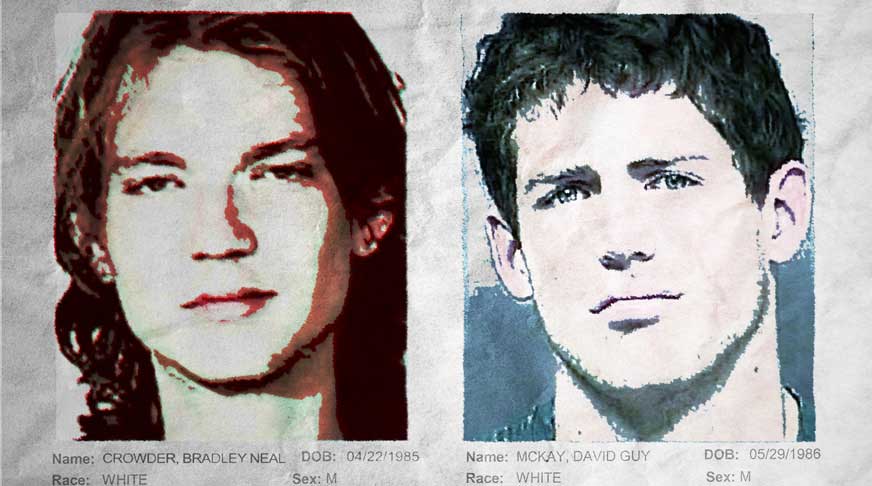
Following a tip from a friend, I came across Better This World – a film in post-production about two young men from Midland, Texas who are facing multiple domestic terrorism charges after manufacturing and bringing Molotov cocktails, or petrol bombs, to the 2008 Republican National Convention. What drew me into the story, and the filmmakers themselves, was the government’s star witness in the case – a controversial and unsuspected FBI informant.

Many of the stories behind the ‘foiled’ terrorist plots of the past few years share in common the trend of an undercover paid FBI informant that often times held a facilitating role in the group– a detail that frequently goes missing from mainstream media reports. (You can find more information on a few of these cases here, here and here.) Knowing this, I became eager to speak with the filmmakers who are taking on such an important and overlooked story.

Loteria Films, the local non-profit production company behind the film, is run by two women, Kelly Duane de la Vega and Katie Galloway. Kelly’s background in still photography and photojournalism, and Katie’s, in radio and print journalism, drew both women to film for what it could accomplish by blending these mediums.

When we met, Kelly recounted the restriction she felt in conveying people’s amazing personal stories as a photographer. “I think there are photographers whose photographs blow my mind, even more than a story. But I wasn’t feeling that about mine. I became so hungry for people to know the story. I knew there was another step.“

For Katie, filmmaking was a natural progression out of her love for working with audio and the depth and intimacy it brought to storytelling. While apprenticing at Frontline under documentarian, Ofra Bickle, criminal justice became her passion.
It was a blurb that Katie found in the Federal Court section of the New York Times that set the two women in pursuit of their first film together. Katie believed the story of two young men facing terrorism charges against the word of an FBI informant was a “really sexy, boiled down way into a story that is my life work so far – examining the criminal justice system and the problems with it.”

The trial was starting a week later, leaving not a moment for second-guessing.

“You say ‘I’m never going to do this on my credit card again. I’m never going to just start spending my own money again.’ But no one is going to give you money in a week’s turn around,” Katie explained with a smile reflecting love for the thrill and risk of chasing a good story. “It’s a gamble, its like going to Vegas.”

Better This World presents tough questions about the balance between liberty and safety in the face of post 9/11 domestic security. “The common thread in many of these [foiled terrorism] cases is some sort of political aspiration and an informant or a government agent who they hook up with and spend a lot of time with, and then at other end, the terrorism case. The question is what happened? Was it entrapment?”

Somewhat tongue-in-cheek Katie went on to ask, “What happens when you have so many resources going into the domestic security apparatus and not necessarily enough terrorists to go around?”

“In the FBI they call it ‘aspirational and not necessarily operational’,” she added.

In a recent interview by Reuters, filmmaker and award winning journalist, John Pilger described a mindset of reporters that says, “only authority can really determine the ‘truth on the news’,” and which leads to a dangerous form of embedding in government and official versions of events.  “Authority has its place, but the skepticism about authority must be ingrained in people,” he said.

And so it seems to be among documentarians.

It is the often skeptical and critical voice of documentary film that has shaped its long and growing legacy of critiquing the status quo while motivating people to educate themselves and take action.

Filmmakers do not face the same time constraints that can lead print and broadcast journalists to regurgitate the press releases handed to them by government, military and business leaders. Instead, they use a richly layered medium to tell the deeper story that hasn’t been told before, or to tell it differently. “Otherwise, what’s the point?” asked Katie.

Kelly pointed to the lack of a concrete power structure, or system, for documentaries to pander to.  “There isn’t a central authority figure in documentary filmmaking. There isn’t a central voice. There isn’t an outlet that is determining what we get to see and don’t get to see – except for PBS and HBO and A&E, but there are ways to get your film out if you are not in those venues.

In some ways it is a much more democratic universe than mainstream journalism. We’re already so far out of the system in some ways.”

One consequence of being outside of the ‘system’ is the struggle of fundraising. As an educational nonprofit, Loteria Films can apply for grants. It has been fortunate for the support it has received so far – the Independent Television Service, the biggest grant maker nationally for documentary films, is funding Loteria’s current project but only funds 1-2% of projects that come in its door.

“When you look at all the labor and heart and soul and money that goes into independent projects and the struggle…” Katie reflected.

“We went a year and a half with very little funding. You know, begging, borrowing and stealing. That’s really the life of an independent unless you’ve made it and have money coming in regularly for projects. We’re not there yet. We’ve been really lucky raising money through grants and so forth.”

But, funding is only part of the equation. Kelly attributes the success of the partnership to their base of trust and respect, calling it the “bedrock” of their collaboration.

“When the other person is talking you know that you respect the way they think as a creative person and as a story teller. So, if they are challenging your idea it is something you have to listen to because it very well might be right. When you and your partner are both able to do that for one another it deepens your respect and base trust.”

Comparing the partnership positively to a marriage Kelly added, “It’s a long intimate journey. Its pretty damn intense – you are really committing so much to each other.”

When I asked what advice the activist filmmakers had for aspiring documentarians, Kelly’s words resonated with my pull to the medium.

“I feel like there are certain people who don’t have a choice in life, who just are going to do something creative whether it makes good sense or not…I think you have to have something inside of you that is somewhat predetermining your fate, that is driving you, that is making you choose something that is difficult. You can’t be materialistic. You have to be the kind of person that gets pride from the good their work does, or the quality and pleasure of their work.”

Just as Katie had, Kelly was sure not to gloss over the financial struggles that, more often than not, accompany the production of an independent film, while highlighting that flexibility is key in overcoming those challenges.

“Sometimes you might have to take a commercial job and that sucks because it might not be at the core of where your values are. But unless you are from a financial situation where you aren’t forced to have that choice I think you have to be okay with that – moving in and out of those worlds to tell a bigger, larger more important story. You have to figure out how to keep yourself viable so you can raise the seed money to do the thing that matters.

You just have to go for it and at the end of the journey you know whether you can do it again. Whether it was great or if it was too hard.”


Better This World
will be premiering at SXSW in March. Stay tuned to Loteria Films for an upcoming trailer of the film.


Article by alicia roldán, editor for Media Roots

Image © Copyright of Loteria Films

Many Students Don’t Learn Critical Thinking in College

ALTERNET– What happens when you fail to invest in education (and no, I don’t mean investment in excessive layers of school administration), the most important single item in our nation’s success or failure? You end up with this result:

An unprecedented study that followed several thousand undergraduates through four years of college found that large numbers didn’t learn the critical thinking, complex reasoning and written communication skills that are widely assumed to be at the core of a college education.

Many of the students graduated without knowing how to sift fact from opinion, make a clear written argument or objectively review conflicting reports of a situation or event, according to New York University sociologist Richard Arum, lead author of the study. The students, for example, couldn’t determine the cause of an increase in neighborhood crime or how best to respond without being swayed by emotional testimony and political spin. […]

Forty-five percent of students made no significant improvement in their critical thinking, reasoning or writing skills during the first two years of college, according to the study. After four years, 36 percent showed no significant gains in these so-called “higher order” thinking skills. Read more: link

By the time our kids get to college it is too late to change habits por learn new skills that should have been taught to them in grade k-12 in my opinion. This study does not merely condemn colleges, it throws a harsh light on our primary education system on this country. In general, the US doesn’t pay our teachers well (compared to other professions and other nations), nor do we reward them for excellence, nor do we often provide them with a system that accurately assesses their efforts (i.e., No child left behind ring any bells?).

Continue reading about Students Not Learning Critical Thinking in College.

Photo by flickr user Shutterhacks

© COPYRIGHT ALTERNET, 2011

6 Revolts the Corporate Media Overlooked in 2010

ALTERNET–  Some of the most undercovered stories of 2010 were actions taken by ordinary people standing up for a more just and equitable society. People are taking to the streets on a regular basis across the country, but unlike the corporate-sponsored Tea Party — whose spokespeople can’t answer basic questions about the deficit they claim to be so worried about — those who believe in health care, affordable housing, economic justice, education, a living wage, and a better life for all rarely, if ever, get the attention they deserve. Instead, the media, even the alternative media, spent the better part of last year obsessing over the Tea Party and manufactured personalities like Sarah Palin, while ignoring people like 85-year-old Julia Botello.

Last month, Botello was among 22 people arrested for blocking the doors of a Chase Bank branch in downtown Los Angeles. Over 200 people, many of them homeowners facing foreclosure and eviction, took part in the action organized by Home Defenders League and the Alliance of Californians for Community Empowerment.

According to the Alliance, these families have never participated in an event or protest before, but they have exhausted all other options. Imagine if over 200 Tea Partiers took part in a similar action. Imagine if an 85-year-old Tea Party member was photographed being led away by two cops, one holding each arm. Not only would this video footage be shown over and over again on the cable shows, Julia Botello would be bombarded with interview requests, but because she’s standing in solidarity with people who are losing their homes, she’s only been contacted by two other reporters.

“If we’re united, we’re a better force. We need to stand together,” she says. “I use my voice for the people. I know all of the councilmen and councilwomen in my area. I’m not afraid to speak and ask for better conditions for my community.”

Botello found her voice 10 years ago after falling and hurting her knee on a routine walk home. Her South Central Los Angeles neighborhood was usually dark because the street lights rarely worked. “We usually had only one light that worked, so I went to local council meetings and raised my voice. Why are our streets dark? We need light. My neighborhood hasn’t been dark since.” She’s been going strong ever since. If there’s an action focusing on an issue she cares about, she will do whatever it takes to be there, even if it means rescheduling an overdue eye surgery. “I still have time and I want to keep going.”

In addition to the Chase Bank action last month, several other grassroots actions failed to receive the attention they deserve. These actions, no matter how small, should not be discounted. Let’s hope these voices and demands become too loud to ignore in 2011.

Continue reading about the 6 Revolts the Tea Party-Obsessed Corporate Media Overlooked.

Photo by Abby Martin

© COPYRIGHT ALTERNET, 2011

Lebanon in Limbo

THE INDEPENDENT/UK – Soldiers, soldiers everywhere. In the valleys, on the mountains, in the streets of Beirut. I have never seen so many soldiers. Are they going to “liberate” Jerusalem? Or are they going to destroy all the Arab dictatorships?

They are supposed to stop the country of Lebanon from sliding into a civil war, I suppose. Hezbollah, we are told, has destroyed the government – which is true up to a point. For on Monday, so we are told, the Hague tribunal of the United Nations will tell us that members of Hezbollah killed the former prime minister, Rafiq Hariri.

America demands that the tribunal name the guilty men. So does France. And so, of course, does Britain. Which is strange, because in 2005, when Mr Hariri was killed 366 metres from me on the Beirut Corniche, we all believed that the Syrians had killed him. Not the President, mind you. Not Bashar Assad, but the security services of the Syrian Baath party. That’s what I believed then. That’s what I still believe. But we are told now that it will be Hezbollah, Syria’s friend and Iran’s militia (albeit Lebanese) in Lebanon. And now America and Britain are beating the drum of litigation.

Hezbollah must be blamed and of course, the Prime Minister – or, to be correct, the former prime minister of Lebanon Saad Hariri, son of Rafiq – has just lost his job.

There are many who believe that Lebanon will now descend into a civil war, similar to the fratricidal conflict which it endured from 1976 to 1980. I doubt it. A new generation of Lebanese, educated abroad – in Paris, in London, in America – have returned to their country and, I suspect, will not tolerate the bloodshed of their fathers and grandfathers.

In theory, Lebanon no longer has a government, and the elections which were fairly held and which gave Saad Hariri his cabinet are no more. President Michel Suleiman will begin formal talks on Monday to try to create a new government.

But what does Hezbollah want? Is it so fearful of the Hague tribunal that it needs to destroy this country? The problem with Lebanon is perfectly simple, even if the Western powers prefer to ignore it. It is a confessional state. It was created by the French, the French mandate after the First World War. The problem is that to become a modern state it must de-confessionalise. But Lebanon cannot do so. Its identity is sectarianism and that is its tragedy. And it has, President Sarkozy please note, a French beginning point.

The Shias of Lebanon, of which Hezbollah is the leading party, are perhaps 40 per cent of the population. The Christians are a minority. If Lebanon has a future, it will be in due course be a Shia Muslim country. We may not like this; the West may not like this. But that is the truth. Yet Hezbollah does not want to run Lebanon. Over and over again, it has said it does not want an Islamic republic. And most Lebanese accept this.

But Hezbollah has made many mistakes. Its leader, Hassan Nasrallah, talks on television as if he is the President. He would like another war with Israel, ending in the “divine victory” which he claims his last war, in 2006, ended in. I fear the Israelis would like another war too. The Lebanese would prefer not to have one. But they are being pushed further and further into another war which Lebanon’s supposed Western friends seem to want. The Americans and the British would like to hurt Iran. And that is why they would like Hezbollah to be blamed for Mr Hariri’s murder – and for the downfall of the Lebanese government.

And it is perfectly true that Hezbollah does want this government to fall. By getting rid of this government, getting rid of this cabinet, it has broken the rules of the Doha agreement, which stated that the government and security services of Lebanon should not be harmed.

It is effectively wiping out the Arab “solution” to the Lebanese sectarian conundrum, and what – with the help of its Christian allies – is turning Lebanon into a frightened state. No wonder there were no drivers on the roads yesterday. No wonder the Lebanese were so frightened to go out and enjoy the Mediterranean sun. We are all frightened.

But I think the Lebanese state has grown up. I noticed, yesterday, that the Christian leader of the Lebanese Forces, one of the Christian militias, Samir Geagea, had a new photograph on the front of his party offices in a mountain town. But he was wearing civilian clothes. He was wearing a suit and tie. Not the militia costume he use to wear. That was a good sign.

No civil war in Lebanon.

Click to read the full article, Lebanon in Limbo: A Nation Haunted by the Murder of Rafiq Hariri.

© 2011 The Independent

Robert Fisk is Middle East correspondent for The Independent newspaper.  He is the author of many books on the region, including The Great War for Civilisation: The Conquest of the Middle East.

Photograph by Flickr user conjure1

“Lock & Load” Rhetoric of US Politics Isn’t Just a Metaphor

HUFFINGTON POST – I’m not saying that putting a bullseye on Arizona Democrat Rep. Gabrielle Giffords’ congressional race – as Sarah Palin did – was an explicit or intentional invitation to violence. Nor am I saying that the “Get on Target for Victory” events held by the guy Giffords beat – “Help remove Gabrielle Giffords from office Shoot a fully automatic M16 with Jesse Kelly” – was the reason her assassin went after her. This tragedy is still unfolding, and the questions of motive and incitement will be argued about for a long time to come.

But I am saying that the “lock and load”/”take up your arms” rhetoric of American politics isn’t just an overheated metaphor. For years, the language of sports has dominated political journalism, and discourse about hardball and the horserace and the rest of the macho athletic lexicon has been a factor in the trivialization of our public sphere. This has helped dumb down democracy, making a serious national discussion about anything important too wonky for words.

The “second amendment solution,” though, does something worse than make politics a branch of entertainment. It makes it a blood sport. I know politics ain’t beanbag. But words have consequences, rhetoric shapes reality, and much as we like to believe that we are creatures of reason, there is something about our species’ limbic system and lizard brainstems that makes us susceptible to irrational fantasies.

If you’re worried that violent video games may make kids prone to bad behavior; if you think that mysogenic and homophobic rap lyrics are dangerous to society; if you believe that a nipple in a Superbowl halftime show is a threat to our moral fabric – then surely you should also fear that the way public and media figures have framed political participation as a shooting gallery imagery is just as potentially lethal.

Article by Marty Kaplan, Director of the Norman Lear Center and Professor at the USC Annenberg School

© 2011 Huffington Post


Posted in Uncategorized | 1 Reply