Newly Leaked Docs Show Travesty of Guantanamo

April, 25 2011

SALON– Numerous media outlets — The New York Times, The Washington Post, The Guardian, The Telegraph, and NPR, among others – last night published classified files on more than 700 past and present Guantanamo detainees.
The leak was originally provided to WikiLeaks, which then gave them to the Post, NPR and others; the NYT and The Guardian claim to have received them from “another source” (WikiLeaks suggested the “other source” was Daniel Domscheit-Berg, a former WikiLeaks associate who WikiLeaks claims took, without authorization, many WikiLeaks files when he left).

The documents reveal vast new information about these detainees and, in particular, the shoddy and unreliable nature of the “evidence” used (both before and now) to justify their due-process-free detentions. There are several points worth noting about all this:

(1) Given that multiple media outlets have just published huge amounts of classified information, it is more difficult than ever to distinguish between WikiLeaks and, say, the NYT or the Post under the law. How could anyone possibly justify prosecuting WikiLeaks for disseminating classified information while not prosecuting these newspapers who have done exactly the same thing? If Dianne Feinstein, the DOJ and Newt Gingrich are eager to prosecute WikiLeaks for “espionage” – and they are – how can that not also sweep up these media outlets?

(2) Once again we find how much we now rely on whistleblowers in general – and WikiLeaks and (if he did what’s accused) Bradley Manning in particular – to learn the truth and see the evidence about what the world’s most powerful factions are actually doing. WikiLeaks is responsible for more newsworthy scoops over the last year than all media outlets combined: it’s not even a close call. And if Bradley Manning is the leaker, he has done more than any other human being in our lifetime to bring about transparency and shine a light on what military and government power is doing.

Read more about Newly Leaked Documents Show the Ongoing Travesty of Guantanamo

© 2011 Salon

Photo by flickr user drabina

Posted in Uncategorized | 1 Reply

Bush Torture Psychologist is Obama’s Newest Pick

SALON– One of the most intense scandals the field of psychology has faced over the last decade is the involvement of several of its members in enabling Bush’s worldwide torture regime.  Numerous health professionals worked for the U.S. government to help understand how best to mentally degrade and break down detainees. At the center of that controversy was — and is — Dr. Larry James.  James, a retired Army colonel, was the Chief Psychologist at Guantanamo in 2003, at the height of the abuses at that camp, and then served in the same position at Abu Ghraib during 2004.  

Today, Dr. James circulated an excited email announcing, “with great pride,” that he has now been selected to serve on the “White House Task Force entitled Enhancing the Psychological Well-Being of The Military Family.”  In his new position, he will be meeting at the White House with Michelle Obama and other White House officials on Tuesday.

For his work at Abu Ghraib and Guantanamo, Dr. James was the subject of two formal ethics complaints in the two states where he is licensed to practice: Louisiana and Ohio.  Those complaints — 50 pages long and full of detailed and well-documented allegations — were filed by the International Human Rights Clinic of Harvard Law School’s Human Rights Program, on behalf of veterans, mental health professionals and others.  The complaints detailed how James “was the senior psychologist of the Guantánamo BSCT, a small but influential group of mental health professionals whose job it was to advise on and participate in the interrogations, and to help create an environment designed to break down prisoners.”  Specifically:

During his tenure at the prison, boys and men were threatened with rape and death for themselves and their family members; sexually, culturally, and religiously humiliated; forced naked; deprived of sleep; subjected to sensory deprivation, over-stimulation, and extreme isolation; short-shackled into stress positions for hours; and physically assaulted. The evidence indicates that abuse of this kind was systemic, that BSCT health professionals played an integral role in its planning and practice. . . .

Writing in 2009, Law Professor Bill Quigley and Deborah Popowski, a Fellow at the Harvard Law School Human Rights Program, described James’ role in this particularly notorious incident:

In 2003, Louisiana psychologist and retired Col. Larry James watched behind a one-way mirror in a US prison camp while an interrogator and three prison guards wrestled a screaming, near-naked man on the floor.

The prisoner had been forced into pink women’s panties, lipstick and a wig; the men then pinned the prisoner to the floor in an effort “to outfit him with the matching pink nightgown.” As he recounts in his memoir, “Fixing Hell,” Dr. James initially chose not to respond. He “opened [his] thermos, poured a cup of coffee, and watched the episode play out, hoping it would take a better turn and not wanting to interfere without good reason …”

Although he claims to eventually find “good reason” to intervene, the Army colonel never reported the incident or even so much as reprimanded men who had engaged in activities that constituted war crimes.

Read full article about Top Bush-era Psychologist Obama’s Newest Appointment.

Written by Glenn Greenwald

© 2011 Salon

Photo by flickr user hermmermferm

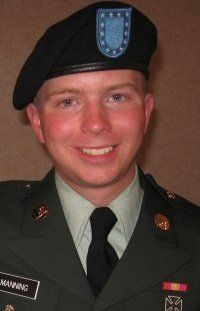
Bradley Manning’s Forced Nudity to Occur Daily

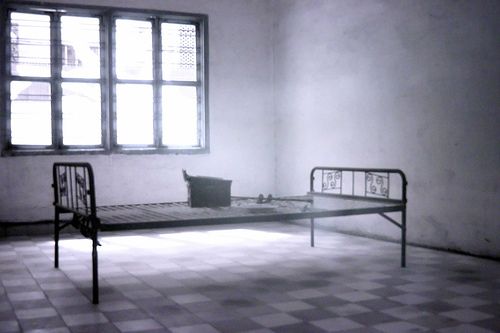
SALON– To follow-up on yesterday’s observations about the prolonged forced nudity to which Bradley Manning has been subjected the last two days:  brig officials now confirm to The New York Times that Manning will be forced to be nude every night from now on for the indefinite future — not only when he sleeps, but also when he stands outside his cell for morning inspection along with the other brig detainees.  They claim that it is being done “as a ‘precautionary measure’ to prevent him from injuring himself.”  

Has anyone before successfully committed suicide using a pair of briefs — especially when under constant video and in-person monitoring?  There’s no underwear that can be issued that is useless for killing oneself?  And if this is truly such a threat, why isn’t he on “suicide watch” (the NYT article confirms he’s not)?  And why is this restriction confined to the night; can’t he also off himself using his briefs during the day? 

Let’s review Manning’s detention over the last nine straight months:  23-hour/day solitary confinement; barred even from exercising in his cell; one hour total outside his cell per day where he’s allowed to walk around in circles in a room alone while shackled, and is returned to his cell the minute he stops walking; forced to respond to guards’ inquiries literally every 5 minutes, all day, everyday; and awakened at night each time he is curled up in the corner of his bed or otherwise outside the guards’ full view.  Is there anyone who doubts that these measures — and especially this prolonged forced nudity — are punitive and designed to further erode his mental health, physical health and will?  As The Guardian reported last year, forced nudity is almost certainly a breach of the Geneva Conventions; the Conventions do not technically apply to Manning, as he is not a prisoner of war, but they certainly establish the minimal protections to which all detainees — let alone citizens convicted of nothing — are entitled.

Read full article about Bradley Manning’s Forced Nudity.

Written by Glenn Greenwald

© SALON 2011

Photo by EPA

Guantánamo: No Closure For Obama

GUARDIAN– In the nine years since the opening of the Guantánamo Bay detention facility, the country has moved incrementally towards institutionalising the existence of the facility. On Monday, the Obama administration took the process of institutionalisation one step further, issuing both an executive order on detention – the first since the pathbreaking executive order that began his presidency, calling for the closure of Guantánamo and promising a rethink on the detention policy – and the revocation of the ban on military tribunals there.

In contrast to its predecessor, yesterday’s executive order was anything but pathbreaking. It tacitly acknowledged that the premises of detention in the “war on terror” begun by the Bush administration in the fall of 2001 still hold. More tellingly still, it demonstrated that the Obama administration now not only accepts the fact of Guantánamo’s existence as a given, but has also abandoned any debate over whether or not indefinite detention should be the policy of the land.

Under this new detainee review plan, the blueprint set out nearly a decade ago remains. At the outset, the underlying rationale for detention at Guantánamo Bay rests upon the September 2001 Authorisation to Use Military Force (AUMF). So, too, as decreed in the November 2001 Military Order, the department of defence remains the lead player in implementing the guidelines of the executive order, although “consultation with the attorney general” is prescribed. In terms of the procedures for review of the cases, those, too, are essentially new and updated versions of those that constituted the administrative review boards and the combatant status review tribunals, in which each detainee’s status was reviewed and chance for trial or release assessed. The justification for continued detention is familiar also – to wit, “to protect against a significant threat to the security of the United States“.

Read full article about Guantánamo: No Closure For Obama.

© Guardian News and Media Limited 2011

Photograph by Brennan Linsley/Pool/Reuters

Torture, Secret Wars, U.S. Disdain for Justice & More

photo by jan kromerDemocracy Now! has spent this week examining the revelations behind the first installments of State cables released by WikiLeaks on Sunday. Below is a collection of the outlet’s interviews and broadcasts covering torture, renditions, secret U.S. War Ops in Pakistan, U.S. pressure on other countries to thwart justice, and the most startling leaks that have yet to come.


WikiLeaks Reveals U.S. Tried to Thwart Spanish Probes of Gitmo Torture and CIA Renditions

The latest disclosures from the massive trove of diplomatic cables published by WikiLeaks reveal U.S. officials tried to influence Spanish prosecutors and government officials to drop court investigations into torture at Guantánamo Bay and CIA extraordinary rendition flights. We speak to Scott Horton, an attorney specializing in international law and human rights and a contributing editor of Harper’s Magazine.


Leaked Cables Reveal U.S. Pressured Spain to Drop Case of Cameraman Killed in 2003 Attack on Journalists in Baghdad

Leaked U.S. embassy cables from Madrid reveal the United States pressured the Spanish government to close a court case brought by the family of a Spanish cameraman, José Couso. Couso was killed in Baghdad when a U.S. Army tank fired on the Palestine Hotel, which was filled with journalists, on April 8, 2003. Three U.S. soldiers have been indicted in Spanish court for Couso’s death. “I am outraged,” says Javier Couso, the brother of José Couso. “I can’t believe my government conspired with a foreign government… It seems we are citizens, or at least a small province, of the empire of the United States.”


Jeremy Scahill: WikiLeaks Cables Confirm Secret U.S. War Ops in Pakistan

Despite sustained denials by the Pentagon, the leaked cables from WikiLeaks confirm that U.S. military special operations forces have been secretly working with the Pakistani military to conduct offensive operations and coordinate drone strikes in the areas near the Afghan border. A U.S. embassy cable from October of 2009 states: “These deployments are highly politically sensitive because of widely-held concerns among the public about Pakistani sovereignty and opposition to allowing foreign military forces to operate in any fashion on Pakistani soil.” The cables confirm aspects of a story about the covert U.S. war in Pakistan published in The Nation magazine last year by investigative journalist and Democracy Now! correspondent Jeremy Scahill.


“We Have Not Seen Anything Yet”: Guardian Editor Says Most Startling WikiLeaks Cables Still to be Released

In the coming days, we are going to see some quite startling disclosures about Russia, the nature of the Russian state, and about bribery and corruption in other countries, particularly in Central Asia,” says Investigations Executive Editor David Leigh at the Guardian, one of the three newspapers given advanced access to the secret U.S. embassy cables by the whistleblower website, WikiLeaks. “We will see a wrath of disclosures about pretty terrible things going on around the world.” Leigh reviews the major WikiLeaks revelations so far, explains how the 250,000 files were downloaded and given to the newspaper on a thumb drive, and confirms the Guardian gave the files to the New York Times. Additional cables will be disclosed throughout the week.


U.N. Special Rapporteur Juan Méndez: Instead of Focusing on Assange, U.S. Should Address WikiLeaks Disclosure of Torture

One of the leaked U.S. State Department cables released by WikiLeaks urges diplomats to gather intelligence about “plans and intentions of member states or U.N. Special Rapporteurs to press for resolutions or investigations into U.S. counter-terrorism strategies and treatment of detainees in Iraq, Afghanistan or Guantanamo.” We speak to Juan Méndez, the new U.N. Special Rapporteur on Torture and Other Cruel, Inhuman and Degrading Treatment or Punishment. He has called on the United States to investigate and prosecute torture committed under former President George W. Bush. He also said he hopes to visit Iraq and Guantánamo Bay to probe widespread torture allegations. Méndez says, “We seem to be focusing on whether disclosing [the cables] merits some kinds of action against Julian Assange… I am very concerned about the documents that show that thousands of people first imprisoned by U.S. forces [were] transferred to the control of forces in Iraq and perhaps even in Afghanistan, where they knew they were going to be tortured.”


photograph by Jan Krömer