Self-Immolation by Women in Afghanistan Still Common

TIME–  Fawzia felt like she had no way out. Married off to her cousin at age 16, she had been beaten routinely by her husband and in-laws in their poor rural home in Paktia province for the first three years of her marriage. She complained bitterly to her parents, but no solution seemed imminent.

Marriage had become too much for her to bear. Then, after she saw her brother-in-law strike his wife on the head with a gun, Fawzia finally did what she had threatened to do many times before: she doused herself in cooking fuel and struck a match.

Now Fawzia (whose name has been changed because of her age) lies in a hospital bed with third-degree burns covering 35% of her body and ash coating the insides of her lungs. Her physician, Dr. Ahmed Shah Wazir, believes it’s unlikely that she will survive. The terrifying thing is that she is far from the only person in Afghanistan to take such drastic action.

The Ministry of Women’s Affairs has documented a total of 103 women who set themselves on fire between March 2009 and March 2010. No one knows what the real numbers are, given the difficulty of collecting data in the country. “More than 80% [who try to kill themselves in this way] cannot be saved,” says Wazir, who runs the burn unit at Kabul’s Istiqlal Hospital, one of only two such specialized wards in Afghanistan. (See pictures of Muslim women leading a soft revolution.)

Wazir believes that most of his would-be patients never make it to the hospital. In some cases, families are too ashamed or fearful of prosecution to report what happened. “There are many such cases where, because of honor, because of the media, [the families] don’t want to disclose it,” says Selay Ghaffar, director of the Kabul-based NGO Humanitarian Assistance for the Women and Children of Afghanistan (HAWCA). “I’m sure there are many, many cases that are still invisible.” “I have seen a number of instances of women setting themselves on fire in my life,” says Fawzia’s mother, wiping away tears. She insists that there is nothing unusual about her daughter. “Four months ago, someone else from our village lit herself on fire and died.”

In recent years, the dramatic suicide method employed by women in this war-torn country has drawn wide attention, amid speculation that the trend might be growing. Some, like Wazir, blame Iranian TV and cinema for romanticizing suicide by fire. (For example, in the 2002 movie Bemani, a girl uses self-immolation to escape a forced marriage.) He points out that many of his patients, including Fawzia, are refugees who have returned from Iran. Other observers argue that the practice has long existed as a method by which Afghan women try to escape their sorrows and that improved monitoring since the fall of the Taliban has only made it more prominent in public awareness. The Afghan government, however, says that in the past five years, the numbers have dropped.

Read full article about Afghan Women Self Immolation.

Photo by AfghanistanMatters Flickr User

© COPYRIGHT TIME, 2010
Israel Settlements Cover 42% of West Bank

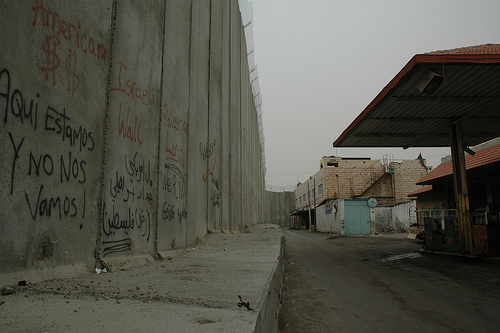
SEATTLE TIMES– Jewish settlements control more than 42 percent of the West Bank, and much of that land was seized from Palestinian landowners in defiance of an Israeli Supreme Court ban, an Israeli human rights group said Tuesday.

The group’s findings echo what other anti-settlement activists have claimed in the past: That settlements have taken over lands far beyond their immediate perimeters, sometimes from private Palestinians. Israel’s settlements have been a much-criticized enterprise throughout the decades and a major obstacle to peacemaking with the Palestinians.

“The extensive geographic-spatial changes that Israel has made in the landscape of the West Bank undermine the negotiations that Israel has conducted for 18 years with the Palestinians and breach its international obligations,” the B’Tselem group said in a summary of its report.

Settlers disputed the figures and said the report by the B’Tselem group was politically motivated. Israeli officials had no comment. The report was based on official state documents, including military maps and a military settlement database, the B’Tselem said.

Although the actual buildings of the settlements cover just 1 percent of the West Bank’s land area, their jurisdiction and regional councils extends to more than 42 percent, the group added.

Continue reading about Israeli Settlements.

By AMY TEIBEL

Photo by flickr user Frecklebaum

© COPYRIGHT SEATTLE TIMES, 2010

Posted in Uncategorized | 1 Reply

American Jews Who Reject Zionism Say Events Aid Cause

NY TIMES– One day nearly 20 years ago, Stephen Naman was preparing to help the rabbi of his Reform Jewish temple in South Carolina move the congregation into a new building. Mr. Naman had just one request: Could the rabbi stop placing the flag of Israel on the altar?

“We don’t go to synagogue to pray to a flag,” Mr. Naman, 63, recalled having said in a recent telephone interview.

That rabbi acceded to the request. So, after being transferred to North Carolina and joining a temple there six or seven years later, Mr. Naman asked its rabbi to remove the Israeli flag. This time, the reaction was more predictable.

“The rabbi said that would be terrible,” recounted Mr. Naman, a retired paper company executive who now lives outside Jacksonville, Fla., “and that he’d be embarrassed to be rabbi of such a congregation.” As shocking as Mr. Naman’s insistence on taking Israel out of Judaism may seem, it actually adheres to a consistent strain within Jewish debate. Whether one calls it anti-Zionism or non-Zionism — and all these terms are contested and loaded — the effort to separate the Jewish state from Jewish identity has centuries-old roots.

For the past 68 years, that stance has been the official platform of the group Mr. Naman serves as president of, the American Council for Judaism. And while the establishment of Israel and its centrality to American Jews consigned the council to irrelevancy for decades, the intense criticism of Israel now growing among a number of American Jews has made Mr. Naman’s group look significant, or even prophetic.

It is not that members are flocking to the council. The group’s mailing list is only in the low thousands, and its Web site received a modest 10,000 unique visitors in the last year. Its budget is a mere $55,000. As Mr. Naman acknowledges, the council’s history of opposition to Zionism renders it “radioactive” for even liberal American Jewish groups, like J Street and Peace Now.

Yet the arguments that the council has consistently levied against Zionism and Israel have shot back into prominence over the last decade, with the collapse of the Oslo peace process, Israel’s wars in Lebanon and Gaza, and most recently the fatal attack on a flotilla seeking to breach the naval blockade of the Hamas regime. One need not agree with any of the council’s positions to admit that, for a certain faction of American Jews, they have come back into style.

Read full article about American Jews who Reject Zionism.

© COPYRIGHT NY TIMES, 2010

Photo by flickr user RonAlmog

Young Man Beaten to Death in Eqypt for Using the Internet

HUMAN RIGHTS FIRST– Activists and supporters of Internet freedom in Egypt have described to Human Rights First different measures the Egyptian authorities take to control the activities of people accessing the Internet, but as of last week, it seems they have reached a whole new level. A young man was dragged out of an Internet café and beaten to death after refusing to show his ID card to police.

Patrons of Internet cafés are often required to provide identification details before logging on, and then their searches and activities online can be monitored. Police officers carry out random raids on Internet cafés and gather identification information from those present, even though there is no justification in Egyptian law for this kind of demand.

On the evening of June 7, 2010 what appeared to be one of these random raids escalated into the horrific brutalization of a young man by two policemen. Reports now reveal that the man may have been targeted for exposing police corruption. He posted a video on the internet depicting officers sharing the profits of a drug bust.

One thing that distinguishes this incident from other incidents of government intimidation of bloggers and activists is that it was carried out in plain view, and other citizens were able to capture and transmit images of police brutality before they could be confiscated. As human rights defenders in Egypt have told us, the government’s usual approach is to brutalize activists/netizens after detaining them and to hold them in custody until the bruises have disappeared. Gamal Eid, lawyer and Executive Director for Arabic Network for Human Rights Information, has said that with respect to bloggers and Internet activists, the government will find reasons to “kidnap them, torture them, take their passport and send them to prison until the hurts on their body become normal so for us there is no evidence of what happened.” 

Here are the facts of this tragic case: Khaled Mohamed Saeed, 28, was at an Internet café that he frequented in the Sidi Gaber district of Alexandria when two officers from the local police station entered the café and demanded to see everyone’s ID cards, claiming that they were authorized to do this under the Emergency Law, a law that has been condemned by international human rights organizations and Egyptian activists as allowing security forces to commit abuses with near impunity.

Khaled objected to what he saw as a violation of his rights. There are various reports of what happened next. One press report mentions that the police bound Khaled’s hands and started to beat him, others just describe the beating. Police officers knelt over him beating his head against the marble floor tiles of the café. Khaled was then dragged outside the Internet café, covered in blood, and the beating continued in full view of many witnesses, some of whom pleaded with police to stop. Two doctors even tried to help. Eyewitnesses said his head was banged against an iron door, steps and walls of an adjacent building. He was thrown into a police vehicle, and fifteen minutes later, his gruesomely disfigured dead body was deposited in the street.

Continue reading about the Young Man Beaten to Death in Eqypt for Using the Internet.

Posted in Uncategorized | 1 Reply

49% of US Voters Think Aid Flotilla is to Blame for Deaths at Sea

RASMUSSEN– Forty-nine percent (49%) of U.S. voters believe pro-Palestinian activists on the Gaza-bound aid ships raided by Israeli forces are to blame for the deaths that resulted in the high-profile incident.

A new Rasmussen Reports national telephone survey finds that just 19% of voters think the Israelis are to blame. Thirty-two percent (32%) more are not sure.

But 51% say Israel should allow an international investigation of the incident. Twenty-five percent (25%) agree with the Israeli government and reject the idea of an international probe. Another 24% are undecided.

In the May 31 incident, nine people were killed when Israeli commandos raided an aid ship headed from Turkey to break the Israeli blockade imposed on the Palestinian Gaza Strip.

While a number of countries have called for an international investigation of the incident, the Israeli government is skeptical of such probes arguing that the participants are often biased against the Jewish state.

Nearly half (49%) of U.S. voters agree that, generally speaking, most countries are too critical of Israel. Twenty-one percent (21%) say those countries are not critical enough. Seventeen percent (17%) say neither.

The survey of 1,000 Likely U.S. Voters was conducted on June 3-4, 2010 by Rasmussen Reports. The margin of sampling error is +/- 3 percentage points with a 95% level of confidence. Field work for all Rasmussen Reports surveys is conducted by Pulse Opinion Research, LLC. See methodology.

At the United Nations and in other international forums, the United States often finds itself as one of Israel’s few defenders, but just 24% say, generally speaking, America is too supportive of Israel. Thirty-three percent (33%) say the United States is not supportive enough, while 32% say neither is the case.

Israel is one of only five countries that most Americans are willing to defend militarily.

Republicans feel much more strongly than Democrats and voters not affiliated with either party that pro-Palestinian activists are to blame for the deadly outcome on the Gaza-bound aid ships.

While 65% of Democrats and 50% of unaffiliateds favor an international investigation, Republicans are evenly divided on the idea.

One possible explanation is that nearly two-thirds (65%) of GOP voters think most countries are too critical of Israel, a view shared by just 37% of Democrats and a plurality (46%) of unaffiliated voters.

Similarly, Republicans are more than twice as likely as Democrats to think the United States is not supportive enough of Israel. Unaffiliated voters are more narrowly divided.

Last year at this time, 35% criticized President Obama for not being supportive enough of Israel, while 48% said the president’s Middle East policy was about right.

Seventy percent (70%) of voters say they have been following recent news reports about the incident involving the ships carrying aid to the Gaza Strip at least somewhat closely. Twenty-eight percent (28%) have not been following closely, if at all.

Seventy-three percent (73%) of voters think it is unlikely that lasting peace between the Israelis and Palestinians will be achieved in the next 10 years, consistent with findings going back several years.  Fifty-eight percent (58%) view Israel as a U.S. ally and two percent (2%) as an enemy, with 32% saying the country is somewhere in between the two.

By comparison, just 30% see the United Nations, which has been pushing for an international probe of the ship incident, as an ally of the United States.  Sixteen percent (16%) see the UN as America’s enemy, and 49% put it somewhere in between.

Please sign up for the Rasmussen Reports daily e-mail update  (it’s free) or follow us on Twitter or Facebook. Let us keep you up to date with the latest public opinion news.

© COPYRIGHT RASMUSSEN, 2010

Posted in Uncategorized | 1 Reply