What If Edward Snowden Leaked All the Documents?

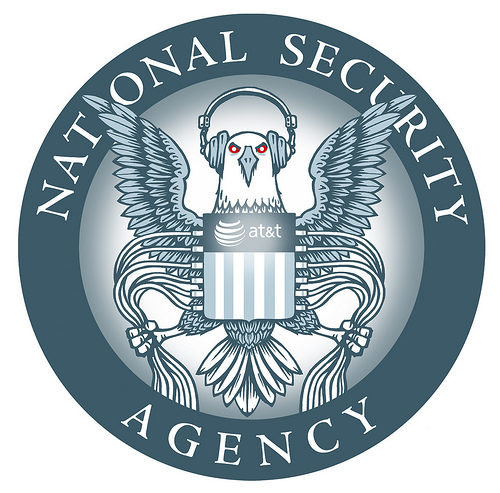
NSAbyEFFIn the few public interviews given by NSA whistleblower Edward Snowden, he’s hinted at having access to documents that include CIA outpost locations and secret agents’ names. Yet Snowden has also outlined the agreement he made with journalists to vet the documents carefully, and consult with the government before every release to ensure no harm to national security.

Russ Tice, the first post-9/11 NSA whistleblower said that he would have ‘shot Snowden’ himself if he had leaked juicier documents Tice refers to as ‘the jewels’, presumably in reaction to the potential dangers posed by what’s considered legitimate spying, black-ops programs and/or by exposing the people who secretly work within the intelligence sector.

Interested in how other NSA whistleblowers feel about this potential scenario, Media Roots posed the question to former AT&T technician turned NSA whistleblower Mark Klein in an exclusive radio interview.

Media Roots: What would be your opinion of Snowden if he leaked everything that he had without any regard for protecting intelligence assets names?

Mark Klein: I would say well, he did a heroic thing and it’s better the world knows the crimes that the government’s committing. Frankly a lot of the people who might get exposed, whose lives might be in danger, probably are bad people anyways. I’m from the 70s, my hero in the 70s was Philip Agee who exposed a whole list of names of CIA agents all over the world, because he figured rightly that the CIA was a dangerous, evil organization whose main task was to assassinate people, and he was right. I don’t give a shit what happens to the CIA, I hope this organization is dismantled and destroyed, it’s dedicated to assassination, that’s what it’s always done.

Klein’s blistering critique against the US intelligence apparatus differs greatly from statements made by any other NSA whistleblower. As a private sector employee, he never held any allegiance to the US government, nor signed any secrecy oath in contrast to other former NSA employees like Bill Binney, Thomas Drake, Kirk Wiebe, and Russ Tice.  

The typical template framing how Snowden’s leaks could have or did put American service members lives at risk is always met with adamant denial from those involved, especially Glenn Greenwald (with Shepard Smith and Bill Maher) and even Snowden himself. Understandably, when facing potential espionage charges, the exaggerated construct of harm devised by National Security state apologists has to be countered with a measured response by people in positions like Greenwald.

Though hypothetically speaking, if Snowden had leaked information like this, do secret CIA agents even deserve protection? Does an unabashed assassination and torture agency sponsoring an illegal arms trade and funded by our tax dollars really deserve a cloak of secrecy any longer?

Instead of shying away from the potentially false premise that lives might be in danger from the ongoing leaks, why are journalists not confronting it with a similar line to what war-criminal-walking-free Dick Cheney said about the public outrage regarding the Iraq war?

“So?”

Written by Robbie Martin of Media Roots, @fluorescentgrey on twitter

Photo from the EFF
Our Commando War in 120 Countries

MEDIA ROOTS- It’s hard to take the government’s talk of “shared sacrifice” amidst our debt crisis and economic hardships seriously, when there isn’t more than a peep about sacrificing dough from the most overfunded department of all: defense. The US government spends half of all taxpayer revenue on war. Yet, instead of acknowledging how the department’s increasingly bloated budget (which has doubled since 2001) might have something to do with the fact that our country is broke, the debt deal is set to mostly make cuts to severely depleted social programs.

Cutting a significant fraction of military spending isn’t even on the table, because of the western world’s blind acceptance to needing a global “war on terrorism.” Therefore, the cost of imperialism trumps the needs of the middle and working class once again.

However, maintaining American hegemony does not just mean strategically occupying resourceful Middle Eastern countries– it also means the funding and training of extensive special operations armies that are currently engaged in over 120 countries in the world, carrying out covert missions such as “assassinations, counterterrorist raids, long-range reconnaissance, intelligence analysis, foreign troop training, and weapons of mass destruction counter-proliferation operations.” Alternet takes a look at an under reported element of US imperialism that isn’t on too many Americans’ radars: the secret forces that are currently interfering with 120 other countries’ political processes and democratic evolutions– all at the expense of the US taxpayers.

Abby

***

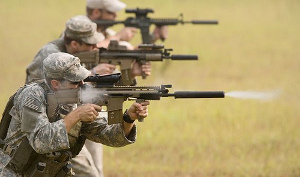
ALTERNET– Somewhere on this planet an American commando is carrying out a mission.  Now, say that 70 times and you’re done… for the day.  Without the knowledge of the American public, a secret force within the U.S. military is undertaking operations in a majority of the world’s countries.  This new Pentagon power elite is waging a global war whose size and scope has never been revealed, until now.

After a U.S. Navy SEAL put a bullet in Osama bin Laden’s chest and another in his head, one of the most secretive black-ops units in the American military suddenly found its mission in the public spotlight.  It was atypical.  While it’s well known that U.S. Special Operations forces are deployed in the war zones of Afghanistan and Iraq, and it’s increasingly apparent that such units operate in murkier conflict zones like Yemen and Somalia, the full extent of their worldwide war has remained deeply in the shadows.

Last year, Karen DeYoung and Greg Jaffe of the Washington Post reported that U.S. Special Operations forces were deployed in 75 countries, up from 60 at the end of the Bush presidency.  By the end of this year, U.S. Special Operations Command spokesman Colonel Tim Nye told me, that number will likely reach 120.  “We do a lot of traveling — a lot more than Afghanistan or Iraq,” he said recently.  This global presence — in about 60% of the world’s nations and far larger than previously acknowledged — provides striking new evidence of a rising clandestine Pentagon power elite waging a secret war in all corners of the world.

The Rise of the Military’s Secret Military

Born of a failed 1980 raid to rescue American hostages in Iran, in which eight U.S. service members died, U.S. Special Operations Command (SOCOM) was established in 1987.  Having spent the post-Vietnam years distrusted and starved for money by the regular military, special operations forces suddenly had a single home, a stable budget, and a four-star commander as their advocate.  Since then, SOCOM has grown into a combined force of startling proportions.  Made up of units from all the service branches, including the Army’s “Green Berets” and Rangers, Navy SEALs, Air Force Air Commandos, and Marine Corps Special Operations teams, in addition to specialized helicopter crews, boat teams, civil affairs personnel, para-rescuemen, and even battlefield air-traffic controllers and special operations weathermen, SOCOM carries out the United States’ most specialized and secret missions.  These include assassinations, counterterrorist raids, long-range reconnaissance, intelligence analysis, foreign troop training, and weapons of mass destruction counter-proliferation operations.

Read more about Our Commando War in 120 Countries: Uncovering the Military’s Secret Operations In the Obama Era.

© 2011 AlterNet

Photo by Flickr user world_armies

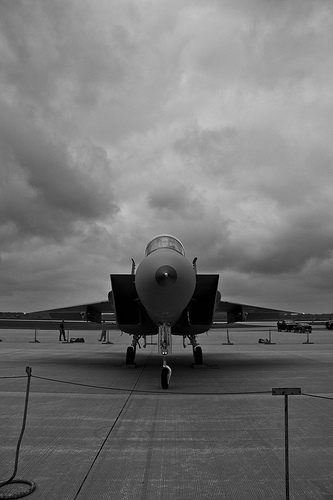
US Intensifies Secret Yemen Airstrike Campaign

NY TIMES– The Obama administration has intensified the American covert war in Yemen, exploiting a growing power vacuum in the country to strike at militant suspects with armed drones and fighter jets, according to American officials.

The acceleration of the American campaign in recent weeks comes amid a violent conflict in Yemen that has left the government in Sana, a United States ally, struggling to cling to power. Yemeni troops that had been battling militants linked to Al Qaeda in the south have been pulled back to the capital, and American officials see the strikes as one of the few options to keep the militants from consolidating power.

On Friday, American jets killed Abu Ali al-Harithi, a midlevel Qaeda operative, and several other militant suspects in a strike in southern Yemen. According to witnesses, four civilians were also killed in the airstrike. Weeks earlier, drone aircraft fired missiles aimed at Anwar al-Awlaki, the radical American-born cleric who the United States government has tried to kill for more than a year. Mr. Awlaki survived.

The recent operations come after a nearly year-long pause in American airstrikes, which were halted amid concerns that poor intelligence had led to bungled missions and civilian deaths that were undercutting the goals of the secret campaign.

Read full article on US Intensifying a Secret Campaign of Yemen Airstrikes.

©2011 NY Times

Photo by flickr user NicStage-F15

US ‘Secret War’ Expands Globally with Special Ops

WASHINGTON POST– Beneath its commitment to soft-spoken diplomacy and beyond the combat zones of Afghanistan and Iraq, the Obama administration has significantly expanded a largely secret U.S. war against al-Qaeda and other radical groups, according to senior military and administration officials.

Special Operations forces have grown both in number and budget, and are deployed in 75 countries, compared with about 60 at the beginning of last year. In addition to units that have spent years in the Philippines and Colombia, teams are operating in Yemen and elsewhere in the Middle East, Africa and Central Asia.

Commanders are developing plans for increasing the use of such forces in Somalia, where a Special Operations raid last year killed the alleged head of al-Qaeda in East Africa. Plans exist for preemptive or retaliatory strikes in numerous places around the world, meant to be put into action when a plot has been identified, or after an attack linked to a specific group.

The surge in Special Operations deployments, along with intensified CIA drone attacks in western Pakistan, is the other side of the national security doctrine of global engagement and domestic values President Obama released last week.

One advantage of using “secret” forces for such missions is that they rarely discuss their operations in public. For a Democratic president such as Obama, who is criticized from either side of the political spectrum for too much or too little aggression, the unacknowledged CIA drone attacks in Pakistan, along with unilateral U.S. raids in Somalia and joint operations in Yemen, provide politically useful tools.

Obama, one senior military official said, has allowed “things that the previous administration did not.”

Continue reading about the U.S. ‘secret war’ expanding globally as Special Operations forces take a larger role.

Photo by Flickr user DVIDSHUB

© COPYRIGHT WASHINGTON POST, 2011

Posted in Uncategorized | 1 Reply