From Persia to Iran: The Iran Neighborhood, Friend or Foe: Part 1 of 3
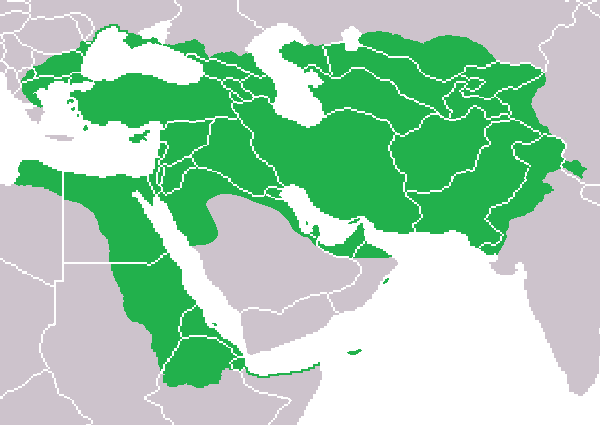 MEDIA ROOTS —The so called “diplomacy” currently being conducted by international surrogates to control the momentum of Iranian nuclear ambitions is conducted by the very same people who saturated the region with nuclear weapons technology. Iran, in one sovereign form or another, has been operating for 2,500+ years. The Median Empire allied with the Babylonians to capture Nineveh in 612 BC. Cyrus the Great, a descendant of Achaemenes conquered the Median Empire to establish the Achaemenid Empire. The Achaemenid Empire in Persis for more than two centuries stretched from the Indus Valley to Egypt.
Hidden in the halls of history, irony reveals, Persia championed the emancipation of Jewish slaves from Babylonian captivity during the Greco-Persian wars. After the fall of Babylon, Cyrus the Great guided Jewish slaves to Yehud province to rebuild the second temple of Jerusalem. The Babylonian slavery and the subsequent return to Israel was a pivotal biblical event between Yahweh and the people of Israel. Persia played both a pivotal historic and biblical role in preserving the Jewish people and homeland.
Fast forward a millennium, after the Muslim conquest of Persia the Safavid Dynasty of the Sufi Order ascended to power from 1501 – 1722. The Twelver School of Shi’a Islam was established as the official religion of the Empire. Shah Abbas I fought the Ottoman Empire over modern Iraq, courted European monarchs and remained resistant to Spanish and Portuguese overtures to end the relationship with Britain. In 1622, the English East India Company helped Shah Abbas retake Hormuz from the Portuguese. It was the beginning of a long running British interest in Iran.
Today, Iran is in the crosshairs of western foreign policy as Israel and western powers align to confront Iran over harnessing nuclear weapons technology. On the surface it appears Israel and Iran are the primary actors in an impending Middle-East war. Scratch a little deeper and you find Britain and Russia playing an old game, now acting as marionette masters. It must be said that each of these masters has a marionette that occasionally dances to its own rhythm.
Britain via America has waning influence over Israeli movements, while Russia dominates the crippled Syrian marionette by influencing the guarded Iranian led dance. The British mother remains a ghost as America and Israel represent her interests. She opaquely nods her approval to the cheers of the international banking cabal. Russia and China both call for respect of sovereignty and signal a willingness to protect their collective interests. Tensions are high and those aware of world history know the wicked brew well.
Israel and Iran
The divide between Iran and Israel transcends politics and roots itself in religion, ancient culture, millennia of war and ultimately land. Sects of humanity have always quantified protecting culture by defining and defending geographical boundaries. This is my land–that is your land. Nowhere on Earth is this starker than Jerusalem or Al-Quds. The cosmic lottery awards you either an Israeli or Palestinian mother and from here you choose sides.
In 1896, Theodor Herzl published Der Judenstaat –The Jewish State. The publication claimed the only resolution for the “Jewish Question” in Europe was the establishment of a Jewish state. At the 1897 First Congress of the Zionist Organization (ZO), founder Theodor Herzl again called for securing a homeland for the Jewish people under public law –the origin of modern political Zionism. A letter dated November 2, 1917 from Britain’s Foreign Secretary Arthur James Balfour to Baron Walter Rothschild, liaison to British Jewish leaders, reads as follows:
“His Majesty’s government view with favour the establishment in Palestine of a national home for the Jewish people, and will use their best endeavours to facilitate the achievement of this object, it being clearly understood that nothing shall be done which may prejudice the civil and religious rights of existing non-Jewish communities in Palestine, or the rights and political status enjoyed by Jews in any other country.”
Later this agenda evolved into the Sèvres peace treaty with Turkey and the Mandate for Palestine. In 1917, after the British defeat of Ottoman Turkish forces during World War I, Britain occupied and ruled under a military administration across Ottoman Syria. The cloak of international consensus and impetus was deployed in the form of a League of Nations to administer and control the Middle East, “until such time as they are able to stand alone.” The Zionist intended to “piggyback” the British coup d’état and a series of diplomatic and political moves provided or restored or captured –depending on perspective– a homeland for the Jewish people of the world.
The Zionist Commission formed in 1918. In April 1920, the Zionist commission elected representatives for the Palestinian Jewish Community. In July 1920, the eloquently named Occupied Enemy Territory Administration was replaced by a civilian commissioner named Herbert Samuel. Herbert Samuel would also be instrumental in forming the Muslim Supreme Council by appointing his half-brother Mohammad Amin al-Husayni as Grand Mufti of Jerusalem –the Sunni cleric in charge of holy places. The locals insisted al-Husayni was a British puppet and demanded As’ad Shukeiri was the Grand Mufti. It makes sense then if you are now told that As’ad Shukeiri would have a son named Ahmad Shukeiri who would become the first leader of the Palestine Liberation Organization.
The arrogant and ill-conceived British occupation of Palestine unapologetically causes and fosters the modern Palestinian liberation organizations agendas, Fatah and Hamas. Britain created Israel in the face of specific Arab opposition. Britain carved out Palestine and created Israel for persecuted Jewish citizens world-wide to have a home. More can be said about the centuries of failed European crusades, but it is clear Britain achieved some level of permanence with this diplomatic move into the Middle-East. Israel as a British proxy has never been well received by Iran and the history of British regional imperialism is largely to blame.
In 1980, irony would find Yehoshua Saguy, Director of Israeli military intelligence, publicly urging and assisting Iran’s strike on the Iraqi Osirak nuclear reactor. In 1981, three weeks before the Israeli elections, Israel again bombed the French-built Iraqi Osirak reactor. Superficially criticized by the United Nations Security Council, the strike is currently used as an example of preventive strikes in modern international law. An Israeli strike on Iranian nuclear reactors in 2012 will not be setting precedent, only revisiting old method.
Today, Israel backed and armed by Britain and America, is the center of gravity for all Middle-East issues. Iran leads the Muslim world in denouncing Israel and it is only a matter of time before Israel attacks Iranian nuclear facilities. Iran demands the world recognize its inalienable nuclear right to a full nuclear fuel cycle as granted by their membership in the nuclear Non-Proliferation Treaty –a treaty that nuclear Israel refuses to sign. Recent reports suggest Iran has suffered state-sponsored cyber-attacks against nuclear centrifuges and nuclear scientist assassinations. Iran is strapped to the Israeli table enduring overt acts of war, biting economic sanctions, requests to search sovereign military sites and the threat of Israeli military action.
On June 6, 2012 Iran sparred with western diplomats accusing the United Nations IAEA of acting like a “western-manipulated intelligence agency.” Iranian media said Tehran had written twice, with no response, to the permanent five members of the United Nations Security Council seeking a foundation for the talks scheduled in Moscow on June 18, 2012. The dialogue falls on deaf ears on both sides of the table and the diplomats and politicians may soon scurry behind their militaries for cover. The ultimate culmination of political arrogance, diplomatic madness and catastrophic human relation is war.
The Permanent Five: Britain and Iran
Look to Britain for explanations of the current trajectory in the Middle-East. This slice of history begins in 1735 when Persian leader Nader Shah attacked deep into India capturing the Peacock throne, adorned with the largest diamond in the world, the koh-i-noor. The riches of India were on full display and western imperialists took notice. Assassinated in 1747, Nader Shah was succeeded by the Zand and Qajar Persian dynasties. In the dusk of the 18th Century Iran would bow, but not break to British and Russian aggression.
The Iranian Qajar dynasty ceded close to half of its territory to Britain and Russia. Signed in 1813, the Treaty of Gulistan ceded modern-day Azerbaijan to Russia. The treaty text was prepared and mediated before the Persian court by British Ambassador to Persia, Sir Gore Ouseley. Meanwhile, Britain’s increasing occupation of Egypt allowed Russia to make sweeping regional gains. Likewise, the Persian losses and subsequent weakening grasp in India left it ripe for British plucking. This 18th century Russo-Anglo expansionist “tag-team” would turn sour for the next century as the game began.
Britain fearing Russian acquisition of the jewel of British imperialism –India, fought proxy wars with Russia across central Asia from 1813 to 1907. Afghanistan and then China became the primary theatres for what was called “The Great Game.” Reigniting during the Bolshevik Revolution of 1917, the game fizzled after Britain and the Soviet Union once again became allies in World War II.
In 1925, Shah Reza Khan came to power in Iran only to once again be invaded by Britain and Russia because of alleged ties to the German regime. In all historical honesty it was to commandeer the Iranian railroad. Shah Khan was forced to abdicate his position to his son, Shah Mohammed Reza Pahlavi. Iranians after enduring more than two centuries of invasion, territorial concessions and castration of regional influence were again the subject of British and Russian imperialist foreign policy. The seeds of distrust were thus sewn for generations and the worst was yet to come.
In 1951, Shah Pahlavi ratified the Iranian parliamentary appointment of Prime Minister Dr. Mohammad Mosaddegh who quickly nationalized Iran’s petroleum industry. British Prime Minister Winston Churchill countered by embargoing Iranian oil and enlisting American President Dwight Eisenhower to carry out operation Ajax. This was the first time the United States had openly overthrown a democratically elected civilian government. British heavy-handed ethnocentric diplomacy once again reaped the rotten fruits of ill-will, floundering down the historically redundant path of promoting the fallacy of war and occupation. As the grip of western interference strangled Shah Pahlavi, another was rising to relieve the population’s malcontent with foreign interference.
Sayyed Ruhollah Musavi Khomeini (Grand Ayatollah) was of Kashmiri descent, his grandfather left India because of British occupation. Studying at some of Iran’s elite seminaries Khomeini became an expert in Islamic Law and jurisprudence. A philosopher and a poet, privately Khomeini was an expert in Sufi mysticism and controversially knowledgeable of Gnosticism. In 1963, Shah Pahlavi proposed a White Revolution consisting of sweeping governmental changes at odds with the traditions of Islamic law. Khomeini was having none of it. After 16 years in exile, Khomeini returned to Tehran on February 1, 1979. He steamrolled the provisional government and appointed his own interim government.
Iran is still dominated by a clerical style of government, staunchly mistrustful of Britain. In November of 2011, the British embassy in Tehran was stormed on the heels of an IAEA report. Britain was so infuriated it expelled all Iranian diplomats with 48 hours notice. This set off a flurry of ambassador recalls for consultation and condemnation across the European Union. In the same month, Britain announced prohibition on all trade between British financial institutions and the Iranian central bank. The British-Persian relationship is at a new low, it is difficult to imagine Britain standing in the way of Israeli or American aggression, especially since it is the wizard wielding the levers behind the curtain.
Russia and Iran
Much of the Russian engagement of Persia – now Iran, dovetails with the British history already discussed. However it is important to note that Russia currently maintains a friendly posture with Iran and its surrogates Syria, Southern Lebanon and Palestine. Russia has relaxed its complicity interfering in Iranian affairs to a posture of trading partner, military and diplomatic ally and potentially proxy-war boss.
Russia-Persia relations originate in the early 1600s. As mentioned, Persia suffered a succession of annexations at the hands of the Russians during the 1800s, then again a bitter occupation in the 1900s, all ensued by an American-British coup d’état and counter revolution in the last 60 years. Russia still dances on the fence as evidenced in 2010, Russia scuttled a $13 billion arms sale to Iran, which included signing a decree banning the delivery of S-300 missile systems, warplanes, helicopters and ships.
Russia continues to veto United Nations attempts to sanction the Syrian government, the key regional Iranian proxy. Russian United Nations ambassador, Vitaly Churkin, accused the United States and its European allies of deceiving fellow Security Council members by using a civilian protection mandate to implement regime change in Libya. Iranian President Ahmadinejad and Russian President Vladimir Putin are meeting before the June 18, 2012 summit scheduled in Moscow to “feel the heat” surrounding the nuclear ambitions of Iran. The irony of Russia coming full-circle to Persia’s rescue is mind boggling viewed through the glasses of imperialist history, however the modern culture of business cultivated between Russia and Iran is reality.
America and Iran
The United States maintains no formal diplomatic relations with Iran. America maintains an “interests section” at the Swiss embassy in Tehran, while Iran maintains a similar section at the Pakistan embassy in Washington D.C. Since the MI6 and CIA coup d’état against the Iranian Mosaddegh regime in the 1953, the British conceived and Shah Pahlavi endorsed White Revolution of 1963 and the 1979 taking of hostages at the United States embassy in Tehran –it is an understatement to say Iran and America have a significant trust deficit.
Recent tightening of banking sanctions, Persian Gulf naval skirmishes, hostage taking and release, assassinations and alleged assassinations bring the United States to the brink of war with Iran in 2012. The irony is breathtaking when you consider the Iranian Nuclear program began with the direct assistance of the United States Atoms for Peace program in the 1950s. Western nuclear assistance eventually gave way to Russian and French assistance. Iran with Russian help opened the Bushehr Reactor in September of 2011. America stands only behind Britain and Israel in fervent opposition of Iranian nuclear ambitions.
The President of the United States of America and the United States State Department are now fully represented by international bodies and independent civilian foreign policy “think tanks,” abdicating sovereign American foreign policy to central bankers and corporate lobbying interests. On June 8, 2012, talks between Iran and these international surrogates collapsed as pessimism and distant points of compromise were feigned, tabled and trashed. Increasingly it appears only the American election cycle and the timing of war with Iran remains to be determined. War weary Americans are being lined up to support the Israeli proxy engagement of Iran. Britain created Israel and America continues to support and arm Israel for this very “showdown.” America’s international surrogates travel to Moscow on June 18, 2012, for perhaps a final discussion on Iran’s sovereign right to develop nuclear energy.
China and Iran
China and Iran have trade and diplomatic relations spanning back millennia. In modern times the relationship between Iran and China is one of trade reliance. China is fully invested in developing Iran’s capacity to export oil and natural gas, Iran is fiscally dependent on oil sales to China and energy dependent upon Chinese conversion of oil to gasoline. This relationship is expansive and current attempts to place Iranian import and exports under an international microscope, is unnerving to both China and Iran.
In 2011, a group known as the Green Experts of Iran reported large swaths of Iranian land had been given to China for construction of oil and gas fields, sovereignty intact. China has vowed that any attack against these regions would be considered an attack against its own sovereign territory and will be defended. The Green Experts of Iran have speculated that this was the impetus for Chinese Major General Zhang Zhaozhong’s statement that “China will not hesitate to protect Iran even with World War III.”
China is a major supplier of military arms to Iran. Having delicately not taken sides in the Iran-Iraq war, China has steadily maintained military support. Initially using North Korea as a proxy to transit sensitive arms to Iran, China has opted for direct trade to avoid antagonizing the west. China continues to be a major arms provider for Iran, including surface-to-surface anti-ship missiles that threaten to wreak havoc on Persian Gulf shipping through the Straits of Hormuz.
Chinese nuclear cooperation with Iran once flourished as China assisted Iran in developing several nuclear research reactors. Additionally, China has assisted Iran in developing its capacity to domestically enrich hexafluoride uranium in Isfahan, Iran. China currently has no official direct cooperation with Iran concerning nuclear materials, while indirect cooperation remains murky. Chinese nuclear scientists and technicians remain in Iran even as China openly opposes Iranian domestic production of nuclear arms.
China continues to straddle the fence as it encourages Iran to be flexible and pragmatic through negotiations, while the mainstream press is selling the idea that China is arming Iran, Syria and the Lebanese proxy Hezbollah. China does not share the West’s urgency to intervene in Iran and certainly can be expected at a minimum to protect its Iranian energy and infrastructure investments.
France and Iran
The relationship between France and Iran spans back almost five centuries. The French East India Company promoted French interests in Persia as far back as 1664. The Shah of Iran welcomed the French to balance the trade and corresponding influence of the Dutch and British. With favorable rates on customs duties and a French trading post in Bandar Abbas the relationship flourished.
In 1807, Napoleon I formed a Franco-Persian alliance with Fath Ali Shah to challenge Russia and Great Britain. The alliance collapsed as it became apparent it was a French ruse to march across the Middle-East to seize British held India. France would practice further treachery when it then aligned with Russia to focus on European war campaigns. The relationship would continue to be on again–off again between France and Iran, depending predominately on Russian regional posture.
After the 1979 Iranian Revolution, French involvement in the Iranian nuclear program became a heated issue. The French Cogema Company and the Iranian Sofidif Company formed a joint venture to establish the Société Franco–iranienne pour l’enrichissement de l’uranium par diffusion gazeuse. Primarily France, Belgium, Spain and Sweden formed the Eurodif joint stock company of which Iran’s Sofidif Company held about 40% of the company stock. Iran would also lend more than $1.25 billion for construction of the Eurodif factory. In 1982, Francois Mitterrand refused to provide any uranium to Iran and reneged on paying back the $1.25 billion loan.
On November 17, 1986 as Georges Besse, Renault CEO and Eurodif manager stepped from his chauffeured car a motorcycle approached and shot him in the head and chest and he died instantly. The assassination was blamed on a militant group claiming responsibility, while at trial these members vehemently denied any involvement. Nathalie Menigon, Joelle Aubron, Jean-Marc Rouillan and Georges Cipriani are all serving life imprisonment for the assassination.
Along comes French investigative journalist Dominique Lorentz to uncover a series of terrorist acts in France related to proliferating the Iranian nuclear program. Dominique Lorentz’s documentary film, La République Atomique, analyzes the French domestic and foreign policy agenda through economic, diplomatic, technological and military sectors. She exposes how American reluctance to help anyone in the world with nuclear technology after World War II found American officials backing France to do the job. Starting with Israel, France would assist an additional 44 countries with their nuclear programs.
Dominique Lorentz investigated and reported on a series of attacks that were said to be an Iranian campaign to force France to pay back the Eurodif debt. She reported these attacks included the French Hostage affair in Lebanon, bombing of Hotel de Ville, bombing of Pub Renault, the assassination of Georges Besse and the plane crash of Michel Baroin. Dominique Lorentz reports that on the day Besse was shot the French paid $330 million to Tehran and another payment after Baroin’s plane crash in December 1987. In 1988, the last French hostages were released from Lebanon and French Premier Jacques Chirac signed an accord saying Tehran would get its shareholder status back in Eurodif and delivered its enriched Uranium.
During these 10 years of crisis between France and Iran over the nuclear program, Germany, Argentina, China and Pakistan filled the nuclear collaboration void. Iran expanded its nuclear technology holdings, including enriched uranium. In 1995, the Russians lined up to build the Bushehr nuclear power facility and in 1997 the French signed on to provide Russia with enriched uranium. Whether you agree with the hard-hitting investigative journalism Dominique Lorentz has shared, no one can deny who supplied nuclear technology to Iran. America, France, China, Russia, Britain, Germany, Argentina and Pakistan have all provided Iran (and Israel) with nuclear technology, fuel and weapons.
So the political, economic and diplomatic lust that led all these geniuses to proliferate nuclear technology is ready to give birth to the war they all knew was coming. A fleeting flurry of diplomacy occurred in 2005 ending with the Iranian President calling for the destruction of Israel. In 2009, French diplomats in Tehran were accused by Iran for instigating post-election protests. In 2010, the Iranian state-run daily paper called France’s first lady a prostitute and this symbolizes the bottom as French and Iranian diplomacy descends into petty media slurs. In February 2012, Iran ceased oil exports to France. In June 2012, the French continue to isolate Iran through diplomacy and the media.
Iran and Israel are squared off at the peak of useful diplomacy as the mainstream media begins a campaign of conditioning and deterioration. The Permanent Five members of the United Nations are both responsible for creating and destroying the sovereign nuclear ambitions of Iran. Two key members, Russia and China, are being pushed to the brink of their capacity to remain neutral on military engagement of Iran. The old game between Britain and Russia is alive and the marionette masters begin to seriously plan their dance. The British war drums are thundering and Uncle Sam rides shotgun with the Queen as they encourage the heavily armed Israeli proxy to jump down the slippery slope of war.
Part two of this three part feature on the Iranian Neighborhood will delve into the allegiance of critical regional neighbors –Turkey, Syria, Saudi Arabia, Palestine and Lebanon. Part three of the Iranian Neighborhood will take a look at the neighborhood through snapshots of allegiance with contiguous countries such as Jordan, Egypt, Armenia, Azerbaijan, Turkmenistan, Afghanistan, Pakistan, Iraq and Kuwait. Join us again at Media Roots for the exclusive conclusion of this in depth analysis of the Iranian Neighborhood.
Chris Martin for Media Roots
***
Photo by Flickr user Daniella Zalcman



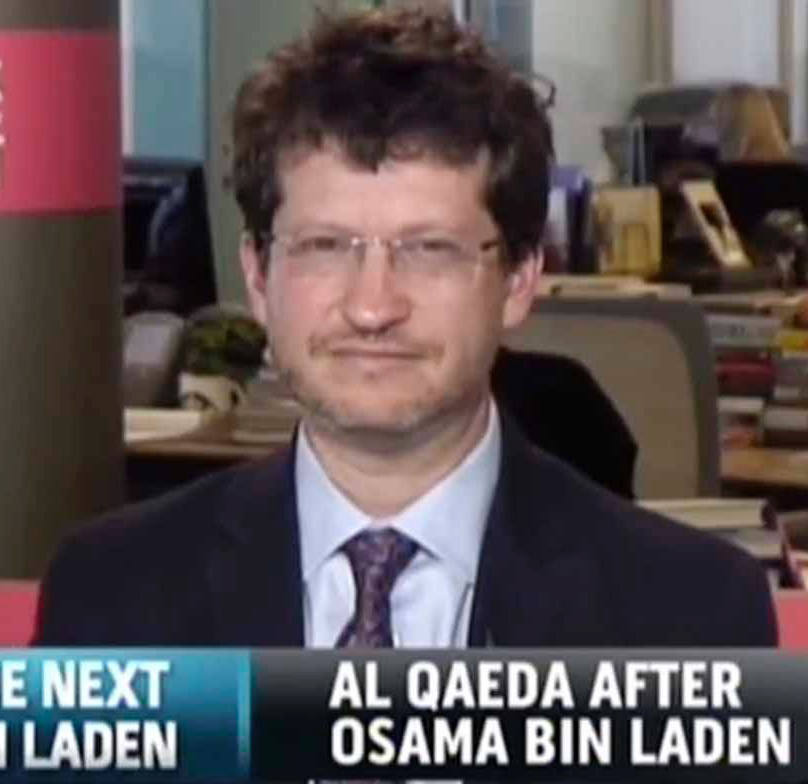 MEDIA ROOTS – Daniel Klaidman, former editor for Newsweek magazine, recently produced a slick and pandering ‘anti-war’, pro-drone, pro-Obama video on the ‘liberal’ website The Daily Beast. The segment insinuated that Muslims in Pakistan are grateful for US drone strikes, even when they kill innocent people.
  MEDIA ROOTS —The so called “diplomacy” currently being conducted by international surrogates to control the momentum of Iranian nuclear ambitions is conducted by the very same people who saturated the region with nuclear weapons technology. Iran, in one sovereign form or another, has been operating for 2,500+ years. The Median Empire allied with the Babylonians to capture Nineveh in 612 BC. Cyrus the Great, a descendant of Achaemenes conquered the Median Empire to establish the Achaemenid Empire. The Achaemenid Empire in Persis for more than two centuries stretched from the Indus Valley to Egypt.
 MEDIA ROOTS –
 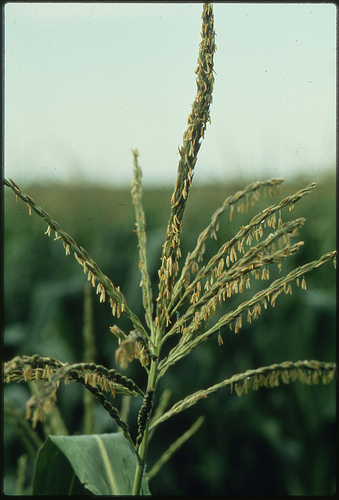 MEDIA ROOTS — If you were ever wondering exactly how large corporations ‘cover up’ malfeasance, look no further than the India Times. Ag-giant Monsanto has colluded with one of the largest papers in Asia, the India Times, to heavily downplay the notion that Indian farmers have been committing suicide at abnormally high rates as a result of Monsanto’s clamp down on crop sharing. This is a perfect example of powerful interests conspiring with a major media outlet in order to conceal the truth.