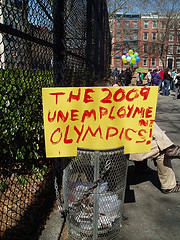
MEDIA ROOTS —Although the corporate media touts an improving economy, U.S. citizens continue to suffer cruel economic punishment and austerity. Millions of citizens still search for employment, and the typical income of a U.S. household is less now than it was in 1997. Why is the economy not improving? Wall Street makes an easy target for the ire of struggling workers, but is there a deeper, more complex reason why the economy creaks, tumbles and rolls like an outdated galleon laboring in rough seas?
Economist Joseph Stiglitz offers in-depth analysis of the weakening foundation of the U.S. economy. In the years leading up to 2008, U.S.A. lived in an easy-credit, fast-money mania, fueled by wildly inflated home values, corrupt appraisers, and financial gimmicks. However, the integrity of the economy was compromised even before the meltdown, explains Stiglitz. Our collective economic livelihood had been dealt a slow acting, poisonous blow long ago, as other observers such as Catherine Austin Fitts and Dr. Michael Hudson have described.
Stiglitz draws insight comparing today with the tumultuous Great Depression, which had been well underway for years before the banking sector crashed. What brought about the economic paralysis? The primary cause was a quiet, but massive, transition away from an agriculture-based economy. As food production modernized and became more efficient, less farmers were required to grow the food necessary to feed the U.S. Suddenly, a vast portion of the U.S. workforce became obsolete through automation.
Stiglitz argues broad changes must be made in tandem with large, concentrated investment. As once industrious manufacturing regions of U.S.A. wither and rust, elected officials neglect investment in education, research, and infrastructure, favoring austerity cuts. Yet, these three areas provide opportunities for healthy economic growth and future employment, as the nation struggles to adapt to the 21st century. Addressing these needs, perhaps, U.S.A. can fulfill its promise of greatness and prosperity.
MR
***
VANITY FAIR —Even when we fully repair the banking system, we’ll still be in deep
trouble—because we were already in deep trouble. That seeming golden age
of 2007 was far from a paradise. Yes, America had many things about
which it could be proud. Companies in the information-technology field
were at the leading edge of a revolution. But incomes for most working
Americans still hadn’t returned to their levels prior to the previous
recession. The American standard of living was sustained only by rising
debt—debt so large that the U.S. savings rate had dropped to near zero.
And “zero” doesn’t really tell the story. Because the rich have always
been able to save a significant percentage of their income, putting them
in the positive column, an average rate of close to zero means that
everyone else must be in negative numbers. (Here’s the reality: in the
years leading up to the recession, according to research done by my
Columbia University colleague Bruce Greenwald, the bottom 80 percent of
the American population had been spending around 110 percent of its
income.) What made this level of indebtedness possible was the housing
bubble, which Alan Greenspan and then Ben Bernanke, chairmen of the
Federal Reserve Board, helped to engineer through low interest rates and
nonregulation—not even using the regulatory tools they had. As we now
know, this enabled banks to lend and households to borrow on the basis
of assets whose value was determined in part by mass delusion.
The
fact is the economy in the years before the current crisis was
fundamentally weak, with the bubble, and the unsustainable consumption
to which it gave rise, acting as life support. Without these,
unemployment would have been high. It was absurd to think that fixing
the banking system could by itself restore the economy to health.
Bringing the economy back to “where it was” does nothing to address the
underlying problems.
The trauma we’re experiencing right now
resembles the trauma we experienced 80 years ago, during the Great
Depression, and it has been brought on by an analogous set of
circumstances. Then, as now, we faced a breakdown of the banking system.
But then, as now, the breakdown of the banking system was in part a
consequence of deeper problems. Even if we correctly respond to the
trauma—the failures of the financial sector—it will take a decade or
more to achieve full recovery. Under the best of conditions, we will
endure a Long Slump. If we respond incorrectly, as we have been, the
Long Slump will last even longer, and the parallel with the Depression
will take on a tragic new dimension.
Until now, the Depression
was the last time in American history that unemployment exceeded 8
percent four years after the onset of recession. And never in the last
60 years has economic output been barely greater, four years after a
recession, than it was before the recession started. The percentage of
the civilian population at work has fallen by twice as much as in any
post-World War II downturn. Not surprisingly, economists have begun to
reflect on the similarities and differences between our Long Slump and
the Great Depression. Extracting the right lessons is not easy.
MEDIA ROOTS – Early Monday morning, the controversial website WikiLeaks released a stunning collection of Global Intelligence Files from the private intelligence corporation Stratfor.
“The Global Intelligence Files exposes how Stratfor has recruited a global network of informants who are paid via Swiss banks accounts and pre-paid credit cards. Stratfor has a mix of covert and overt informants, which includes government employees, embassy staff and journalists around the world.
The material shows how a private intelligence agency works, and how they target individuals for their corporate and government clients. For example, Stratfor monitored and analysed the online activities of Bhopal activists, including the “Yes Men”, for the US chemical giant Dow Chemical. The activists seek redress for the 1984 Dow Chemical/Union Carbide gas disaster in Bhopal, India. The disaster led to thousands of deaths, injuries in more than half a million people, and lasting environmental damage.”
Most mainstream media reports aren’t covering several important issues that these files bring up, like how Stratfor has been gathering intelligence and spying on journalists and activists all over the world for not only the government, but for private corporations like Coca-Cola.
Comedy/activist duo the Yes-Men found out they were being spied on by Stratfor because of their activism surrounding the Bopal Chemical Disaster. Other media outlets that had intelligence gathering done on them include Rolling Stone, Wikileaks itself (over 4,000 emails alone), Sunday Star Times, The Hindu, Russia Reporter, Publico and an unknown amount more. Wikileaks says that more information about journalist spying is yet to be revealed.
Activist Cosmos found an intriguing tidbit of information within the e-mails that uncovered how “out of Wikileaks’ release of 5 million Stratfor emails is the comment from Fred Burton, Stratfor’s Vice President of Intelligence, that the Imam of the controversial so-called Ground Zero mosque is an “FBI operational asset.” Burton, who was formerly a special agent with the US State Department’s Diplomatic Security Service and the Deputy Chief of their counterterrorism division, made the comment on an email chain regarding a New York Observer article, Untangling the Bizarre CIA Links to the Ground Zero Mosque. The controversy surrounding the “Ground Zero mosque” overwhelmingly dominated the news and discussion surrounding the ninth anniversary of the 9/11 attacks.”
At Media Roots, we recommend that you don’t rely on our or any other media outlet’s coverage of the recent leak. Instead, you can watch the entire press conference with Julian Assange about the Stratfor leaks here:
MEDIA ROOTS – Abby and Robbie Martin discuss nuclear weapons: living in a perpetual Cold War mentality, MAD, stockpiling, labs and mismanagement, how nuclear fear and control underpin US imperialism; the manufactured GOP debate on contraception as a distraction from real issues; Obama’s drone warfare and domestic drone surveillance; complacency of party loyalists and their approval of Obama’s continuation of Bush policies; Iran war propaganda: the political establishment and corporate press trumping up the war drum to instill fear and justify pre-emptive warfare against Iran and Syria.
The above timeline is interactive. Scroll through it to find out more about the show’s music and to resources mentioned during the broadcast. To see a larger version of the timeline with clickable resources go to the soundcloud link below the player.
If you would like to directly download the podcast click the down arrow icon on the right of the soundcloud display. To hide the comments to enable easier rewind and fast forward, click on the icon on the very bottom right.
This Media Roots podcast is the product of many long hours of hard work and love. If you want to encourage our voice, please consider supporting us as we continue to speak from outside party lines. If you donate, we want to thank you with your choice of art from AbbyMartin.org as well as music from RecordLabelRecords.org. Much of the music you hear on our podcasts comes from Robbie’s imprint Record Label Records, and Abby’s art reflects the passion and perspective that lead her to create Media Roots.org.
$40 donation: One 8×10 art print and one RLR release (You choose! Tell us in the Paypal notes.)
$80 donation: Two 8×10 art prints and two RLR releases (You choose!)
$150 donation: Four 8×10 art prints and four RLR releases (You choose!)
Even the smallest donations are appreciated and help us with our operating costs.
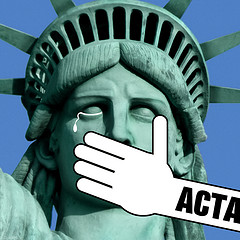
MEDIA ROOTS — With governments,
citizens, and activists worldwide increasingly relying on the internet, the environment the
internet fosters is a hotly contested issue.
Last summer, the United Nations declared that disconnecting people from
the internet was a human
rights violation and against international law. Considering internet access as a human right
and witnessing the vital contribution it has played in the Arab Spring and Occupy Movements,
the sanctity of preserving a free and open internet, or net neutrality, can’t
be understated. Even the U.S. military
recently acknowledged the critical role of cyberspace by including the digital
domain in its latest concept of “full spectrum dominance.”
As humanity’s relationship with the
burgeoning information age matures, threats to a free and open internet
continue to proliferate. Indeed, when the
printed press, radio, TV, and every other technological innovation, which have promised
to revolutionize public access to a diversity of information, were developed, they’ve
faced consolidation, monopolization, and the resultant transferences of power
and control into few hands. Now, potential
predators stalk the digital realm; and they have been revealed as SOPA, PIPA
and ACTA.
SOPA, PIPA and
ACTA all generally share the same goals which are to ostensibly protect
trademarks and intellectual property, while fending off counterfeiting and
pirating. SOPA and PIPA are U.S. pieces
of legislation, while ACTA is a transnational agreement. After recent public outcries, internet users
defeated an attempt to pass SOPA and PIPA on Capitol Hill. However, SOPA will be resurrected soon. Meanwhile, countries around the world
vigorously protest the enactment of ACTA.
What’s the significance of these acronyms on our digital routines? Let’s break each one down individually and
have a closer look.
PIPA: Protect IP Act – Preventing
Real Online Threats to Economic Creativity and Theft of Intellectual Property
PIPA’s stated
goal would have given the U.S. government and copyright holders additional
capabilities to restrict access to websites involved in copyright infringement
and the distribution of counterfeit goods.
Senator Patrick Leahy (D-VT) originally introduced Senate Bill 968 on May
12, 2011, but the motion to proceed with the legislation was withdrawn January
23, 2011.
The most controversial
aspect of the bill would have enabled Domain Name System (DNS) blocking and
redirection. DNS serves as the virtual
yellow pages of the internet. By
blocking and redirecting DNS, this essentially tears entire pages out of the
phone book, creating an incomplete version, no longer compatible with the rest
of the world. In this scenario, a simple
search for a site would yield a message stating the site no longer exists.
SOPA: Stop Online Piracy
Act
SOPA (H.R. 3261) is the
sister bill to PIPA in the House of Representatives. SOPA was introduced by U.S. Representative
Lamar Smith (R-TX). Its legal aim was to
provide law enforcement agencies greater online jurisdiction to prevent
violation of copyrighted intellectual property and the creation of counterfeit
goods.
“This bill would
establish a system for taking down websites that the Justice Department
[DoJ] determines to be dedicated to copyright infringement. The DoJ or the copyright
owner would be able to commence a legal action against any site they deem to
have ‘only limited purpose or use other than infringement,’ and the DoJ would
be allowed to demand that search engines, social networking sites and domain
name services block access to the targeted site. It would also make
unauthorized web streaming of copyrighted content a felony with a possible penalty
up to five years in prison.”
The bill’s
inherent dangers would have allowed the U.S. government and private companies to
arbitrarily incapacitate websites, thus threatening freedom of speech. Furthermore, thousands of websites would have
been jeopardized based on their user-generated content, which in turn,
frequently relies on copyrighted material.
Following the SOPA Blackout Day on January 18th, Senate
Majority Leader Harry Reid (D-NV) rescinded
H.R. 3261’s vote on January 24, 2012.
This brief video offers a concise explanation of SOPA.
The battle for
online freedom plows ahead, in light of a new bill
originating in the Senate Homeland Security and Government Affairs
Committee. Senator Joe Lieberman (I-CT),
who chairs the Committee, is engineering the latest attempt to widely expand
authority by Executive Branch departments over the internet. The debut of this new cybersecurity bill is
expected today, February 16, 2012.
Details of the cybersecurity bill have not been revealed, a result of
the legislation’s crafters meeting behind closed doors. Theories
abound that the bill, which has benefited
from bipartisan support, would grant the Department of Homeland Security
expansive new powers to regulate and stake out the internet under the pretext
of cybersecurity. However, the
persistent attempts to pass such legislation adversely impacting free speech and
the flow of information must be questioned.
Large amounts of financial contributions to politicians, as well as dubious connections, may indicate that a broader agenda is at work.
Supporters of
SOPA and PIPA will likely vigorously lobby for the new cybersecurity bill to be
passed. Backers of this type of
legislation read like a who’s who
list of Hollywood industry bosses. From
the MPAA (Motion Picture Association of America) to the RIAA (Recording Industry
Association of America), major Hollywood power brokers angle to protect their
interests. A total of 161
entities have stumped for the passage of
SOPA and PIPA. Besides the MPAA and
RIAA, they include the AFL-CIO, the International Brotherhood of Teamsters,
Comcast, Disney, and Sony. Based on some
of the groups in favor, the entire matter appears to be a pet project of the
Democrat Party. This comes as no
surprise when considering who the vanguard of Hollywood intellectual property has historically been.
Chris Dodd has made it his mission to crusade in Washington D.C. on
behalf of Hollywood under the pretext of copyright protection legislation. Dodd is the perfect bridge between Hollywood
and the Beltway. On March 1, 2011, Dodd
was chosen as chairman
of the MPAA. On the side, he also lobbies for an
organization called Creative America.
“…everyone in
the community recognizes what a grave threat content theft poses to our
livelihood and creativity – that thieves are making millions of dollars
trafficking in stolen film and television while our jobs, pensions and
residuals continue to decline.”
Some of the
groups involved with Creative America
include the CBS Corporation, NBC Universal, the Screen Actors Guild, Twentieth
Century Fox, Viacom, and Warner Bros. Entertainment. A simple search into Dodd’s previous career
uncovers much cozier ties to D.C.
Dodd has enjoyed
over three decades as a senator and has the distinction of being Connecticut’s
longest serving senate member. He’s one of the
most recognizable Democratic senators of years past, with posts on the Committee
on Foreign Relations, the Committee on Banking, Housing and Urban Affairs, and
the Committee on Health, Education, Labor and Pensions. However, his post-political career has proven
quite lucrative. According to sources,
Dodd rakes in a $1.5 million salary as chairman of the MPAA. The appointment of Dodd to head the MPAA
might be the biggest coup Hollywood has had in years.
Further evidence
from Dodd himself reinforces this as he
threatened to cut off financial contributions from Hollywood to politicians who
did not support SOPA and PIPA. The
pipeline of sizeable contributions from Hollywood going to politicians is a
healthy one most on Capitol Hill would prefer to preserve.
Democrat Senator Harry
Reid has also asserted himself a champion of SOPA and PIPA legislation. He has brought various versions of the bill
to the Senate floor and may be bound to three and half million vested interests
to pass the legislation; Reid was the beneficiary
of $3.5 million from SOPA and PIPA
advocates during the last campaign cycle. Although donations to Reid stand out by far,
other elected officials supporting the legislation have received contributions,
too: Democrat Chuck Schumer ($2.6 million), Democrat Kirsten
Gillibrand ($2 million), Democrat Barbara Boxer ($1.4 million), and Republican Michael Bennet ($1
million). Clearly, millions of reasons
jeopardize maintaining a free and open internet. One of those reasons is another piece of
little known legislation, called ACTA.
ACTA:
Anti-Counterfeiting Trade Agreement
ACTA protests
have flashed across Europe over recent weeks.
Anti-ACTAvists have sprung up
from the Netherlands to Germany to Poland and many other countries throughout
Europe. The contentious nature of ACTA attempts
to normalize an international legal framework that enforces intellectual
property rights, but also endeavors to target counterfeit goods and even generic
medications. On October 1st,
2011, Australia, Japan, Canada, Morocco, New Zealand, Singapore, South Korea,
and the United States signed the agreement.
At the start of 2012, the European Union and 22 of its member states
ratified ACTA, bringing the total signatories to 31.
Battle lines
have been drawn and two organizations are standing toe to toe—the MPAA and the Electronic
Frontier Foundation (EFF). According to
the EFF, “[…] copyright industry rightsholder groups have sought stronger
powers to enforce their intellectual property rights […] to preserve their
business models.” This sentiment
essentially drives to the heart of the debate, one which also includes SOPA and
PIPA. Those opposed to restricting the
internet view these efforts as a veiled and desperate attempt at trying to
preserve an atrophying business model, being rendered obsolete by the age of digital
file sharing. This sentiment has
galvanized many who sense that the true reason the public digital domain is under
siege is in attempts to undermine free speech and democracy. Due to what’s at stake, emotions have run
high. U.S. Rep. Darrell Issa (R-CA) has called it
“more dangerous than SOPA.” Popular
opinion likely agrees with Issa, but is the truth harder to discern?
A lot of misinformation
swirls around ACTA. The hacktivist group Anonymous shares some
of the blame. A popular video
produced by the amorphous, hacktivist collective shines light on ACTA’s
pitfalls. But is the hit piece video
accurate? According to ArsTechnica.com,
there are four dubious claims that Anonymous makes: ISPs will monitor all your data packets, ACTA
obliges its member countries to assent to the worst features of SOPA and PIPA, generic
drugs will be banned and seeds will be controlled via patents, and ISPs will be
constantly required to scour their servers for even the smallest bits of
copyrighted material. The Anonymous
video, which includes a qualifying disclaimer at the outset, has been widely
embedded in articles online and reached nearly one million views. Anonymous noted, “This video may not reflect
the recent changes within the ACTA text.
However, it will give you an idea of what ACTA is about and why the
internet should fight it.” And, of
course, after sorting any conflicting claims, ACTA still deserves a thumbs-down
verdict. We also bear in mind internet
censorship, freedom of speech restrictions, loss of net neutrality, domestic
surveillance, and civil rights erosions and police state repression have already
been ongoing issues plaguing the U.S. ACTA
would simply codify existing repressive policies for people in the U.S. under
the pretext of opposing counterfeiting.
ACTA is a poorly
crafted agreement and simply bad. ACTA’s
basic criticisms are threefold: the agreement’s designers are not
democratically elected nor accountable, the ACTA negotiations were held in secret, and there was no discussion held in a public forum. ReadWrite
Enterprise does a fine job laying
out ten reasons why ACTA fails.
Furthermore, even though ACTA probably won’t change U.S. law, it would
lock us into a constrictive legal space in an area of law that changes
rapidly. Much like activists around the
world can now respond more quickly to police brutality and government tactics
of repression thanks to the internet, file sharing enthusiasts are finding new ways to
circumvent internet censorship just as quickly.
The Internet Can’t Be
Bound and Gagged
Already the hive
mind of the internet has developed a solution to undercut potential censorship
attempts. Many people are unaware the
internet exists similarly to an iceberg; only a small portion of it is visible
to the average user. A significant
amount of the internet lies hidden in an area called the deep web. The deep web lies
obfuscated to the armchair web surfer due to an inability to access it by simply
typing it into a search engine and accessing it.
For example, the deep web does not employ the use of meta tags or DNS
and blocks search engines, among other characteristics, making navigation there
challenging. In this secretive
environment, hackers have been diligently working on a new protocol calledTribler.
Tribler
works in a similar fashion to other BitTorrent clients except that when search
results are produced, they aren’t procured from a central index, rather they
are directly produced from other peers.
According to TorrentFreak,
“Downloading a
torrent is also totally decentralized. When a user clicks on one of the search
results, the meta-data is pulled in from another peer and the download starts
immediately. Tribler is based on the standard BitTorrent protocol and uses
regular BitTorrent trackers to communicate with other peers. But, it can also
continue downloading when a central tracker goes down.”
This type of
decentralized structure would allow users to create ‘channels’ amongst
themselves and make Tribler an
indomitable force, making neutralization by censors extremely difficult. Tribler
will make it “impossible
to shut down unless the whole Internet goes down with it.” This will come as excellent news to millions
of people witnessing attempts to stifle internet freedom with ACTA, SOPA, PIPA,
and ongoing attacks on net neutrality.
The race to control
the internet rages on, but developments like this beg the question: Does the
internet adapt and evolve too quickly for elected officials to harness it? This brings to mind Wile E. Coyote and the Roadrunner. Some things can just never be
caught. However, U.S. voters continue
to support the two-party system, which continually abandons them whilst
representing corporate interests. Time
will tell.
MEDIA ROOTS — Capitalism Is The Crisis: Radical Politics in the Age of Austerity is a film featuring a diverse
array of thinkers offering common sense analysis of the trappings of modern life
and critical perspectives on basic assumptions of capitalism and
democracy. The
film presents original interviews, including Chris Hedges, David Graeber,
Derrick Jensen, Michael Hardt, Leo Panitch, David McNally.
The movie is about
waking up our neighbours to the glaring ills plaguing our society. It argues that capitalism is the crisis and dares us to imagine saner alternatives.
“The way to make money
is to buy when blood is running in the streets.” —John D. Rockefeller, American oil magnate, robber
baron
“The engines of
corporatists cannot be halted. They are
impervious to the will of those who they exploit, they are more powerful
than
the governments they control, and they have built within them an
inevitable,
kind of, mechanism for self-annihilation because corporations have this
strange
pathology where they turn everything into a commodity. Human beings
become commodities. The natural world becomes a commodity. And you
exploit these commodities until
exhaustion or collapse. And that’s
precisely what’s happening.” —Chris Hedges
Messina
***
Capitalism is the Crisis
***
CAPITALISM IS THE
CRISIS — The
2008 “financial crisis” in the United States was a systemic fraud in which the
wealthy finance capitalists stole trillions of public dollars. No one was
jailed for this crime, the largest theft of public money in history.
Instead, the rich forced working people across the globe to pay for their
“crisis” through punitive “austerity” programs that gutted public services and
repealed workers’ rights.
Austerity was named “Word of the Year” for 2010.
This documentary explains the nature of capitalist crisis, visits the protests
against austerity measures, and recommends revolutionary paths for the future.
Special attention is devoted to the crisis in Greece, the 2010 G20 Summit
protest in Toronto, Canada, and the remarkable surge of solidarity in Madison,
Wisconsin.



 MEDIA ROOTS — Although the corporate media touts an improving economy, U.S. citizens continue to suffer cruel economic punishment and austerity. Millions of citizens still search for employment, and the typical income of a U.S. household is less now than it was in 1997. Why is the economy not improving? Wall Street makes an easy target for the ire of struggling workers, but is there a deeper, more complex reason why the economy creaks, tumbles and rolls like an outdated galleon laboring in rough seas?
 MEDIA ROOTS – Early Monday morning, the controversial website
  MEDIA ROOTS — With governments,
citizens, and activists worldwide increasingly relying on the internet, the environment the
internet fosters is a hotly contested issue.
Last summer, the United Nations declared that disconnecting people from
the internet was a
MEDIA ROOTS — With governments,
citizens, and activists worldwide increasingly relying on the internet, the environment the
internet fosters is a hotly contested issue.
Last summer, the United Nations declared that disconnecting people from
the internet was a 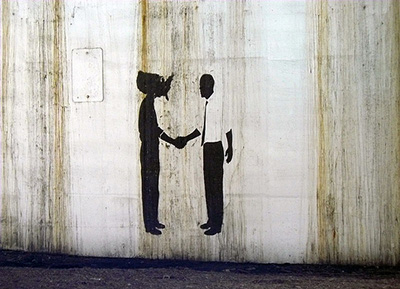 MEDIA ROOTS — Capitalism Is The Crisis: Radical Politics in the Age of Austerity is a film featuring a diverse
array of thinkers offering common sense analysis of the trappings of modern life
and critical perspectives on basic assumptions of capitalism and
democracy. The
film presents original interviews, including Chris Hedges, David Graeber,
Derrick Jensen, Michael Hardt, Leo Panitch, David McNally.
MEDIA ROOTS — Capitalism Is The Crisis: Radical Politics in the Age of Austerity is a film featuring a diverse
array of thinkers offering common sense analysis of the trappings of modern life
and critical perspectives on basic assumptions of capitalism and
democracy. The
film presents original interviews, including Chris Hedges, David Graeber,
Derrick Jensen, Michael Hardt, Leo Panitch, David McNally.