November 2007
PROJECT CENSORED– In a startling affront to American freedoms of expression, privacy, and
association, the Violent Radicalization and Homegrown Terrorism
Prevention Act (H.R. 1955) passed the House on , by a
vote of 404–6. The Senate is currently considering a companion bill, S.
1959. The act would establish a national commission and a
university-based “Center for Excellence” to study and propose
legislation to prevent the threat of “radicalization” of Americans.
Author of the bill Jane Harman (D-CA) explains, “We’re studying the
phenomenon of people with radical beliefs who turn into people who would
use violence.”
The act states, “While the United States must continue its vigilant
efforts to combat international terrorism, it must also strengthen
efforts to combat the threat posed by homegrown terrorists based and
operating within the United States. Understanding the motivational
factors that lead to violent radicalization, homegrown terrorism, and
ideologically based violence is a vital step toward eradicating these
threats in the United States.”
The act’s purpose goes beyond academic inquiry, however. In a press
release Harman stated, “The National Commission will propose to both
Congress and [Department of Homeland Security Secretary Michael]
Chertoff initiatives to intercede before radicalized individuals turn
violent.”
The act states, “Preventing the potential rise of self radicalized,
unaffiliated terrorists domestically cannot be easily accomplished
solely through traditional Federal intelligence or law enforcement
efforts, and can benefit from the incorporation of State and local
efforts.”
Harman, who chairs the House Subcommittee on Intelligence, Information
Sharing, and Terrorism Risk Assessment, also has close ties to the RAND
Corporation, a right-wing think tank, which appears to have influenced
the bill. Two weeks prior to the introduction of H.R. 1955 on April 19,
2007, Brian Michael Jenkins of RAND delivered testimony on “Jihadist
Radicalization and Recruitment” to Harman’s subcommittee.
In June, Jenkins was back before Harman’s subcommittee discussing the
role of the National Commission. “Homegrown terrorism is the principal
threat that we face as a country and it will likely be the principal
threat that we face for decades. . . . Unless a way of intervening in
the radicalization process can be found, we are condemned to stepping on
cockroaches one at a time,” he stated. In a 2005 RAND report titled
“Trends in Terrorism,” one chapter is devoted entirely to a non-Muslim
“homegrown terrorist” threat—the threat of anti-globalists.
In an effort to prevent people from becoming “prone to” radicalization,
this preemptive measure of policing thought specifically identifies the
Internet as a tool of radicalization: “The Internet has aided in
facilitating violent radicalization, ideologically based violence, and
the homegrown terrorism process in the United States by providing access
to broad and constant streams of terrorist-related propaganda to United
States citizens,” says Harman.
The legislation authorizes a ten-member National Commission (the Senate
bill calls for twelve members) appointed by the President, the Secretary
of Homeland Security, congressional leaders, and the chairpersons of
both the Senate and House committees on Homeland Security and
Governmental Affairs.
After convening, the Commission is to submit reports at six-month
intervals for eighteen months to the President and Congress, stating its
findings, conclusions, and legislative recommendations “for immediate
and long-term countermeasures . . . to prevent violent radicalization,
homegrown terrorism and ideologically based violence.”
This commission has disturbing similarities to the Counterintelligence
Program (COINTELPRO), which was investigated by a US Senate select
committee on intelligence activities (the Church Committee), in 1975.
The Church Committee found that from 1956 to 1971, “The Bureau [FBI]
conducted a sophisticated vigilante operation aimed squarely at
preventing the exercise of First Amendment rights of speech and
association, on the theory that preventing the growth of dangerous
groups and the propagation of dangerous ideas would protect the national
security and deter violence.”
H.R. 1955 would give the DHS secretary power to establish a “Center of
Excellence,” a university-based research program to “bring together
leading experts and researchers to conduct multidisciplinary research
and education for homeland security solutions.” the DHS currently has
eight Centers at academic institutions across the country, strengthening
what many see as a growing military-security-academic complex. Harman,
in an October 23 press release, stated that the Center would “examine
the social, criminal, political, psychological and economic roots of
domestic terrorism.”
Hope Marston, regional organizer with the Bill of Rights Defense
Committee (BORDC) warns against the danger of vaguely defined terms in
this legislation, which, open to very broad interpretation, mirrors a
historical pattern of sweeping government repression.
Jules Boykoff, author and professor of politics and government at
Pacific University, is alarmed by the circular definition, for example,
of “ideologically based violence,” which itself fails to define the
terms “threat,” “force,” or “violence.” Boykoff commented that the bill
used the terms “extremism” and “radicalism” interchangeably. “The word
‘radical’ shares the etymological root to the word ‘radish,’ which means
to get to the root of the problem,” he says. “So, if the government
wants to get at the actual root of terrorism, then let’s really talk
about it. We need to talk about the economic roots, the vast
inequalities in wealth between the rich and poor.”
Caroline Fredrickson, director of the Washington Legislative Office of
the American Civil Liberties Union, says of the Act, “Law enforcement
should focus on action, not thought. We need to worry about the people
who are committing crimes rather than those who harbor beliefs that the
government may consider to be ‘extreme.’”
UPDATE BY JESSICA LEE
While civil liberties and religious freedom groups credit independent
journalists and grassroots activists with helping to stall the passage
of the Violent Radicalization and Homegrown Terrorism Prevention Act of
2007, some members of Congress continue to push for Internet censorship
and racial profiling as necessary to prevent “homegrown terrorism.”
The House of Representatives approved the Violent Radicalization and
Homegrown Terrorism Prevention Act in October 2007 by a 404-6 vote, but
widespread opposition forced the Senate to shelve the bill. As of June
1, 2008, no vote was scheduled or expected during the current
legislative year.
I became aware of the Act in early November 2007. Other than an article
by Lindsay Beyerstein, “Examining the Homegrown Terrorism Prevention
Act,” (In These Times, November 1, 2007), no major media outlet had
reported on the bill despite the dangers it posed to civil liberties,
privacy, and Muslim and Arab communities in the United States.
Nonetheless, I did discover active online discussion about the bill,
mainly on blogs and videos posted to YouTube.com.
Isabel Macdonald, communications director for Fairness and Accuracy in
Reporting, commented: “Perhaps due to the symbiotic relationship between
corporate media outlets and government officials, the corporate media
has shown a consistent aversion to offering critical coverage of the
erosion of civil liberties. The independent media—and specifically The
Indypendent—played a critical role in breaking the story of this bill,
and, through coverage in blogs and on Democracy Now!, keeping the story
alive.”
Within a month of The Indypendent article, rallies were held from Maine
to California, and numerous civil liberties, religious freedom and
American Muslim and Arab organizations issued action alerts encouraging
people to contact their congressional representatives in an effort to
stop the US Senate companion bill, S. 1959.
According to civil rights lobbyists, the public outcry forced Senate
committee chair Sen. Joseph Lieberman (I-CT) to put the bill on the
backburner. However, Lieberman and committee ranking minority leader
Sen. Susan Collins (R-ME) continue to claim “homegrown terrorism” by
Islamists is a grave menace, and on May 8, 2008, issued their own
report, without public backing by other committee members, that warned
“the threat of homegrown terrorism is on the rise, aided by the
Internet’s capacity to spread the core recruitment and training message
of violent Islamist terrorist groups.”
In response, more than thirty civil liberties and religious freedom
groups sent a letter to the Senate committee on May 30, expressing
concern that the report could impinge on freedom of expression, unjustly
target Muslims, and define the Internet as a “weapon.”
A group of organizations representing American Muslim and Arab
communities also submitted a letter in response to the report and the
Senate hearings charging that they have been largely excluded from the
legislative process and that the report relies on a discredited 2007 New
York Police Department report that attempts to explain the process of
“violent radicalization” of Muslim individuals.
Shortly after issuing the report, Lieberman demanded that Google remove
YouTube videos produced by “terrorist organizations such as al-Qaeda.”
Google responded May 19 by removing eighty videos that the company
agreed violated YouTube’s Community Guidelines, which depict gratuitous
violence, advocated violence or used hate speech. Google, however,
refused to meet all of Lieberman’s demands, which included censoring all
videos mentioning or featuring groups listed by the US State Department
as foreign terrorist organizations, such as al-Qaeda.
“Senator Lieberman stated his belief . . . that all videos mentioning or
featuring these groups should be removed from YouTube—even legal
nonviolent or non-hate speech videos,” Google said. “YouTube encourages
free speech and defends everyone’s right to express unpopular points of
view.”
Chip Berlet, senior analyst at the Boston-based Political Research
Associates, said that he believes Lieberman’s actions are a “political
dirty trick” with the motive of trying to push the presidential
candidates towards accepting a more aggressive stance in the Middle
East.
Organizations leading the effort to oppose the legislation include
Defending Dissent Foundation (http://www.defendingdissent.org),
the Bill of Rights Defense Committee (http://www.bordc.org),
the Center for Constitutional Rights (http://www.ccrjustice.org), the
American Civil Liberties Union (http://www.aclu.org),
and the Council on American-Islamic Relations (http://www.cair.com).
UPDATE BY LINDSAY BEYERSTEIN
The Homegrown Terrorism bill has been bogged down in the Senate since
last October. The bill sailed through the House with little public
comment but subsequently encountered stiff opposition from across the
political spectrum. Until recently, it appeared that civil liberties
groups and Muslim civic organizations had successfully blocked the
Senate version of the bill.
The bill seemed destined to die in committee—that is, until Sen. Joe
Lieberman, the chair of the Senate Committee on Homeland Security,
signaled his eagerness to revisit the issue by releasing a new report
and picking a fight with YouTube.
On May 8, Chairman Lieberman and ranking member Susan Collins (R-ME)
released “Violent Islamist Extremism, The Internet, and the Homegrown
Terrorist Threat,” a bipartisan report based on hearings before the
Senate Committee on Homeland Security.
Even before it was released to the public, the report drew fire from a
coalition of civil liberties organizations spearheaded by the ACLU. The
coalition outlined its concerns about the report in a May 7 memo to
committee members.
“Our concern is that this focus on the Internet could be a precursor to
proposals to censor and regulate speech on the Internet. Indeed, some
policy makers have advocated shutting down objectionable websites,” the
memo said.
Lieberman reinforced those misgivings on May 19 when he wrote to the CEO
of Google (YouTube’s parent company) demanding that an unspecified
number of Islamic propaganda videos be removed from the popular
video-sharing site. Lieberman alleged in the letter that the clips were
the work of a sophisticated Islamic propaganda network discussed in his
committee’s recent report. He also claimed that these videos violated
YouTube’s community guidelines.
YouTube rules expressly forbid gratuitous violence, hate speech,
threats, harassment, and depictions of crimes such as bomb-making.
Hundreds of thousands of videos are uploaded to the site daily. Rather
than prescreening the content, YouTube relies on users to flag material
that violates community standards. Content that breaks the rules is
routinely removed.
After reviewing the clips, YouTube refused to remove the bulk of the
material flagged by Lieberman’s staff. A handful of clips that violated
community standards were taken down, but the rest stayed up.
“Most of the videos, which did not contain violent or hate speech
content, were not removed because they do not violate our Community
Guidelines,” read a statement issued by the YouTube Team. The statement
went on to affirm the right of YouTube users to express unpopular points
of view.
Lieberman was not satisfied with the response.
“No matter what their content, videos produced by terrorist
organizations like al-Qaeda that are committed to attacking America and
killing Americans should not be tolerated. Google must reconsider its
policy,” Lieberman stated on May 20.
No vote has been scheduled, but Lieberman’s fight with Google has pushed
the Homegrown Terrorism bill back into the spotlight. After months of
silence, the established media are finally beginning to ask questions
about the government’s increasing enthusiasm for monitoring “radical”
speech online. The New York Times sharply criticized Lieberman and the
bill in a May 25 editorial. The op/ed called Lieberman a “would-be
censor” whose efforts to restrict constitutionally protected speech on
YouTube “contradict fundamental American values.”
Readers can make their views on the Homegrown Terrorism bill known by
contacting their senators and the members of the Senate Committee on
Homeland Security. The two frontrunners in the 2008 presidential race
are senators. Now is a good time for voters to pressure the presidential
candidates to take clear positions on the Homegrown Terrorism bill.
Sen. Barack Obama (D-IL) sits on the Homeland Security Committee, but
did not contribute to the report. Sen. John McCain (R-AZ) is closely
allied with Sen. Lieberman, especially on issues pertaining to
terrorism.
UPDATE BY MATT RENNER
A controversial plan to study and profile domestic terrorism was
scrapped after popular push back, but the spirit of the legislation
lives on in Senator Joe Lieberman’s office.
H.R. 1955, “The Violent Radicalization and Homegrown Terrorism
Prevention Act of 2007” passed the House in October 2007 with almost
unanimous support. The bill immediately came under fire from civil
liberties watchdogs because of what many saw as a deliberate targeting
of Muslims and Arabs and the possible chilling effect it might have on
free speech.
The original bill intended to set up a government commission to
investigate the supposed threat of domestically produced terrorists and
the ideologies that underpin their radicalization. The ten-member
commission was to be empowered to “hold hearings and sit and act at such
times and places, take such testimony, receive such evidence, and
administer such oaths as the Commission considers advisable to carry out
its duties.” The bill also singled out the Internet as a vehicle for
terrorists to spread their ideology with the intention of recruiting and
training new terrorists.
After significant public pressure, the bill stalled in the Senate.
However, Senator Joe Lieberman (D-CT), the current chairman of the
Senate Homeland Security and Governmental Affairs Committee, embraced
the thrust of the legislation and has been working to push forward some
of the goals of the original bill, including an attempt to weed out
terrorist propaganda from the Internet.
On May 19, Lieberman sent a letter to Google’s CEO Eric Schmidt
demanding that YouTube’s parent company Google “immediately remove
content produced by Islamist terrorist organizations from YouTube.”
“By taking action to curtail the use of YouTube to disseminate the goals
and methods of those who wish to kill innocent civilians, Google will
make a singularly important contribution to this important national
effort,” Lieberman wrote.
Google fired back, refusing to take off material that did not violate
the site’s code of conduct. “While we respect and understand his views,
YouTube encourages free speech and defends everyone’s right to express
unpopular points of view,” Schmidt said in response, adding, “we believe
that YouTube is a richer and more relevant platform for users precisely
because it hosts a diverse range of views, and rather than stifle
debate, we allow our users to view all acceptable content and make up
their own minds.”
Google removed some of the videos that violated their rules against
posting violence and hate speech, but made a point to write, “most of
the videos, which did not contain violent or hate speech content, were
not removed because they do not violate our Community Guidelines.”
According to civil liberties activists, Chairman Lieberman has been
spearheading an effort to censor speech on the Internet. His committee
recently released a report titled “Violent Islamist Extremism, The
Internet, and the Homegrown Terrorist Threat,” a report detailing the
use of web sites and Internet tools to spread pro-terrorism propaganda.
The report repeatedly blames websites and chat rooms for
“radicalization,” calling the websites “portals” through which potential
terrorists can “participate in the global violent Islamist movement and
recruit others to their cause.” As civil liberties groups have pointed
out, the report focuses solely on terrorism seen as associated with
Islam.
Caroline Fredrickson, director of the ACLU Washington, DC, legislative
office, said that Lieberman “is trying to decide what he thinks should
go on the Internet,” which, she said, “reeks of an interest in censoring
all sorts of different dialogs.”
“If someone criticizes Israel’s treatment of Palestinians and favors
Hamas, should that be censored?” Fredrickson asked.
Links:
“Violent Islamist Extremism, The Internet, and the Homegrown Terrorist
Threat”: http://hsgac.senate
.gov/public/_files/ IslamistReport.pdf.
New York Times editorial on Lieberman’s attempt to censor YouTube: http://www.nytimes.com/
2008/05/25/opinion/25sun1.html?_r=1&ref=opinion&oref=slogin.
Lieberman’s response to the New York Times editorial: http://www.nytimes.com/2008/05/25/opinion/
25sun1.html?_r=1&ref=opinion &oref=slogin.
COMMENT BY MICKEY S. HUFF, author of Chapter 14
The coverage of this story by these journalists is highly commendable.
However, another element that appears to have been censored regarding
the possible application of H.R. 1955 and S. 1959, even in the
independent and progressive press coverage, is the specificity of
possible domestic activists mentioned in the hearings Representative
Jane Harman held in Washington, DC. While the aforementioned authors
allude to animal rights activists and anti-globalists as potential
targets of these bills, none mention 9/11 Truth activists and scholars
even though they were mentioned by name in the Harman hearings at the
Capitol. (For possible explanations, see Censored 2008, Chapter 7, for
more on the propaganda model inside left progressive press.)
Among the claims of those testifying to Congress about the “need” for
H.R. 1955 was that anyone who questions the official government line on
9/11 is akin to a terrorist or a material supporter to terrorism. One
speaker, Mark Weitzman of the Wiesenthal Center (ironically founded by
Holocaust survivor Simon Wiesenthal to educate the public about war
crimes), claimed that architects, engineers, and scientists that
question the official 9/11 narrative are the same as alleged violent
jihadist groups. This was further implied in a Powerpoint presentation
in which Weitzman showed architect Richard Gage’s website, http://AE911Truth.org, alongside
alleged violent jihadist sites. Gage has criticized the 9/11 official
story about the destruction of the Twin Towers and WTC7. On the basis of
his professional expertise of steel frame buildings, Gage contends the
buildings could not have been brought down the way the government has
explained and offers alternative theories supported by evidence.
Regardless of whether one believes the counterarguments about the events
of 9/11, free speech and questioning of the government on such crucial
issues should not be criminalized.
This is the latest round of official conflation between terrorists and
activists in the US. Is there a proven link between these aforementioned
groups? No, there is not. But that didn’t stop people from simply
saying so on the public record while providing no evidence. And Jane
Harman, Democratic cosponsor of the bill, didn’t ask for any, nor did
she invite rebuttal. This is reminiscent of McCarthyism of the Red Scare
period of the 1950s.
I originally wrote about this issue here:
http://mythinfo.blogspot.com/2007/11/state-terror-hr-1955-weapon-of-mass.html
http://www.911truth.org/article.php?story=2007112285903892.
For C-Span video footage of the hearing (just after thirty-nine
minutes), see:
http://www.c-spanarchives.org/library/index.php?main_page=product
_video_info&products_id=202123-1.
© PROJECT CENSORED 2007



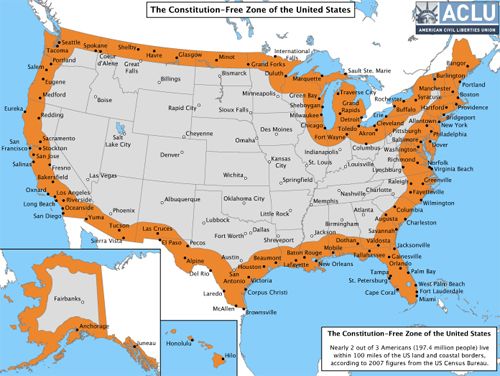
 Madam Speaker, I rise in opposition to the extension of the Protect America
Act of 2007 because the underlying legislation violates the U.S. Constitution.
The misnamed Protect America Act allows the U.S.
government to monitor telephone calls and other electronic communications of
American citizens without a warrant. This clearly violates the Fourth
Amendment, which states:
Madam Speaker, I rise in opposition to the extension of the Protect America
Act of 2007 because the underlying legislation violates the U.S. Constitution.
The misnamed Protect America Act allows the U.S.
government to monitor telephone calls and other electronic communications of
American citizens without a warrant. This clearly violates the Fourth
Amendment, which states: