
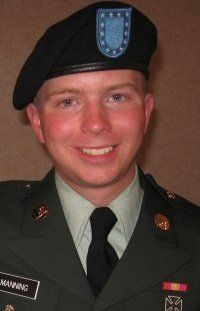
Charges Announced for Soldier Accused of Leaking Video

Jul6 6, 2010

NY TIMES– An Army soldier in Iraq who was arrested for leaking a video of a deadly American helicopter attack here in 2007 has also been charged with downloading more than 150,000 highly classified diplomatic cables that could, if made public, reveal the inner workings of American embassies around the world, the military here announced on Tuesday.

The full contents of the cables remain unclear but according to formal charges filed on Monday, it appeared that a disgruntled soldier working at a remote base east of Baghdad gathered some of the most guarded, if not always scandalous secrets of American diplomacy. He disclosed at least 50 of the cables “to a person not entitled to receive them.”

With the charges, a case that stemmed from the furor over a graphic and fiercely contested video of an American helicopter killing 12 people, including a reporter and a driver for Reuters, mushroomed into a far more extensive and potentially embarrassing leak. The charges cited only one cable by name, “Reykyavik 13,” which appeared to be one made public by Wikileaks.org, a Web site devoted to disclosing the secrets of governments and corporations. The website decoded and in April made public an edited version of the helicopter attack in a film it called “Collateral Murder.”

In the cable, dated January 13, the American deputy chief of mission, Sam Watson, detailed private discussions he held with Iceland’s leaders over a referendum on whether to repay losses from a bank failure, including a frank assessment that Iceland could default in 2011. (The referendum failed, but negotiations continue.)

Wikileaks, which reportedly operated in the country for a time, disclosed a second cable from Iceland in March profiling the country’s leaders, including Prime Minister Johanna Sigurdardottir.

Although hardly sensational in tone, the cable does reveal a complaint over the “alleged use of Icelandic airspace by CIA-operated planes” by the Icelandic ambassador to the United States, Albert Jonsson, who is described as “prickly but pragmatic.” r Such are the sorts of assessments diplomats go to great lengths to keep private.

Wikileaks has not acknowledged receiving the cables or video from the analyst, Private First Class Bradley E. Manning, 22, whose case has been the subject of vigorous debate between defenders and critics. Private Manning, who served with the Second Brigade of the 10th Mountain Division, based at Contingency Operating Station Hammer, was arrested in May and transferred to a military detention center in Kuwait after allegedly revealing his activities in online chats with a former computer hacker, who turned him in to the authorities.

Read full article HERE.

© COPYRIGHT NY TIMES, 2010
Senators Propose President Emergency Internet Power

CNET– A new U.S. Senate bill would grant the president far-reaching emergency powers to seize control of or even shut down portions of the Internet.

The legislation announced Thursday says that companies such as broadband providers, search engines, or software firms that the government selects “shall immediately comply with any emergency measure or action developed” by the Department of Homeland Security. Anyone failing to comply would be fined.

That emergency authority would allow the federal government to “preserve those networks and assets and our country and protect our people,” Joe Lieberman, the primary sponsor of the measure and the chairman of the Homeland Security committee, told reporters on Thursday. Lieberman is an independent senator from Connecticut who caucuses with the Democrats.

Because there are few limits on the president’s emergency power, which can be renewed indefinitely, the densely worded 197-page bill (PDF) is likely to encounter stiff opposition.

TechAmerica, probably the largest U.S. technology lobby group, said it was concerned about “unintended consequences that would result from the legislation’s regulatory approach” and “the potential for absolute power.” And the Center for Democracy and Technology publicly worried that the Lieberman bill’s emergency powers “include authority to shut down or limit Internet traffic on private systems.”

The idea of an Internet “kill switch” that the president could flip is not new. A draft Senate proposal that CNET obtained in August allowed the White House to “declare a cybersecurity emergency,” and another from Sens. Jay Rockefeller (D-W.V.) and Olympia Snowe (R-Maine) would have explicitly given the government the power to “order the disconnection” of certain networks or Web sites.

Read full article HERE.

© CNET, 2010

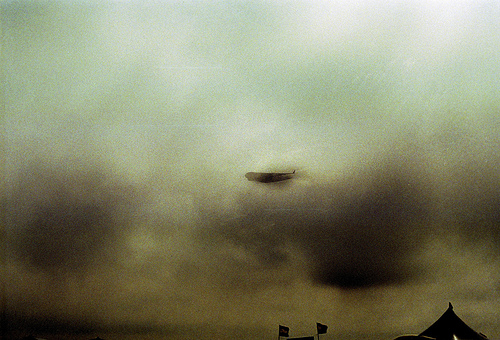
Feds Under Pressure to Open US Skies to Drones

AP– Unmanned aircraft have proved their usefulness and reliability in the war zones of Afghanistan and Iraq. Now the pressure’s on to allow them in the skies over the United States.

The Federal Aviation Administration has been asked to issue flying rights for a range of pilotless planes to carry out civilian and law-enforcement functions but has been hesitant to act. Officials are worried that they might plow into airliners, cargo planes and corporate jets that zoom around at high altitudes, or helicopters and hot air balloons that fly as low as a few hundred feet off the ground.

On top of that, these pilotless aircraft come in a variety of sizes. Some are as big as a small airliner, others the size of a backpack. The tiniest are small enough to fly through a house window.

The obvious risks have not deterred the civilian demand for pilotless planes. Tornado researchers want to send them into storms to gather data. Energy companies want to use them to monitor pipelines. State police hope to send them up to capture images of speeding cars’ license plates. Local police envision using them to track fleeing suspects.

Like many robots, the planes have advantages over humans for jobs that are dirty, dangerous or dull. And the planes often cost less than piloted aircraft and can stay aloft far longer.

Continue reading about Feds Under Pressure to Open US Skies to Drones.

© AP, 2010

Photo by flickr user PLaneMGlasgow

Internet Monitoring Needed to Fight Homegrown Terrorism

FOX NEWS– Fighting homegrown terrorism by monitoring Internet communications is a civil liberties trade-off the U.S. government must make to beef up national security, the nation’s homeland security chief said Friday.  

As terrorists increasingly recruit U.S. citizens, the government needs to constantly balance Americans’ civil rights and privacy with the need to keep people safe, said Homeland Security Secretary Janet Napolitano. 

But finding that balance has become more complex as homegrown terrorists have used the Internet to reach out to extremists abroad for inspiration and training. Those contacts have spurred a recent rash of U.S.-based terror plots and incidents. 

“The First Amendment protects radical opinions, but we need the legal tools to do things like monitor the recruitment of terrorists via the Internet,” Napolitano told a gathering of the American Constitution Society for Law and Policy. 

Continue reading about Internet Monitoring Needed to Fight Homegrown Terrorism.

© COPYRIGHT FOX NEWS, 2010

Obama Targets Press Freedom

RUSSIA TODAY– In the past few weeks the U.S. has witnessed an aggressive crack down on whistleblowers. For many the Obama administration’s tough investigative stance on unauthorized press leaks goes against the president’s own election promises to bring back openness and transparency. Moreover, some journalists now accuse the Obama government of actually attacking press freedom.

Democracy Now Part 1/3 

Democracy Now Part 2/3

Democracy Now Part 3/3

DEMOCRACY NOW– Pentagon investigators are reportedly still searching for Wikileaks co-founder Julian Assange, who helped release a classified US military video showing a US helicopter gunship indiscriminately firing on Iraqi civilians. The US military recently arrested Army Specialist Bradley Manning, who may have passed on the video to Wikileaks. Manning’s arrest and the hunt for Assange have put the spotlight on the Obama administration’s campaign against whistleblowers and leakers of classified information. We speak to Daniel Ellsberg, who’s leaking of the Pentagon Papers has made him perhaps the nation’s most famous whistleblower; Birgitta Jónsdóttir, a member of the Icelandic Parliament who has collaborated with Wikileaks and drafted a new Icelandic law protecting investigative journalists; and Glenn Greenwald, political and legal blogger for Salon.com.
