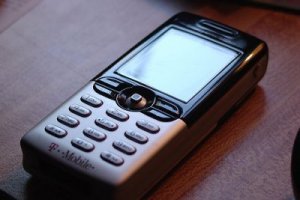
Cellphone Alert System Announced in NYC

CBS– The U.S. government and local authorities will soon be able to reach people directly on their cellphones to warn them of imminent danger or alert them about missing children – even in the middle of a widespread emergency that overloads communications systems as happened after the Sept. 11 attacks, officials said Tuesday.

The emergency alert system will be used only for critical national messages from the president, information in life-threatening situations and Amber Alerts meant to widen the search for missing or abducted youngsters, New York Mayor Michael Bloomberg announced Tuesday. He was accompanied by Federal Communications Commission Chairman Julius Genachowski and Federal Emergency Management Agency Administrator Craig Fugate.

The system, set to launch by the end of the year in New York City and Washington, D.C., will spread to most if not all U.S. cellphones in the next few years as people replace their old phones with new devices containing a special chip that will enable them to receive the messages. They will receive the alerts free of charge.

Read full article about Cellphone Alert System Announced in NYC.

© 2011 CBS

Photo by flickr user Oracio Alvarado

Michigan: Police Search Cell Phones During Traffic Stops

THETRUTHABOUTCARS– The Michigan State Police have a high-tech mobile forensics device that can be used to extract information from cell phones belonging to motorists stopped for minor traffic violations. The American Civil Liberties Union (ACLU) of Michigan last Wednesday demanded that state officials stop stonewalling freedom of information requests for information on the program.

ACLU learned that the police had acquired the cell phone scanning devices and in August 2008 filed an official request for records on the program, including logs of how the devices were used. The state police responded by saying they would provide the information only in return for a payment of $544,680. The ACLU found the charge outrageous.

“Law enforcement officers are known, on occasion, to encourage citizens to cooperate if they have nothing to hide,” ACLU staff attorney Mark P. Fancher wrote. “No less should be expected of law enforcement, and the Michigan State Police should be willing to assuage concerns that these powerful extraction devices are being used illegally by honoring our requests for cooperation and disclosure.”

Read more about Michigan: Police Search Cell Phones During Traffic Stops.

© 2011 TheNewsPaper.com

Photo by flickr user Oracio Alvarado

US Spy Operation that Manipulates Social Media

GUARDIAN– The US military is developing software that will let it secretly manipulate social media sites such as Facebook and Twitter by using fake online personas to influence internet conversations and spread pro-American propaganda.

A Californian corporation has been awarded a contract with United States Central Command (Centcom), which oversees US armed operations in the Middle East and Central Asia, to develop what is described as an “online persona management service” that will allow one US serviceman or woman to control up to 10 separate identities based all over the world.

The project has been likened by web experts to China’s attempts to control and restrict free speech on the internet. Critics are likely to complain that it will allow the US military to create a false consensus in online conversations, crowd out unwelcome opinions and smother commentaries or reports that do not correspond with its own objectives.

The discovery that the US military is developing false online personalities – known to users of social media as “sock puppets” – could also encourage other governments, private companies and non-government organisations to do the same.

Continue reading about US Spy Operation that Manipulates Social Media

© Copyright Guardian, 2011

Court: No Warrant Needed to Search Cell Phone

REDTAPE.MSNBC – The next time you’re in California, you might not want to bring your cell phone with you. The California Supreme Court ruled Monday that police can search the cell phone of a person who’s been arrested — including text messages — without obtaining a warrant, and use that data as evidence. 

The ruling opens up disturbing possibilities, such as broad, warrantless searches of e-mails, documents and contacts on smart phones, tablet computers, and perhaps even laptop computers, according to legal expert Mark Rasch.

The ruling handed down by California’s top court involves the 2007 arrest of Gregory Diaz, who purchased drugs from a police informant. Investigators later looked through Diaz’s phone and found text messages that implicated him in a drug deal.  Diaz appealed his conviction, saying the evidence was gathered in violation of the Fourth Amendment, which prohibits unreasonable searches and seizures. The court disagreed, comparing Diaz cell phone to personal effects like clothing, which can be searched by arresting officers.

“The cell phone was an item (of personal property) on (Diaz’s) person at the time of his arrest and during the administrative processing at the police station,” the justices wrote. “Because the cell phone was immediately associated with defendant’s person, (police were) entitled to inspect its contents without a warrant.”  

In fact, the ruling goes further, saying essentially that the Diaz case didn’t involve an exception — such as a need to search the phone to stop a “crime in progress.” In other words, this case was not an exception, but rather the rule.

Click to continue reading the full article, including reactions to the ruling that says no warrant needed to search cell phones.

Article by Bob Sullivan

© MSNBC.COM, 2011

Photograph by samantha celera


One Tip Enough to Put Name on Terrorist Watch List

WASHINGTON POST – A year after a Nigerian man allegedly tried to blow up a Detroit-bound airliner, officials say they have made it easier to add individuals’ names to a terrorist watch list and improved the government’s ability to thwart an attack in the United States.

The failure to put Umar Farouk Abdulmutallab on the watch list last year renewed concerns that the government’s system to screen out potential terrorists was flawed. Even though Abdulmutallab’s father had told U.S. officials of his son’s radicalization in Yemen, government rules dictated that a single-source tip was insufficient to include a person’s name on the watch list.

Since then, senior counterterrorism officials say they have altered their criteria so that a single-source tip, as long as it is deemed credible, can lead to a name being placed on the watch list.

The government’s master watch list is one of roughly a dozen lists, or databases, used by counterterrorism officials. Officials have periodically adjusted the criteria used to maintain it.

But civil liberties groups argue that the government’s new criteria, which went into effect over the summer, have made it even more likely that individuals who pose no threat will be swept up in the nation’s security apparatus, leading to potential violations of their privacy and making it difficult for them to travel.

“They are secret lists with no way for people to petition to get off or even to know if they’re on,” said Chris Calabrese, legislative counsel for the American Civil Liberties Union.

Click to read the full article by the Washington Post about the 440,000 names on the Terrorist Watch List.

Article by Ellen Nakashima

© Copyright The Washington Post, 2010

Photograph by ebrkut