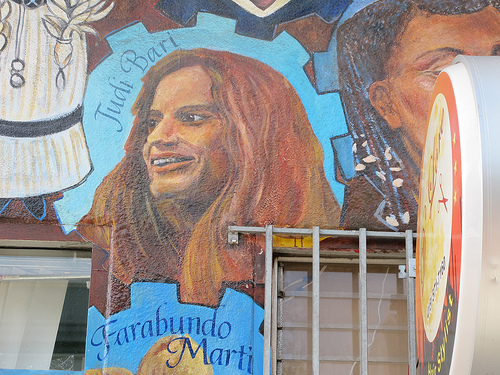
MEDIA ROOTS — Judi Bari was an
activist, a person of conscience, who exercised her First Amendment rights toward socioeconomic justice for much of her life.
She was one of the leading organisers to popularise environmental
activism with Earth First!, which influenced the environmental activism
contributing to the historic 1999 WTO resistance in Seattle, as well
as the more recent Occupy Movement. On
May 24, 1990, a motion-triggered car bomb exploded under Judi’s car seat, as she
and Darryl Cherney drove through Oakland en route to Santa Cruz during the Redwood Summer organising
tour.
Judi Bari’s story, one of solidarity and collective action, has
been documented in an important new film by Mary Liz Thomson (Director/Editor) and Darryl Cherney (Producer)
entitled “Who Bombed Judi Bari?” The
documentary film will have its world premiere next week at the 2nd
Annual San Francisco Green Film Festival taking place March 1-7. The world premiere
screening will be on Friday, March 2, at 5pm (1746 Post Street, SF). With the full production team in the house, this
screening will likely be filled to capacity.
So, advance tickets are recommended
for those interested in attending.
This is an important film for all because it speaks directly to our human
rights in the face of state belligerence.
If we don’t care to question culpability when our neighbours are
attacked, particularly where the state has motive to repress, we are unlikely
to encourage future generations to take principled stands for socioeconomic justice. From JFK, X, Ché,
MLK,
Fred
Hampton, and countless others to 9/11,
as the state obfuscates and destroys evidence outright, lack of curiosity
becomes erosive to our humanity.
Perhaps, we are learning. In the case
of the 1990 attempt on Judi Bari’s life, the FBI was thwarted in
its plans to destroy all of the evidence.
“A U.S. federal judge in California has ordered the FBI to preserve evidence in a 1990 car bombing that nearly killed two members of the environmental group Earth First! The FBI
was planning to destroy all evidence in the case, even though agents
had never determined who carried out the attempted assassination of
environmental activists Judi Bari and Darryl Cherney. The FBI initially arrested the activists for building the bombs themselves, but the pair later sued the FBI and won more than $4 million in damages.”
Messina
***
“Who Bombed Judi Bari?” trailer
***
SFGFF — This is a raw, personal and at times abrupt film, with a protagonist and
story vitally important to American justice and the struggle for the
environment. Judi Bari was an environmental and social justice activist
who popularized protests against clear-cutting (e.g. at Headwater
Forests) together with the organization EarthFirst! in the 1980s and
’90s. At times, she (and others) proceeded despite threats of death and
violence. Then, on May 24th, 1990 in Oakland, CA, a bomb explodes in
Judi’s car and she suffers debilitating injuries along with confidant,
and the film’s producer, Darryl Cherney. In the aftermath FBI and local
police accuse the team of bombing themselves. It chronicles the rise of a
powerful movement as well as the circuitous court cases that followed
the blast. Chock full of archival news footage, interviews and
statements by Bari, viewers follow a path from non-violent eco protests
to an ostensible assassination attempt on Judi’s life with an associated
cover-up – ending with a surprising resolution.
***
“Redwood Summer: Where the 90s Begin,” by Mary Liz Thomson, et al. (1990)
Considering the fact that Pakistan possesses nuclear weapons, this issue is of great concern for human rights as well as international
security. Last year, the UN HRC recognized that while 40
countries have drone technology, the United States is the
dominant user of drones for targeted killings. Additionally, the Government of Pakistan has previously
stated that the continued use of drones in their airspace, without prior
consent, is a direct violation of their sovereignty. Imagine Pakistan, or any other foreign military, flying drones, without consent, over U.S. airspace.
Reprieve, a UK-based
legal charity, is formally delivering the
complaint. Activist Shahzad Akbar explains, “the international community can
no longer afford to ignore the human rights catastrophe which is taking place
in North West Pakistan in the name of the ‘War on Terror.’”
Shockingly, the Bureau of Investigative Journalism reveals that, during the year the United States increased its drone operations, multiple civilians were
specifically
targeted as, either, rescuers or for simply attending the funerals of the slain. The Bureau adds, since Obama took office three years ago, 60 of these victims have been
children.
MEDIA ROOTS — Doubtless, many have heard of the U.S. targeted killing of U.S. citizen Anwar al-Awlaki under Obama. But many may not know that al-Awlaki wasn’t the last U.S. citizen arbitrarily killed by the state, as investigative journalist Jeremy Scahill recently reported:
“You know, President
Obama authorised strikes that resulted in three U.S. citizens being killed
within less than a month in Yemen: Anwar
al-Awlaki, who was born in New Mexico; Anwar al-Awlaki’s 16-year-old son; and
then Samir Khan, who was another U.S. citizen from North Carolina and was the
editor of Inspire magazine, the
English-language publication of al-Qaeda in the Arabian Peninsula. All three of those U.S. citizens were killed
within one month.”
Obama drone strikes have arbitrarily killed hundreds of civilians worldwide including three U.S. citizens without conviction, trial or due process. One might expect more public outcry. Yet, in light of a recent Washington Post ABC News poll revealing that 77% of self-proclaimed liberal Democrats approve of Obama’s drone policy, it seems most progressives are prepared to re-elect Obama or sit idly by as he purchases a second term.
But
while we’re all indignant about the profoundly disturbing killings by the U.S.
under Obama in Yemen and elsewhere, we forget the U.S. establishment is killing many more in the U.S. Many U.S. citizens, such as Kenneth Harding and Oscar Grant, are gunned down daily by the state, igniting uprisings of a different sort in this country.
Jeremy Scahill recently joined Amy Goodman to discuss
U.S. intervention in Yemen and the arbitrary state killings of U.S. citizens. However, it seems important to broaden discussions to allow investigative journalists to reflect upon U.S. violence abroad as well as state violence domestically. The
state killings of Anwar al-Awlaki and Oscar Grant are related,
because they are all manifestations of the police state violence necessitated
by U.S. imperialism under capitalism.
Mickey Huff, of
Project Censored, has recently noted
how the rise of U.S. targeted killings stems from the rise of torture perpetrated by the U.S., as the citizenry becomes increasingly complacent toward its continued use in a post-9/11 sociopolitical climate. It may also be argued the rise of torture is,
really, a continuation of poorly reported domestic torture of U.S.
citizens, particularly people of colour and/or low-income.
The bold-faced tyranny of the state shows itself quite plainly, if we observe the historical record against labour, civil rights, and activists throughout U.S. history. As Naomi Klein noted, it’s important to look at history and roots to survive the shocks intended to derail nations. But then what are the people to do? Protest or petition our masters? Petitions are easily ignored, but also part of proving the futility of working through the system. Protests are ignored, downplayed, or distorted by the United States’ mostly corporate-owned media machine, which reaches the most U.S. minds. Protesters are intimidated, bullied, beaten, arrested, and worse for exercising their inalienable rights. Yet, they must endure.
Voltaire wrote:
“So long as the people do not care to exercise their freedom, those who wish
to tyrannise will do so; for tyrants are active and ardent, and will devote
themselves in the name of any number of gods, religious and otherwise, to put
shackles upon sleeping men.”
Something is glaringly amiss beyond the
Election 2012 hyperbole—our political discourse sorely lacks a culture
of resistance to the two-party electoral system underpinning U.S.
imperialism. Today, many seem to enjoy an apathetic stance toward electoral politics because the only two choices are owned by the same corporations. Yet, political parties rule this nation, in the Legislative and Executive branches, some would even say in the Judicial. And although the people need a grassroots people’s party to pose a serious Left challenge, U.S. progressives throw their lot in with their chosen political organisations, which may focus on advocacy but leave electoral politics in the unchallenged hands of Wall Street.
A serious debate about U.S. democracy must be undertaken. Virtually
everyone says they want democracy, but few vote and less do so from an
informed perspective. Progressives put their faith in the Democrat Party and get swindled every time. We lack a culture of reflection to learn from the past. Perhaps, new generations of progressives are fooled by Democrat Party promises because older generations do not own up to the consequences of supporting the two-party system. We have a captured political system or, perhaps, a
subservient and brainwashed body politic. Both yield similar results.
Observing the U.S. in its youth, Alexis de Tocqueville wrote:
“The instability of the administration has penetrated
into the habits of the people: it even appears to suit the general taste, and
no one cares for what occurred before his time. No methodical system is
pursued; no archives are formed; and no documents are brought together when it
would be very easy to do so.”
They say, in a democracy, the people get the government they deserve or allow. If one doesn’t like the choices one can work to change them, or open up the process to consider alternative candidates like Rocky Anderson of the Justice Party in 2012. Otherwise, how can one complain about the next Democrat’s policies when one supported, or acquiesced in, that candidacy? In the U.S., too many are more committed to their favourite celebrity or sports team, than they are to the political candidates or parties they choose or ignore and which impact their working lives.
Progressives must analyse this question of apathy towards electoral politics or leave the task of influencing electoral politics to the highest bidder, which always hedges its bets between either side of the same two-party coin.
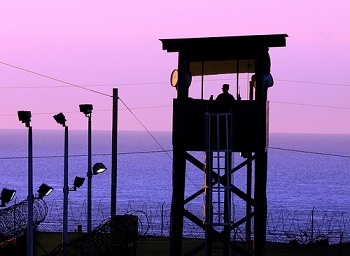
MEDIA ROOTS – Several hundred psychologists, as well as numerous psychological associations around the
country, are united in calling for the annulment of the American Psychological
Association’s report on
Psychological Ethics and National Security (PENS). The 2005 report is an APA endorsement of the highly suspect intelligence-gathering
procedures used in US military detention sites such as Guantánamo Bay and
Bagram, Afghanistan. The demand for its immediate suspension and
public review is called not by the APA Board or Ethics Committee, but by its
general membership as well as several scholar-activists such as Daniel Ellsberg
and Noam Chomsky.
Flaws in the PENS process have been apparent from its
inception. The creation of a presidential task force consisting of nine psychologists was specifically
assigned to adopt the official psychological guidelines for interrogation by US
intelligence agents. Unfortunately, the task force was composed primarily of
psychologists already working within the military and intelligence communities, and
many have been involved in instances of suspected prisoner abuse. Additionally, PENS
was never offered for discussion among the APA membership, the press, or the
general public, and it was approved in a highly suspect emergency vote that deviated
from standard APA procedures.
The closing of Guantánamo Bay is on hold, and Bagram is
expanding in size to incarcerate up to 5,500 suspected ‘terrorists’ by the end of 2012. Both detention sites do not offer detainees due process as outlined in the
Constitution and violate international laws, such as those outlined in the Geneva Conventions. As these criminal gulags continue to operate unabated, psychologists
worldwide are becoming increasingly aware that the APA was simply used as a promotional propaganda tool by the White House in order to justify its rendition and torture program.
MR
***
COALITION FOR AN ETHICAL PSYCHOLOGY – Over the decade since the horrendous attacks of
9/11, the world has been shocked by the specter of abusive interrogations and
the torture of national security prisoners by agents of the United States
government. While psychologists in the U.S. have made significant contributions
to societal welfare on many fronts during this period, the profession
tragically has also witnessed psychologists acting as planners, consultants,
researchers, and overseers to these abusive interrogations at Guantanamo Bay
Detention Center, Bagram Air Base, CIA “black sites,” and elsewhere. Moreover,
in the guise of keeping interrogations “safe, legal, ethical and effective,”
psychologists were used to provide legal protection for otherwise illegal
treatment of prisoners.
The American Psychological Association’s (APA) 2005 Report of the
Presidential Task Force on Psychological Ethics and National Security
(the PENS Report) is the defining document endorsing psychologists’
engagement in detainee interrogations. Despite evidence that
psychologists were involved in abusive interrogations, the PENS Task
Force concluded that psychologists play a critical role in keeping
interrogations “safe, legal, ethical and effective.” With this stance,
the APA, the largest association of psychologists worldwide, became the
sole major professional healthcare organization to support practices
contrary to the international human rights standards that ought to be
the benchmark against which professional codes of ethics are judged.
MEDIA ROOTS — Project Censored has become a centrepiece at KPFA, free speech radio, the flagship motherstation of the national Pacifica Radio network. During this season’s fund drive, on Friday, February 17, 2012, Project Censored broadcast a two-point-five-hour special programme entitled ‘Brought to Justice? The Indefinite Detention and Targeted Killing of the Rule of Law’ with music by David Rovics. Abby Martin and Mickey Huff speak with Center for Constitutional Rights attorney, Pardiss Kabriaei. Also, author and investigative journalist Andy Worthington and organiser Stephanie Tang of World Can’t Wait join the dialogue, raise public class-consciousness, and encourage support for KPFA free speech radio.
MR
***
PROJECT CENSORED — “Welcome to a KPFA Fund Drive Special with
Project Censored. I’m Mickey Huff, in
studio with Dr. Peter Phillips and, Associate Director of Project Censored,
Andy Roth. We’ll also be joined for the
next two and a half hours by Abby Martin of Media Roots.
“Today’s special programme is: ‘Brought to Justice? The Indefinite Detention
and Targeted Killing of the Rule of Law.’
Again, welcome. This is a special
broadcast by Project Censored on Pacifica Radio.
Joining us, each half-hour segment, we’ll have a special guest.
“We’ll begin with investigative journalist Andy
Worthington, author of The Guantánamo
Files and Co-Director of the film, ‘Outside the Law: Stories from Guantánamo.’
“At 1:30pm, we’ll be joined by Pardiss Kabriaei, an attorney for the Center for Constitutional Rights, who has
represented a number of the men detained at Guantánamo and is also counsel in al-Awlaki vs. Obama. That will be a pre-recorded interview that we
did with Pardes last week. [See transcript below.]
“We will also have music and commentary from one of the
most notable and political folk musicians of our time, that would be the one
and only David Rovics. You just heard David Rovics’ music; that was
[his song] “Guantánamo Bay” [you heard opening this broadcast]. We’ll be playing David Rovics’ music today; and
it will be available for a premium. We’ll
also be interviewing him later on this afternoon.
“We’ll also hear from Dr.
Almerindo Ojeda, professor of linguistics and Director of the Guantánamo Testimonials Project[of
the Center for the Study of Human Rights in the Americas] at the University of
California, Davis.
“And we will round out today’s special with Stephanie
Tang, of World Can’t
Wait, talking about indefinite detention and targeted killings. And when we wrap up today, we’re going to be
focusing on who is working on trying to stop these types of things. What can be done about it?
“So, today’s programme
is not simply to bemoan the evisceration of the rule of law. It’s also to be looking at positive ways that
we can be confronting these types of measures.”
PARDISS KABRIAEI, ATTORNEY, CENTER FOR CONSTITUTIONAL RIGHTS
Mickey Huff
(c. 32:46): “That’s the music of David Rovics. You can get his new CD, ‘Red Sessions’ with a
$50 pledge [to KPFA]. You can get [the]
Andy Worthington [film] ‘Outside the Law’ on Guantánamo; you just heard from
Andy Worthington in the first segment of today’s special fundraiser here at
KPFA. We’re talking about, essentially,
the evisceration of the rule of law and the rise of targeted killings stemming
from the rise of torture. You can call
and pledge your support to free speech radio anytime this afternoon; but we
have a lot of content.
“This show originally sprang from a programme we did
about a month ago with many of the guests you’re hearing today. But there was so much to cover that we
expanded this into a two and a half hour fundraising special because you’re not
gonna hear this information on any other media outlet. You’re gonna hear it here on KPFA.
“Again, I’m Mickey Huff, joined by Peter Phillips of
Project Censored, Andy Roth and Abby Martin, again, of Media Roots. Please call in 510.848-5732,
800.439-5732. You can pledge online at
KPFA.org. And here’s Abby Martin to tell
you about the interview we did with Pardiss Kabriaei, of the Center for
Constitutional Rights.”
Abby Martin
(c. 33:55): “This is Abby Martin with Project
Censored. Pardiss Kabriaei is an attorney
with the Center for Constitutional Rights, specialising in the Center’s Global
Justice Initiative. She’s represented
men from Yemen, Syria, Algeria, and Afghanistan who have been detained at Guantánamo
Bay working on theirhabeas corpuschallenges. Her work
includes seeking accountability for torture and arbitrary detention at Guantánamo,
including representing the families of two men who died there in June
2006. We spoke with her last week about
the targeted killings in light of Obama’s expansive global drone killing
apparatus. And here’s the interview with
Pardiss Kabriaei.”
Mickey Huff
(c. 34:30): “Welcome to the show Pardiss Kabriaei,
attorney with the Center for Constitutional Rights. We’re very happy that you could join us again
today on our two and a half hour special covering issues from torture to the
evisceration of the rule of law in the United States. Could you please remind our audience a little
bit about our discussion we had a few weeks ago, stemming from the Guantánamo
programme we did?”
Pardiss Kabriaei
(c. 35:00): “Sure.
And thank you for having me back. We were talking before, around the time right before
the tenth, unfortunate, anniversary of the opening of Guantánamo, the day in January
of 2002 when the first men were flown to the prison camp, and the fact that 171
people still remain, despite President Obama’s promises to close the prison. It is alive and well and will remain open for
the foreseeable future. So, we were
discussing the issues around Guantánamo and the unjust detentions of the people
still there and some of the challenges to closure that the [Obama]
Administration has put out that we actually feel are not difficult. That’s the problem of closure; it’s actually
a simple one, but it’s become a political issue. That’s why it remains open.”
“I’ve worked on Guantánamo at CCR since I’ve been here,
since 2007, and have represented a number of men there and have gone to the
base and met with them. Some of them,
thankfully, have been released. And, as
an extension of that work, challenging unjust detention policy by the United
States, in this context of terrorism, have, from that work, started looking at
other manifestations of abusive Executive [or Presidential] policy in this
context. And, specifically, have been
looking at the policy of targeted killing by the [Obama] Administration.”
Mickey Huff
(c. 36:26): “And the website, by the way, for listeners, is
CCRjustice.org. And if you go to that
site, the Center for Constitutional Rights, there is a fact sheet, Government Kill Lists Target
U.S. Citizens Far From Any Armed Conflict.
And we actually covered this at Project Censored in the 2012 book when
we talked about the Executive Branch claiming the right to assassinate U.S.
citizens abroad and the complete evisceration of the rule of law, again, and
due process.
“Could you talk a little bit about what are the government kill lists? And why would you say this is illegal. I mean, it seems obvious; but you could
explain that for us.”
Pardiss Kabriaei
(c. 37:07): “Sure.
The basic policy we’re talking about in our concerns within it are, you
know, if we were all worried about a policy of global detention, indefinitely,
without review, of hundreds of people held at Guantánamo and elsewhere that the
[U.S.] government said were all the worst
of the worst and that we know now, after judicial review, we’re not, in
fact, terrorists or whose detentions were not founded, we’re talking now about
a, effectively, a global assassination policy
of killing people who are only suspected of being involved in terrorism. Our concern is that many of them were
actually not involved in any
fighting, even if it were lawful to kill individuals wherever they may be found
who are engaged in terrorism. Our
concern, in part, is that many of them are actually not even involved in
terrorism.
“We have questioned the standards the government is using
to determine who is and who is not targetable.
But the policy we are now talking about, and this is a policy that
existed under Bush, but that has very much escalated and expanded under
President Obama. And it is, effectively,
killing individuals wherever they may be found who are unilaterally deemed to
be dangerous to the United States, unilaterally deemed without any outside
meaningful check on what criteria are being used, what evidence supports those
targeting decisions. And these are
targeting decisions and targeting practices that are happening outside of
recognised war zones. So, we’re not
talking about the use of drones or airstrikes against individuals fighting in
Afghanistan or, previously, in Iraq. We’re
talking about people who are being killed far from those battlefields in places
like Yemen; Somalia, there was a reported strike in the Philippines,
reportedly, that was assisted or led by the United States. There are many concerns we have about the
policy.
“Our particular focus, and the focus of the al-Awlaki
case, was targeted killings that are occurring outside of ‘war’ zones and questions and concerns we have about what criteria
are being used, where these targeted killings are being carried out. What was not at issue in the al-Awlaki case,
but we’re very much worried about is the issue of civilian casualties resulting
from these strikes. So, there are many
issues we could talk about.”
Abby Martin (c. 39:34): “Pardiss, this is Abby Martin. You were talking about the unfounded claims
behind the global assassination campaign and the indefinite detention; a recent
poll that just came out in a Washington Post/ABC News talks about how 70% of
respondents approve of Obama’s decision to keep Gitmo open and 83% approve of
the U.S. drone policy that he’s expanded.
I wonder if you could speak to those [statistics] and the rebranding effort
and the danger of the conditioning.”
Pardiss Kabriaei
(c. 40:00): “M-hm.
I guess I have to believe that those poll numbers are what they are because
people still don’t know. I have to hope
that that’s the reason why we’re not authorising or sanctioning the [U.S.]
government to go after people who are innocent and should not be killed. Despite what I think is fair, and in fact
there is plenty of evidence to show, at least in Guantánamo, that of the almost
800 people that were held there most of them have been released by the Bush
Administration or the Obama Administration, the government themselves. And others, one there was an opportunity to
have their detentions reviewed by courts, courts have found most of their
cases, the majority of those cases found that the detentions were
unjustified. But I have to hope that
people still believe, as the government has, as the Obama Administration has, either
been perpetuating this myth of ‘dangerous’
people still being held at Guantánamo or just failing to educate the public
about the truth and reality of who’s still there. But that they believe the 171 people still
there must actually have been involved in fighting and need to be there. And that Guantánamo is necessary for the
national security of the United States.
“But, again, in fact, if you break down the number of the
171 people only about 30 of them were, according to the [U.S.] government
itself, only about 30 of them, according to the government itself will ever
actually be charged with anything. 89 of
them have been cleared by the Administration, by every government agency with a
stake in the matter has been cleared.
So, I have to believe that people don’t know that and we just have to
continue educating.”
Mickey Huff
(c. 4134): “This is a Kafkaesque black hole to be
sure. And you’re really on to
something. There’s been a relentless and
endless propaganda campaign under the Orwellian guise of the nebulous war on ‘terror.’
And people really, sort of, throw their own projected beliefs and ideas,
sort of a motivated reasoning: ‘There must be a reason that they’re there.’ And, again, that’s among the people that are
aware of it, as you pointed out. There’s
many people that really don’t know
what goes on and what’s going on here.
“And, going back to the Bush years, George W. Bush, in a
rare joint press conference with then-Prime Minister, at the time, Tony Blair
of Great Britain, when asked by a seemingly intrepid reporter about how they
knew these were the most dangerous people, right? Because as you said, there’s this endless
rhetoric about how: ‘These are the most dangerous people. These people are gonna get us. We
have to lock ‘em up. And they’re so especially dangerous that they absolutely
need to be put in Guantánamo. Never mind about what we did after World War II in
Nuremberg and put the Nazis on trial. These people are in a special class all
of their own, outside of any real judicial system or oversight.’
“And Bush was asked, well, how do you know they’re
dangerous? And this is after he just got
done saying that the most dangerous people in the world are in Guantánamo. And the answer to that question was: ‘Well because they are at Guantánamo Bay.’ It’s that circular kind of reasoning that
comes from the top down and reverberates throughout our culture.
“Just to be more specific with our listeners—again, we’re
talking to Pardiss Kabriaei, of the Center for Constitutional Rights,
CCRjustice.org—what laws are the [U.S.] government actually violating in these
procedures, in these policies?”
Pardiss Kabriaei
(c. 43:17): “For talking about the issue of targeting,
our legal position is that when you are in recognised war zones, we are talking about Afghanistan. A situation of war triggers a different set
of rules, it triggers the laws of war within that context.
“Factually, and within that legal framework, there is
greater leeway in terms of detaining people and even killing them. It doesn’t mean that every detention is
lawful, every killing is lawful, but the rules are different. And that’s because in situations of immediate
fighting the exigencies of wartime ordinary Constitutional provisions
just don’t apply the same way. They can’t
apply the same way.
“But what we’re talking about is, for example in the
al-Awlaki case, a targeting that occurred in Yemen and, despite conflict in
Yemen and a certain level of violence, certainly, there’s a high bar to call
something a war and an armed conflict. And the United States is not ‘at war’ in
Yemen. It is not ‘at war’ with Yemen or within it.
There may be a presence of Al Qaeda, but, again, there are legally
defined criteria that need to be satisfied to call something an armed conflict to trigger those
different set of rules.
“So our position in the case, and the position that we
continue to take is that outside of immediate battlefields and zones of active
hostilities, the law that should apply is the Constitution and international
human rights law. And under that
framework you can only kill someone, and what we were talking about in the
al-Awlaki case is a U.S. citizen with
respect to whom, clearly, the Constitution applies. And on that point the majority of the people
who are bearing the brunt of these policies are not actually U.S. citizens. They are non-citizens, foreign citizens.
“So, the government could make arguments; and they would
try to in court about the fact that the Constitution does not apply, maybe, to non-citizens. But it is, at least, clear that vis a vis
U.S. targeting and killing by the U.S. government of its own citizens, that due
process and the Constitution applies. According
to that standard, the government can only kill someone if they’ve been afforded
process, there’s been a conviction for a capital crime, and there’s been a
sentence of death. Outside of that
process, you can only kill in self-defence.
And that means that there has to be an imminent threat, an immediate
threat, of deadly harm. And lethal force
has to be a last resort.
“And what happened in the al-Awlaki case was that this
person, despite what the government was saying about him, was on a kill list of some kind, maintained by
the CIA and secret military forces. But,
reportedly, these lists maintain these people’s names for months at a time;
they are reviewed periodically every few months, reportedly. And this is what ‘credible’ news sources, like the New York Times, the L.A. Times,
the Washington Post, have reported. Just
that very fact of keeping people on lists that are reviewed months at a time
undermines this idea of immediacy.
“And what we know in the actual killing that took place
against al-Awlaki in September of last year, September 30, 2011, was when the
U.S. actually carried out the strike, is that they had been surveilling him for
weeks, potentially before he was actually killed. That also undermines this idea of an imminent, immediate, threat. And that
the killing was, based on facts that have been reported, in cooperation and in
coordination with Yemeni officials, which undermines the idea that there couldn’t
have been, potentially, other measures taken, non-lethal measures taken.
“I think what’s important for people to remember is even
if you think, and if you believe the government’s story about who this person
was and that he presented a threat, killing, again, really has to be a last
resort. And when we don’t accept that,
and that’s another standard we’re putting forward. It’s a Constitutional standard. When we don’t accept that it leads to a very
slippery, very scary slope of what is possible.
And that’s our concern looking forward; and when there are reports of
the CIA’s drone programme expanding, what they are doing in Pakistan expanding
to places like Yemen, and hearing reports of potential U.S. involvement in
strikes in the Philippines and definitely in Somalia and who know where else,
there’s a real concern about the escalation and the expansion of war and
violence led by the United States in the name of national security.”
Abby Martin
(c. 47:51): “Pardiss, exactly. And I wanted to touch upon Pakistan. I just read, you know, it seems like every
time I read about the drone strikes under Obama it’s just getting more
expansive more far-reaching. I was
wondering if you could speak upon these signature
strikes and the indiscriminate group targeted assassinations that are
happening in Pakistan.”
Pardiss Kabriaei
(c. 48:14): “Yeah, the signature strikes, I think part of the problem with this programme
is the secrecy and the lack of transparency.
And just to be clear about some factual things, the strikes, the drone
strikes and strikes carried out in other ways that we’re talking about outside
of situations of wars—so, outside of Afghanistan, for example—are mostly
carried out by the CIA and the Joint
Special Operations Command, which is a secret unit of the military.
“In Afghanistan, because our military forces carry out
these strikes, the rules by which we operate are known. There can be, and there often is after the
fact of a killing, an investigation and some kind of accounting and, in some
cases, compensation, even.
“What we are talking about in Pakistan and Yemen and
Somalia and wherever else is an entirely, well, bizarre situation where we know
the drone strikes are occurring—we see the deaths; we see drone pieces—we
certainly have independent researchers documenting, or trying their best to
document what’s happening, we still have an [Obama] Administration that
officially refuses to acknowledge that this programme even exists, let alone
disclose any meaningful information about the criteria they use, or the rules
that govern the procedures, or where it operates, who’s being killed, how many
are being killed.
“So, just going back to the signature strikes, there’s very little known exactly about the
criteria that are used or how the strikes are governed and what procedures are
used. My understanding of the signature strikes is that they are
strikes carried out based on observing patterns of behaviour and patterns of
life. And they are not necessarily
people who are on kill lists. They are
just individuals who, based on unknown criteria, are deemed to be engaging in
threatening behaviour or conduct and that are killed.”
Mickey Huff (c.
50:08): “Well, you mentioned, Pardiss Kabriaei, you
mentioned that ‘scary slippery slope.’
And here we are sliding further into it.
And this was reported in Wired magazine.
There was a piece in the Wall Street Journal, even. Again, these are pretty mainstream, even
corporate, media sources here. One
article, ‘CIA Drones Kill Large Groups Without Knowing Who They Are.’ This is a quote
from the Wall Street Journal: ‘Men
believed to be militants associated with terrorist groups, but whose identities
aren’t always known.’
“So, the CIA is killing people without even knowing who
they are on suspicion, suspicion of association ‘with terrorist groups.’ I
mean how many degrees away from certainty are we here?”
Pardiss Kabriaei
(c. 51:00): “Right.
Many degrees. And just in terms
of context, too, on these signature
strikes, when you consider just family relationships and the context in
Pakistan where sometimes you’ve got 30, 40 people in one home, family members
living together, or entire communities living under one roof, if you’ve got one
individual the government has been tracking and deems to be a threat, when they
are in that home and a missile strikes everyone dies. And that is how we’ve got, then, the numbers
that have been reported. And according
to, sort of, moderate estimates, for example the New America Foundation that
is, I think, even by the [Obama] Administration, perceived to be a
non-partisan, non-biased, group that has been documenting these strikes there
have been hundreds of civilian deaths in Pakistan alone just over a period of
years that were strikes that have actually been documented. If you talk to the government, though,
amazingly, a U.S. official said there were zero civilian casualties in Pakistan
for the year of 2011.
“I mean there is something wrong between how the United
States is defining civilian or militant and how the rest of the world and
people who actually are on the ground documenting this stuff, what they are
seeing.”
Mickey Huff
(c. 52:19): “It’s simply propaganda and deception.”
Pardiss Kabriaei
(c. 52:22): “I agree with you. But I think wherever you stand I think there
is growing consensus, at least on the need for some transparency. And the [U.S.] government says, well, we’ve
given transparency. Well, how can there
be transparency when you still have an [Obama] Administration that still doesn’t
officially acknowledge that this programme exists?”
Abby Martin
(c. 52:37): “Right.
It seems like whatever the [U.S.] government says, this is an insurgent—that must be true; anyone we just killed
with a drone must be an insurgent without any sort of due process or evidence
against him. Can you expand upon now the
Congressional approval of the domestic use of drones in the United States and the
surveillance that we are going to be seeing in a couple of years? What do you think about that?”
Pardiss Kabriaei
(c. 53:03): “Well, I know that the drone technology
is another piece of this. The legal
issues with drones to the extent that there may not be legal issues—the [U.S.] government’s
talking about how ‘they are more precise’
and ‘actually as a method of killing they
are not problematic, legally’—there are certainly ethical issues, at least.
“These Drone operators sit in rooms thousands of miles
away, for example in Nevada, watching targets and people on video screens and
with the press of a button kill, make decisions to kill people. And then drive home to their families, pick
up their kids from soccer practice and have dinner. There is something very scary and concerning
about how the use of drones is further dehumanising the act of killing and
war. I think that’s something people should
be thinking about, separate from the legal issues, just the ethical and moral issues
with that and how much easier it makes killing
and warfare.”
Abby Martin (c.
53:58): “Yeah.
Just the chilling effect, just curbing political activism, knowing that
there are these drones surveilling the country.”
Pardiss Kabriaei
(c. 54:06): “Absolutely.”
Abby Martin (c.
53:58): “And there’s certainly a privacy issue.”
Pardiss Kabriaei
(c. 54:08): “Yeah.
And then there are billions of dollars being poured into research and
drone technology and advancements for drones.
And the way we’re seeing them being used in the United States so far is,
as far as what’s been reported, they’ve been used and are being used for
surveillance along borders. There’s talk
of them being used by law enforcement, by police departments for surveillance
purposes. I mean the capacity for drones
is really limitless. And we know that
there’s a lot of money that’s being poured into research and technology to
further advance the technologies. So,
what’s possible and what may come in the United States is unknown. So far they are being used for surveillance
by law enforcement, for border patrol.
I know that there are some groups in the United States
that have filed Freedom of Information Act requests to get more information on
exactly how these things are being used and the basis for authorising them in
the United States. But, certainly, they
are present here. They are in the skies
in the United States. And it’s really a
question and a concern about what may come here to the extent that people are
not concerned about what the United States is doing abroad.”
Mickey Huff
(c. 55:20): “That’s right. Pardiss Kabriaei, you were also talking about
priorities. And when we hear these cries
of austerity coming from on high, they ring pretty hollow when one sees so much
is being sunk into these incredibly dubious and problematic policies of
targeted killing, of surveillance, not just abroad, but here at home [in the
U.S.], potentially.
“We have one minute left, Pardiss. Could you tell us, what are you trying to
accomplish, then, through the courts?
Why is this important? Why should
people get active? And where can they
get more information?”
Pardiss Kabriaei
(c. 54:06): “M-hm.
What we were trying to do with the courts in our last case was just to
impose a process of review over these decisions and to force some level of
transparency. And we will continue those
efforts in the courts and take them as far as we can.
“What I would say is, with Guantánamo and the poll
numbers, what they are in the United States, there are still a lot of people, I
think, who are outraged by Guantánamo because it was so known. And I think we still talk very much about the
detentions there. I think what people
need to do is educate themselves about this killing policy as well. And we need the same level of outcry and the
same demand for transparency and information.
People should know, at a minimum, what the United States government is
doing in their name and with their money.
“I think that, for more information, please go to our
website CCRjustice.org. We have
information about the prior case we fought on behalf of al-Awlaki. And we’ll be putting out more
information. And I think, at this point,
just the basic minimum is educate yourself about what the United States is
doing in your name.”
Mickey Huff
(c. 56:56): “That’s the voice of Pardiss Kabriaei from
the Center for Constitutional Rights.
And that’s certainly what we’re trying to do here at [KPFA] free speech
radio. We are trying to get the word out
and get people to really understand what’s going on and understand what’s at
stake.
Pardiss, thanks so much for your time and for taking time
out of your very busy schedule and your important work. Thank you, again.”
Abby Martin
(c. 57:15): “Thanks, Pardiss.”
Pardiss Kabriaei
(c. 57:16): “Thank you so much. Bye-bye.”
Transcript by Felipe Messina
Photo by Flickr user Art Makes Me Smile
***
Fund Drive Special – Guantanamo and the Gulag with Project Censored – February 17, 2012 at 1:00pm



 MEDIA ROOTS — Judi Bari was an
activist, a person of conscience, who exercised her First Amendment rights toward socioeconomic justice for much of her life.
She was one of the leading organisers to popularise environmental
activism with Earth First!, which influenced the environmental activism
contributing to the historic 1999 WTO resistance in Seattle, as well
as the more recent Occupy Movement. On
May 24, 1990, a motion-triggered car bomb exploded under Judi’s car seat, as she
and Darryl Cherney drove through Oakland en route to Santa Cruz during the Redwood Summer organising
tour.
MEDIA ROOTS — Judi Bari was an
activist, a person of conscience, who exercised her First Amendment rights toward socioeconomic justice for much of her life.
She was one of the leading organisers to popularise environmental
activism with Earth First!, which influenced the environmental activism
contributing to the historic 1999 WTO resistance in Seattle, as well
as the more recent Occupy Movement. On
May 24, 1990, a motion-triggered car bomb exploded under Judi’s car seat, as she
and Darryl Cherney drove through Oakland en route to Santa Cruz during the Redwood Summer organising
tour.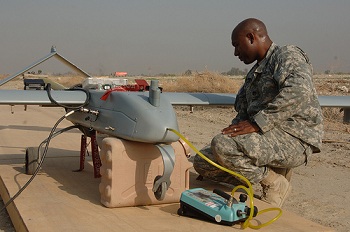 MEDIA ROOTS — Last
month, President Obama
MEDIA ROOTS — Last
month, President Obama 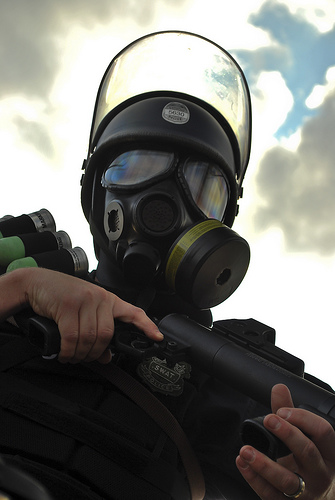 MEDIA ROOTS — Doubtless, many have heard of the U.S. targeted killing of U.S. citizen Anwar al-Awlaki under Obama. But many may not know that al-Awlaki wasn’t the last U.S. citizen arbitrarily killed by the state, as investigative journalist Jeremy Scahill recently
  MEDIA ROOTS – Several hundred psychologists, as well as numerous psychological associations around the
country, are united in calling for the annulment of the American Psychological
Association’s
MEDIA ROOTS – Several hundred psychologists, as well as numerous psychological associations around the
country, are united in calling for the annulment of the American Psychological
Association’s 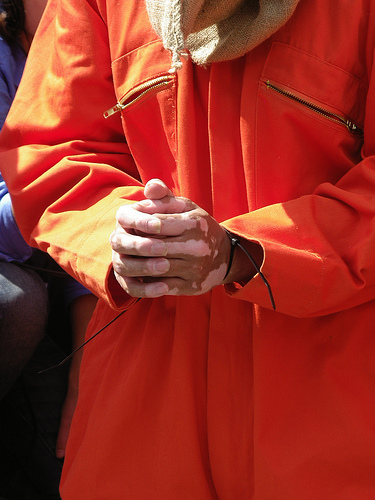 MEDIA ROOTS — Project Censored has become a centrepiece at KPFA, free speech radio, the flagship motherstation of the national Pacifica Radio network. During this season’s fund drive, on Friday, February 17, 2012, Project Censored broadcast a two-point-five-hour special programme entitled ‘Brought to Justice? The Indefinite Detention and Targeted Killing of the Rule of Law’ with music by David Rovics. Abby Martin and Mickey Huff speak with Center for Constitutional Rights attorney, Pardiss Kabriaei. Also, author and investigative journalist Andy Worthington and organiser Stephanie Tang of World Can’t Wait join the dialogue, raise public class-consciousness, and encourage support for KPFA free speech radio.