 MEDIA ROOTS- It reads like a science fiction novel: a multinational corporation, in control of a vast majority of the world’s food supply and chief promoters of genetically altered foods, is actively infiltrating the legislative authority to not only corner the world food market, but to make growing food in one’s own back yard illegal. Even more sinister, they’ve hired one of the most equipped private mercenary companies in the world to enforce their whims.
It’s an unnerving scenario, and an altogether realistic one. As the corporate era continues to expand its branches and authority in modern America, the modern farmer is facing challenges and dangers far more frightening than early frost or a pest infestation; they are now being forced to defend the very seeds they plant. Even worse: they’re up against one of the most powerful corporations in the world, whose genetically modified products many experts are warning could be detrimental to human health.
A quick lesson in GMOs, for the blissfully unaware: genetic engineering or modification of food involves the laboratory process of artificially inserting genes in the DNA of food crops or animals to add nutrients or traits such as resistance to insects or disease, according to the U.S. Department of Energy Genome Program’s Humane Genome Project. The result is called a genetically modified organism, or GMO.
The Monsanto corporation, the world’s leading producer of herbicides, is also a world leader in genetically modified seeds. The two go hand-in-hand, you see: one kills the bugs eating the plants, the other is able, through scientific tinkering, to resist the uber-toxic poisons used to kill the bugs. Theoretically, it’s a match made in heaven – until one factors in the impact of the potentially hazardous genetic manipulation, and the tactics by which the company owning the patent on these Frankenfoods assert their market domination.
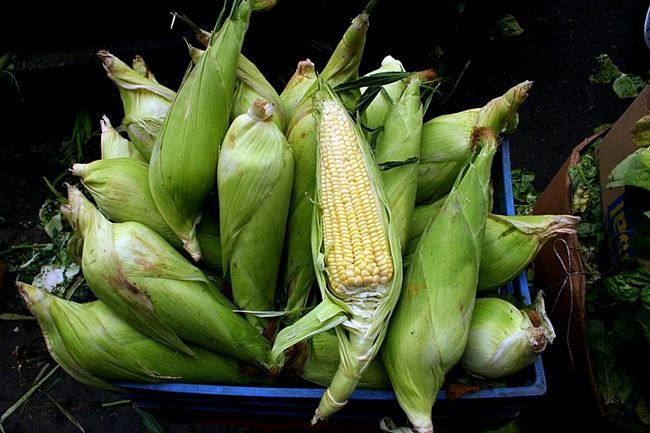 cJust how big is the GMO issue? As Americans become more conscientious of what they put in their bodies, many will be surprised to learn that we’ve been consuming genetically engineered or genetically modified foods for the past 15 years. 70 percent of our nation’s corn farmland and 94 percent of soy farmland are planted with genetically engineered crops, designed to resist pests and herbicides and increase crop yields. New technologies promise a future where genetically modified apples that don’t turn brown, rice is infused with vitamin A and, as early as next year, you may be able to buy a GM super salmon that grows to maturity in just two years.
At the forefront of the GMO debate, the Monsanto corporation has long been viewed as the chief enemy among organic farmers and GMO skeptics, having been the most aggressive in their attempts to corner the world food market, often through large-scale legal battles against small-time farmers and considerable (and controversial) legislative influence that leans heavily in their favor.
What is the ultimate benefit to Monsanto’s methods? The company defends the usefulness of its GM seeds, saying, “Biotechnology crops have provided a wealth of benefits to farmers and the environment. It is well established that farmers growing biotech crops realize many benefits including increased yields and lower production costs, and the use of these crops have resulted in an increase in the adoption of conservation tillage practices that reduce soil erosion. These benefits are the reason why farmers have overwhelmingly and willingly chosen to use these technologies year after year.”
Evidence of the negative economic and health effects of GMO seeds, however, which organic-farming groups argue invalidates the legal requirement for “usefulness” under patent law, are plentiful. “None of Monsanto’s original promises regarding genetically modified seeds have come true after 15 years of wide adoption by commodity farmers,” said David Murphy, founder and Executive Director of Food Democracy Now! “Rather than increased yields or less chemical usage, farmers are facing more crop diseases, an onslaught of herbicide-resistant superweeds, and increased costs from additional herbicide application.”
Moreso, studies are cropping up with increasing regularity that the potential harm of GM seeds far exceeds the original indication. Andres Carrasco, a globally recognized scientist in the biotech world, found (along with his team from Argentina and Paraguay) that Monsanto’s Roundup weed killer causes birth defects in frogs and chickens. “The findings in the lab are compatible with malformations observed in humans exposed to glyphosate during pregnancy,” he told GMWatch. He has since reportedly suffered threats and attacks from local civilians as well as area police.
Many believe that the prevalence of GM corn and GM sugarbeets used as sweeteners in processed foods (such as the nearly-unavoidable high fructose corn syrup) is a leading contributing factor to the spike in diabetes, which has more than doubled since GM foods were quietly introduced to the market in 1996. GMO products have been found to exacerbate allergies, reduce digestive enzymes, cause liver problems and may, according to some findings, even lead to cancer.
Biochemist and nutritionist Arpad Pusztai first blew the whistle in 1998 on the hazards of GM crops, costing him his job at Rowett Research Institute in Scotland. Having studied biotechnology for 35 years, Pusztai had established himself as the world’s leading expert in the highly specialized field. In 1995, he won a three-year, $1.5 million contract from the UK government to establish a testing methodology for regulators when assessing the safety of genetically modified crops. The results of his findings, which are as remarkable as they are alarming, can be found in his book Seeds of Destruction: The Hidden Agenda of Genetic Manipulation.
In his book, Pusztai contends that agribusiness giants plan world domination by patenting life forms to gain worldwide control of our food supply, with innumerable references to studies and experiments to support his claims. The book’s findings lend added ominous tones to Henry Kissinger’s 1970 quote: “Control oil and you control nations; control food and you control the people.”
Despite these findings, which are increasing in regularity far beyond Pusztai’s work, large-scale efforts are underway to not only silence these damning revelations but to actually redefine personal farming, with the clear intention of world food-market domination. In 2009, two pieces of legislation were introduced (HR875 and S425) that would, through deceptively loose terminology, which would put private farming at risk and effectively criminalize organic farming. It is perhaps quite telling that the sponsor of the bill is Connecticut Congresswoman Rosa Delauro, who is married to Stan Greenburg, a political strategist for Monsanto. She is, quite literally, in bed with the enemy, in the eyes of farmers at risk.
The H.R. 875 bill, also known as the Food Safety Modernization Act, would establish a “Food Safety Administration” within the Department of Health and Human Services, specifically “to protect the public health by preventing food-borne illness, ensuring the safety of food, improving research on contaminants leading to food-borne illness, and improving security of food from intentional contamination, and for other purposes.”
Section 3 of H.R. 875 defines what type of establishments would be subject to the regulations in this legislation. It that section, a “food production facility” is defined this way: “any farm, ranch, orchard, vineyard, aquaculture facility, or confined animal-feeding operation.” To clarify, that would include all small farms, all organic farms, and even small family gardens if you sell any produce to your neighbor. It would, in effect, preclude the public’s right to grow, own, trade, transport, share and feed naturally grown food and agricultural products.
The law was signed into effect in January.
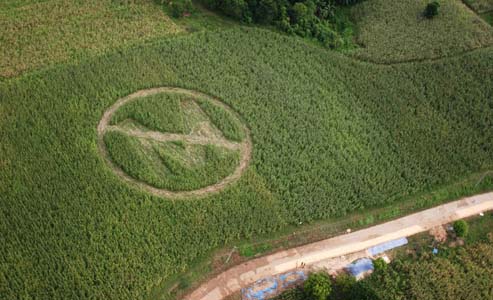 Such conflicts of interest exist on the U.S. Supreme Court as well, with judge Clarence Thomas, a former Monsanto attorney, writing the high court decision allowing biotech companies to patent GM seeds. Thomas also refused to recuse himself from last year’s Monsanto v Geertson Seed case, which allowed the USDA to impose a partial deregulation of GM alfalfa last June. This January, the USDA completely deregulated GM alfalfa, even removing the requirement for buffer zones, which helped prevent the wind-generated spread of seeds.
The Monsanto corporation has taken a very aggressive stance in its business tactics, suing literally hundreds of farmers whose fields have been contaminated with the company’s genetically modified seeds. In 2001, Monsanto sued a 70-year-old farmer from Saskatchewan, Canada, named Percy Schmeiser, for violating its patent on an herbicide-resistant GMO canola seed. They alleged that Schmeiser had intentionally planted some of Monsanto’s patented “Roundup Ready” seed, which has been genetically modified to withstand the company’s Roundup brand weed killer. Schmeister countered that the patented seed had blown onto his fields unbeknownst to him – a sentiment shared by many frustrated farmers around the world. Monsanto won the case, as well as two subsequent appeals, the last at the Canadian Supreme Court in 2004.
According to the company’s website, between 1997 and April of 2010, Monsanto filed 144 lawsuits over alleged patent violations in the U.S. Nine of those cases have gone to trial, with the company winning every case. And according to Digital Journal, Monsanto has also admitted to hiring Blackwater, a notoriously aggressive security firm which hires Green Berets and CIA officers, not only to keep watch for the safety of personnel overseas, but to monitor blogs of people raising issue with their tactics.
Even worse, Monsanto has modified its Technology Stewardship Agreement to shift all damage liability arising from transgenic crops onto farmers who plant their seeds, in the event that any health effects occur.
There is no overstating the risks small farmers face if their fields are accidentally contaminated with GMOs. In March, the Public Patent Foundation, a nonprofit legal services organization based at New York’s Cardozo Law School, filed a federal lawsuit against Monsanto on behalf of about 60 U.S. and Canadian organic farmers, family farmers, seed businesses and agricultural groups. The suit denies accusations of infringing upon biotech corporation Monsanto’s patented plant germs, and contends that the proliferation of genetically modified seeds put organic growers at particular risk—both of their crops being contaminated by modified seeds, and of legal challenges from the corporation if the seed inadvertently ends up in their fields.
“This case asks whether Monsanto has the right to sue organic farmers for patent infringement if Monsanto’s transgenic seed should land on their property,” Dan Ravicher, executive director of the Public Patent Foundation and lead attorney in the case, said in announcing the suit. “It seems quite perverse that an organic farmer contaminated by transgenic seed could be accused of patent infringement, but Monsanto has made such accusations before and is notorious for having sued hundreds of farmers for patent infringement, so we had to act to protect the interests of our clients.”
The prosecution denies using Monsanto property and claims the company’s genetically modified seeds have an invasive presence. Despite the prosecution’s claims, a press release from Monsanto said farmers’ accusations are nothing more than a “publicity stunt.”
Genetically modified seed, the plaintiffs argue, can destroy organic versions of the same crop; after Monsanto introduced its GM canola seed, for instance, organic canola “became virtually extinct as a result of contamination.”
GeneWatch UK and Greenpeace have documented over 300 contaminations through July 2010 alone.
“Some say transgenic seed can coexist with organic seed, but history tells us that’s not possible, and it’s actually in Monsanto’s financial interest to eliminate organic seed so that they can have a total monopoly over our food supply,” Ravicher said.
We all deserve to know what’s in our food. We all deserve the right to grow our own food, if we desire. But above all, we deserve access to healthy food.
Stay informed. Enlighten others. Act now.
Johnny Firecloud is actively
helping to build new horizons of personal activism and sociopolitical progress
in Los Angeles, where he runs Antiquiet.com and is a senior writer/editor at
CraveOnline.
Photo by flickr user Adobe of Chaos, alicia, Melvyn20CalderonGreenpeace
Related: Want to work on an organic farm? www.wwoof.org



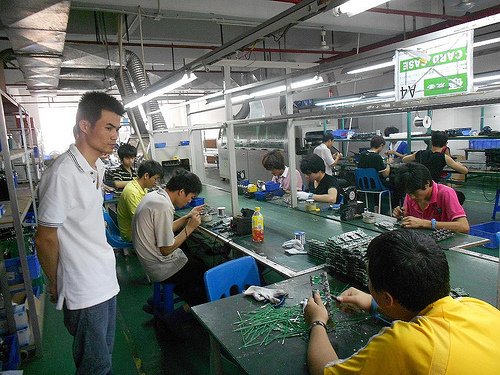 DAILY MAIL– Factories making sought-after Apple iPads and iPhones in China are forcing staff to sign pledges not to commit suicide, an investigation has revealed.
 GUARDIAN
 GLOBAL RESEARCH
 MEDIA ROOTS- It reads like a science fiction novel: a multinational corporation, in control of a vast majority of the world’s food supply and chief promoters of genetically altered foods, is actively infiltrating the legislative authority to not only corner the world food market, but to make growing food in one’s own back yard illegal. Even more sinister, they’ve hired one of the most equipped
  cJust how big is the GMO issue? As Americans become more conscientious of what they put in their bodies, many will be surprised to learn that we’ve been consuming genetically engineered or genetically modified foods for the past 15 years.
  Such conflicts of interest exist on the U.S. Supreme Court as well, with judge Clarence Thomas, a former Monsanto attorney, writing the high court decision allowing biotech companies to patent GM seeds. Thomas also refused to recuse himself from last year’s Monsanto v Geertson Seed case, which allowed the USDA to impose a partial deregulation of GM alfalfa last June. This January, the USDA completely deregulated GM alfalfa, even removing the requirement for buffer zones, which helped prevent the wind-generated spread of seeds.
  COMMON DREAMS