SF GATE– If you search for news and information about the oil spill on the
internet, your first result will be a link to BP’s website that the
tagline describes as “how BP is helping.” That’s because the company has
purchased “oil spill” ad words through Google and
Yahoo. “Oil spill” has been among the top searches on Google, Twitter
and Yahoo for several weeks.
To add insult to injury, the better source of information is the website of the Unified Command, which includes BP and
Transocean as well as the government agencies involved in cleanup.
On Friday, President Obama criticized BP for buying $50 million in television advertising, while
continuing to push on a number of fronts to limit the amounts it
will owe fishermen and taxpayers for its Biblical boo-boo in the Gulf.
Mother Jonesreports today on mounting evidence that BP and
Transocean ignored warnings of problems on the Deepwater Horizon rig.
AL
JAZEERA– A landmark trial is unfolding in Ecuadorian Amazon, where a group
of rainforest residents is suing Texaco for $6bn in oil clean-up costs. Texaco, now part of Chevron, admits to dumping 18 billion gallons of run-off
while drilling for oil in the rainforest, but the company says it did so
legally and according to industry standards.
Environmentalists call it the worst oil-related disaster in the world –
Texaco allegedly dumped 30 times the amount of crude spilled by the Exxon
Valdez.
Al Jazeera’s Mariana Sanchez reports that the plaintiffs say the
company left hundreds of dump sites, many of them unlined, and open-air pits
that ooze toxic sludge into what was once pristine rainforest.
The Cofan, an indigenous nation of less than 500 men and women, say their
land is contaminated and are filing a lawsuit against the giant oil company. Toribio Aguinda, one member of the Cofan tribe, remembers when the waters of
the Aguarico river turned dark.
“The water stunk and so did our fish. In the end, we were left there,
with sadness, thinking where will we get fresh water?”
These tribesmen are demanding a clean-up. They are part of the 30,000
plaintiffs who filed a class action lawsuit in New York
in 1993 and lost the case. The case is now being tried in Ecuador.
In 2001 Chevron bought Texaco, taking over its assets and this legal battle.
“Texaco created a system where they dumped literally billions of
gallons of toxic waste water”, said Steven Donziger, legal counsel.
Donziger, who represents the plaintiffs, says the dumping saved the company
billions of dollars in operating costs.
“When you do this every day with 300 well sites in 28 years you have an
ecological disaster and that’s what we are looking out today,” he said.
Meanwhile, Ricardo Reis Vega, Chevron’s legal counsel and vice president,
argues the company cleaned up the areas under Chevron’s obligation.
“The part that was in our responsibility inside the scope of work was
done 100 percent,” Vega said.
In 1995 the Ecuadorian government agreed to release the company from further
responsibilities after they cleaned up. The Amazon Defence Front, also representing the 30,000 plaintiffs, says most
of the damage has been left untouched. And the pollution, they say, is not
biodegradable.
“This is how Texaco designed their pits and they are still working
today. The pollutants come from a pool through a tube into the swamp and the
swamp feeds the river from which the Cofan take their water.”
The American company says it spent $40m on remediation but that is only
one per cent of the amount the Cofan’s lawyers estimate is needed for a real
clean up.
VOA NEWS– The National Oceanic and Atmospheric Administration (NOAA) confirms that
some of the oil escaping from that ruptured well in the Gulf of Mexico is
staying beneath the surface, raising new environmental concerns about the
disaster. BP says there is no significant oil staying underwater.
Scuba divers showed U.S. legislators video of the spill which they shot
while 20 meters under the sea and 64 kilometers off the U.S. Gulf coast.
The oil is so thick below this depth that it blocks out almost all light.
“Something I’ve never seen in diving, in my whole life out here,”
said diver Al Walker.
Fellow diver Scott Porter says the substance feels like a mixture of clay and
wax. He had to scrape it off his hands. Soap had no effect. “I
don’t know of anything that would be able to live through that,” Porter
said.
Yet on Wednesday, BP continued to deny any large amount of oil under the
surface.
“No one has yet found any concentrations that measured higher than the
parts per million,” said BP’s Doug Suttles.
Meantime, Congress conducted five oil spill hearings on Capitol Hill
Wednesday. Legislators want to know why risks weren’t studied when oil
rigs drill 5,000 feet below the water.
“I’m just terribly bothered about the lack of foresight, both by our
government and of BP and, of course, BP will pay a price for that,” said
Congressman Vernon Ehlers. “Perhaps even a failure of the corporation at
the rate it’s going.”
PALM BEACH POST– A Florida beach might get hit
with oil from the Deepwater Horizon accident for the first time Wednesday as
sheen likely caused by the accident was reported less than 10 miles off Pensacola
Beach.
A charter boat captain reported the oil Tuesday afternoon and state and
local environmental officials confirmed that it was about 9.5 miles offshore. Winds are
forecast to blow from the south and west, pushing the outer edges of massive
slick from the spill closer to western Panhandle beaches.
Emergency crews began Tuesday scouring the beaches for oil and shoring up
miles of boom. Escambia County will use it to block oil from reaching inland
waterways, but plans to leave beaches unprotected because they are too
difficult to protect and easier to clean up.
The spill’s arrival coincides with the beginning of the Panhandle’s summer
tourism season, which normally brings millions of dollars to the region.
“It’s inevitable that we will see it on the beaches,” said Keith
Wilkins, Escambia’s deputy chief of neighborhood and
community services.
YAHOO NEWS – Perhaps you saw news footage of President Obama in Grand Isle, La., on
Friday and thought things didn’t look all that bad. Well, there may have been a
reason for that: The town was evidently swarmed by an army of temp workers to
spruce it up for the president and the national news crews following him.
Jefferson Parish Councilman Chris Roberts, whose district encompasses Grand
Isle, told Yahoo! News that BP bused in “hundreds” of temporary workers
to clean up local beaches. And as soon as the president was en route back to Washington,
the workers were clearing out of Grand Isle too, Roberts said.
“The level of cleanup and cooperation we’ve gotten from BP in the past
is in no way consistent to the effort shown on the island today,” Roberts
said by telephone. “As soon as the president left, they were immediately
put back on the buses and sent home.”
Roberts says the overnight contingent of workers was there mainly to furnish
a Potemkin-style
backdrop for the event — while also making it appear that BP was firmly in
command of spill cleanup efforts.
New Orleans NBC affiliate WDSU
reports that the workers were paid $12 an hour and came mostly from
neighboring Terrebonne and Lafourche parishes.
News of 11th-hour spruce-up brigade spread rapidly Friday afternoon and
infuriated locals. One popular radio host, WWL’s Spud McConnell, suggested that
the Coast Guard and the White House may have been involved in setting up the
“perfect photo op.”
“Who else has the kind of authority to bring a bunch of strangers to Grand
Isle when the president is in town for a visit? You think they did background
checks on all those people?” wondered McConnell. “I’d be a lot less
upset about this if they would have at least stayed to clean the beach.”
Yahoo! News could not reach BP for comment.
Brett Michael Dykes is a national affairs writer for Yahoo! News.



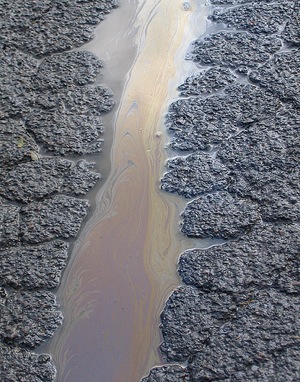 PALM BEACH POST