MEDIA ROOTS – I’m very excited to announce that an extensive lot of our footage from Occupy Oakland is going to be used to represent the S.F. Bay Area in the upcoming 99% Collaborative Film Project! The film is unique in its collaborative fashion and is geared to represent an honest portrayal of the ongoing Occupy Movement. At 2:18, the film trailer gets slightly sinister with our footage of Oakland’s police state crackdown. Check it out and donate, so this epic film can be made!
Abby
***
WIRED – Most documentaries involve months of planning before the first frame
of film is shot, but the creators of an in-the-works Occupy Wall Street
documentary didn’t have that luxury. The protest movement was happening
around them when they decided to make the film.
Now the filmmakers behind 99% — The Occupy Wall Street Collaborative Film
are looking to raise funds to complete the project. They have footage
from 75 filmmakers who captured imagery at various Occupy events across
the country, but to finish the project, producers Audrey Ewell and Aaron
Aites are looking to raise $17,500.
“It’s the amount we need to buy the hard-drive storage and editing
space that will allow us to begin the massive process of sorting and
editing,” the filmmakers say on the 99% Kickstarter page. “This will get us to the point that we can, at the very least, put together a promo reel to bring in additional funding.”
To drum up additional cash, the filmmakers will be holding an online screening.
For $3.99, viewers can buy a ticket to watch early footage. The Jan. 7
screening will be hosted by Ewell and Aites, as well as producer
Williams Cole, and will be followed by a question-and-answer period with
some of the film’s contributors.
“To my knowledge, this is the first film about a current, ongoing
event that’s been made in this collaborative fashion,” Ewell said in a
press release announcing the screening. “And the process is
devastatingly hard, rewarding and exciting.”
The Kickstarter campaign for 99% ends Jan. 13. Check out the trailer for the documentary above and head over to the 99% website to learn more.
MEDIA ROOTS — As we look back on 2011, we feature an important and relevant interview many may have missed with Glenn Greenwald on a myriad of topics including the Occupy Movement, Obama co-optation, and the U.S. two-tiered justice system. The interview aired on KPFA’s Letters and Politics on November 4, 2011. (Please see transcript below.)
The wake of the successful and historic OM Port of Oakland Shutdown sets the stage for this discussion. GG answered the decidedly naïve question of whether or not the Obama Administration would be moved or not by the Occupy Movement. Predictably, it was later revealed that Obama quietly allowed or facilitated the coordinated police state repression against Constitutionally-protected, First Amendment, political expression and activity.
Messina
***
Letters and Politics – November 4, 2011 at 10:00am
LETTERS AND POLITICS — “The thing is if you look at what has happened in
the last decade in the United States,” explains Glenn Greenwald, “think about the kind of crimes
that we have seen by the most powerful people.
“So, we’ve seen the construction of a worldwide torture regime,
spying on American people without the warrants required by the criminal
law, an aggressive attack on another country that killed at least a
hundred thousand innocent people, multiple acts of obstruction of
justice, systematic fraud on an enormous scale that triggered a
worldwide economic crisis that destroyed the economic comfort and
middle-class security of tens of millions of people, mortgage fraud
where homes were taken without legal entitlements. And every single one
of these crimes has been completely protected. None have been
investigated meaningfully, let alone prosecuted.
“Then at the
very same time that we’ve created this template of elite immunity we
have created the world’s largest penal state, prison state, in the
entire world.
“So, people are extremely well aware of this
vastly disparate treatment that people who are powerful and in positions
of privilege and prestige receive versus how ordinary Americans receive
treatment before the bar of justice. And we’re inculcated the idea
we’re all supposed to be equal before the law.”
“Good day and welcome to Letters and Politics. I’m Mitch Jeserich.
“Glenn Greenwald is here. Glenn Greenwald is a former constitutional and civil rights litigator. He’s the author of two best-selling books and also writes for Salon.com. He is a recipient of the first annual I.F. Stone Award for Independent Journalism. And he’s the winner of the 2010 Online Journalism Association Award for his investigative work on the arrest and detention of Bradley Manning. He’s the author of the new book With Liberty and Justice for Some: How the Law Is Used to Destroy Equality and Protect the Powerful.
“Glenn Greenwald, it is good to have you here.” Glenn Greenwald (c. 6:44): “Great to be here. Thanks for having me.”
LAP (c. 6:58): “So, you’ll have—by the time we play this—”
Glenn Greenwald (c. 6:59): “Exactly.”
LAP (c. 7:00): “What are you gonna say?”
Glenn Greenwald (c. 7:05): “Honestly, I’m not entirely sure because I wanna go down there and get a sense for what is happening and what the mood is and who’s there. But what I do know is that for me what has happened with the Occupy Protest Movement is the most exciting and inspiring thing to happen in American politics in many years, certainly including and surpassing easily the 2008 Presidential Election.
“I consider everybody who’s participating in this movement and especially at Occupy Oakland where it’s been lots of tumultuous activity to be genuinely heroic. So, I’m just honoured to be there and excited by it.”
LAP (7:42): “You mentioned, you say surpass sort of the energy in the movement of the 2008 Election. Do you see a connection there? Of the people that were backing—” Glenn Greenwald (c. 7:49): “I do.”
LAP (c. 7:50): “—and supporting the Presidential candidacy at the time of Obama?”
Glenn Greenwald (c. 7:53): “I do. You know, one of the interesting things in looking back in retrospect at the Obama Candidacy that, for me at least, is so disillusioning and even angering, is that Barack Obama specifically and deliberately targeted people who had become extremely cynical in the political process and had decided either that it wasn’t worth doing at all or that they had done it before and they no longer wanted to.
“And he talked about this corrosive cynicism in the citizenry, this perception that working within the political process changes nothing. And he specifically tried to persuade those people that it would be worthwhile to get behind his candidacy. And that’s what all this ‘yes, we can’ and the ‘audacity of hope’ was designed to convey. And huge numbers of people, young people, and first-time voters, and people who had become disillusioned were persuaded by that and poured their time, and energy, and money, and resources into this candidacy and perceived that this was going to be finally the vehicle to re-empower the people of the United States in terms of our government. And, of course, none of that happened.
“And the disillusionment was so extreme, ironically he, kind of, increased the cynicism in the citizenry more than any one else could have. And I think a lot of it is getting channelled into this Occupy Movement that’s grounded in the belief, the correct belief, I believe, that political change [can’t] be effectuated through the political system. It has to be done by citizen anger and unrest and disruption outside of it.”
LAP (c. 9:15): “Oftentimes we compare what’s happening now to the 1930s. If you talk about the New Deal, the New Deal came because of a grassroots movement and also a labour movement during that time. Do you think, I guess it’ll be interesting to see how the White House Responds to this, if it’ll be moved or not.”
Glenn Greenwald (c. 9:37): “I think we’ve seen already what the White House is thinking about in terms of this Movement. And I find it somewhat laughable because it’s never gonna work. But what they’re trying to do and they’ve made it clear, is, essentially, they wanna co-opt the movement to reinvigorate the energy that the Obama Re-Election Campaign is so obviously lacking and have it be the force that basically drove him into the White House in the first place.
“Organs, Democrat Party organs like the Center for American Progress have openly spoken about the effort to transform this Movement into one that is about electing Democratic leaders and re-electing the President. And I think that the reason that’s never gonna work is if the people who were out protesting wanted to work for the Democratic Party, there wouldn’t have been a protest movement in the first place.
“I also think the people are able to see quite clearly that despite the rhetoric that we’re now gonna hear, the populist rhetoric from President Obama, that during his first three years in office he’s been far more devoted to the people who have funded his campaign, which is Wall Street and the banking and securities industry, than he has to ordinary Americans whose interests have largely been ignored.”
LAP (c. 10:43): “So, how do you think this Wall Street Movement then becomes successful? I mean obviously and a lot of people will say it’s already been successful.” Glenn Greenwald (c. 10:48): “Right.”
LAP (c. 10:52): “It’s changed the debate.”
Glenn Greenwald (c. 10:54): “Right.”
LAP (c. 10:55): “It’s brought visibility to the streets. Anything else, though?”
Glenn Greenwald (c. 10:58): “Well, I mean, the way in which it’s already been successful is a critically important development which is that it has injected discussions of income and wealth inequality into mainstream American discourse. A watershed moment for me was I was watching CNN a couple weeks ago and there was David Gergen who is, sort of, the voice of the political establishment and he said something along the lines of, ‘Well, I think that we need to acknowledge that income inequality is an issue worthy of some attention,’ which for him is a very radical acknowledgement. That is directly the by-product of the Occupy Movement instead of only talking about austerity and where to cut budgets, we’re now talking about wealth inequality and fairness.
“And it’s very difficult for me to answer your question specifically in terms of what the outcome will be because none of us know. Right? It’s in the incipient stages. Part of what makes it exciting is that it’s organic and relatively unplanned and unstructured and so it could go anywhere—good or bad. But I think that the more important outcome that it is achieving, that it has already begun to achieve, that will continue to achieve, is that it is putting fear into the hearts of those in who exercise power, political and financial power. And, for me, if you look at the reason why the ruling-class has been able to run rampant say the last decade or more it’s because this fear has been so glaringly absent. If people who wield power can wield it without any fear of the repercussions we’ve removed from the threat that they face the idea that if they break the law they’ll be punished because we don’t punish political and financial elites, except for the very rare exception. We shield them from the consequences of their crime.
“And, so, if you don’t have a citizenry that’s willing to march in the street and disrupt things and engage in unrest when they cross lines so egregiously, then it will be without the supreme limit, the most important limit, which is fear of the citizenry and how it will react to this degree of corruption and impropriety. And I think that’s being re-instituted in a very important way. And that, I see, is vitally critical.”
LAP (c. 12:57): “Well, on that note and in that spirit, thinking of the [Occupy Oakland] General Strike [and Port Shutdown] Wednesday [11/2/11] in Oakland, largely peaceful, I mean, you had tens of thousands of people out there and you didn’t have any police anywhere and you didn’t need them. That part was amazing. But when you did go by Wells Fargo and a few other banks there were broken windows and vandalism. Is that part of the fear that you’re talking about?” Glenn Greenwald (c. 13:20): “I think so.
LAP (c. 13:21): “And, I guess, can that be included as part of that.”
Glenn Greenwald (c 13:25): “Certainly. I mean, if you look at what has happened in other countries that actually face less severe income inequality and economic disruption than the United States has faced, including some Western European countries, what you see is fairly threatening unrest and even riots. And policy planners in the United States and people in positions in law enforcement and elsewhere have been aware for quite some time that if you start eroding the middle-class and destroying peoples’ economic security, history teaches pretty clearly that nothing triggers backlash and societal unrest and disruption and even riots more inevitably than that. And so there’s certainly an expectation that at some point that’s gonna happen. I think that’s part of the police coordination and excessive use of force is about is a way of deterring further acts of protest.
“So, certainly, if you are somebody who’s very wealthy and who is content with the status quo, anything that threatens it is something that you are gonna fear. So, I don’t necessarily condone the use of violence or throwing rocks through windows and the like. But I think that is an inevitable part of the kind of pilfering and plundering that has taken place and on some level has good outcomes from it.”
LAP (c 14:38): “And it has an effect. And, again, when we hear the description of what happened with the vandalism, I think people flippantly say, ‘Anarchists.’ And I know a number of anarchists who are like, ‘Well, wait a minute. No. We’re not violent. It’s a political philosophy that we are about.’ But it does have an effect.”
Glenn Greenwald (c. 14:59): “The thing is if you look at what has happened in the last decade in the United States, I mean, think about the kind of crimes that we have seen by the most powerful people. So, we’ve seen the construction of a worldwide torture regime, spying on American people without the warrants required by the criminal law, an aggressive attack on another country that killed at least a hundred thousand innocent people, multiple acts of obstruction of justice, systematic fraud on an enormous scale that triggered a worldwide economic crisis that destroyed the economic comfort and middle-class security of tens of millions of people, mortgage fraud where homes were taken without legal entitlements. And every single one of these crimes has been completely protected. None have been investigated meaningfully, let alone prosecuted.
“Then at the very same time that we’ve created this template of elite immunity we have created the world’s largest penal state, prison state, in the entire world. We imprison ordinary Americans at a faster rate, with less mercy and forgiveness and leniency than any Western country on the Earth. People go to prison for infractions that in every Western country are considered too trivial to warrant imprisonment and incarceration.
“So, people are extremely well aware of this vastly disparate treatment that people who are powerful and in positions of privilege and prestige receive versus how ordinary Americans receive treatment before the bar of justice. And we’re inculcated the idea we’re all supposed to be equal before the law.
“And, so, when you see the very same people who, through their fraud and theft, collapsed the world economy profit and prospering, while war criminals are out selling books and making money instead of inside a courtroom, the anger is going to be very real and it’s gonna be severe and intense. And when it’s compounded by economic anxiety, of course, some people are gonna throw rocks through windows. It’s amazing to me that we haven’t seen more of that and that more widespread yet.”
LAP (c. 16:50): “And the outrage of people throwing some rocks through windows, breaking windows, and what has happened to people who have ruined the financial system.”
Glenn Greenwald (c. 17:00): “Yeah. It reminds me of a lot. I remember the incident when George Bush visited Iraq in 2007 and a journalist, an Iraqi journalist, threw a shoe at him. And this provoked all kinds of intense outrage by the American punditocracy and the media-class and political elites and demand, we force the al-Maliki Government to prosecute and imprison him.”
LAP (c. 17:20): “Cathartic for others.”
Glenn Greenwald (c. 17:21): “Yeah. Exactly. And he became a hero in the Arab world. And, so, here was all this extreme outrage that somebody who had committed, well, basically, a symbolic offence and yet the person whom he was targeting with his shoes is somebody who has extreme amounts of blood on his hands and who has suffered no recriminations or penalties of any kind. “And I think you’re exactly right. All this outrage over people throwing a couple of bricks or rocks through windows is intense when measured against the almost apathy that we have in our political class toward people who have devastated the lives of tens of millions of people with their warmongering and their illegal surveillance and torture and especially with their financial fraud.”
LAP (c. 18:07): “Again, we are in conversation with Glenn Greenwald, author of With Liberty and Justice for Some: How the Law Is Used to Destroy Equality and Protect the Powerful. And this is what your book really goes into, is how we got here. Major question, how did we get here?”
Glenn Greenwald (c. 18:24): “Yeah, right. Well, what’s interesting is if you look at the history of the United States, it was really founded in this conception that the rule of law had to be supreme. We learn through all kinds of clichés that this is the case, that justice is blind, that we’re all equal before the law.
“John Adams thought we only have two choices. We can be a nation of men, meaning let them make decisions without constraints, or a nation of law. Those were the only two choices. Thomas Paine said, to he who asks where is the king in America? Let a crown be placed on the head of law and declare that in America the law is the monarch. And, of course, the founders violated those principles in all sorts of violent and heinous ways that are too obvious to merit lots of discussion, but the important point is that they nonetheless affirmed the supremacy, this sacredness of this principle, even when they were violating it, and that principle became kind of a governing aspirational principle that animated American progress over the next two hundred years.
“And what we’ve really now done, beginning with, I think, the Ford pardon of Nixon. And then it became a precedent that was set is that we’ve explicitly repudiated this principle. We don’t even pretend to believe it any longer. Now, we make arguments, we in the opinion-making elite-class, anyway, do.”
LAP (c. 19:30): “Which is a elite immunity.”
Glenn Greenwald (c 19:32): “Right. Elite immunity that when somebody is sufficiently powerful and society is sufficiently dependent upon them, they are instrumental in the functioning of the country, that it is not just in their interest but in all of our interests, the common good, to decide that when they get caught committing crimes they will not be subjected to investigation and prosecution on equal terms with other Americans.
“We saw that with Richard Nixon, who got caught committing crimes in Iran-Contra criminals, the crimes of the Bush era, Wall Street crimes. And it’s really this prevailing mentality now, this set of rhetorical justifications that enables the most powerful people in the society to commit crimes with absolute impunity.”
LAP (c. 20:11): “Is this something that has consciously occurred or just has happened over the years.”
Glenn Greenwald (c. 20:17): “Well, I think what happened was if you go and look at the way in which Gerald Ford, who of course is chosen by Richard Nixon precisely to do this, went on television and justified to what was really an angry and highly resentful nation, the idea that this politician who built his career as the law and order candidate, Richard Nixon, was going to be completely immunised and never see the inside of a courtroom, let alone a prison, he went on the air, Gerald Ford did. And he was trying to explain why he thought it was just. And what he said at the time was, ‘Well, of course, I believe in the rule of law, the idea that law is no respecter of persons, which is the crux of this concept.
“Then he went on and added this newly concocted Amendment designed to gut the principle that he just pretended to believe in. And he said, ‘but the law is a respecter of reality,’ meaning that if there’s too much disruption or if there’s too much divisiveness that comes from prosecuting powerful people, if it’s just too inconvenient for us to do it, then we can and should decide in the interest of the nation that we simply are gonna move beyond what just happened and forget about it and in a a sense sweep it under the rug and not bring about accountability for it.
“And if this were a leniency that were available to everybody, to ordinary Americans and the powerful alike, then you could have debates about whether or not that was a smart thing to do. But it wouldn’t be a complete evisceration of the rule of law. It’s the fact that this is available only to people who are powerful. And this is the rationale that sort of set the precedent.
“Lots of even well-intentioned people believe that, yeah, Richard Nixon shouldn’t have been held accountable. It was time to pardon him because the country needed to heal. But whatever you feel about that specific case, the application of that mindset, the problem is that, like so many things, once you endorse it in a specific case, it becomes normalised and it grows beyond its original application. And that’s exactly what has happened.”
LAP (c. 22:08): “The law is a respecter of reality?”
Glenn Greenwald (c. 22:12): “That’s what Gerald Ford said, yes.”
LAP (c. 22:14): “Yeah.”
Glenn Greenwald (c. 22:15): “And, I mean, which is really another way of saying, ‘If I, a political leader, decide that it is inadvisable to hold somebody accountable under the law, then they should not be held accountable; they should be shielded.’ And that is, really, another way of saying we are not a nation under law, we are a nation of men, of political leaders who, in their own discretion, can decide when the law does and does not apply. That’s exactly what the founders warned against. It’s what the Constitution was most intended to avoid.”
LAP (c. 22:44): “And getting back to the founders and, of course, you gotta keep in mind, and you alluded to this slavery and—”
Glenn Greenwald (c 22:52): “The disenfranchisement of women and White property owners and Native Americans.”
LAP (c 22:56): “Etcetera, etcetera. Yet, they meant for the law to be one place where, at least when it comes to economic realities, that’s the one spot, not that they believed in egalitarian society, but it’s the one, under the law it was the one place where people who were seen as people, let’s say that way, were supposed to be treated equal.”
Glenn Greenwald (c. 23:22): “Precisely. The founders were not just people who accepted, but who believed in, vigorously, the virtues of wealth inequality and income inequality and inequality in power, which isn’t surprising since they were the elite of the society. They were very wealthy, by and large. And so they believed that these fortunes they had amassed and their position in society was justifiable and earned.
“But what they emphasise is these was that these income inequalities that some people are rich and most people are poor, would be acceptable and legitimate only if we all started at the same starting point with the same set of rules governing all of us, which was what law was meant to be.
“I analogise it frequently to a running race. So, that if you have, say, sprinters who are running a hundred-metre race. And everybody starts at the same starting point. And everyone has the same rules. You can’t elbow the other runners out of the way. You can’t invade people’s lanes. You have arms-length relationship with the judges and umpires. You’re not bribing them in order to rule in your favour. Then whoever crosses the finish line first, we accept that as the winner. They get rewards. We all accept that as legitimate. Whoever comes in second is second. Whoever comes in last is slowest.
“You know, it’s sort of like when Steve Jobs dies with eight billion dollars, very few people begrudge that, even though there’s mass joblessness and homelessness and foreclosures because there’s a perception, rightly or wrongly, that it was earned, that it was justifiable. It’s when someone gets to start at a starting point far ahead of everybody else and when the judges are in their back pocket ‘cos they’re being bribed and they’re allowed to elbow people out of the way. Then when they win, there’s a rejection of legitimacy of that outcome. I think that’s very much what’s happening in American society now. Americans by and large don’t mind income inequality. We’ve been inculcated to accept it as virtuous and just.
“What people are really angry about in my view is not inequality in and of itself, but it’s the illegitimacy of that inequality, the sense that the people who are winning are not winning because they deserve it, but because they’re cheating. They are protecting their ill-gotten gains using their power over our political and legal institutions. And that’s what I think is sparking so much disgust with our prevailing political culture.”
LAP (c. 25:29): “So far, we have talked about, sort of, this immunity for the political class. When did this move to the private sector?”
Glenn Greenwald (c. 25:36): “Well, that’s one of the more disturbing aspects of it. That’s a great question. I mean, for me, what really made me realise that it was no longer just available to public sector elites, but private sector ones as well was the battle that was waged, and I worked on this for a long time, over the effort to immunise the nation’s telecom giants from being sued by their customers and being prosecuted for having violated a whole series of laws that prohibited telecoms from allowing governments spying on the communications of their clients without warrants required by the law.”
LAP (c. 26:07): “The NSA programme of 2005?”
Glenn Greenwald (c. 26:09): “Yeah. I mean, AT&T and Verizon and Sprint, the reason why the Bush officials were able to break the law and spy on Americans without warrants is because AT&T, Verizon, Sprint, and most of the other industry leaders turned over huge amounts of documents showing the communications of their customers as well as gave direct access in some cases to those communications even though the law required that their be warrants first. And they had no warrants.
“And the Congress, specifically, enacted these statutes that said that if you, the telecom industry, violate these laws because the abuses that led to the reforms in the 1970s, from the Church Committee that discovered decades of eavesdropping abuses on Martin Luther King and others. It wasn’t just Government officials. It was Western Union turning over telegraphs to the Government. All telegraphs sent in the United States to JR Edgar Hoover. It was AT&T allowing the Government to listen in on calls.
“So, the Congress, specifically, passed laws that said that, ‘You, the telecom industry, are barred from allowing government spying on your customers’ communications without the warrants required by law.’ AT&T and the rest of them did that. They got sued by their clients, by their customers, in a whole variety of lawsuits which were centred here in San Francisco.”
Glenn Greenwald (c. 27:22): “Exactly. The EFF, the outstanding civil liberties and privacy organisation represented those plaintiffs and they began winning. The Federal Court started saying that if the telecom industry did what it is alleged to have done, it is clearly illegal.
“And instead of doing what everyone else does when they get sued in court and begin losing, which is think about how to settle the case or continue to contest it, the telecom industry hired an army of bipartisan lobbyists, ex-officials in both parties, who went to Congress and demanded that Congress pass a law that had no purpose other than to retroactively immunise the telecom industry to say that they cannot be held accountable in court, that lawsuits must [discriminate], an extraordinarily radical step to do, a radical expression of lawlessness. So much so that when I it was first demanded, I was very skeptical about the fact that the Democratic Congress would do it, not because I had faith in the Democrats, but because I just thought it was too glaringly sleazy and corrupt even for our political class to be able to do it. And, yet, six months later with the leadership of all parties behind it including the current President, the then-Senator Obama, the Congress did exactly that. It enacted this legislation. It terminated all lawsuits against the telecoms and shielded them completely from the consequences of their illegal acts. So, here was a case where that rationale that I described Gerald Ford promulgating. The idea that, ‘Oh, we need the telecoms for our national security. It’s unfair to subject them to these high damages awards seeped into the private sector and led to full-scale immunity for them.”
LAP (c. 28:54): “So, could you draw a line to these telecommunication companies to then CEOs of the major financial institutions in the 2007/2008 crash?”
Glenn Greenwald (c. 29:06): “Absolutely. And if you look at what is said about the reasons why banking executives and Wall Street firms and credit agencies are not being, in the opinion of some, should not be subjected to prosecution, what you will hear is exactly the same mentality, which is, ‘it’s more important that we recover economically than it is that we dig in the past and assign blame or point fingers, all those clichés or that we need these firms for our economic recovery. And if we start subjecting them to prosecution, it’s gonna disrupt the markets and prevent us from prospering economically again.
“So, it’s always this argument, Orwellian claim, that it’s in all of our common good to immunise the most powerful people and not subject them to the rule of law. And what that does, the real outcome of what that does, is that it signals to the elite class that you are free to break the law with impunity however much you want. We will never prosecute you for it. And what does is it means that, in essence, they are incentivised to break the law because they know the more they break the law the more protected they will be.”
LAP (c. 30:14): “The New York Times broke the story in 2005 about the NSA spy programme, won awards for it, but also sat on it for a year until the Election was over.”
Glenn Greenwald (c. 30:27): “This is something that The New York Times does repeatedly. Interestingly, we saw in the WikiLeaks controversy the Executive Editor of the New York Times, Bill Keller, despite his paper publishing lots of secrets WikiLeaks had provided, went around on this campaign to convince people that the New York Times and WikiLeaks were drastically different.
“And one of the things Bill Keller consistently pointed to proudly is that unlike WikiLeaks, which publishes secrets without the permission of the Government, the New York Times goes in advance to the U.S. Government and says we intend to publish these secrets and basically allows the Government veto power over it to say,‘You should not publish this secret ‘cos it could it’s too harmful.’ Of course, it’s The Times that retains the decision, ultimately, about whether to do it. Sometimes, in rare cases they’ll publish it anyway. But, by and large, they obey the orders of the government
LAP (c. 31:16): “Ready to protect national security.”
Glenn Greenwald (c. 31:18): “Exactly. And what happened was when the New York Times was about to publish the NSA story. In 2004, the Bush Administration, George Bush, himself, summoned the publisher of the New York Times, then-Executive Editor, to the Oval Office and said, ‘If you publish this information you’re gonna harm national security and render us vulnerable to terrorist attack.’ It was absurd from the start that claim, because the only thing The Times was publishing, everybody knew already that the U.S. was eavesdropping on terrorists.
“The only thing that story revealed was that they were doing it without warrants, as the law required. They were doing it illegally, rather than legally. It’s not information that could possibly have helped anybody attack the United States. But they obey the orders, essentially, from the Bush White House and as you said sat on the story for almost a full year until after George Bush was safely re-elected. They abetted and enabled that to go on without the knowledge of the American people for almost a full year.”
LAP (c. 32:10): “Again, we are in conversation with Glenn Greenwald, award-winning journalist, author of the new book With Liberty and Justice For Some: How the Law Is Used to Destroy Equality and Protect the Powerful. Something you mentioned earlier made me start thinking about something during our conversation. That’s the Church Committee, a committee in Congress, I think in the Senate, investigated COINTEL-PRO and just abuses by the FBI, perhaps the CIA, I don’t know.”
Glenn Greenwald (c. 32:38): “Right. Yep.”
LAP (c 32:39): “There is a film on YouTube out now from Occupy Oakland showing some police officers and then showing them again as protesters, infiltrators. I guess I’m asking you to do some conjecture here but with these Occupy Wall Street Movements gaining steam, do you, and we saw the NSA programme, all these other things, what would you expect right now the authorities to be doing about this?”
Glenn Greenwald (c. 33:10): “Well, there’s no question that they’re taking it very seriously. It is not possible, just by the nature of how power is exercised, to pose a threat to people who wield power and have them sit by quietly and passively and accept it.”
LAP (c. 33:27): “They’re not just watching this.”
Glenn Greenwald (c. 33:28): “Yeah. They use their power to undermine and subvert it. I’ll give you a great example. There was a top secret report published by or prepared by the Pentagon in 2008 that declared WikiLeaks, which at the time almost nobody in the United States knew, to be an enemy of the state. That’s the term they used. And they plotted ways to destroy WikiLeaks. They talked about exposing their sources to prevent people from having confidence that if they leak they can do so without detection. They talked about fabricating documents that are fraudulent and submitting them to WikiLeaks in the hopes that they would publish them, which would destroy their credibility and the credibility of future leaks. They talked about disrupting their financial pipeline—all things that essentially ended up being done, were done to WikiLeaks. Ironically, this report got leaked to WikiLeaks, which then published it. And that’s how we know about it.
“But this is what the U.S. Government does all the time to any organisation, including domestic ones, that they consider threatening. They’ve infiltrated dissident groups for decades in the United States. They constantly infiltrate Muslim communities with agent provocateurs and spies and double-agents who keep many of the plots that the FBI disrupts and then proudly announces are plots that the FBI actually created and introduced into people’s minds.”
LAP (c. 34:45): “Oh, in new York.”
Glenn Greenwald (c. 34:47): “Yeah. And many of these plots involved have been ones that FBI informants, undercover informants—”
LAP (c. 34:54): “They come in pushing for us.” Glenn Greenwald (c. 35:57): “They come in and they persuade. They give target some 22-year old kid and convince him that it’d be worthwhile to do a plot and they could feed him the money, they feed him the material and feed him the means. And then right before he’s about to carry out the act, the FBI plot, they disrupt their own plot and announce to the world that they saved us all from their plot. This is what the U.S. Government is there to do.
“The surveillance industry, the national security state, the law enforcement agencies are extremely well-funded at a time when everything else is being stripped away. They operate under an extreme cloak of secrecy. And this is the stuff that they’ve been doing forever. So, if they weren’t infiltrating the Occupy Movement and putting in agent provocateurs and trying to undermine the credibility and disrupt them in all sorts of ways, it would be the first time that ever happened, right? It would be the first time ever.”
LAP (c. 35:41): “Yeah. And I mean they’ve infiltrated grandmother peace groups.”
Glenn Greenwald (c 35:44): “Absolutely. And they used the P.A.T.R.I.O.T. Act to spy on environmental groups and anti-war groups, civil liberties organisations, and pretty much everyone else who at all dissents from mainstream orthodoxy.”
LAP (c 35:55): “Last week we marked the ten year anniversary of the P.A.T.R.I.O.T. Act.”
Glenn Greenwald (c. 35:58): “Yes. That is still going stronger than ever.”
LAP (c. 36:01): “Yeah. Glenn Greenwald, as we move to wrap up, again in 2010 you won the Online Journalism Association Award for your work about Bradley Manning. At Occupy San Francisco there’s a debate. I don’t know if there General Assembly has voted on this or not, but to rename Justin Herman Plaza to either Scott Olsen, who is the Marine that got struck last week in Oakland, or after Bradley Manning.”
Glenn Greenwald (c. 36:30): “M-hm.”
LAP (c. 36:31): “It’s interesting to think about Bradley Manning, WikiLeaks in Oakland, even the Oscar Grant incident all of this coming into one big narrative.”
Glenn Greenwald (c. 36:43): “Well, you know, one of the things that I think you see as a common thread through all of this, I mean, when I first wrote about Bradley Manning and the extremely inhumane and oppressive conditions under which he was being detained for ten months. The question that a lot of people had and that I actually had as well was, ‘Well, why would the Obama Administration want to, basically, torture Bradley Manning?’ It seems counterproductive. It creates sympathy for Manning. It undermines their ability to prosecute him because his statements made in custody become subject to claims of coercion.
“Ultimately, what I realised is the reason why Bradley Manning is subjected to that treatment is the same reason that the Bush Administration picked up thousands of people around the world and brought them thousands of miles away to a Carribean Island and dressed them in orange jumpsuits and shackles and tortured people and showed it to the world. It’s the same reason why the police, gratuitously and arbitrarily pepper-spray protesters and shoot them with rubber bullets. It’s because it’s a way of signalling to people who might challenge their authority or dissent in a meaningful way that ‘you should think twice about doing so, that if you’re somebody who wants to go march in the street, look at what we’ve done to these protesters. If you discover that we’ve committed crimes and wanna expose them, look what we’ve done to Bradley Manning.’
“And it’s really about using the law coercively as a force to entrench power, which was the exact opposite of what it was intended to be.”
LAP (c. 38:06): “Glen Greenwald, thank you.”
Glenn Greenwald (c. 38:08): “My pleasure. Thanks for having me.”
LAP (c. 38:09): “Again, Glenn Greenwald has been our guest, author of the new book With Liberty and Justice for Some: How the Law Is Used to Destroy Equality and Protect the Powerful.” Transcript by Felipe Messina for Media Roots
***
Looking back as the year comes to a close, so many
stories, so much news, and so little time.As Media Roots looks back on 2011, we feature an interview many may have
missed with Glenn Greenwald on myriad topics including the Occupy Movement and
Obama cooptation.
MEDIA ROOTS — Felipe
Messina of Media Roots speaks with Vaquous of Occupy Montreal to get an
international perspective of the global Occupy Wall Street Movement, find out
what Canadians are saying and doing as they participate, and what lessons they
can share with their international counterparts about what can be done toward
socioeconomic justice through collective action and the taking of the public
square around the world, physically and digitally.
We apologise
for the audio quality wherever distortion occurs. We feel these stories from the ground are worth being shared even without slick production or bells and whistles. Media Roots is a collaborative independent media project and not corporate-funded, so we rely on your contributions. If you would like to support this type of
fiercely independent, unembedded, journalism bringing you real stories of substance toward socioeconomic justice,
please contribute whatever you can to help Media Roots bring you the highest quality
content possible.
MEDIA ROOTS — As
big banks inject record amounts of cash into lobbying
this year, largely aimed at access to financial regulators, Wells Fargo, in
particular, stands out because of its added rapacious dimension of investments
in for-profit prisons and immigrant detention centres. Certainly, legal wrangling over deportation policies is politicised. Yet, whereas pre-9/11,
undocumented immigrants were summarily deported to their country of origin by
border patrol agents along the border, post-9/11 for-profit detention centres are hugely
profiting from the detention of scores of immigrants apprehended throughout the
country, not just along the border at the point of entry.
Meanwhile, one of Wells Fargo’s biggest investors, the
for-profit prison firm GEO Group, Inc., invests millions in lobbying for ever
more draconian anti-immigrant legislation, as Eric Dolan (in the article below)
and Hyun-Mi Kim (in the interview below) explain. Kim notes, the racist anti-immigrant SB 1070
Bill in Arizona was shaped in large part by the nation’s top-two for-profit prison firms GEO Group, Inc. and Corrections Corporation of America. The two firms, says Kim, raked in a whopping
$2.9 Billion in profits in 2010.
As regressive policies, such as NAFTA, create economic
refugees forced to migrate from Latin America to the U.S. in search of
employment, predatory anti-immigrant policies, shaped by for-profit prison
firms, incentivise prolonged detentions, such as at the notorious T. Don
Hutto Detention Center in Texas, as Davey D notes (below).
Kim correctly points out the complete betrayal by Obama to
his campaign promises of compassion towards immigrant communities. Not only have record
numbers of immigrants been imprisoned under Obama’s support for the
regressive policies of I.C.E. and S-Comm,
but Obama has even run defence on behalf of for-profit detention centres by
exempting them from the Prison Rape Elimination Act of 2003. As Frontline has reported, immigrants “held in
U.S. immigration detention facilities filed more than 170 allegations of sexual
abuse over the last four years, mostly against guards and other staff at the
centers, according to government documents
obtained by FRONTLINE and the American Civil Liberties Union (ACLU).” Thus, not only must immigrants endure
economic abuse, class-warfare, and arbitrary detention, but torture
as well.
Messina
***
RAW
STORY — The
advocacy group Small Business United on Thursday called on Wells Fargo to
provide a full accounting of investments related to private prisons and
immigrant detention centers.”
Wells
Fargo is one
of the largest investors in Geo Group, Inc. — the second largest private
prison company in the world contracted by state and federal government
agencies. The group spends
millions
lobbying for stricter immigration enforcement.
Wells
Fargo has claimed the investments in the GEO Group were made by Wells Fargo
mutual funds on behalf of clients, not investments made by Wells Fargo and
Company.
For-profit
prisons are associated with heightened levels of violence toward prisoners and
have limited incentives to reduce future crime, according to a report by the
American Civil Liberties Union.
“The perverse incentives to maximize profits and cut corners — even at the
expense of safety and decent conditions — may contribute to an unacceptable
level of danger in private prisons,” the report stated.
After spending a month in solitary confinement in a GEO Group operated Texas
prison, 32-year-old Jesus Manuel Galindo allegedly died of an epileptic seizure
in December 2008. The cell lacked an operational intercom, which would have
allowed Galindo — who needed regular medical attention — to call for help. The
neurologist who reviewed Galindo’s autopsy said he was “set up to die.”
On Wednesday, November 2, 2011, Hyun-Mi Kim, an immigrant
supporter of the Occupy Movement, spoke with KPFA/Pacifica Radio’s Davey D (of “Hard Knock Radio” and “The
Morning Mix with Davey D”) and Dennis Bernstein (of “Flashpoints”) during KPFA’s
live coverage of the historic Occupy Oakland General Strike events. Their discussion included Obama’s betrayal of
campaign promises, such as the continued support of racial profiling and
criminalisation of immigrant communities, Wells Fargo and “the relationship between Wall Street
corporation-supported detention centres,” and anti-immigrant policies. –Messina
Davey D (1:33:45): “We have here Hyun-Mi Kim. And you’re down here this afternoon. What organisation are you with?”
Hyun-Mi Kim: “Well, I work for a non-profit legal services
organisation called Asian Pacific
Islander Legal Outreach. I am not
here on behalf of my organisation today, but I just wanted to talk about how
proud I am to be part of this organisation that provides low-cost/free legal
services for the immigrant community.
But the reason I wanted to come on-air today is, really, to speak about
why and how immigrant communities and people of colour communities should not
only support the Occupy Wall Street Movement, but why they should play a much deserved,
active role in organising their own rallies to be part of the bigger movement. And I’m an immigrant myself. I’m a Korean immigrant. I came here when I was 15 years old. And [three] years ago when President Obama
was running for the White House in 2008, I was very excited about the
possibility of having the first Black President in this country. But I was really most excited about his
promise to immigrant communities that he would show compassion, that he would
not tolerate racial profiling practices that have been going on so long in
people of colour communities in this country.
While [Obama] was on the campaign trail he chanted and shouted, ‘¡Si se
puede! Yes, we can!’ with our Latino
brothers and sisters. But since he got
elected, I really think his actual immigration policies have shown a very
tragic contrast, in reality.”
Davey D (1:35:18): “Let me ask you this. Do you think his immigration policies are
reflective of a 1% policy?”
Hyun-Mi Kim: “Yes.”
Davey D: “What would be the benefit for that class of
people?”
Hyun-Mi Kim: “Okay, so I would think that conversation
would take me to the relationship between the Wall Street corporation-supported
detention centres and how the detention centres are breaking up hundreds of thousands
of immigrant families in this country.
So, what is happening right now is there are three major corporations in
this country. They are investing and
building more and more detention centres.
And I want to name the names of those corporations today. Those three corporations are Corrections
Corporation of America, GEO Group, and I can’t remember the last corporation’s
name [Management and Training Corporation]. But those two groups are the
nation’s largest owners and operators of government-contracted correctional
facilities. And they are actually traded
on the New York Stock Exchange. And just
last year in 2010, Corrections Corporation of America and GEO Group made over
$2.9 Billion dollars. $2.9 Billion
dollars in profit and they actually even played a very active role in drafting
the immigration law in Arizona SB-1070, which is an extremely racist and
discriminatory law.”
Davey D: “Just a couple of things, Dennis. I know we’ve done a lot [on Hard Knock Radio]
and I know you guys have covered a lot on ‘Flashpoints’
on the detention centres. And, you know,
I don’t know if a lot of people realise what this is because they think it’s,
entire families go there. Just being in
Texas, the Don Hutto Detention Center was just notorious for just bringing
babies, mothers, pregnant folks, keeping them in there for months at a time
locked up. And so—”
Dennis Bernstein: “And mixing men and women, exposing teenagers
to hardcore folks, a brutal situation and—”
Davey D: “And just breaking up families in general.”
Dennis Bernstein: “Breaking up families. And at the core here is that these prisons
for profit, I began investigating C.C.A. a long time ago, just when they got
started with the immigration operation.
And one of the things that they do, it’s a total contradiction to the
Bill of Rights and the First Amendment because their concept is no rights, no
due process, the longer we can keep them in jail, the more money we make. So, the idea of ‘corrections,’ of people
getting better, getting healed, recovering, they have a bad time, they have a
bad situation, they get arrested. They
work, their modus operandi, ‘how long can we keep them in jail?’”
Hyun-Mi Kim: “That’s right. And, you know, the Corrections Corporation of
America, they currently own and operate more than 60 facilities, including 44
company-owned facilities. And I want to
speak a little bit about their relationship with the U.S. Military. And do you know what they are doing now? They are actually hiring now, the national military
magazine, G.I. Jobs to recruit the military veterans to come and work at these
detention centres. There was an article
in G.I. Jobs edition of September and the title of the article was called
‘Careers in Corrections.’ The
publication described: ‘military
experience as the perfect match for this recession-resistant industry and our
culture has much in common with the U.S. Military,’ said Wendy Gardner, C.C.A.
Senior Director, Staffing and Recruiting.
And C.C.A. has twice, twice, been ranked in G.I. Jobs’ annual listing of
the top fifty military-friendly employers.
So, we have to connect all those dots about Wells Fargo Bank, how
they’re investing their money, using the mutual funds that their clients, you
know, when their clients put in their money to open their accounts. And they are actually now building a
relationship with the U.S. Military to recruit the Iraq and the Afghanistan War
Veterans [that] come back here. And they
work in the detention centres, funded by Wells Fargo, breaking up thousands and
thousands of immigrant families.”
Davey D: “Right.
And what they won’t say is they’ll couch it as: ‘We are creating new jobs.’ But they won’t exactly tell people what those
jobs are. And so, yeah, that’s a very
sinister way of doing things. As we get
ready to let you go, Hyun-Mi, what would be one or two things that you want
people listening to do?”
Hyun-Mi Kim (1:39:41): “You know, I want them to come out this
Saturday, the immigrant rights organisations are putting on a march this
Saturday [11/5/11] against Wells Fargo.
And they are gonna be educating the public about the relationship Wells
Fargo has been building with the corporate-owned detention centres. But one quick thing I want to talk about,
Davey D, before I go is, I don’t know if you’ve seen the PBS Frontline
documentary, “Lost in Detention.”
It’s a brand new documentary exposing Obama’s immigration policy. And the most disturbing aspect of the
documentary to me was how [the] Obama Administration has exempted the
immigration detention centres from the Prison
Rape Elimination Act. This Act was
established back in 2003 because there had been so much sexual abuse
allegations, sexual abuse taking place.
The Congress passed this Act to make sure that when there’s an
allegation they will do a thorough investigation of each allegation. But Obama, since he came to the White House,
he has eliminated this Act from the immigration detention centres. So, in this documentary, the Frontline
investigator talks about how there have been so many women who have been
sexually harassed. They have been raped
while they’ve been shackled. And there’s
nothing getting done about it because of the exemption of this law. So, this is extremely, extremely outrageous
and unconscionable.”
Davey D (1:41:02): “And as we mentioned this goes all the way up
to the doorsteps in Wall Street.”
Hyun-Mi Kim: “That’s right.”
Davey D: “They have people who have their 401Ks; they
have people that are betting on it on the stock market, all the way down and
around. So, this is something that we
need to keep on the front of our minds.
Hyun-Mi, we appreciate you comin’ on.”
Hyun-Mi Kim: “Sure, thank you for having me. And I just wanna mention that I’m a proud
Member of [the] KPFA Local Station Board.
And I just so appreciate Dennis and Davey. You guys have been doing such an awesome job
covering this [Occupy Oakland General Strike] rally. Thank you very much.”
Thousands vigorously took to the streets and jubilantly marched through
downtown Oakland and around Lake Merritt before tearing down a fence around an
empty lot at 19th & Telegraph to establish another OO encampment. The
uptown location draws attention to the ongoing gentrification in Oakland, as
public schools are being closed whilst charter schools are opening.
The demonstrators held a huge dance party in the streets despite the pouring
rain, as over thirty tents were set up by occupiers. Although not enough
people held the space overnight to prevent a third raid by Oakland PD the
next morning, 11/20, the Occupy Movement continues undeterred. Even as
the long-standing OO encampment a few blocks away at Snow Park was forced out
by police, 11/21, OO persisted with at least eight more tents sprouting later
that evening “in a West Oakland lot at 18th and Linden streets.”
Messina
***
Abby Martin of Media Roots covers Occupy Oakland’s Day of Action Saturday, November 19, 2011.
***
On Friday, November 18, 2011, Jack Hayman, of ILWU Local
10, spoke with Steve Zeltzer of Work Week Radio on Pacifica Radio’s “The Morning Mix with Project
Censored.” They discussed the burgeoning
solidarity between labour, particularly ILWU, and the Occupy Movement in the wake of the historic Occupy
Oakland General Strike earlier this month, the new call for a West Coast shut
down of ports, as well as urging East and Gulf Coast ports to also shut down
next month. -Messina
Dr. Peter Phillips
(27:56): “The Occupy Movement
certainly is a nuisance to the 1% and increasingly more so, as they worry and
coordinate nationally the repression of that.
And we’re just coming back stronger.”
Steve Zeltzer: “That’s right. That is a fear that they have. The other thing is this week the President of
ILWU Local 21, Dan Coffman, was here in San Francisco and he spoke last night to
ILWU Local 10. They are under attack by
the same repressive forces in Longview, Washington where they brought in, union
people are scabbing on their jobs, IUOE 701 [International
Union of Operating Engineers Local 701].
But there was a meeting last night.
Jack Hayman is a retired Member of ILWU Local 10 and he’s joining us
this morning to talk about the meeting [with] Dan Coffman and a formation of a new
committee, the Committee to Defend ILWU.
Welcome, Jack, to the show.”
Jack Hayman: “Hello.”
Steve Zeltzer: “I wanted to ask you about a report about
what’s happening, of the visit of Dan Coffman.
What’s going on with this Committee to Defend the ILWU.”
Jack Hayman (29:03): “Well, Dan spoke at the Longshore Clerks Hall
first, Local 34, to their union meeting.
And then he came over to address the Local 10 Membership. And it was quite an event because we’ve all
been waiting with bated breath to get a report on what’s happening up in
Longview. And he gave a tremendous talk
to our Membership. We hadn’t quite heard
a report like this in a while. It was
very inspiring. And the key point was
that this multinational bank consortium, EGT, that they’re fighting up there is
gonna be bringing in a big ship within the next month, he said. And a call is going to go out to all ports on
the West Coast to shut down because what this is about is about
union-busting. And they’re taking on
probably the most militant union in the country. It’s not just a small local up in Longview of
200 people. It’s a challenge to all of
the ILWU. And, in fact, what Dan said, a
call will also go out to the East Coast and Gulf Coast ports to ask
longshoremen there to shut down as well.
So, if this happens, it’ll be the first ever nationwide strike of all
the ports. And he got a tremendous
standing ovation for that. The Members
were really, really inspired, fired up.”
Steve Zeltzer: “The ILWU has supported the [Occupy] Movement
and maybe you can talk about the march that’s gonna happen this coming Saturday
[11/19/11], tomorrow at 2pm. And Dan will probably be speaking
at that march.”
Jack Hayman: “That’s right. Dan spoke about the march tomorrow. But he first mentioned the November 2nd
Port Shutdown here in Oakland that was led by Occupy Oakland. And he said they watched it on television. And it sent thrills down the spines of their
membership. There was a collective shot
in the arm for the entire Membership up there to see thousands of people
pouring into the Port of Oakland in solidarity with the Longview longshore
workers and shutting the Port down. I
mean, he’s never seen anything like that, he said. And you could see it in his face, his
expression. So, yeah, they have their
union banner, he and Byron Jacobs, the Secretary Treasurer of Local 21 in
Longview, will be marching. The Occupy
Oakland march begins at 2pm, 14th & Broadway. They’ll be up front on the demonstration
march. But he’s also gonna be speaking
tonight, if the listeners out there are interested. There’s an Occupy Oakland General Assembly at
6pm and then we’ll be addressing that Assembly.
So, I’d encourage listeners to come out to both of those, the General
Assembly tonight at 6pm at Oscar Grant Plaza, formerly Frank Ogawa Plaza, and
tomorrow, Saturday, at 2pm, 14th & Broadway.”
Steve Zeltzer: “Now, also there’s a committee that was
recently formed at your union hall, Local 10.
It’s gonna be meeting this coming Tuesday at 7 o’clock, the Committee to
Defend the ILWU. You can reach it at [email protected]. What exactly is this committee?”
Jack Hayman (32:39): “It’s a committee to build rank and file
support within the longshore unions and the labour movement in general. One of the activities it will be involved in
is organising a caravan from the [S.F.] Bay Area up to Longview [in Washington
state]. And that will be led by the ILWU
Members. We’ll have motorcycles and cars
and buses. And when we get the call from
Longview, we’ll be heading up there in a caravan. And we just kind of bounced it around a
little bit in a discussion last night with Dan and he seems to think that’s a
great idea. Maybe they’ll have a caravan
coming in from Portland and Seattle. And
the idea is that if we can show that kind of support when this ship comes in,
there’s a good possibility that Occupy Portland and Occupy Seattle will do the
exact same thing that we did down here on November 2nd and shut the
ports down.”
Steve Zeltzer (33:46): “Well, that sounds like a powerful response
to the attack on your Members in Longview, Washington and also the attack on
all workers. I was gonna discuss on the
other segment there are many workers who don’t have a contract, Oakland
Education Association, United Airline Mechanics, American Airlines. The Railroad Workers are working without a
contract nationally. They wanna impose a
contract. All these workers have the
power. They’re not even without a
contract. But it would mean fighting and
breaking the law, though, to actually go out in some of these cases.”
Jack Hayman (34:17): “Well, yeah, what we’re looking at here is a
first ever shutdown of all the ports in this country. And that’s gonna have an inspiring effect on
other unions and people that are not unionised.
That’s exactly what happened in the ‘30s when with these convulsive
militant strikes by workers occupying plants, mass-picketing. And that’s what made the Labour Movement
grow. People saw they could challenge
the power of capital. And they organised
millions and millions into the trade union movement.”
Steve Zeltzer (34:59): “I wanna thank you, Jack for joining us. We have to go on, but hopefully people can,
if they are interested, come to the rally tonight and tomorrow at 2pm. And also on Tuesday night at 7 o’clock,
they’ll be a meeting of the Committee [to Defend ILWU] at 400 North Point,
ILWU. So, thanks for joining us this
morning.”
Jack Hayman (35:18):
“Alright, thank you, Steve. And
thank you to everybody out there.”



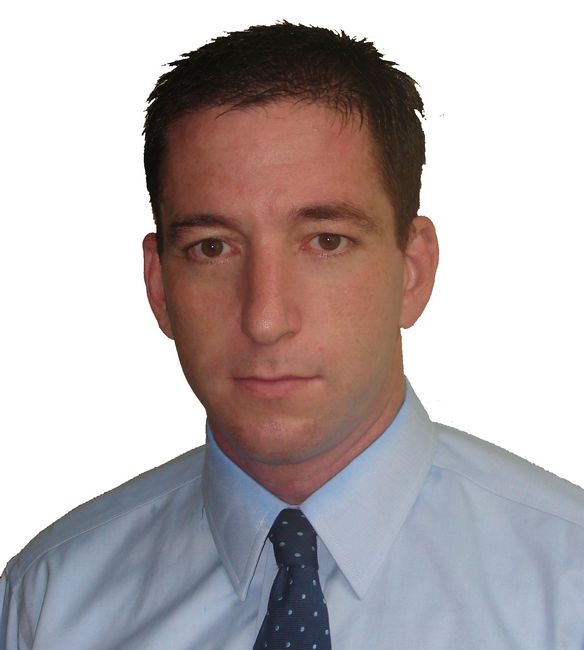 MEDIA ROOTS — As we look back on 2011, we feature an important and relevant interview many may have missed with Glenn Greenwald on a myriad of topics including the Occupy Movement,
  MEDIA ROOTS — Felipe
Messina of Media Roots speaks with Vaquous of Occupy Montreal to get an
international perspective of the global Occupy Wall Street Movement, find out
what Canadians are saying and doing as they participate, and what lessons they
can share with their international counterparts about what can be done toward
socioeconomic justice through collective action and the taking of the public
square around the world, physically and digitally.
MEDIA ROOTS — Felipe
Messina of Media Roots speaks with Vaquous of Occupy Montreal to get an
international perspective of the global Occupy Wall Street Movement, find out
what Canadians are saying and doing as they participate, and what lessons they
can share with their international counterparts about what can be done toward
socioeconomic justice through collective action and the taking of the public
square around the world, physically and digitally. MEDIA ROOTS — As
big banks inject record amounts of
MEDIA ROOTS — As
big banks inject record amounts of 