Theft of Funds – $6.6 Billion Missing in Iraq

RAW STORY– Approximately $6.6 billion in cash was likely stolen after being flown to Iraq during the months that followed the U.S.-led invasion, Pentagon officials said recently.
Stuart Bowen, the U.S. Special Inspector General for Iraq Reconstruction, told The Los Angeles Times that the sum just might be “the largest theft of funds in national history.”

The cash was part of a series of shipments totaling more than $12 billion, taken largely from the U.N. “oil-for-food” program and the sales of Iraqi oil. Officials in the Bush administration had hoped the massive pallets of cash would help calm Iraq’s civilian population following the chaotic and violent invasion and toppling of Saddam.

The funds — which were separate from a $53 billion appropriation Congress approved for Iraqi reconstruction efforts — were cobbled together by the Federal Reserve Bank of New York before being flown to Baghdad and distributed to interim Iraqi ministers, who U.S. officials see as the most likely culprits in the theft: an allegation that’s not officially been leveled.

Read the full article about Billions Missing in Iraq May Be ‘Largest Theft of Funds in National History’.

© 2011 Raw Story

Photo by Flickr user

Former Gov Insider: 9/11 Was an Inside Job

Podcast Show #45 – The Boiling Frogs Presents Paul Craig Roberts

“Paul Craig Roberts joins us to discuss the September 11 terrorist attacks as the defining event of our time, which has launched our nation on interminable wars of aggression, a domestic police state where the American President is a Caesar and completely above the law. He describes the US corporate media’s role today, which is to serve the government and the interest groups that empower the government, their astonishing blackout on legitimate investigations regarding 9/11 such as the investigation results supported by more than 1500 architects, and how currently the majority of Americans are ruled by propaganda and with little regard for truth and little access to it. Mr. Roberts talks about the conflicting, ever-changing and in many ways dubious accounts of the killing of Osama Bin Laden, the Military Industrial Complex’ need for the next ‘black hat,’ the question of China, and more!

http://www.boilingfrogspost.com/podpress_trac/web/3802/0/BF.0045.Roberts…

Paul Craig Roberts is a former Assistant Secretary of the US Treasury and former associate editor of the Wall Street Journal. He has been reporting on executive branch and cases of prosecutorial abuse for two decades. He has written or co-written eight books, contributed chapters to numerous books, and has published many articles in journals of scholarship. A new edition of his book, The Tyranny of Good Intentions, co-authored with Lawrence Stratton, a documented account of how Americans lost the protection of law, has been released by Random House. Mr. Roberts has testified before congressional committees on 30 occasions on issues of economic policy, and has been a critic of both Democratic and Republican administrations. His writings frequently appear on OpEdNews, Prisonplanet.com, Antiwar.com, Lew Rockwell’s web site, CounterPunch, and the American Free Press.”

Photo of Abby Martin in SD 9/11 Truth march, Balboa Park

US Intensifies Secret Yemen Airstrike Campaign

NY TIMES– The Obama administration has intensified the American covert war in Yemen, exploiting a growing power vacuum in the country to strike at militant suspects with armed drones and fighter jets, according to American officials.

The acceleration of the American campaign in recent weeks comes amid a violent conflict in Yemen that has left the government in Sana, a United States ally, struggling to cling to power. Yemeni troops that had been battling militants linked to Al Qaeda in the south have been pulled back to the capital, and American officials see the strikes as one of the few options to keep the militants from consolidating power.

On Friday, American jets killed Abu Ali al-Harithi, a midlevel Qaeda operative, and several other militant suspects in a strike in southern Yemen. According to witnesses, four civilians were also killed in the airstrike. Weeks earlier, drone aircraft fired missiles aimed at Anwar al-Awlaki, the radical American-born cleric who the United States government has tried to kill for more than a year. Mr. Awlaki survived.

The recent operations come after a nearly year-long pause in American airstrikes, which were halted amid concerns that poor intelligence had led to bungled missions and civilian deaths that were undercutting the goals of the secret campaign.

Read full article on US Intensifying a Secret Campaign of Yemen Airstrikes.

©2011 NY Times

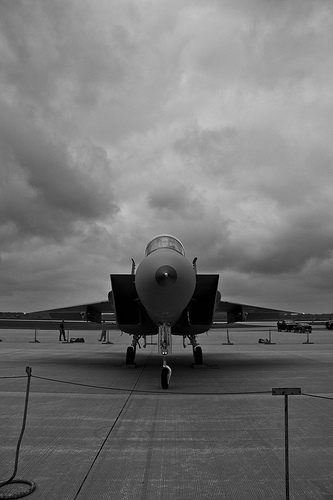
Photo by flickr user NicStage-F15

Fears of a Corporate Police State

SALON– “Corporate Police State,” it’s a fraught — some might even say, overwrought — term. But in its purest, apolitical form, it simply describes the periodic commingling of state and corporate power to protect private interests.

In the American psyche, any discussion of that phenomenon typically brings one of three images to mind. There’s the Old Corporate Police State — the sepia-toned America of decades long past, a place where state militias murder striking mine workers on behalf of Gilded Age barons and Congress empowers the government to forcibly ban work stoppages that defy corporate executives’ wishes. There’s the Fictional Future Corporate Police State — that smoldering bombed-out world depicted in “Robocop,” “Fortress” and every other dystopian flick in Hollywood’s post-apocalyptic catalog. And there’s the Foreign Corporate Police State — think Dubai, Singapore, Monaco and every other lavish enclave defined by lots of rich people, lots of corporate headquarters, lots of heavily armed cops — and almost no civil liberties.

By imagining the Corporate Police State primarily as a historical, fictional or foreign monster, these snapshots encourage us to believe that this monster poses no threat to us in the here and now. They encourage us, in other words, to ignore the monster’s creeping advances in present-day America.

In just the last few years, the Corporate Police State has reared its head at every level of government.

Read the full article about Fears of a Corporate Police State.

©2011 Salon

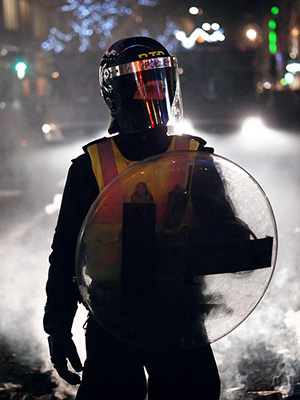
Photo by Flickr user hozinja

Obama Strikes Out on Global Warming

SALON– In our globalized world, old-fashioned geography is not supposed to count for much: mountain ranges, deep-water ports, railroad grades — those seem so nineteenth century. The earth is flat, or so I remember somebody saying.

But those nostalgic for an earlier day, take heart. The Obama administration is making its biggest decisions yet on our energy future and those decisions are intimately tied to this continent’s geography. Remember those old maps from your high-school textbooks that showed each state and province’s prime economic activities? A sheaf of wheat for farm country? A little steel mill for manufacturing? These days in North America what you want to look for are the pickaxes that mean mining, and the derricks that stand for oil.

There’s a pickaxe in the Powder River Basin of Montana and Wyoming, one of the world’s richest deposits of coal. If we’re going to have any hope of slowing climate change, that coal — and so all that future carbon dioxide — needs to stay in the ground. In precisely the way we hope Brazil guards the Amazon rainforest, that massive sponge for carbon dioxide absorption, we need to stand sentinel over all that coal.

Doing so, however, would cost someone some money. At current prices the value of that coal may be in the trillions, and that kind of money creates immense pressure. Earlier this year, President Obama signed off on the project, opening a huge chunk of federal land to coal mining. It holds an estimated 750 million tons worth of burnable coal. That’s the equivalent of opening 300 new coal-fired power plants. In other words, we’re talking about staggering amounts of new CO2 heading into the atmosphere to further heat the planet.

As Eric de Place of the Sightline Institute put it, “That’s more carbon pollution than all the energy — from planes, factories, cars, power plants, etc. — used in an entire year by all 44 nations in Central America, South America, and the Caribbean combined.”Not what you’d expect from a president who came to office promising that his policies would cause the oceans to slow their rise.

But if Obama has admittedly opened the mine gate, it’s geography to the rescue. You still have to get that coal to market, and “market” in this case means Asia, where the demand for coal is growing fastest. The easiest and cheapest way to do that — maybe the only way at current prices — is to take it west to the Pacific where, at the moment, there’s no port capable of handling the huge increase in traffic it would represent.

And so a mighty struggle is beginning, with regional groups rising to the occasion. Climate Solutions and other environmentalists of the northwest are moving to block port-expansion plans in Longview and Bellingham, Washington, as well as in Vancouver, British Columbia. Since there are only so many possible harbors that could accommodate the giant freighters needed to move the coal, this might prove a winnable battle, though the power of money that moves the White House is now being brought to bear on county commissions and state houses. Count on this: it will be a titanic fight.

Read the full article about Obama Strikes Out on Global Warming.

© 2011 Salon

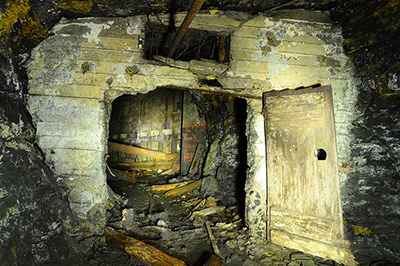
Photo by Flickr group Abandoned Mines