Media Roots Interview with Ralph Nader

MEDIA ROOTS- Abby Martin of Media Roots talks to political activist and former presidential candidate Ralph Nader about Project Censored, the landscape of media censorship, the establishment co-opting of the tea party, the two party dictatorship in the US, Obama’s exacerbation of Bush era policies and the recent assassination of Anwar al-Awlaki. [Transcript Below]

Ralph Nader sits down to speak with Media Roots.

Abby Martin:  “Ralph, thanks so much for taking the time. 
 
Ralph Nader:  “Great.”
 
Abby Martin:  “Why do you support Project Censored?  I know that their, last year’s, book was on your essential reading list.  Why?”
 
Ralph Nader:  “Because Project Censored focuses on the courageous media that publishes articles that the mass media doesn’t cover.  And it does it in a very clear way.  And the selection process, I think, has been pretty effective.  They take really important subjects that are censored out by the networks or the major newspapers and they find it being covered, say, in Mother Jones or Multinational Monitor or Nation magazine and they highlight it.  So, it’s a memorable way to show how much censorship there is, still, in the media because these topics that they select are extremely important ones.  They’re not marginal trivial matters.”
 
Abby Martin:  “Do you think media censorship is more of a problem now than ever before?”
 
Ralph Nader:  “Well, in some ways there’s more disclosure and reporting because of the internet, because of the blogs, and the websites, and the world-wide range, like if you can’t find the story reported in the U.S., you get it from The Guardian or the independent newspapers or, you know, some newspaper abroad.  Or you see it on Al Jazeera.  So, in that sense it’s better than the past.  In the second, though, there’s far more censorship of citizen activity trying to do something about the very revelations that are reported in the newspapers.  So, you get great feature stories that are Pulitzer Prize-winning in The New York Times or The Washington Post and The Wall Street Journal; and then when people rally or march or file lawsuits or give testimony about the very abuses that these papers have exposed they don’t cover it, the citizen efforts.  That is worse, by far.  For example, we used to be able to get on the Phil Donohue Show; there’s no more Phil Donahue Show.  He opened the door for the women’s movement, the consumer movement, the environmental movement, the displaced worker movement like no one before with a huge audience of eight million people.  And nothing has replaced him since he closed down in 1996.  We used to get on Mike Douglas and Merv Griffin Shows.  They were largely entertainment shows, but they felt a responsibility to devote maybe ten, fifteen percent of their time to serious activities going on.  They, of course, have been replaced by these sadomasochistic shows that are on afternoon daily TV.  So, things are really going down.  A lot of seasoned reporters have been laid off.  Or that their contract has been bought out.  And, so, that memory and experience is not doing much.  Then you have the embedded journalists.  You know?  Can you imagine being an embedded journalist in Iraq or Afghanistan?  That’s another way of saying, ‘Oh, we’re muzzled journalists.’  So, they’re missing all kinds of major stories and, with the budget cuts for the mass media, there’s less foreign bureaus, less reporters in bureaus in the United States for these big newspapers and television networks.  So, that, all those represent a real decay in the mass media.”
 
Abby Martin:  “Absolutely.  One of the things Project Censored talks about is ‘framing’ and that’s a really crucial aspect of censorship that people don’t really realise is censorship.  And I wanted you to speak, I know that you spoke about this in your talk [here at The Hillside Club in Berkeley], but I wanted you to speak about the framing of how the media portrays elections and that whole false dichotomy of the lesser-of-two-evils, um, basically we’re fear-mongered into voting against our interests.  And I just wanted you to speak about that, even though you did already, just, you know, something that you can say just ‘cos it is, it’s infuriating.  [Chuckles.]  I know that you’re probably…”
 
Ralph Nader:  “Yeah, well, framing is…
 
Abby Martin:  “…used…”
 
 Ralph Nader:  “…is a way of excluding.  Let’s face it.  I mean, if they ‘frame’ the Israeli-Palestinian conflict in terms of pro-Israeli, then they slaughter in Gaza, and its precedence and the fact that it was  Israelis that broke the truce, uh, and, and had a continuing embargo, uh, it would’ve been a completely different reporting…”
 
Abby Martin:  “Right.”
 
Ralph Nader:  “…situation.  And, and, that’s true in terms of covering the Pentagon, covering the predatory seizure of our natural resources on Federal lands, which belong to us, or a whole host of subjects that simply are not covered.  For example, the stealing of, from the health care expenditures, it’s about $250 billion dollars out of a $2.7 trillion dollars.  That’s $250 billion, with a ‘b.’  And there’s a professor at Harvard, he’s documented this.  His name is Malcolm Sparrow and he’s the world authority on this and he’s been a consultant on this to various states and federal agencies.  He’s almost never interviewed by the public, eh, the newspapers or by the TV.  And he’s a great source.  That amount of money would cover the uninsured.  And every year it’s $250 billion dollars.  So…”
 
Abby Martin:  “It’s called shared sacrifice.  Come on, we all need to cut expenses, except the Defense, of course.”
 
Ralph Nader:  “Yeah.  No, this is an oligarchy and a plutocracy, you know?  Pick your word.  And that infects the media, ‘cos the media, the mass media is a conglomerate of corporations.  And six or seven now control the bulk of TV, radio, uh, magazine, newspaper circulation.  When Ben Bagdikian did his first study over 25 years ago it was about 50 media corporations that had that ratio of control.  It’s down to about six now.  So, you see where it’s going.  And that’s why Fox News has such a influence.  And that’s why the Dow Jones has, because they get a bigger, bigger share by fewer and fewer corporations serving their investments.  I mean, they’re out for profits.  When the Wall Street Journal does all these editorials, always against consumer protection, against civil justice, tort system, against, uh, fear of taxation.  Nobody has, ever says, ‘hey, these Wall Street Journal editorials, they’re not so more than servicing the page after page of corporate advertising in their newspaper!’  Why give them any credibility at all?”
 
Abby Martin:  “Right.  Exactly.  And one of the stories in this year’s book is about the Tea Party and the ‘astro-turfing’ of what happened in this.  And it, kind of, just goes along with the whole thing that you, you know, there was a question in the audience, ‘oh, I just hate these Tea-baggers.’  It’s the fear that, that prevents people from really voting with their heart and from what they really want to make happen.  And you see the Tea Party was just totally co-opted and ‘astro-turfed,’ it’s not even really real.  There’s no substance there.  Um, and, yeah, I really liked what you said about, you know, both parties will get worse if you keep doing that.  And I was wondering if you could, maybe, just elaborate on, on why you said that.”
 
Ralph Nader:  “Well, the Tea Party started out as, sort of, spontaneously, and there were a lot of different parts to it.  There were Libertarians.  There were conservatives.  There were the corporatists.  There were the militarists.  Whatever reason.  Then, it was hijacked.  And, it’s really interesting how it happened because first it was influenced in numbers, hugely exaggerated.  They really couldn’t turn out that many people.  Especially, since they had their own television network every day pushing it, the Fox Network.  So, the Washington Post wrote an article saying there wasn’t more than three hundred thousand people who had any kind of membership in these Tea Party organisations all over the country.  So, it was hijacked because the brand name, corporatist wing of the Republican Party figured, ‘hey,’ you know, ‘this is the trademark, politically, de jour, grab it, it’s valuable!’  And, so, it’s really the wing of the Republican Party that has hijacked the Tea Party brand and appropriated this exaggerated aura, whose balloon has now been punctured by vigorous investigative reporting.  And you know, in Washington, as they say, ‘perception is reality,’ even though it doesn’t reflect any force of numbers out there in the country.  So, the Tea Party now is the conservative, corporatist wing of the Democratic, excuse me, the Tea Party now is the resurgence of the conservative, largely non-Libertarian, wing of the Republican Party.  And it’s ensconced in Congress.” 
 
Abby Martin:  “We interviewed Mike Gravel a couple weeks ago and he was just talking about, you know, during the 2008 Election.  He felt like the game was rigged.  He wasn’t allowed on the MSNBC or NBC debates because of GE.  How do you feel about candidates who, you know, you try so hard to get in there and the game’s rigged all along?  The establishment won’t let you.  They’ll faze you out.  And we saw what happened to you in 2000 and 2004 when people, still, to this day, ‘Ralph Nader cost the Election,’ when, really, there was widespread voter fraud that no one really followed up on, even though it was very blatant.  And Greg Palast did a great report on it.  It’s just, it’s just amazing that those talking points are still perpetuated and, um, that the game is really rigged.  I was wondering if you could talk about that.”
 
Ralph Nader:  “Well, Mike Gravel, he got on the debates early on.”   
 
 
Abby Martin:  “Yeah.”
 
Ralph Nader:  “But he tried to wing it too much.  If he raised enough money just to have an office in Des Moines or an office in New Hampshire, by the rules of the Democratic Primary, they couldn’t have excluded him.  So, he could’ve lasted a little longer and maybe got a foothold, so as to get at least as much attention as Ron Paul did, who spent time trying to raise money.  Mike Gravel has a very good proposal, but he thinks, has legs on no money.”
 
Abby Martin:  “Right.  Well, do you think the game is rigged?”
 
Ralph Nader:  “Well, of course.”
 
Abby Martin:  (laughs)
 
Ralph Nader:  “Two-party dictatorship, completely rigged, right down to the Presidential Debate Commission, which is a fancy phrase for a private corporation created in 1987 by the Republican and Democratic parties to get rid of the League of Women Voters, which supervised Presidential Debates up to then, and to exclude anyone who they think should not reach tens of millions of Americans.”
 
Abby Martin:  “How do we get people out of this paradigm that they’re living in where they need to do one or the other when both mirror each other?
 
Ralph Nader:  “Well, they have to do what no one can stop them from doing.  That is vote their belief and conscience.  Don’t go tactical and vote for least worst.  And every four years both parties get worse.  And get out and march and demonstrate.  That’s the first rampart, uh, that get’s attention and gets more and more people on board.  And last I learned about our system, they can’t stop you from marching and demonstrating in front of the right buildings and the right places at the right time all over the country in ever greater numbers.”
 
Abby Martin:  “Civil disobedience at the, I love Cornel West, kind of turnaround on that.  And I know I  said that was my last question, but I wanted you, really quickly, I just remembered, I mean as it’s still relevant that al-Awlaki assassination, you were talking about Obama’s exacerbation of a lot of Bush’s foreign policy.  And this is, I mean, is this, you’ve been in politics for a long time, is this open kind of accepted assassination now of American citizens, is this kind of par for the course, is this just playing the game of politics, or is this kind of an unprecedented thing that we should be standing up and saying…”
 
Ralph Nader:  “Well…”
 
Abby Martin:  “…‘what’s going on?’”
 
Ralph Nader:  “…President Obama, who is a Constitutional lecturer, has just torn up another part of the Constitution.  He now believes in summary execution of suspects, even American citizens, which violates the due process of law guaranteed by our Constitution.  That is an impeachable offence.  And that should be a issue in the Campaign.  He has made Bush look modest in terms of his aggressiveness abroad.  And he’s, Obama is doing exactly what he said he was gonna do.  That he thinks he can send the armed forces anywhere in the world irrespective of international law, U.N. Charter, national sovereignties, kill, injure, and crush anything that he, as prosecutor, judge, jury, and executioner, thinks needs to be destroyed.  That is about as radical and anti-American [a] position, given the founders of our Constitution and our Constitutional heritage, as can be imagined.  It was done by an expert in Constitutional Law, the former President of the Harvard Law Review, and a Black American.  We better get worried.”
 
Abby Martin:  “Absolutely. Thank you so much, Ralph.”

***

MR: Ralph, thanks so much for taking the time.  

Ralph Nader: Great.

MR: Why do you support Project Censored?  I know that their, last year’s, book was on your essential reading list.  Why?

Ralph Nader:  Because Project Censored focuses on the courageous media that publishes articles that the mass media doesn’t cover.  And it does it in a very clear way.  And the selection process, I think, has been pretty effective.  They take really important subjects that are censored out by the networks or the major newspapers and they find it being covered, say, in Mother Jones or Multinational Monitor or Nation magazine and they highlight it.  So, it’s a memorable way to show how much censorship there is, still, in the media because these topics that they select are extremely important ones.  They’re not marginal trivial matters.

MR: Do you think media censorship is more of a problem now than ever before?

Ralph Nader:  Well, in some ways there’s more disclosure and reporting because of the internet, because of the blogs, and the websites, and the world-wide range, like if you can’t find the story reported in the U.S., you get it from The Guardian or the independent newspapers or, you know, some newspaper abroad.  Or you see it on Al Jazeera.  So, in that sense it’s better than the past.  In the second, though, there’s far more censorship of citizen activity trying to do something about the very revelations that are reported in the newspapers.  So, you get great feature stories that are Pulitzer Prize-winning in The New York Times or The Washington Post and The Wall Street Journal; and then when people rally or march or file lawsuits or give testimony about the very abuses that these papers have exposed they don’t cover it, the citizen efforts.  That is worse, by far.  

For example, we used to be able to get on the Phil Donahue Show; there’s no more Phil Donahue Show.  He opened the door for the women’s movement, the consumer movement, the environmental movement, the displaced worker movement like no one before with a huge audience of eight million people.  And nothing has replaced him since he closed down in 1996.  We used to get on Mike Douglas and Merv Griffin Shows.  They were largely entertainment shows, but they felt a responsibility to devote maybe ten, fifteen percent of their time to serious activities going on.  They, of course, have been replaced by these sadomasochistic shows that are on afternoon daily TV.  So, things are really going down.  A lot of seasoned reporters have been laid off.  Or that their contract has been bought out.  And, so, that memory and experience is not doing much.  

Then you have the embedded journalists.  You know?  Can you imagine being an embedded journalist in Iraq or Afghanistan?  That’s another way of saying, ‘Oh, we’re muzzled journalists.’  So, they’re missing all kinds of major stories and, with the budget cuts for the mass media, there’s less foreign bureaus, less reporters in bureaus in the United States for these big newspapers and television networks.  So, that, all those represent a real decay in the mass media.

MR: Absolutely.  One of the things Project Censored talks about is ‘framing’ and that’s a really crucial aspect of censorship that people don’t really realise is censorship.  And I wanted you to speak, I know that you spoke about this in your talk [here at The Hillside Club in Berkeley], but I wanted you to speak about the framing of how the media portrays elections and that whole false dichotomy of the lesser-of-two-evils, um, basically we’re fear-mongered into voting against our interests.  And I just wanted you to speak about that, even though you did already, just, you know, something that you can say just ‘cos it is, it’s infuriating. 

Ralph Nader:  Yeah, well, framing is a way of excluding.  Let’s face it.  I mean, if they ‘frame’ the Israeli-Palestinian conflict in terms of pro-Israeli, then they slaughter in Gaza, and its precedence and the fact that it was  Israelis that broke the truce, uh, and, and had a continuing embargo, uh, it would’ve been a completely different reporting situation.  

And, and, that’s true in terms of covering the Pentagon, covering the predatory seizure of our natural resources on Federal lands, which belong to us, or a whole host of subjects that simply are not covered.  For example, the stealing of, from the health care expenditures, it’s about $250 billion dollars out of a $2.7 trillion dollars.  That’s $250 billion, with a ‘b.’  

And there’s a professor at Harvard, he’s documented this.  His name is Malcolm Sparrow and he’s the world authority on this and he’s been a consultant on this to various states and federal agencies.  He’s almost never interviewed by the public, eh, the newspapers or by the TV.  And he’s a great source.  That amount of money would cover the uninsured.  And every year it’s $250 billion dollars.  

MR: It’s called shared sacrifice.  Come on Ralph, we all need to cut expenses, except the Defense, of course.

Ralph Nader:  Yeah.  No, this is an oligarchy and a plutocracy, you know?  Pick your word.  And that infects the media, ‘cos the media, the mass media is a conglomerate of corporations.  And six or seven now control the bulk of TV, radio, uh, magazine, newspaper circulation.  When Ben Bagdikian did his first study over 25 years ago it was about 50 media corporations that had that ratio of control.  It’s down to about six now.  So, you see where it’s going.  And that’s why Fox News has such a influence.  And that’s why the Dow Jones has, because they get a bigger, bigger share by fewer and fewer corporations serving their investments.  I mean, they’re out for profits.  When the Wall Street Journal does all these editorials, always against consumer protection, against civil justice, tort system, against, uh, fear of taxation.  Nobody has, ever says, ‘hey, these Wall Street Journal editorials, they’re not so more than servicing the page after page of corporate advertising in their newspaper!’  Why give them any credibility at all?

MR: Right.  Exactly.  And one of the stories in this year’s book is about the Tea Party and the ‘astro-turfing’ of what happened in this. And it, kind of, just goes along with the whole thing that you, you know, there was a question in the audience, ‘oh, I just hate these Tea-baggers.’  It’s the fear that, that prevents people from really voting with their heart and from what they really want to make happen.  And you see the Tea Party was just totally co-opted and ‘astro-turfed,’ it’s not even really real.  There’s no substance there. I really liked what you said about, you know, both parties will get worse if you keep doing that.  And I was wondering if you could, maybe, just elaborate on, on why you said that.

Ralph Nader: Well, the Tea Party started out as, sort of, spontaneously, and there were a lot of different parts to it.  There were Libertarians.  There were conservatives.  There were the corporatists.  There were the militarists.  Whatever reason.  Then, it was hijacked.  And, it’s really interesting how it happened because first it was influenced in numbers, hugely exaggerated.  They really couldn’t turn out that many people.  Especially, since they had their own television network every day pushing it, the Fox Network.  So, the Washington Post wrote an article saying there wasn’t more than three hundred thousand people who had any kind of membership in these Tea Party organisations all over the country.  

So, it was hijacked because the brand name, corporatist wing of the Republican Party figured, ‘hey,’ you know, ‘this is the trademark, politically, de jour, grab it, it’s valuable!’  And, so, it’s really the wing of the Republican Party that has hijacked the Tea Party brand and appropriated this exaggerated aura, whose balloon has now been punctured by vigorous investigative reporting.  And you know, in Washington, as they say, ‘perception is reality,’ even though it doesn’t reflect any force of numbers out there in the country.  So, the Tea Party now is the conservative, corporatist wing of the Democratic, excuse me, the Tea Party now is the resurgence of the conservative, largely non-Libertarian, wing of the Republican Party.  And it’s ensconced in Congress.

MR: We interviewed Mike Gravel a couple weeks ago and he was just talking about, you know, during the 2008 Election.  He felt like the game was rigged.  He wasn’t allowed on the MSNBC or NBC debates because of GE.  How do you feel about candidates who try so hard to get in there and the game’s rigged all along?  The establishment won’t let you.  They’ll phase you out.  And we saw what happened to you in 2000 and 2004 when people, still, to this day, ‘Ralph Nader cost the Election,’ when, really, there was widespread voter fraud that no one really followed up on, even though it was very blatant.  And Greg Palast did a great report on it.  It’s just, it’s just amazing that those talking points are still perpetuated and that the game is really rigged.  I was wondering if you could talk about that.

Ralph Nader:  Well, Mike Gravel, he got on the debates early on. But he tried to wing it too much.  If he raised enough money just to have an office in Des Moines or an office in New Hampshire, by the rules of the Democratic Primary, they couldn’t have excluded him. So, he could’ve lasted a little longer and maybe got a foothold, so as to get at least as much attention as Ron Paul did, who spent time trying to raise money.  Mike Gravel has a very good proposal, but he thinks, has legs on no money.

MR: Right.  Well, do you think the game is rigged?

Ralph Nader:  Well, of course. Two-party dictatorship, completely rigged, right down to the Presidential Debate Commission, which is a fancy phrase for a private corporation created in 1987 by the Republican and Democratic parties to get rid of the League of Women Voters, which supervised Presidential Debates up to then, and to exclude anyone who they think should not reach tens of millions of Americans.

MR: How do we get people out of this paradigm that they’re living in where they need to do one or the other when both mirror each other?

Ralph Nader:  Well, they have to do what no one can stop them from doing.  That is vote their belief and conscience.  Don’t go tactical and vote for least worst.  And every four years both parties get worse.  And get out and march and demonstrate.  That’s the first rampart, uh, that get’s attention and gets more and more people on board.  And last I learned about our system, they can’t stop you from marching and demonstrating in front of the right buildings and the right places at the right time all over the country in ever greater numbers.

MR: Civil disobedience at the, I love Cornel West, kind of turnaround on that.  And I know I  said that was my last question, but I wanted you, really quickly, I just remembered, I mean as it’s still relevant that al-Awlaki assassination, you were talking about Obama’s exacerbation of a lot of Bush’s foreign policy.  And this is, I mean, is this, you’ve been in politics for a long time, is this open kind of accepted assassination now of American citizens, is this kind of par for the course, is this just playing the game of politics, or is this kind of an unprecedented thing that we should be standing up and saying what’s going on?

Ralph Nader:  President Obama, who is a Constitutional lecturer, has just torn up another part of the Constitution.  He now believes in summary execution of suspects, even American citizens, which violates the due process of law guaranteed by our Constitution.  That is an impeachable offence.  And that should be a issue in the Campaign.  He has made Bush look modest in terms of his aggressiveness abroad.  And he’s, Obama is doing exactly what he said he was gonna do.  That he thinks he can send the armed forces anywhere in the world irrespective of international law, U.N. Charter, national sovereignties, kill, injure, and crush anything that he, as prosecutor, judge, jury, and executioner, thinks needs to be destroyed.  That is about as radical and anti-American [a] position, given the founders of our Constitution and our Constitutional heritage, as can be imagined.  It was done by an expert in Constitutional Law, the former President of the Harvard Law Review, and a Black American.  We better get worried.

MR: Absolutely. Thank you so much, Ralph.

***
MR Exclusive – Meet the Precariat

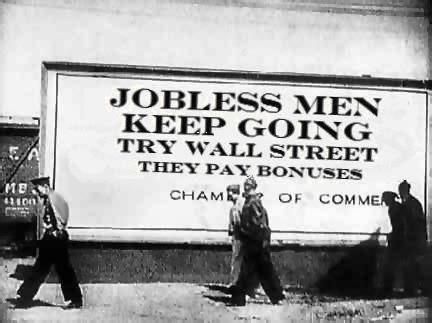
MEDIA ROOTS- Obama’s jobs bill amounts to nothing more than a prop that his apologists will use to promote his re-election. His progressive critics, on the other hand, will bemoan its inadequacy, as they demand an FDR-like program of direct governmental employment. And so the sorry spectacle we have witnessed for the past several years will continue, all leading nowhere. Or rather, leading to further dire consequences for tens of millions.

The problem we face isn’t unemployment. The problem is that people are broke and the solution isn’t jobs, but income. With direct payments to all citizens, the government would at least begin to address the deeper problem of generalized insecurity, of which joblessness is simply one manifestation.

Enlightened government policy of this sort won’t be announced at a White House press conference. But is it delusional to contemplate revolutionary social change? Degenerating social conditions adversely affect a majority of citizens, and what is the response – to chase after neo-liberal illusions? Or to fund social entrepreneurs? Or to work towards change that addresses, without the constrictions of ideology, our real needs?

We are facing a bewildering set of catastrophes: climate change, resource depletion, and worldwide economic meltdown. It is no wonder that we are all uncertain where to start and what to support. However, if we can meet our basic needs won’t we be able to contend with all the other problems? It doesn’t take a Marxist to whisper in our ear that we are in the midst of a class struggle – we are not a country of fools some outside our borders think we are. We all understand the role of the rich who in pursuit of their gain undermine our survival. 

One hundred years ago the average person knew this too, but the difference between our great grandparents and us is that they saw the power of ordinary working people putting down tools and striking, sometimes winning and sometimes smashed by the armed might of the capitalists – the State. During the Great Depression ordinary people began taking control of their circumstances; some created combative unemployed councils that organized local, collaborative economies (California had hundreds of these groups) and others occupied factories threatening the bosses’ control and spurring FDR to legalize unions to prevent revolutionary turmoil.

Obviously, we do not live in such heady times. Who will replace the workers who once toiled in those now abandoned factories scattered across the country? The pivotal role played by the old working class finds no equivalent in our age of permanent unemployment. Is it possible for the solidarity of a previous age, based on hope and resistance, but founded on a shared commonality, to be resuscitated by recognizing our generalized insecurity? Could this become the motivating force for social change hidden in plain sight?

What unites immigrants, students, the unemployed, the semi-employed in temporary and part-time jobs and all of us in jobs who face speed-ups, downsizing and off shoring? In Europe a name exists for those in this situation of precariousness: the precariat. A dissident academic, Guy Standing, has just written a thorough examination of this new class: The Precariat: The New Dangerous Class. The precariat is dangerous because, so far, its fears have only been addressed by the demagogic Right – the neo-fascists in Europe and the Tea Party in the US.

According to Standing, this new class has a tenuous grip on secure employment, with temporary contracts, no labor protections and no benefits. Or if they have a job, there is no guarantee it will last for years. These conditions lead the precarians to continuously job-hunt as a defensive strategy. They can’t expect to gain job experience as an asset for future employment and, as a consequence, a career with a professional identity fades from their lives.

Neoliberalism’s dogma of flexibility and adherence to market demands creates a centrifugal reality for the individual, destabilizing all aspects of life that define the personality, and that previously led to self-esteem. Values dissolve into attenuated opinions, friendships devolve into text messages, and love detours into pornography. Life hollows out in an endless pursuit of escapism (epitomized by consumerism) and insecurity generates fear of an uncertain future.

Ten years ago in Europe members of the precariat were the chain store workers, but today recent graduates find those jobs are unavailable. All across Europe and the US, the financial sector extracts its homage from governments as a policy of austerity that threatens even the most secure employment of all – government jobs. Can anyone doubt the continuing decline of the old working class, the industrial proletariat, and its succession by a growing mass of fringe workers, immigrants, and unemployables – the precariat? Standing estimates that in the West one-quarter of the population falls into this category, but if only those under thirty years old are counted the category swells to over half, or more. For the young the writing is on the wall, as they all know.

Jobs are scarce and will become even more so as technology continues to replace humans not only in manufacturing, but also increasingly in services. World trends for job creation, at least in the developed world, are discernable and really not contested, and to fly against them with solutions from another era merely demonstrates our inability to imagine another paradigm.

We need to take seriously the proposition that income must be separated from jobs. While this seems absurd in the context of US politics, it received a receptive hearing in the Nixon administration. At that time the fear of growing unemployment and major social unrest, like that seen in all major cities in the late 60s, prompted Washington to introduce a negative income tax to supplement income. Instead of paying taxes, the poor would receive federal funds to stay out of poverty; the federal Earned Income Tax Credit is a lame remnant of that policy. The oligarchs didn’t approve, and at about the same time both the explosive growth of poorly paid service jobs and the rise of the industrial prison complex sidetracked a more humane alternative.

While only a few academics are thinking along these lines in the US, in other parts of the world a basic income has been gaining adherence. The largest program based on this premise is in Brazil, where a modest stipend goes to families so that children can afford schooling. This may be a baby step of a program, but there are proposals to extend it. And other countries more generous benefits are contemplated. Here in the US we have a variation of this idea with the Alaska Permanent Fund that annually pays citizens approximately $1,000 apiece as their benefit from the sale of Alaskan oil.

Most advocates of a guaranteed income premise their program on a yearly subsistence paid to all without qualification, thereby with one program saving billions by ending a multiplicity of government assistance programs. Whether the funds raised for general distribution as income come from a small tax on financial transactions, or whether these funds come from the rent paid by corporations using public resources, or some other scheme or mixture of many sources, the point is that the money can be raised. The obstacle is not an economic issue, but a political one.

The assumption is that the guaranteed income would meet basic needs and be supplemented by employment, which could be part-time or full. If implemented, no one need be tied to a job for a whole year. For the young, in school, travelling, or experimenting with life’s choices, this sum might be sufficient to find meaningful engagement with others. We need to understand that this is not a scheme to avoid work, but to search out fulfillment in work. To in fact, redefine work away from forced labor as it’s conceived by most.

The long-range implications of this transformation of life’s current goal – to search for a job – address the environmental crises we face. How in fact will we contend with a world presented as a jungle, as a struggle to attain scarce resources? The reality of a life without an endless expansion of commodities must be met by transforming our values at some basic levels. The sages of all cultures have told us that we define ourselves by freely associating with others to discover our way of contributing to the commonweal. This is wise advice. We need to be free to follow it.

Bernard Marszalek is editor of The Right to be Lazy: Essays by Paul Lafargue (Kerr/AK Press). He can be reached at [email protected]

Obama: A Candidacy Based on Failed Promises

MEDIA ROOTS- After seeing this pro Obama ‘gangsta’ meme circulating on facebook this morning, we felt the need to provide a quick rebuttal to the alleged accomplishments it touts.

Here’s what I promised again and again to do that I didn’t do:

I didn’t close Guantanamo Bay. Sure, it was a cornerstone of my campaign, but still. Terrorists gonna terrorize.

I didn’t repeal the Bush tax cuts. In fact, I extended them.

I didn’t negotiate the health care reform ideas in public or televised sessions, as promised.

In fact, remember when I said this in 2007? “I will sign a universal health care bill into law by the end of my first term as president that will cover every American” – Yeah, I was just kidding. What we’re going to do instead is force you to BUY insurance, or we’ll fine you – and if you don’t pay that fine, you’ll go to jail.

I didn’t sign the Employee Free Choice act, making it easy for workers to unionize and protect themselves from thug political bullying, like what happened in Wisconsin.

I didn’t forbid companies going into bankruptcy from giving executive bonuses.

I didn’t allow imported prescription drugs to save citizens money.

I didn’t form an international group to help the millions of displaced Iraq refugees who were pushed out of their country because of a decade long bombing campaign for a terrorist act they had nothing to do with.

I didn’t withdraw from Afghanistan– instead I added more troops. In the case of Iraq, I replaced some troops with corporate thugs-for-hire. Now private military contractors make up half of our force in both countries.

I didn’t double funding for afterschool programs, as I repeatedly promised to do.

I didn’t instill tougher rules against lobbyists. In fact, I did the opposite, and even hired a couple for cabinet positions!

I didn’t use any revenue from cap and trade to support clean energy and environmental restoration.

But yeah, I gave the order to kill a guy in Pakistan and dump his body in the ocean mafia style.

And yeah, I gave the order to drop some million dollar missiles in Libya.

And yeah, I bailed out Wall Street with taxpayer money and then offered nothing to the people, while those same swindling fatcats showered one another with “job creation” money – without creating a single fucking job.

Awesome choices we are given by the establishment: choose between hysterical and unthinkably dangerous creationist caricatures or a lying right wing Republican in Democrat’s clothes who solely serves corporate America while breaking off tiny token crumbs in perfect sync with the election cycle. Obama is just Bush with an iPod. And we are duped into thinking that the sliver of hardened shit might turn to gold if we ‘hope’ hard enough.

Written by Johnny Firecloud, Founder, Managing Editor of Antiquiet.com


President Obama’s Lack of Transparency

MEDIA ROOTS- What happened to all that talk about transparency, Mr. President? Oh right, it was all just empty rhetoric. One of the first things Obama did once he elected was promise an “unprecedented level of transparency” in government. He was even given a transparency award which was ironically delivered to him in a private Oval Office ceremony off the public record. However, his administration has exacerbated some of the most egregious policies regarding secrecy and censorship.

The Obama administration has not only prosecuted more whistleblowers than any other president combined. Officials in this administration are also responsible for classifying 77 million documents in 2010—a shocking one-year jump of 40 percent. Furthermore, this cabinet has misguidedly used the Espionage Act in five cases of news media disclosures, when previously there were no more than four in all of White House history.

Abby

***

NEW YORK TIMES– A former top official in charge of ensuring that real secrets are kept secret has delivered a stunning repudiation of the Obama administration’s decision to use the Espionage Act against a whistle-blower attempting to expose government waste and abuse.

J. William Leonard, who directed the Information Security Oversight Office during the George W. Bush administration, filed a formal complaint about the prosecution with the Justice Department and the National Security Agency, and urged punishment of officials who needlessly classify documents that contain no actual secrets.

In the case in question, Thomas Drake, an N.S.A. employee, faced 35 years in prison for espionage after he leaked information to a reporter about a potential billion-dollar computer boondoggle. The case collapsed last month with Mr. Drake walking away after a token misdemeanor plea to providing information to an unauthorized person. The government was deservedly berated by Judge Richard Bennett of Federal District Court in Maryland for an “unconscionable” pursuit of the accused across “four years of hell.”

Prosecutors dropped the felony charges at the 11th hour after Judge Bennett ordered them to show allegedly classified material to the jury. But Mr. Leonard said he was willing to testify for Mr. Drake that there were no secrets at issue and that he had never seen “a more deliberate and willful example of government officials improperly classifying a document.”

The Obama administration has misguidedly used the Espionage Act in five such cases of news media disclosures; previously there were no more than four in all of White House history. This comes as officials classified nearly 77 million documents last year — a one-year jump of 40 percent. The government claim that this was because of improved reporting is not reassuring.

Two years ago, President Obama ordered all agencies to review secret material by June 2012 with a goal of promoting more declassification. Unfortunately, the administration’s emphasis since then has all been in the opposite direction. Treating potentially embarrassing information as a state secret is the antithesis of healthy government.

A former top official in charge of ensuring that real secrets are kept secret has delivered a stunning repudiation of the Obama administration’s decision to use the Espionage Act against a whistle-blower attempting to expose government waste and abuse.
Related in News
J. William Leonard, who directed the Information Security Oversight Office during the George W. Bush administration, filed a formal complaint about the prosecution with the Justice Department and the National Security Agency, and urged punishment of officials who needlessly classify documents that contain no actual secrets.
In the case in question, Thomas Drake, an N.S.A. employee, faced 35 years in prison for espionage after he leaked information to a reporter about a potential billion-dollar computer boondoggle. The case collapsed last month with Mr. Drake walking away after a token misdemeanor plea to providing information to an unauthorized person. The government was deservedly berated by Judge Richard Bennett of Federal District Court in Maryland for an “unconscionable” pursuit of the accused across “four years of hell.”
Prosecutors dropped the felony charges at the 11th hour after Judge Bennett ordered them to show allegedly classified material to the jury. But Mr. Leonard said he was willing to testify for Mr. Drake that there were no secrets at issue and that he had never seen “a more deliberate and willful example of government officials improperly classifying a document.”
The Obama administration has misguidedly used the Espionage Act in five such cases of news media disclosures; previously there were no more than four in all of White House history. This comes as officials classified nearly 77 million documents last year — a one-year jump of 40 percent. The government claim that this was because of improved reporting is not reassuring.
Two years ago, President Obama ordered all agencies to review secret material by June 2012 with a goal of promoting more declassification. Unfortunately, the administration’s emphasis since then has all been in the opposite direction. Treating potentially embarrassing information as a state secret is the antithesis of healthy government.

Read more about Why Is That A Secret?

© 2011 The New York Times

Photo by Flickr user Animation Concept

Fabricating Pretext for NATO “Humanitarian Intervention”

MEDIA ROOTS- After using NATO’s Orwellian “humanitarian bombing” operation as the front for US intervention in Libya, the establishment is narrowing its sight on oil rich Syria next. Already the US and the EU have slapped economic sanctions on the country, citing President Bashar al-Assad’s human rights abuses during Syria’s recent protests. The corporate media is also beginning to ingrain propaganda about Syria’s stockpile of deadly weapons that is reminiscent of the propaganda surrounding the lead up to the Iraq war.

Earlier this month, Russia Today reported that the UN Security Council condemned “the widespread violation of human rights in Syria and the use of force against civilians by the country’s security forces,” while also urging the Damascus authorities to respect human rights and observe international law. “Those responsible for the violence should be held accountable,” the Council said in a presidential statement, the UN official website reports.

A great article by Global Research cuts through the misinformation regarding Syria and lays out some facts that don’t jive with what we are being told about their “democratic uprising”. Instead, reports suggest that the government and corporate press are fabricating a pretext for another NATO led humanitarian intervention in the region. Let’s not forgot that the United States pays the largest percentage of all NATO efforts, and wields the most influence on the shots being called on the grand chessboard.

Abby

***

GLOBAL RESEARCH– There is evidence of gross media manipulation and falsification from the outset of the protest movement in southern Syria on March 17th.

The Western media has presented the events in Syria as part of the broader Arab pro-democracy protest movement, spreading spontaneously from Tunisia, to Egypt, and from Libya to Syria. 

Media coverage has focussed on the Syrian police and armed forces, which are accused of indiscriminately shooting and killing unarmed “pro-democracy” demonstrators. While these police shootings did indeed occur, what the media failed to mention is that among the demonstrators there were armed gunmen as well as snipers who were shooting at both the security forces and the protesters.

The death figures presented in the reports are often unsubstantiated. Many of the reports are “according to witnesses”. The images and video footages aired on Al Jazeera and CNN do not always correspond to the events which are being covered by the news reports.

There is certainly cause for social unrest and mass protest in Syria: unemployment has increased in recent year, social conditions have deteriorated, particularly since the adoption in 2006 of sweeping economic reforms under IMF guidance. The IMF’s “economic medicine” includes austerity measures, a freeze on wages, the deregulation of the financial system, trade reform and privatization.

With a government dominated by the minority Alawite (an offshoot of Shia Islam), Syria is no “model society” with regard to civil rights and freedom of expression. It nonetheless constitutes the only (remaining) independent secular state in the Arab world. Its populist, anti-Imperialist and secular base is inherited from the dominant Baath party, which integrates Muslims, Christians and Druze.

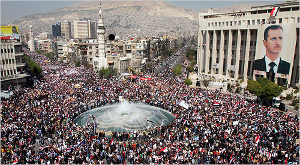
Moreover, in contrast to Egypt and Tunisia, in Syria there is considerable popular support for President Bashar Al Assad. The large rally in Damascus on March 29, “with tens of thousands of supporters” (Reuters) of President Al Assad is barely mentioned. Yet in an unusual twist, the images and video footage of several pro-government events were used by the Western media to convince international public opinion that the President was being confronted by mass anti-government rallies.

The “Epicenter” of the Protest Movement. Daraa: A Small Border Town in southern Syria 

What is the nature of the protest movement? From what sectors of Syrian society does it emanate? What triggered the violence?

What is the cause of the deaths?

The existence of an organized insurrection composed of armed gangs involved in acts of killing and arson has been dismissed by the Western media, despite evidence to the contrary.

The demonstrations did not start in Damascus, the nation’s capital. At the outset, the protests were not integrated by a mass movement of citizens in Syria’s capital.

The demonstrations started in Daraa, a small border town of 75,000 inhabitants, on the Syrian Jordanian border, rather than in Damascus or Aleppo, where the mainstay of organized political opposition and social movements are located. (Daraa is a small border town comparable e.g. to Plattsburgh, NY on the US-Canadian border).

The Associated Press report (quoting unnamed “witnesses” and “activists”) describes the early protests in Daraa as follows:

The violence in Daraa, a city of about 300,000 near the border with Jordan, was fast becoming a major challenge for President Bashar Assad, …. Syrian police launched a relentless assault Wednesday on a neighborhood sheltering anti-government protesters [Daraa], fatally shooting at least 15 in an operation that began before dawn, witnesses said.

At least six were killed in the early morning attack on the alOmari mosque in the southern agricultural city of Daraa, where protesters have taken to the streets in calls for reforms and political freedoms, witnesses said. An activist in contact with people in Daraa said police shot another three people protesting in its Roman-era city center after dusk. Six more bodies were found later in the day, the activist said.

As the casualties mounted, people from the nearby villages of Inkhil, Jasim, Khirbet Ghazaleh and alHarrah tried to march on Daraa Wednesday night but security forces opened fire as they approached, the activist said. It was not immediately clear if there were more deaths or injuries. (AP, March 23, 2011, emphasis added)

The AP report inflates the numbers: Daraa is presented as a city of 300,000 when in fact its population is 75,000; “protesters gathered by the thousands”, “casualties mounted”.

The report is silent on the death of policemen which in the West invariably makes the front page of the tabloids.

The deaths of the policemen are important in assessing what actually happened. When there are police casualties, this means that there is an exchange of gunfire between opposing sides, between policemen and “demonstrators”.

Who are these “demonstrators” including roof top snipers who were targeting the police.

Israeli and Lebanese news reports (which acknowledge the police deaths) provide a clearer picture of what happened in Daraa on March 17-18. The Israel National News Report (which cannot be accused of being biased in favor of Damascus) reviews these same events as follows:

Seven police officers and at least four demonstrators in Syria have been killed in continuing violent clashes that erupted in the southern town of Daraa last Thursday.

…. On Friday police opened fire on armed protesters killing four and injuring as many as 100 others. According to one witness, who spoke to the press on condition of anonymity, “They used live ammunition immediately — no tear gas or anything else.”

…. In an uncharacteristic gesture intended to ease tensions the government offered to release the detained students, but seven police officers were killed, and the Baath Party Headquarters and courthouse were torched, in renewed violence on Sunday. (Gavriel Queenann, Syria: Seven Police Killed, Buildings Torched in Protests, Israel National News, Arutz Sheva, March 21, 2011, emphasis added)

The Lebanese news report, quoting various sources, also acknowledges the killings of seven policemen in Daraa: They were killed “during clashes between the security forces and protesters… They got killed trying to drive away protesters during demonstration in Dara’a”

The Lebanese Ya Libnan report quoting Al Jazeera also acknowledged that protesters had “burned the headquarters of the Baath Party and the court house in Dara’a” (emphasis added)

These news reports of the events in Daraa confirm the following:

1. This was not a “peaceful protest” as claimed by the Western media. Several of the “demonstrators” had fire arms and were using them against the police: “The police opened fire on armed protesters killing four”.

2. From the initial casualty figures (Israel News), there were more policemen than demonstrators who were killed: 7 policemen killed versus 4 demonstrators. This is significant because it suggests that the police force might have been initially outnumbered by a well organized armed gang. According to Syrian media sources, there were also snipers on rooftops which were shooting at both the police and the protesters.

What is clear from these initial reports is that many of the demonstrators were not demonstrators but terrorists involved in premeditated acts of killing and arson. The title of the Israeli news report summarizes what happened: Syria: Seven Police Killed, Buildings Torched in Protests.

The Daraa “protest movement” on March 18 had all the appearances of a staged event involving, in all likelihood, covert support to Islamic terrorists by Mossad and/or Western intelligence. Government sources point to the role of radical Salafist groups (supported by Israel)

Other reports have pointed to the role of Saudi Arabia in financing the protest movement.

What has unfolded in Daraa in the weeks following the initial violent clashes on 17-18 March, is the confrontation between the police and the armed forces on the one hand and armed units of terrorists and snipers on the other which have infiltrated the protest movement.

Reports suggest that these terrorists are integrated by Islamists. There is no concrete evidence as to which Islamic organizations are behind the terrorists and the government has not released corroborating information as to who these groups are.

Both the Syrian Muslim Brotherhood (whose leadership is in exile in the UK) and the banned Hizb ut-Tahrir (the Party of Liberation), among others have paid lip service to the protest movement. Hizb ut Tahir (led in the 1980s by Syrian born Omar Bakri Muhammad) tends to “dominate the British Islamist scene” according to Foreign Affairs. Hizb ut Tahir is also considered to be of strategic importance to Britain’s Secret Service MI6. in the pursuit of Anglo-American interests in the Middle East and Central Asia. (Is Hizb-ut-Tahrir another project of British MI6? | State of Pakistan).

Syria is a secular Arab country, a society of religious tolerance, where Muslims and Christians have for several centuries lived in peace. Hizb utTahrir (the Party of Liberation) is a radical political movement committed to the creation of an Islamic caliphate. In Syria, its avowed objective is to destabilize the secular state.

Since the Soviet-Afghan war, Western intelligence agencies as well as Israel’s Mossad have consistently used various Islamic terrorist organizations as “intelligence assets”. Both Washington and its indefectible British ally have provided covert support to “Islamic terrorists” in Afghanistan, Bosnia, Kosovo and Libya, etc. as a means to triggering ethnic strife, sectarian violence and political instability.

The staged protest movement in Syria is modelled on Libya. The insurrection in Eastern Libya is integrated by the Libya Islamic Fighting Group (LIFG) which is supported by MI6 and the CIA. The ultimate objective of the Syria protest movement, through media lies and fabrications, is to create divisions within Syrian society as well as justify an eventual “humanitarian intervention”.

Read more about Who is Behind The Protest Movement? Fabricating a Pretext for a US-NATO “Humanitarian Intervention”

Written by Prof. Michel Chossudovsky

© 2011 Global Research

Photo by Flickr use gmsampaio