Abby Martin of Media Roots is featured in this RT article and video report.
RUSSIA TODAY– As the scandal over voicemail and phone-hacking by the Murdoch media
empire rages, public and political fury has focused on ruthless tabloids
out of control. But some say in this day and age, the whole concept of
privacy is falling apart.
News International chairman James Murdoch has been accused of trying
to mislead British MPs by saying he was unaware of the true extent of
phone-hacking by reporters. His testimony was challenged by two former
executives, Colin Myler and Tom Crone, who say Murdoch was informed
three years ago that the illegal practice went beyond just one rogue
journalist.
And as the scandal continues to grow, critics believe
the issue is just the tip of the iceberg in a society that no longer
values the privacy of the people.
“Everybody just clicks
through, agreeing to the terms and conditions. Well those terms and
conditions are very, very heavily weighted against you and your privacy
interest,” says Dave Saldana, the communications director of Free Press.
“We
see breaches of privacy by corporations happening all across America,
all across the world really, in every sector. Surveillance is rampant.
But really this is all a microcosm of the biggest surveillor of all –
that is, the state,” journalist Abby Martin believes.
There
is little Americans can do with the state having sweeping access to
their private information – access that followed the 9/11 terrorist
attacks, under a new law known as the Patriot Act.
The privacy of
Hasan Elahi, who is an associate professor at the University of
Maryland, was taken away from him in 2002, when he was detained by the
FBI for absolutely no reason he says, and scrutinized for months,
without charge.
His response? For nine years he has voluntarily
documented nearly every waking hour of his life on the web. He has
subsequently even turned it into an art-form. “These are all the toilets that I’ve used. You know that on Sunday, November, 24, 2007 I used this toilet, for example,” he explained pointing at a wall of pictures on his website.
He
posts copies of every debit card transaction, so you can see what he
bought, where, and when. A GPS device in his pocket reports his
real-time physical location on a map.
Hasan says his extraordinary abandonment of his own privacy stems from the ignorance of the authorities.
“In
fear they decided: ‘well that guy looks like an Arab, so he must be an
Arab. If he’s an Arab them he must have explosives, everyone knows
that.’ That’s the logic where we’re operating. You realize how
ridiculous that logic sounds. But when your own country takes that as
the basis for national policy… Ignorance as the basis of your national
policy is a pretty scary situation. And that’s how I got caught up in
it,” he told RT.
For Hasan, privacy has become a relic of
the past, and he says he’s not surprised that journalists or anyone else
really, would use the same surveillance tactics as the state.
In
that sense, it might be of no surprise that the chief architect of the
Patriot act, the lawyer who put it together, happens to be one of
Murdoch’s hand-picked News Corp board directors. Viet Dinh served as
assistant attorney general in the Bush administration, and was described
by some as the purveyor of the most sweeping curtailment of freedom in
the US since the McCarthy era.
At a time when corporations and
the government can easily hack into people’s private lives, it does not
come as a surprise when social networks give your personal information
to ad companies, or when other industries live off breaching people’s
privacy.
In the US it is so widespread, and people have gotten so
used to it, that Rupert Murdoch seems to be a perfect part of the
system rather than some special villain, whose corporation has been
undertaking some unique unlawful practices.
MEDIA ROOTS- Despite the incessant commercialization of electronic music and increasing accessibility to beat making software, my brother Robbie Martin, AKA Fluorescent Grey, continues to push his musical limits while staying true to his art.
Every album he’s released has been the product of innovative conceptualizations, whether it be constructing songs from sampling the elements of fire and water or combining hertz frequencies to cancel out sounds. His music falls loosely into the genre of IDM (Intelligent Dance Music) akin to the likes of Aphex Twin and Squarepusher, but his versatility and constant exploration into new territory makes him difficult to box into a particular category.
Fluorescent Grey studied audio engineering at Expressions for New Media College in Emeryville where he mastered his technique and production skills. In an effort to remain as independent from the mainstream as possible and not have to cater toward other labels, he then pioneered the creation of Record Label Records, a bay area based record label that now represents a variety of artists worldwide.
Robbie’s non conformity has also led to his involvement with several hoaxes that have caused quite a stir in the musical and political world, including tricking Autechre fans into thinking his album was a leaked copy of Autechre’s Untilted, creating a bogus Myspace page for Aphex Twin’s side project The Tuss, and releasing a fake terrorist beheading video that got him attention from media outlets worldwide as well as a visit from the FBI.
Now, Robbie co-hosts and produces Media Roots Radio, where he incorporates unique vintage electronic music into every broadcast. My brother’s creativity has hugely inspired me in life, and he’s taught me everything I know about music, so it was a great honor to have been able to sit down with him for an in depth interview about his inspiration, his discography, his label, his thoughts on politics and on the future of electronic music.
***
MR: You have been passionate about music ever since you were
young, and you’ve always had a taste for the bizarre. Where
do you think that stems from?
FG: Probably listening to Weird Al Yankovic as a
kid. I remember getting old tapes of his Michael Jackson parodies, one song in
particular that really inspired me was his Devo parody “Dare to be Stupid.” At
the time, I didn’t know it was a parody, it just seemed like a really creative
and weird song. It was him saying all these non sequitur things over really
fast techno music, and I liked the aesthetic combination of that.
Another
song of his was a love ballad done in a 50’s-Doo Wop style, and the lyrics were
about him mutilating himself to get this girl. “I’ll jump in a pool of
razorblades for ya baby” and stuff like that. “Christmas at Ground Zero” was a
gleeful theme of post-apocalyptic nuclear fallout, and “Mr. Frump and the Iron
Lung” was a song where Mr. Frump talks to Weird Al through a disturbing iron
lung sound effect.
Weird Al Yankovic’s “Mr. Frump and the Iron Lung”
FG: Our neighbor gave me
a tape when I was eight that had the songs “Shoehorn with Teeth” by They Might
Be Giants and “Punk Rock Girl” by the Dead Milkmen, and they were both kind of
in a similar vein to Weird Al Yankovic. Those were all awesome, weird songs
that stuck with me as a kid. I remember thinking Shoehorn with teeth in
particular had some kind of double entendre sexual meaning, of course now that
I’m older I know it doesn’t (laughs). Those
songs carried a certain creative energy
to them.
MR: Who are some of your other musical influences early on
and now?
FG: A lot of older hip hop. Slick Rick’s
“La Di Dah” and “Square Dance Rap” by Sir Mix-A-Lot were two songs that were in
a higher echelon of rap music. They went beyond the genre of rap and were just
insanely infectious songs.
Later on, when
I really got into more avant-garde stuff, the main acts that influenced me were
Coil, Zoviet France and Aphex Twin. Aphex Twin was a huge inspiration for me,
but Coil and Zoviet France were more interesting to me at the time because they
were more unpredictable. Especially Coil. Some of their stuff has vocals,
some is just noise, some is totally melodic, and some is classical.
MR: In high school I remember you getting into some really
crazy experimental music where you were playing radio frequency and static
noises that were pretty unbearable to listen to. When did you venture into such
extreme territory?
FG: I think the
turning point for me is when I started making my own music. I wanted to play
guitar in a band, but I was never really good at guitar and could never get
enough friends together with the same musical tastes to form a band. The only
friends that I knew who were good at instruments, well let’s just say their
favorite bands were MxPx, Blink 182 and the Mr. T Experience.
My first exposure to
industrial music was when I heard Nine Inch Nails as a kid, and I was really
inspired by the combination of weird sounds with emotion. I remember hearing “Down In It” on the radio
and then just listening to the Pretty Hate Machine tape all the time. When
NIN’s Downward Spiral came out, I had started doing a lot of music research on
the internet. I think it was around 1994, and there were a lot of resources
online to discuss music with people in different groups.
I found the AOL
usenet section and then the rec.music.industrial news group. The people in it said that Nine Inch
Nails wasn’t real industrial music and they just rip off all these other
bands. They listed other bands like Ministry, Skinny Puppy and Throbbing
Gristle and at the time, it was a really important resource for me because I
didn’t know anyone else who wanted to explore further than NIN.
There was a record store in
Pleasanton of all places called City Records that had an industrial section,
and they let you listen to cds before buying them. I sat on the floor of
City Records and listened to almost the whole duration of Skinny Puppy’s Too Park Park for the first time, it was mesmerizing. Even though I was a little thrown off by Ogre’s
voice at first, I went with it and bought all the Skinny Puppy I could find, eventually landing on Bites and Last Rights as my
two favorites.
The first album that I heard from that
springboard was Zoviet France’s Garista. I remember hearing about Zoviet France
because they (Mark Spbyby specifically) were working with Download and I got
into Download via Skinny Puppy. I bought Garista not knowing it was Zoviet
France’s first CD, and it just sounded like people in a garage banging shit
together, just the most tribal and pure form of music. There were no rules.
There was no studio production or anything, it just sounded like anybody could
do it if they wanted to.
Zoviet France’s “Side B”
FG: It was a really
weird experience for me, because I didn’t understand that someone could just
put something like this out there and people would listen to it. It didn’t fit
into my mental vocabulary. It became really inspiring for me, because I
realized that I don’t have to play the guitar, the drums or be learned in music
theory to make stuff people will enjoy listening to.
MR: Did you start making music by sampling and experimenting
with different sounds that you found around you at the time?
FG: Yeah, it started
with just things I had around the house. One of the first songs I ever made was
with Mike Dunkley, a guy who later came on board as a contributing artist with
Record Label Records. We made a song together when were in middle school that
involved a snoring Santa robot toy. It was Santa in bed snoring, and when you
held his stomach down, it messed up and kept repeating the same sound over and
over. We made a song where we put the snoring through all these computer
effects. Back then we couldn’t afford guitar pedals or effects processors, so
we used the Sound Blaster 16 programs that came with Windows to add echoes and
stuff.
MR: That’s awesome, I remember that toy! I have always
really liked your artist name and have always wanted to know how the hell you
came up with it.
FG: It was a concept
I used to think about a lot as a child- colors that you try to imagine in your
mind that don’t exist. I would get into these weird mind fuck loops as a kid
where I would lie in bed at night wondering if are colors out there can’t see
and don’t exist… what would those look like? It’s just one of those things you
think about as a kid. When highlighter markers hit the market it seemed like
this exciting new technology. I was only five years old or something, but it
was almost magical to me how they were so bright.
MR: We did grow up in the 80s, and there seemed to be a
big fluorescent tone throughout the culture.
FG: Yeah, the
fluorescent tone was definitely a big inspiration. It goes along with the weird
mental fuck loop I would put myself in with the concept of fluorescent colors,
and imagining a color that couldn’t possibly be fluorescent, like fluorescent
grey.
MR:
What was the first official Fluorescent Grey release?
FG:
When I released the first album under the name Fluorescent Grey, I was spelling
Fluorescent F-L-O-R-E-S-C-E-N-T,
which actually means flowery. The first release under that name was called Dirk Furgonson’s Orchestral Rollercoaster of Fun & Challenge and it was a
recording of Aaron Epperson and I jamming in our garage with random shit we had
at the time. We stacked all this stuff into the mic input of a karaoke stereo
system using adapters, splitters and headphones. We didn’t even have a mixer or
anything, just spaghetti cables coming out of a mic jack. The session was
recorded on a 120 minute cassette tape as a limited edition of one.
Amoeba
Records in Berkeley used to allow experimental noise musicians to sell tapes,
so we put ours in the store, but an Amoeba employee bought it before it even
had a chance to sell on the shelves. I think the guy thought it was cool that
some 16-year-old kid was selling their own noise music to the store. Phil
Blankenship aka Lefthanddecision was the guy curating the noise section who
bought the tape. The
next album was called Swiveling Lawn Chairs, and we made it by syncing up
different Fischer Price style turntables with scotch tape patterns so they
would make a repeated rhythm every time the record rotated.
Next,
I tried my hand at doing a minimalist tone album called Twenty to Twenty
Thousand Hertz, influenced by people like Pansonic and Jean-Claude Risset. The
concept was a four CD set with each CD being a 74 minute test tone from 20
hertz to 20,000 hertz over the course of 74 minutes. One of the discs was 20 to
20,000, one was 20,000 to 20 and another was 20,000 to 20 in one channel and 20
to 20,000 in the other channel combined, so at one point in the middle of it
would actually be silent because it was face canceling itself out.
Molten
Ghost was my next release, and is probably my favorite album from this period
of time. It was a culmination of my experimentation on older Windows computer
programs like Cool Edit Pro, Vaz, Audio Mulch, Rebirth- some of it sounds like
modern Mego Records stuff, and I’m pretty proud of it (download or stream Molten Ghost).
Later
on around 2001 I was going to Expressions College for audio, I was listening
Venetian Snares’s Cats, Squarepusher’s Go Plastic and Autechre’s Confield
and Draft. But I never had felt like I was skilled enough in making beats or
programming songs to match the caliber of those artists. It wasn’t until 2002
that I felt like I had learned enough and was ready to take a stab at doing
something more elaborate than what I had been doing, production wise.
That’s
how Lying on the Floor,
Mingling with God in a Tijuana Motel Roomcame about. At
first, it was going to be a rushed album of songs I was working on at the time.
Then I realized I could use the opportunity to embark on a lot of ideas that
I’ve had for years for songs to put on the album. For example, the song made
only from water sounds was a concept I had always wanted to do.
I also wanted
to do a song based entirely around Kabuki theater sounds and a song using
spectral morphing synthesis to morph from one sound to the other. I used sounds that were personal to me too,
like the sound of me hitting the aluminum walls of a work shed with a baseball
bat. The tracks on Lying on the Floor also incorporate a lot of fast, IDM
glitchery sequencing techniques, because I’m interested in the technical
quality of beats that are too fast to play but that your brain can still follow
and process.
My
next release, Gaseous Opal Orbs,
fit as a great follow up to Lying on the Floor. It was the first album that I
started using Physical Modeling Synthesis on, which is the recreation of acoustic instrument sounds by using
only computers, equations and pure synthesis. There are absolutely no samples,
recordings, or real instruments. You simply input the mathematical dimensions
of what you want to create. For example you can make a virtual horn that is a
hundred feet long, or make the sound of a violin being strummed forever.
It’s
fascinating, because it brings you to a state of mind where your brain can’t
tell the difference between real sounds or sounds made with a synthesizer. Even
if I make the sound myself, I like to fire up an automator that will randomly
automate the parameters of the sound so that over time it evolves into an
unrecognizable texture and takes on the strange quality of a dying organism or
screaming creature. I have gotten some really strange, guttural vocal sounds by
using physical Modeling synthesis that by the end of this real time
manipulation I barely recognize as mine, they take on a life of their own.
The
way music production has evolved is almost like a magic trick. Hollywood sound
design will stack together a ton of different samples just to make the sound of
someone tearing open a bag of potato chips or something. They won’t even use
the sound of someone opening a bag of chips, instead they will layer together
sounds like crunching leaves or rubbing straws together.
That’s
the kind of artistic liberty you can take with sound that you can’t do with
visual arts. It’s much harder to trick someone visually. Brian Eno has a great
quote about this where he said imagine the impact on visual art if visual
artists and painters didn’t even have access to 50% of the color spectrum until
the year 1950. On a side note i’m a big admirer of Brian Eno the writer, but
not so much the musician.
The
same thing has happened with music. When synthesis and other music making
techniques were invented, it was similar to having all these new colors,
timbres and textures that were brand new to the human ear. It was an entirely
new set of tools that opened up new ways to make sound. The technology is still
in its infancy. We’ve only known how to create them for the last 70 years,
which is not long in the course of human history. Computer DSP technologies
have taken us a long way too.
MR: Talk about your album that you
said you made all in one continuous session.
FG: Improvised
Electronic Musiccomes from the idea of making something
with a static, rigid beat structure to it. It started as something in the 171
BPM tempo. I wanted to make really fast electronic music that started with an
empty pattern and built on top of it from scratch. Instead of going back and
erasing anything, I kept everything and forced myself to move forward while
recording the entire process.
Out of 20
hours of recording time of me on my sequencer, I got about one hour of usable
music. I didn’t re-arrange any of the music that I improvised, I only
compressed the time and delete portions in between. The overall structure and
the flow was the same, and since it was all at 171 BPM it ended up sounding
like a continuous dance mix at the same tempo with no lapse in the beat (download or stream Improvised Electronic Music Parts 1-3).
MR: That’s a really cool concept to
challenge yourself with.
FG: It was liberating to be able to make music
according to a different set of rules than what I was used to entirely. The
newest album that I just put out is through UK label Acroplane Records, called Antique Electronic Synthesizer Greats, 1955 to 1984 Part 1 (download in full Antique Electronic Synthesizer Greats).
The
album is my love letter to old electronic music- before rave, before synth pop,
before industrial, and before electronic music was set into this pattern and
absorbed into more rigid formulas. If you make electronic music now, people
will ask: Is it drum and bass? Is it dub step? I’m talking about back when it was
just music made with synthesizers or by creating tones with sped up tape loops,
and you couldn’t label it like that.
I
wanted to make new songs using all these different loops and layers from old
music I had collected over the years. Some of them have recognizable melodies
that will remind people of old songs which is the fun part of it. Another
reason I made the album was that I wanted to flesh out some of those songs and
kind of show how they were responsible for things that came later on. When I listen
to music like old Ptose, Cluster, or Harold Grosskopf, it reminds me how that,
you know, a lot of these artists that make electronic music now are referencing
either intentionally or just through the ether, these older artists and are
echoing ideas that were formed a long time ago.
Then there are artists like Justice who actually
take these old songs- like Goblin- and remix them into really hard hitting
modern dance sounding songs. It’s really cutting production, like really vacuum
sucking bass drums. It’s really pleasurable sounding, but I was trying to avoid
that with this. I wanted to just showcase the sounds as they were. The
compression I used in some tracks I wouldn’t use for effects. I just layered a
lot of these old sounds on top of each other to thicken them out, like the bass
drum from Kraftwerk’s “Radio-Activity” with
a baseline put over it from a Tangerine Dream track.
Fluorescent Grey’s “Chicken Hypnotism”
MR: You are also the founder of Oakland based
independent record label, Record Label Records (RLR), what prompted you to
start the label?
FG: I started RLR because we needed a vehicle to
launch my friend and my Great White Hype Coil parody rap album off of. Instead
of just self-releasing it, we wanted to come up with an umbrella label for it.
But at the time there wasn’t much of a plan to keep it going farther than just
releasing rap parody releases.
MR: How did it evolve into something more? When did you
start pulling other musicians onto the label?
FG: I started
getting more serious about my own music, and I knew that I didn’t want to
compromise what I wanted to do by trying to get on someone else’s label. So I
started working hard to put out my own music on my own label. Kush Arora, one
of the artists on RLR, is a longtime friend who is into similar musical styles,
so it was natural to put him on the label. RLR released his debut album
Underwater Jihad.
MR: A lot of the artists on RLR have also been your
friends growing up. It’s cool that so many of your friends just happen to be
extremely musically gifted as well, and amazing that you have given them an
outlet with RLR to put out their music.
FG: Yeah, but
that’s just a weird coincidence for me, I wouldn’t sign my friends just because
they are my friends. Like I had no idea Mike Dunkley had continued making music
from high school. Then one day I saw him in the halls of Expressions College
and found out he was taking their visual arts program. He showed me some of his
music and I was surprised because it was really good. In a way, it was really
similar to mine. We were both obsessed with a lot of the IDM music banking
techniques and sound design, and we were both huge Autechre fans.
MR: A lot of labels release only certain genres and
don’t branch out to incorporate different sounds. But RLR takes a different
approach, by hosting artists like Kush Arora and Sote, who both have completely
different sounds.
FG: RLR is a
mostly experimental label that caters to people with weird taste. I think too
many labels have the tendency to put out genres of music people are already
comfortable with, like Dubstep or garage music. I don’t want to plug RLR
into any particular genre. Genres come and go- for me it’s more about picking
music that I not only find fun to listen to, but that is also groundbreaking in
some way.
MR: So you aren’t closed off to any sound?
FG: Well I haven’t
put out anything with pop music and vocals, but nobody has sent me any demos in
that vein that i’ve loved. If someone sent me a great demo of something
like that, I would put it out. Brian E is probably the poppiest thing I
have put out. Some people might try to lump his music in with other ’80s
revival music right now, but I think it stands apart from most of that stuff.
It’s referencing all the best aspects of 70s prog, things that most retro
revivalist musicians find too difficult to even attempt. It hits a perfect
stride to me, only a few artists I think have successfully done this as of late
one of them is Dam Funk.
Fluorescent Grey’s Ice Cap Zone 2 Michael Jackson Mashup
MR: What other independent labels do you respect and follow?
FG: The top one that
comes to mind is Pthalo Records. They’ve put out a lot of music that I
happen to be obsessed with like Wobbly and OST and Terminal 11. They were probably
the first label that put out a lot of that really crazy but more specifically
unhinged experimental electronic music post digital age. Also Mego Records’s
influence is pretty huge. Another label that I think is underrated is Childisc
Records, which is Nobukazu Takemura’s label.
MR: The most notoriety you have gotten in the press
isn’t from RLR (yet), but from numerous musical hoaxes you have pulled on the
internet instead. Talk about the Autechre and The Tuss hoaxes you did.
FG: The
Autechre hoax happened when Soulseek was at its peak, now it’s dying off
because people download most of their mp3s on torrent sites or mediafire,
filestube things like that. But when Autechre was about to drop their ninth
album Untilted, I had their album name in my search terms so it would show up
once its leaked. Keep in mind that I was and still am a huge Autechre fan boy,
so usually I wouldn’t sit on the internet literally waiting for a leak to show
up in real-time.
When the first result popped up, I downloaded it and I wasn’t
sure if it was real because it sounded a lot different than I expected. It
suddenly came to me that even if it was Autechre, it sounded more stripped down
and different enough from their previous styles that someone could make
something that sounded similar and people would believe it’s real. So I put
about 50% of Lying on the Floor, an album of mine I had been sitting on for a
year, on SoulSeek with the same Autechre album song titles.
Within hours there
were 300 downloads of the album..just from my account, to know how many others
shared it and had downloads from their computers is incalculable, and it kind
of spread like wildfire across the net. Tons of people listened to it, believed
it, and really liked it. Some people even said they liked my album better than
the real Autechre album they ended up hearing. To be fair, a lot of people
didn’t like it either. Some of the comments I saw said “where did all the synths
go?” and “Autechre would never use tabla” (laughs).
MR: What equipment do you normally play with and use to make
music?
FG: Recently
I’ve been working with a lot of synthesizers and effects processors. I’ve been
moving away from the computer a bit more just to get out of my comfort zone,
but I’m moving back onto it now.
MR: When I saw you play at the Kava Lounge in San
Diego, you blew everyone away. You built up
all your beats and the sound had so many layers. When you do shows that are
interactive like that, are they done extemporaneously or do you
have a good idea of how you are going to build your songs beforehand?
FG: When I do
live shows, I like to have parts that allow me to improvise. When you’re using
a drum machine, you could just play a whole show by playing back patterns that
you’ve already made on the machine and it wouldn’t really be live. It would
just be you switching to the next pre-recorded pattern. But there are
people who make a really good show out of combining different loops and
patterns- like Daedelus. He’s really good at performing with a bunch of loops
that he manipulates and mixes together on the fly.
But to play a show
like the San Diego show, sometimes I wear a headphone to hear the beat as it’s
coming in. I’ll listen to the music in one headphone as I cue up the drum machine
and manually sync it in, most of the time I dont use headphones so I will have
to cue it in perfectly on beat and risk being off. I always start with a bass
drum, because it’s safe and easily on sync with the tempo. But I’ll usually
bring it in with a mostly blank pattern where it’s just an empty grid of 16
steps using either a drum machine or a Korg Electribe.
As the music is
going, I’ll usually make up a beat on the fly. It’s an exciting process
because you’re generating something that is unpredictable. It could either suck
or be really good. Sometimes I’ve taken people out of the moment by making too
crazy of a beat or something. But then there are other times I’m really
surprised that one base drum here and one snare drum there works and people enjoy
it.
MR: You just got a ridiculously awesome old school
synthesizer.
FG: The ARP
2600. It’s basically the world’s greatest analog synthesizer ever
made.
MR: As someone who has been into the more underground IDM
electronic scene for a while, what do you think about the fact that IDM seems
to be influencing a lot of more mainstream music? Bands like Animal Collective
and Deerhoof seem to be incorporating a lot of weird sounds and styles. And
just in general you see a lot more Warp artists headlining indie music
festivals and stuff. Do you think it’s a good thing that the mainstream is
becoming more accepting of other types of electronic music beyond just house
and techno?
FG: I think
there are good and bad aspects of it. Just like anything else that catches on
with the mainstream, it can get distilled and whitewashed. It infects
everything, like now you hear Aphex Twin production techniques on Britney
Spears songs and car commercials use glitching stuttering effects. It’s all over the place now, which makes it
boring. But in a sense that’s also a good thing because it makes people who
want to be on the tip of the spear and cutting edge move beyond those old
techniques.
Before they got
appropriated by the mainstream, people didn’t really know how to do them. They
were kind of like these secret magic tricks you’d do in a computer, but there
weren’t workarounds and tools to do those things for you. Now there are, and
everybody has access to them.
MR: The accessibility pushes the envelope for people to keep
reinventing music.
FG: It pushes
people beyond the idea that technology shouldn’t define music. The things
you’re able to do in the computer shouldn’t define the music itself. If
music is good it will move beyond those technological trappings. Just because
those techniques can be done by everyone now, doesn’t mean that people
shouldn’t be creative anymore.
MR: Agreed, I think it’s a really exciting time for
electronic music, precisely because of what you just said.
FG: I’ve also
realized that the term electronic music is becoming, or should I say is an outdated term, because technology
doesn’t define electronic music like it used to when electronic music meant
literally made by electronic equipment, like synthesizers and
samplers. Now everyone uses electronics and sampling. Take jazz- I’m sure
there are some bad jazz producers out there who take the best sounding drum
loop or snare drum sound from the whole song and replace every drum sound in
the song with that one sample.
My friends and I
have described most modern commercial rock music as cybernetic music because
it’s half-electronic / half-real, and you can’t tell the two apart. It’s been
edited heavily on protools, subtly autotuned and squashed so much dynamically
that it looses all character. So the
term “electronic music” doesn’t really apply anymore to the genre. Also, the
internet culture has sped up things so fast that more and more music fans and
hipsters are looking for the newest and weirdest type of music to be
into. That has pushed the experimental and avant-garde music into the
mainstream- it’s the last bastion of what people haven’t discovered yet.
Now, there is so
much technology available and so many ways to achieve a certain sound. You can
fake an old 1930s record now using modern technology to record tricks and make
it sound old, you know? To me, electronic music just means anything that uses
those illusions to convince people they’re hearing something that they
aren’t.
MR: Can you tell when something that isn’t supposed to be
ie: pop punk music is a sampled or edited beat just by listening?
FG: Some of the time
yeah, because it’s not very well done. But more often than not it’s hard
to tell. There are really good producers that have been able to trick people
for years. Pretty much the last 15 years of rock music on the radio has been
totally edited to the point where they might as well be using a sampling
library like the BFD series.
MR: Like auto tune- it seems to be in every pop song
out in the last two years. Shifting gears here, as a highly politically
opinionated person, how do politics fit into your music making?
FG: I’ve tried to
keep my political beliefs and my art separate, and don’t plan to inject too
many politics into Fluorescent Grey- but there’s an underlying political belief
that Record Label Records is founded on.
MR: It seems like it is the artistic integrity of
maintaining a small indie label and not selling out to multinational
corporations. RLR provides an important platform for other independent artists
to put their work out there.
FG: I try to
maintain that. I also try to maintain autonomy from the dance music culture,
which is the primary way people make money in the electronic music scene. I am
not trying to make money by compromising what I want to do. With Record Label
Records, I want to have a home for artists who are kind of making music that’s
really personal to them, and it doesn’t have to fit into any particular niche.
MR: But Record Label Records did endorse Cynthia McKinney and
Ralph Nader for the 2008 Presidential elections.
FG: Yea, I got
irritated that everyone I knew in the electronic music scene was an Obama
lover. I would go on websites like Accelerator and they would be talking about
him. So that’s why I publically endorsed Nader and McKinney. I think I’ve made
a lot of people angry by utilizing some hoaxing techniques too, things that I
learned from the beheading hoax I did.
MR: What are you working on right now, and what’s in store
for Record Label Records?
FG: Record
Label Records just released a compilation series this year of Record Label Record
artists, part one of the compilation is called Drinking the Goat’s Blood and
the second one is called Electric Carpets. Drinking the Goat’s Blood is
more of an experimental album, while the second disc shows a more poppy side of
Record Label Records.
With this
compilation we brought in a lot of new players into the RLR family. Some of the
people I have been a fan of for a long time and others are people who have sent
me demos over the years. Wobbly, who has another appearance on the RLR compilation Ghostbusters 3, but I’m really excited to have two exclusive tracks from him
on this compilation. He just came out with an amazing split album with Jay
Lesser and Matmos off Important Records that I recommend everyone to check
out.
Not Breathing is
also appearing on Electric Carpets, who makes amazing stuff. Koyxen, AKA
Kouhei, a Japanese artist is on a collaboration with hip-hop artist Sensational
and is putting an exclusive track on. Contagious Orgasm has a track on it
too.
Then there’s a track by Senryl, AKA Gunnar
Cubbins, another artist who I’m really excited to have on board. The way I
discovered him was by total random chance. A friend of mine gave me a tape of
amazing electronic music made between 1982 and 1986, and it was incredibly weird
sounding, experimental TR606 music. Senryl had made all of their music in santa
cruz, most of it at Cabrillo Junior College , and back then there weren’t a lot
of people in Santa Cruz doing EMU modular systems. In fact, some of the music
he worked on was some of the only music ever made on an EMU modular
system. EMU only put out a couple of
modulars, and one of them was at UC Santa Cruz which he had access to due to
him wooing the staff with his self made recordings.
I
also am about to release a Fluorescent Grey album called Ambiente, which was
a split release between Record Label Records and UK based Catalyst Records.
I’ve been working on this album longer than probably anything else i’ve
released. Some of the tracks on it date back to 2005, it’s going to be 2 cds
long each one 80 minutes. The second disc, titled Uncanny Valley, will
be a seamless mix of brand new ambient music, whereas the more older stuff will be featured on the first disc.
Fluorescent Grey’s Ambiente Sampler
Mike Dunkley and
Lucas, AKA Kossak, are both coming out with their first full length albums this
year. Steven Frenda AKA Scuzi is coming
out with his first full-length album too. Some more things to look
out for the future: Tomoroh Hidari’s double album is going to be
released, which will be the first double vinyl release by RLR. The Record
Label Records website now has a station player where you can upload every
single track of any release we have done and listen to it in full.
MR: And I, Abby Martin, am happy to announce that I
will be doing a special series of eight limited edition original paintings as
covers for a limited edition Ambiente release.
FG: Yes, and for Ambiente, only
one of the discs is going to be available in a digital format. The two-disc set
is also going to be a limited edition run of 50 copies or so. Besides Ambiente, I’m putting out what is supposed to be a third disc in an
unofficial trilogy that was meant to go along with Lying on The Floor and Gaseous Opal Orbs. The third disc in the trilogy should come at the very end
of 2011.
After that, I am
going to put out an album called Plunderphonics 5.1, the theme for which is
all stolen material from modern DVD recordings. Modern DVD meaning 5.1 surround
sound. It’s going to be a collage album based off of stealing weird surround
sound background tracks from different movies. Another album in the works will be a limited run and it will come with a vest- where
you can experience music tactilely, with a speaker that goes on your chest and no
headphones. It’s going to be an album that you can only feel with your stomach.
MEDIA ROOTS- Despite the incessant commercialization of electronic music and increasing accessibility to beat making software, my brother Robbie Martin, AKA Fluorescent Grey, continues to push his musical limits while staying true to his art.
Every album he’s released has been the product of innovative conceptualizations, whether it be constructing songs from sampling the elements of fire and water or combining hertz frequencies to cancel out sounds. His music falls loosely into the genre of IDM (Intelligent Dance Music) akin to the likes of Aphex Twin and Squarepusher, but his versatility and constant exploration into new territory makes him difficult to box into a particular category.
Fluorescent Grey studied audio engineering where he mastered his technique and production skills. In an effort to remain as independent from the mainstream as possible and not have to cater toward other labels, he then pioneered the creation of Record Label Records, a bay area based record label that now represents a variety of artists worldwide.
Robbie’s non conformity has also led to his involvement with several hoaxes that have caused quite a stir in the musical and political world, including tricking Autechre fans into thinking his album was a leaked copy of Autechre’s Untilted, creating a bogus Myspace page for Aphex Twin’s side project The Tuss, and releasing a fake terrorist beheading video that got him attention from media outlets worldwide as well as a visit from the FBI.
Now, Robbie co-hosts and produces Media Roots Radio, where he incorporates unique vintage electronic music into every broadcast. My brother’s creativity has hugely inspired me in life, and he’s taught me everything I know about music, so it was a great honor to have been able to sit down with him for an in depth interview about his inspiration, his discography, his label, his thoughts on politics and on the future of electronic music.
***
MR: You have been passionate about music ever since you were young, and you’ve always had a taste for the bizarre. Where do you think that stems from?
FG: Probably listening to Weird Al Yankovic as a kid. I remember getting old tapes of his Michael Jackson parodies, one song in particular that really inspired me was his Devo parody “Dare to be Stupid.” At the time, I didn’t know it was a parody, it just seemed like a really creative and weird song. It was him saying all these non sequitur things over really fast techno music, and I liked the aesthetic combination of that.
Another song of his was a love ballad done in a 50’s-Doo Wop style, and the lyrics were about him mutilating himself to get this girl. “I’ll jump in a pool of razorblades for ya baby” and stuff like that. “Christmas at Ground Zero” was a gleeful theme of post-apocalyptic nuclear fallout, and “Mr. Frump and the Iron Lung” was a song where Mr. Frump talks to Weird Al through a disturbing iron lung sound effect.
Weird Al Yankovic’s “Mr. Frump and the Iron Lung”
FG: Our neighbor gave me a tape when I was eight that had the songs “Shoehorn with Teeth” by They Might Be Giants and “Punk Rock Girl” by the Dead Milkmen, and they were both kind of in a similar vein to Weird Al Yankovic. Those were all awesome, weird songs that stuck with me as a kid. I remember thinking Shoehorn with teeth in particular had some kind of double entendre sexual meaning, of course now that I’m older I know it doesn’t (laughs). Those songs carried a certain creative energy to them.
MR: Who are some of your other musical influences early on and now?
FG: A lot of older hip hop. Slick Rick’s “La Di Dah” and “Square Dance Rap” by Sir Mix-A-Lot were two songs that were in a higher echelon of rap music. They went beyond the genre of rap and were just insanely infectious songs.
Later on, when I really got into more avant-garde stuff, the main acts that influenced me were Coil, Zoviet France and Aphex Twin. Aphex Twin was a huge inspiration for me, but Coil and Zoviet France were more interesting to me at the time because they were more unpredictable. Especially Coil. Some of their stuff has vocals, some is just noise, some is totally melodic, and some is classical.
MR: In high school I remember you getting into some really crazy experimental music where you were playing radio frequency and static noises that were pretty unbearable to listen to. What made you start venturing into such extreme territory?
FG: I think the turning point for me is when I started making my own music. I wanted to play guitar in a band, but I was never really good at guitar and could never get enough friends together with the same musical tastes to form a band. The only friends that I knew who were good at instruments, well let’s just say their favorite bands were MxPx, Blink 182 and the Mr. T Experience.
My first exposure to industrial music was when I heard Nine Inch Nails as a kid, and I was really inspired by the combination of weird sounds with emotion. I remember hearing “Down In It” on the radio and then just listening to the Pretty Hate Machine tape all the time. When NIN’s Downward Spiral came out, I had started doing a lot of music research on the internet. I think it was around 1994, and there were a lot of resources online to discuss music with people in different groups.
I found the AOL usenet section and then the rec.music.industrial news group. The people in it said that Nine Inch Nails wasn’t real industrial music and they just rip off all these other bands. They listed other bands like Ministry, Skinny Puppy and Throbbing Gristle and at the time, it was a really important resource for me because I didn’t know anyone else who wanted to explore further than NIN.
There was a record store in Pleasanton of all places called City Records that had an industrial section, and they let you listen to cds before buying them. I sat on the floor of City Records and listened to almost the whole duration of Skinny Puppy’s Too Park Park for the first time, it was mesmerizing. Even though I was a little thrown off by Ogre’s voice at first, I went with it and bought all the Skinny Puppy I could find, eventually landing on Bites and Last Rights as my two favorites.
The first album that I heard from that springboard was Zoviet France’s Garista. I remember hearing about Zoviet France because they (Mark Spbyby specifically) were working with Download and I got into Download via Skinny Puppy. I bought Garista not knowing it was Zoviet France’s first CD, and it just sounded like people in a garage banging shit together, just the most tribal and pure form of music. There were no rules. There was no studio production or anything, it just sounded like anybody could do it if they wanted to.
Zoviet France’s “Side B”
FG: It was a really weird experience for me, because I didn’t understand that someone could just put something like this out there and people would listen to it. It didn’t fit into my mental vocabulary. It became really inspiring for me, because I realized that I don’t have to play the guitar, the drums or be learned in music theory to make stuff people will enjoy listening to.
MR: Did you start making music by sampling and experimenting with different sounds that you found around you at the time?
FG: Yeah, it started with just things I had around the house. One of the first songs I ever made was with Mike Dunkley, a guy who later came on board as a contributing artist with Record Label Records. We made a song together when were in middle school that involved a snoring Santa robot toy. It was Santa in bed snoring, and when you held his stomach down, it messed up and kept repeating the same sound over and over. We made a song where we put the snoring through all these computer effects. Back then we couldn’t afford guitar pedals or effects processors, so we used the Sound Blaster 16 programs that came with Windows to add echoes and stuff.
MR: That’s awesome, I remember that toy! I have always really liked your artist name and have always wanted to know how the hell you came up with it.
FG: It was a concept I used to think about a lot as a child- colors that you try to imagine in your mind that don’t exist. I would get into these weird mind fuck loops as a kid where I would lie in bed at night wondering if are colors out there can’t see and don’t exist… what would those look like? It’s just one of those things you think about as a kid. When highlighter markers hit the market it seemed like this exciting new technology. I was only five years old or something, but it was almost magical to me how they were so bright.
MR: We did grow up in the 80s, and there seemed to be a big fluorescent tone throughout the culture.
FG: Yeah, the fluorescent tone was definitely a big inspiration. It goes along with the weird mental fuck loop I would put myself in with the concept of fluorescent colors, and imagining a color that couldn’t possibly be fluorescent, like fluorescent grey.
MR: What was the first official Fluorescent Grey release?
FG: When I released the first album under the name Fluorescent Grey, I was spelling Fluorescent F-L-O-R-E-S-C-E-N-T, which actually means flowery. The first release under that name was called Dirk Furgonson’s Orchestral Rollercoaster of Fun & Challenge and it was a recording of Aaron Epperson and I jamming in our garage with random shit we had at the time. We stacked all this stuff into the mic input of a karaoke stereo system using adapters, splitters and headphones. We didn’t even have a mixer or anything, just spaghetti cables coming out of a mic jack. The session was recorded on a 120 minute cassette tape as a limited edition of one.
Amoeba Records in Berkeley used to allow experimental noise musicians to sell tapes, so we put ours in the store, but an Amoeba employee bought it before it even had a chance to sell on the shelves. I think the guy thought it was cool that some 16-year-old kid was selling their own noise music to the store. Phil Blankenship aka Lefthanddecision was the guy curating the noise section who bought the tape. The next album was called Swiveling Lawn Chairs, and we made it by syncing up different Fischer Price style turntables with scotch tape patterns so they would make a repeated rhythm every time the record rotated.
Next, I tried my hand at doing a minimalist tone album called Twenty to Twenty Thousand Hertz, influenced by people like Pansonic and Jean-Claude Risset. The concept was a four CD set with each CD being a 74 minute test tone from 20 hertz to 20,000 hertz over the course of 74 minutes. One of the discs was 20 to 20,000, one was 20,000 to 20 and another was 20,000 to 20 in one channel and 20 to 20,000 in the other channel combined, so at one point in the middle of it would actually be silent because it was phase canceling itself out.
Molten Ghost was my next release, and is probably my favorite album from this period of time. It was a culmination of my experimentation on older Windows computer programs like Cool Edit Pro, Vaz, Audio Mulch, Rebirth- some of it sounds like modern Mego Records stuff, and I’m pretty proud of it (download or stream Molten Ghost).
Later on around 2001 I was going to Expressions College for audio, I was listening Venetian Snares’s Cats, Squarepusher’s Go Plastic and Autechre’s Confield and Draft. But I never had felt like I was skilled enough in making beats or programming songs to match the caliber of those artists. It wasn’t until 2002 that I felt like I had learned enough and was ready to take a stab at doing something more elaborate than what I had been doing, production wise.
That’s how Lying on the Floor, Mingling with God in a Tijuana Motel Roomcame about. At first, it was going to be a rushed album of songs I was working on at the time. Then I realized I could use the opportunity to embark on a lot of ideas that I’ve had for years for songs to put on the album. For example, the song made only from water sounds was a concept I had always wanted to do.
I also wanted to do a song based entirely around Kabuki theater sounds and a song using spectral morphing synthesis to morph from one sound to the other. I used sounds that were personal to me too, like the sound of me hitting the aluminum walls of a work shed with a baseball bat. The tracks on Lying on the Floor also incorporate a lot of fast, IDM glitchery sequencing techniques, because I’m interested in the technical quality of beats that are too fast to play but that your brain can still follow and process.
My next release, Gaseous Opal Orbs, fit as a great follow up to Lying on the Floor. It was the first album that I started using Physical Modeling Synthesis on, which is the recreation of acoustic instrument sounds by using only computers, equations and pure synthesis. There are absolutely no samples, recordings, or real instruments. You simply input the mathematical dimensions of what you want to create. For example you can make a virtual horn that is a hundred feet long, or make the sound of a violin being strummed forever.
It’s fascinating, because it brings you to a state of mind where your brain can’t tell the difference between real sounds or sounds made with a synthesizer. Even if I make the sound myself, I like to fire up an automator that will randomly automate the parameters of the sound so that over time it evolves into an unrecognizable texture and takes on the strange quality of a dying organism or screaming creature. I have gotten some really strange, guttural vocal sounds by using physical Modeling synthesis that by the end of this real time manipulation I barely recognize as mine, they take on a life of their own.
The way music production has evolved is almost like a magic trick. Hollywood sound design will stack together a ton of different samples just to make the sound of someone tearing open a bag of potato chips or something. They won’t even use the sound of someone opening a bag of chips, instead they will layer together sounds like crunching leaves or rubbing straws together.
That’s the kind of artistic liberty you can take with sound that you can’t do with visual arts. It’s much harder to trick someone visually. Brian Eno has a great quote about this where he said imagine the impact on visual art if visual artists and painters didn’t even have access to 50% of the color spectrum until the year 1950. (On a side note i’m a big admirer of Brian Eno the writer, but not so much the musician.)
So, the same thing has happened with music. When synthesis and other music making techniques were invented, it was similar to having all these new colors, timbres and textures that were brand new to the human ear. It was an entirely new set of tools that opened up new ways to make sound. The technology is still in its infancy. We’ve only known how to create them for the last 70 years, which is not long in the course of human history. Computer DSP technologies have taken us a long way too.
MR: Talk about your album that you said you made all in one continuous session.
FG: Improvised Electronic Musiccomes from the idea of making something with a static, rigid beat structure to it. It started as something in the 171 BPM tempo. I wanted to make really fast electronic music that started with an empty pattern and built on top of it from scratch. Instead of going back and erasing anything, I kept everything and forced myself to move forward while recording the entire process.
Out of 20 hours of recording time of me on my sequencer, I got about one hour of usable music. I didn’t re-arrange any of the music that I improvised, I only compressed the time and delete portions in between. The overall structure and the flow was the same, and since it was all at 171 BPM it ended up sounding like a continuous dance mix at the same tempo with no lapse in the beat (download or stream Improvised Electronic Music Parts 1-3).
MR: That’s a really cool concept to challenge yourself with.
FG: It was liberating to be able to make music according to a different set of rules than what I was used to entirely. The newest album that I just put out is through UK label Acroplane Records, called Antique Electronic Synthesizer Greats, 1955 to 1984 Part 1 (download in full Antique Electronic Synthesizer Greats).
The album is my love letter to old electronic music- before rave, before synth pop, before industrial, and before electronic music was set into this pattern and absorbed into more rigid formulas. If you make electronic music now, people will ask: Is it drum and bass? Is it dub step? I’m talking about back when it was just music made with synthesizers or by creating tones with sped up tape loops, and you couldn’t label it like that.
I wanted to make new songs using all these different loops and layers from old music I had collected over the years. Some of them have recognizable melodies that will remind people of old songs which is the fun part of it. Another reason I made the album was that I wanted to flesh out some of those songs and kind of show how they were responsible for things that came later on. When I listen to music like old Ptose, Cluster, or Harold Grosskopf, it reminds me how that, you know, a lot of these artists that make electronic music now are referencing either intentionally or just through the ether, these older artists and are echoing ideas that were formed a long time ago.
Then there are artists like Justice who actually take these old songs- like Goblin- and remix them into really hard hitting modern dance sounding songs. It’s really cutting production, like really vacuum sucking bass drums. It’s really pleasurable sounding, but I was trying to avoid that with this. I wanted to just showcase the sounds as they were. The compression I used in some tracks I wouldn’t use for effects. I just layered a lot of these old sounds on top of each other to thicken them out, like the bass drum from Kraftwerk’s “Radio-Activity” with a baseline put over it from a Tangerine Dream track.
Fluorescent Grey’s “Chicken Hypnotism”
MR: You are also the founder of Oakland based independent record label, Record Label Records (RLR), what prompted you to start the label?
FG: I started RLR because we needed a vehicle to launch my friend and my Great White Hype Coil parody rap album off of. Instead of just self-releasing it, we wanted to come up with an umbrella label for it. But at the time there wasn’t much of a plan to keep it going farther than just releasing rap parody releases.
MR: How did it evolve into something more? When did you start pulling other musicians onto the label?
FG: I started getting more serious about my own music, and I knew that I didn’t want to compromise what I wanted to do by trying to get on someone else’s label. So I started working hard to put out my own music on my own label. Kush Arora, one of the artists on RLR, is a longtime friend who is into similar musical styles, so it was natural to put him on the label. RLR released his debut album Underwater Jihad.
MR: A lot of the artists on RLR have also been your friends growing up. It’s cool that so many of your friends just happen to be extremely musically gifted as well, and amazing that you have given them an outlet with RLR to put out their music.
FG: Yeah, but that’s just a weird coincidence for me, I wouldn’t sign my friends just because they are my friends. Like I had no idea Mike Dunkley had continued making music from high school. Then one day I saw him in the halls of Expressions College and found out he was taking their visual arts program. He showed me some of his music and I was surprised because it was really good. In a way, it was really similar to mine. We were both obsessed with a lot of the IDM music banking techniques and sound design, and we were both huge Autechre fans.
MR: A lot of labels release only certain genres and don’t branch out to incorporate different sounds. But RLR takes a different approach, by hosting artists like Kush Arora and Sote, who both have completely different sounds.
FG: RLR is a mostly experimental label that caters to people with weird taste. I think too many labels have the tendency to put out genres of music people are already comfortable with, like Dubstep or garage music. I don’t want to plug RLR into any particular genre. Genres come and go- for me it’s more about picking music that I not only find fun to listen to, but that is also groundbreaking in some way.
MR: So you aren’t closed off to any sound?
FG: Well I haven’t put out anything with pop music and vocals, but nobody has sent me any demos in that vein that i’ve loved. If someone sent me a great demo of something like that, I would put it out. Brian E is probably the poppiest thing I have put out. Some people might try to lump his music in with other ’80s revival music right now, but I think it stands apart from most of that stuff. It’s referencing all the best aspects of 70s prog, things that most retro revivalist musicians find too difficult to even attempt. It hits a perfect stride to me, only a few artists I think have successfully done this as of late one of them is Dam Funk.
Fluorescent Grey’s Ice Cap Zone 2 Michael Jackson Mashup
MR: What other independent labels do you respect and follow?
FG: The top one that comes to mind is Pthalo Records. They’ve put out a lot of music that I happen to be obsessed with like Wobbly and OST and Terminal 11. They were probably the first label that put out a lot of that really crazy but more specifically unhinged experimental electronic music post digital age. Also Mego Records’s influence is pretty huge. Another label that I think is underrated is Childisc Records, which is Nobukazu Takemura’s label.
MR: The most notoriety you have gotten in the press isn’t from RLR (yet), but from numerous musical hoaxes you have pulled on the internet instead. Talk about the Autechre and The Tuss hoaxes you did.
FG: The Autechre hoax happened when Soulseek was at its peak, now it’s dying off because people download most of their mp3s on torrent sites or mediafire, filestube things like that. But when Autechre was about to drop their ninth album Untilted, I had their album name in my search terms so it would show up once its leaked. Keep in mind that I was and still am a huge Autechre fan boy, so usually I would sit on the internet literally waiting for a leak to show up in real-time.
When the first result popped up, I downloaded it and I wasn’t sure if it was real because it sounded a lot different than I expected. It suddenly came to me that even if it was Autechre, it sounded more stripped down and different enough from their previous styles that someone could make something that sounded similar and people would believe it’s real. So I put about 50% of Lying on the Floor, an album of mine I had been sitting on for a year, on SoulSeek with the same Autechre album song titles.
Within hours there were 300 downloads of the album..just from my account, to know how many others shared it and had downloads from their computers is incalculable, and it kind of spread like wildfire across the net. Tons of people listened to it, believed it, and really liked it. Some people even said they liked my album better than the real Autechre album they ended up hearing. To be fair, a lot of people didn’t like it either. Some of the comments I saw said “where did all the synths go?” and “Autechre would never use tabla” (laughs).
MR: What equipment do you normally play with and use to make music?
FG: Recently I’ve been working with a lot of synthesizers and effects processors. I’ve been moving away from the computer a bit more just to get out of my comfort zone, but I’m moving back onto it now.
MR: When I saw you play at the Kava Lounge in San Diego, you blew everyone away. You built up all your beats and the sound had so many layers. When you do shows that are interactive like that, are they done extemporaneously or do you have a good idea of how you are going to build your songs beforehand?
FG: When I do live shows, I like to have parts that allow me to improvise. When you’re using a drum machine, you could just play a whole show by playing back patterns that you’ve already made on the machine and it wouldn’t really be live. It would just be you switching to the next pre-recorded pattern. But there are people who make a really good show out of combining different loops and patterns- like Daedelus. He’s really good at performing with a bunch of loops that he manipulates and mixes together on the fly.
But to play a show like the San Diego show, sometimes I wear a headphone to hear the beat as it’s coming in. I’ll listen to the music in one headphone as I cue up the drum machine and manually sync it in, most of the time I dont use headphones so I will have to cue it in perfectly on beat and risk being off. I always start with a bass drum, because it’s safe and easily on sync with the tempo. But I’ll usually bring it in with a mostly blank pattern where it’s just an empty grid of 16 steps using either a drum machine or a Korg Electribe.
As the music is going, I’ll usually make up a beat on the fly. It’s an exciting process because you’re generating something that is unpredictable. It could either suck or be really good. Sometimes I’ve taken people out of the moment by making too crazy of a beat or something. But then there are other times I’m really surprised that one base drum here and one snare drum there works and people enjoy it.
MR: You just got a ridiculously awesome old school synthesizer.
FG: The ARP 2600. It’s basically the world’s greatest analog synthesizer ever made.
MR: As someone who has been into the more underground IDM electronic scene for a while, what do you think about the fact that IDM seems to be influencing a lot of more mainstream music? Bands like Animal Collective and Deerhoof seem to be incorporating a lot of weird sounds and styles. And just in general you see a lot more Warp artists headlining indie music festivals and stuff. Do you think it’s a good thing that the mainstream is becoming more accepting of other types of electronic music beyond just house and techno?
FG: I think there are good and bad aspects of it. Just like anything else that catches on with the mainstream, it can get distilled and whitewashed. It infects everything, like now you hear Aphex Twin production techniques on Britney Spears songs and car commercials use glitching stuttering effects. It’s all over the place now, which makes it boring. But in a sense that’s also a good thing because it makes people who want to be on the tip of the spear and cutting edge move beyond those old techniques.
Before they got appropriated by the mainstream, people didn’t really know how to do them. They were kind of like these secret magic tricks you’d do in a computer, but there weren’t workarounds and tools to do those things for you. Now there are, and everybody has access to them.
MR: The accessibility pushes the envelope for people to keep reinventing music.
FG: It pushes people beyond the idea that technology shouldn’t define music. The things you’re able to do in the computer shouldn’t define the music itself. If music is good it will move beyond those technological trappings. Just because those techniques can be done by everyone now, doesn’t mean that people shouldn’t be creative anymore.
MR: Agreed, I think it’s a really exciting time for electronic music, precisely because of what you just said.
FG: I’ve also realized that the term electronic music is becoming, or should I say is an outdated term, because technology doesn’t define electronic music like it used to when electronic music meant literally made by electronic equipment, like synthesizers and samplers. Now everyone uses electronics and sampling. Take jazz- I’m sure there are some bad jazz producers out there who take the best sounding drum loop or snare drum sound from the whole song and replace every drum sound in the song with that one sample.
My friends and I have described most modern commercial rock music as cybernetic music because it’s half-electronic / half-real, and you can’t tell the two apart. It’s been edited heavily on protools, subtly autotuned and squashed so much dynamically that it looses all character. So the term “electronic music” doesn’t really apply anymore to the genre. Also, the internet culture has sped up things so fast that more and more music fans and hipsters are looking for the newest and weirdest type of music to be into. That has pushed the experimental and avant-garde music into the mainstream- it’s the last bastion of what people haven’t discovered yet.
Now, there is so much technology available and so many ways to achieve a certain sound. You can fake an old 1930s record now using modern technology to record tricks and make it sound old, you know? To me, electronic music just means anything that uses those illusions to convince people they’re hearing something that they aren’t.
MR: Can you tell when something that isn’t supposed to be just be listening ie: when pop punk music is a sampled or edited?
FG: Some of the time yeah, because it’s not very well done. But more often than not it’s hard to tell. There are really good producers that have been able to trick people for years. Pretty much the last 15 years of rock music on the radio has been totally edited to the point where they might as well be using a sampling library like the BFD series.
MR: Like auto tune- it seems to be in every pop song out in the last two years. Shifting gears here, as a highly politically opinionated person, how do politics fit into your music making?
FG: I’ve tried to keep my political beliefs and my art separate, and don’t plan to inject too many politics into Fluorescent Grey- but there’s an underlying political belief that Record Label Records is founded on.
MR: It seems like it is the artistic integrity of maintaining a small indie label and not selling out to multinational corporations. RLR provides an important platform for other independent artists to put their work out there.
FG: I try to maintain that. I also try to maintain autonomy from the dance music culture, which is the primary way people make money in the electronic music scene. I am not trying to make money by compromising what I want to do. With Record Label Records, I want to have a home for artists who are kind of making music that’s really personal to them, and it doesn’t have to fit into any particular niche.
MR: But Record Label Records did endorse Cynthia McKinney and Ralph Nader for the 2008 Presidential elections.
FG: Yea, I got irritated that everyone I knew in the electronic music scene was an Obama lover. I would go on websites like XLR8R and they would be talking about him. So that’s why I publically endorsed Nader and McKinney. I think I’ve made a lot of people angry by utilizing some hoaxing techniques too, things that I learned from the beheading hoax I did.
MR: What are you working on right now, and what’s in store for Record Label Records?
FG: Record Label Records just released a compilation series this year of Record Label Record artists, part one of the compilation is called Drinking the Goat’s Blood and the second one is called Electric Carpets. Drinking the Goat’s Blood is more of an experimental album, while the second disc shows a more poppy side of Record Label Records.
With this compilation we brought in a lot of new players into the RLR family. Some of the people I have been a fan of for a long time and others are people who have sent me demos over the years. Wobbly, who has another appearance on the RLR compilation Ghostbusters 3, but I’m really excited to have two exclusive tracks from him on this compilation. He just came out with an amazing split album with Jay Lesser and Matmos off Important Records that I recommend everyone to check out.
Not Breathing is also appearing on Electric Carpets, who makes amazing stuff. Koyxen, AKA Kouhei, a Japanese artist is on a collaboration with hip-hop artist Sensational and is putting an exclusive track on. Contagious Orgasm has a track on it too.
Then there’s a track by Senryl, AKA Gunnar Cubbins, another artist who I’m really excited to have on board. The way I discovered him was by total random chance. A friend of mine gave me a tape of amazing electronic music made between 1982 and 1986, and it was incredibly weird sounding, experimental TR606 music. Senryl had made all of their music in santa cruz, most of it at Cabrillo Junior College , and back then there weren’t a lot of people in Santa Cruz doing EMU modular systems. In fact, some of the music he worked on was some of the only music ever made on an EMU modular system. EMU only put out a couple of modulars, and one of them was at UC Santa Cruz which he had access to due to him wooing the staff with his self made recordings.
I also am about to release a Fluorescent Grey album called Ambiente, which was a split release between Record Label Records and UK based Catalyst Records. I’ve been working on this album longer than probably anything else i’ve released. Some of the tracks on it date back to 2005, it’s going to be 2 cds long each one 80 minutes. The second disc, titled Uncanny Valley, will be a seamless mix of brand new ambient music, whereas the more older stuff will be featured on the first disc.
Fluorescent Grey’s Ambiente Sampler
Mike Dunkley and Lucas, AKA Kossak, are both coming out with their first full length albums this year. Steven Frenda AKA Scuzi is coming out with his first full-length album too. Some more things to look out for the future: Tomoroh Hidari’s double album is going to be released, which will be the first double vinyl release by RLR. The Record Label Records website now has a station player where you can upload every single track of any release we have done and listen to it in full.
MR: And I, Abby Martin, am happy to announce that I will be doing a special series of eight limited edition original paintings as covers for a limited edition Ambiente release.
FG: Yes, and for Ambiente, only one of the discs is going to be available in a digital format. The two-disc set is also going to be a limited edition run of 50 copies or so. Besides Ambiente, I’m putting out what is supposed to be a third disc in an unofficial trilogy that was meant to go along with Lying on The Floor and Gaseous Opal Orbs. The third disc in the trilogy should come at the very end of 2011.
After that, I am going to put out an album called Plunderphonics 5.1, the theme for which is all stolen material from modern DVD recordings. Modern DVD meaning 5.1 surround sound. It’s going to be a collage album based off of stealing weird surround sound background tracks from different movies. Another album in the works will be a limited run and it will come with a vest- where you can experience music tactilely, with a speaker that goes on your chest and no headphones. It’s going to be an album that you can only feel with your stomach.
MEDIA ROOTS- As the current US labor system trembles with insecurity, leaking
the salaries, benefits and rights of workers across the country, people are
increasingly wondering what alternatives there are.
In the Bay Area, one doesn’t have to venture far before
coming across a local favorite, the Arizmendi Bakeries. Backed by a development
and support cooperative, the Arizmendi Association has 6 cooperative bakeries
that specialize in morning pastries, artisan breads and gourmet pizza. Together,
these bakeries comprise one of the most successful worker owned associations in
the region.
Although cooperatives can take many different shapes, they
share a fundamental characteristic: the workers are the ultimate
decision-making body. Each worker is a shareholder in the business with one
vote in every decision that guides the organization. At Arizmendi, every
employee is part owner in the bakery with an equal share in the company.
Tiffany Martinez was a labor rights activist and union
organizer before becoming a worker owner of the Emeryville Bakery four years
ago. Despite her years of involvement
fighting for worker empowerment, Tiffany was never taught about cooperatives.
“I felt cheated, in the same way that I wished my high school
counselors told me about trade school… I didn’t even know about unions until I
got to college, which I think is this huge failure in our education system. Young
people don’t have exposure to all the different options after high
school.”
A co-worker at the union Tiffany worked for told her about
Arizmendi. Feeling over worked and underpaid, Tiffany decided to pursue a job
opening at the bakery. Following the interview process at Arizmendi – a sit
down with the cooperative’s hiring committee and then a tryout in the bakery– she
was hired.
“Having dedicated so much of my time as an adult to workers rights I
felt really conflicted about having to do anything else or something that
contradicted what I had been working for. But the cooperative is about worker’s
rights too, so I threw myself into it.”
Arizmendi grew out of a study group in 1995. The group was studying thriving
cooperatives in Spain, the Basque region and Italy, to find out why they were not
similarly flourishing in the United States.
The study found that cooperatives in other parts of the world used
their success to build new cooperatives, while co-ops in the United States were
more scattered, without any kind of network to connect them.
“Learning to cooperate among cooperatives has been one of the keys
to our success,” explains Tim Huet, a participant in the ’95 study group and
member of the Arizmendi Development and Support Cooperative. It is this branch
of the Arizmendi Association that coordinates the development of new
cooperatives while providing ongoing support to the existing bakeries.
The successful Cheeseboard Collective, which became a cooperative in
1971, presented an excellent, local model from which to build future
cooperatives. When approached by the study group, the Cheeseboard Collective
agreed to lend its name, recipes and facilities to train people in starting a
network of new local bakeries. In this way, Arizmendi was born in 1997, opening
its first bakery named after Father Jose María Arizmendiarrieta, the founder of
the Mondragón cooperative movement in Basque Country.
The Development and Support Cooperative of the Arizmendi Association
is the closest thing in the organization to a manager insofar as it creates the
business plan for the cooperatives, finds the funding to start them, recruits
and trains the new worker-owners and provides ongoing education and legal
support to the bakeries.
Everyone hired at the cooperative goes through an extensive business
education program before becoming a worker owner. Tim is a part of this training
process.
“We teach them how to read financial
sheets and make decisions from that. We teach them conflict resolution because
in our co-ops, there are no bosses. There are no managers. There is no one to solve your conflicts so we
teach people how to work things out directly.”
The worker-owners are also taught the
legal responsibilities of being an owner and director of a cooperative corporation,
alongside the history and principles of cooperatives. Learning how to
facilitate decision-making rooted in consensus among owners is another
important element of running the business.
No one co-op is the same – individual
worker-owners decide the shape their cooperative will take, and the differences
between the bakeries tend to exist in how much the co-ops delegate decisions
and tasks.
“Some cooperatives tend toward making all
of their decisions together in one room. Other cooperatives tend to have more
work groups that have authority in certain areas as long as they don’t
contradict the overall mission,” explains Tim.
The beauty of cooperatives like Arizmendi is the flexibility granted
to their workers. As the business changes over time and in size, so can the
structures by which the worker owners decide to operate.
However, one consistency across all of the
bakeries is the central tenet that every worker has one vote for every decision
made. Thumbs up are a go, thumbs to the side are a stand aside vote, and thumbs
down are a block. To maintain accountability and clarity in the decision-making
process, stand aside and block votes have to explain their positions.
Arizmendi Emeryville delegates decisions
among different committees to keep the many tasks at hand from becoming too
many or too tedious, and every worker-owner is expected to be involved. Some
committee positions are elected like the Policy Council, the Hiring Committee
and the Collective Evaluation Committee. Examples of the volunteer committees
include those that deal with finance and marketing, the details of production,
and the maintenance and repairs of the bakery property.
Currently, one of the most challenging
decisions facing the Emeryville cooperative is how to increase their prices in
a global climate of rising food costs.
It is a delicate and difficult line to navigate between sustaining the
bakery and worker-owners while still keeping the food accessible to the
community.
Over the years, Arizmendi has met great
success with its business model. In 2010, a year in which jobs loss was high
and few new businesses were created, Arizmendi opened two more bakeries
employing 30 plus people. Furthermore, Arizmendi has sparked inspiration in
other parts of the world and for those who are moved to create cooperatives of
their own, Arizmendi has the policy of spending at least an hour with whoever
contacts them seeking support and advice.
For both Tim and Tiffany however, the
greatest successes of the Arizmendi Cooperative Association are interpersonal.
“A lot of times when we hire people
they’ve never been asked how they want their work place to run, they’ve never
been asked to make decisions about their pay. So it’s a profoundly altering
experience in that case,” explains Tim. “A lot of time people gain skills about
conflict resolution with each other and how to run meetings and how to run a
business, that then spill over into other aspects of their lives – their family
lives, their community lives.”
On a personal level, Tiffany says that the
amount of time, energy and personal investment that she has put in the bakery
is something she was never compelled to do when she was working for someone
else or as a union organizer.
“I’ve never felt taken advantage of or pushed to do something that I
couldn’t do – that I didn’t have the training or support to do.”
Tiffany described a lesson she received in
humility after years of working the same shift. “I thought I knew everything and there wasn’t anything I could be
told that I didn’t know. But that was so arrogant. I realized I have to learn
how to listen to people when they have feedback about my stuff. I started
practicing taking feedback again and not taking it personally- it’s not about
me, it’s about the food that we are putting out together.
We fight like
brothers and sisters sometimes. There are a lot of family dynamics there. You
know, sometimes we bring our A-game and sometimes we don’t. What I’ve
experienced in the last couple years is that we call each other out when we are
not doing what we are supposed to be doing and that is really hard because how
do you give someone feedback in a way that is going to help them out and not
shut them down? That is something that we have all been learning about.”
If she were to leave the bakery, Tiffany said she would go to
another worker-owned cooperative because she could no longer imagine working
for a boss or a system in which she has no say.
“Look at what is happening in Wisconsin
right now. We have to have more structures where people are going to be
respected and have a say over what is happening in their workplace. It just seems
so logical. Why would you go into a work structure that at its core isn’t
committed to making your life better? So that you can have sick time off, so
you can be with your kids and have healthcare. So that there aren’t unilateral
changes to your shift that affect you and your family.”
The stability
of her job at Arizmendi and having coworkers that care enough to shift
schedules and work to accommodate the changes in their colleagues lives is
simply something Tiffany had never experienced elsewhere. “I may not always
agree with my coworkers but I love them and I can’t say that about my previous
work experiences.”
The central aim
of the Arizmendi Cooperative Association is to create a truly democratic
economy – one in which everyone has a say in the decisions that affect them on
a day-to-day basis. The biggest challenges to achieving this goal, explains
Tim, are raising money (they do not take government or foundation grant money)
and more importantly, living in a society that actually teaches people to be
powerless.
“I think our political institutions, and
most institutions in our society, train us to be undemocratic and they actually
want us to accept a role that is not democratic. They have no interest in incorporating
new or democratic skills in folks. The idea is that you will follow orders and
so they have no interest in having work places where people learn democracy.
They actually train people in this kind of deal where you are going to be an
employee and take orders and the benefit of that is you don’t have any
responsibility. You can complain all you want about the politicians, you get to
complain about your bosses all the time and because you have no power, you have
no responsibility.
We often encounter people who have been
through enculturation into that and part of our job is to teach them that you
can’t just be complaining anymore – you are the ones in power, you have to take
responsibility to change things.”
Some worker-owners of Arizmendi have not previously
had much input in their lives but now have a voice in arguably the most
consuming aspect of life – how they earn a living. They come from a diversity
of backgrounds, entering into a collective partnership as owners of their own business,
feeding the community, and providing inspiration to others.
Arizmendi
believes that the solution to the present broken system is to create an every
day democracy.
“If people are
working in authoritarian work environments, are going to authoritarian schools
then they are not going to have the democratic skills they need to run a
democratic society on a city, state or national level,” Tim explained. “So, I
really think we need to give people that experience in the day to day – how you
come together with your coworkers about how you run your business – and that
will lead to reform on a national or regional level.”
ELECTRONIC INTIFADA– Celebrated American author and poet Alice Walker will later this month be among 38 people aboard the Audacity of Hope, the ship sponsored by US Boat to Gaza as part of an international effort to break Israel’s maritime siege of Gaza.
In a conversation with Ali Abunimah, Walker speaks about her thoughts on the eve of the trip and the parallels between the Gaza Freedom Flotilla and the Freedom Rides during the US
Civil Rights movement when black and white Americans boarded interstate
buses together to break the laws requiring racial segregation. The
Freedom Riders were met with extreme violence — including bus burnings,
attempted lynchings, jail and torture.
Walker — who has authored more than thirty books, the best known of which is the Pulitzer Prize winning novel The Color Purple
— also reflects on her recent visit to the occupied West Bank, the role
of dancing and joy in the struggle for freedom and the situation in the
United States. Her latest book, a memoir, is titled The Chicken Chronicles.
Ali Abunimah: How do you feel about going on the US Boat to Gaza? Are you excited, fearful? What are your thoughts at this time?
Alice Walker: I’m thoughtful. Because we’re told it
could be a quite dangerous journey. And so I am steeping myself in the
wisdom and the images and words of people who in my culture have
sustained us through dangerous journeys. Langston Hughes, Malcolm X,
Martin Luther King and Ella Baker, Fanny Lou Hamer, Black Elk, Geronimo,
Crazy Horse, Ida B. Wells, Sojourner Truth, Bob Marley. It’s good for
me to feel that I am surrounded at all times by the presence of all
these people who have understood American empire and who have stood
against it.
AA: You’ve made the connection with the Freedom Rides that happened fifty years ago, in 1961. Can you talk about that?
AW: Yes, it means that the
baton is being passed on to us of journeying to places in the world
where people need us and where our governments are not helpful and in
fact are destructive.
Just before my first year of college, the Freedom Riders came down to
the South; I was living in Georgia under intense segregation that white
supremacists and many black people assumed would last forever. They had
become extremely complacent after a hundred years of brutality and
subjugation of black people; and so when the Freedom Riders came down we
didn’t expect them to survive.
Just as we didn’t expect Martin Luther King Jr. to live as long as he
did. But we were very grateful because at least it assured us that
someone outside of our own community objected to the repression that we
endured every day and it meant a lot to us. It lifted our spirits, it
gave us courage, it gave us hope.
AA: I was reading about
the Freedom Riders recently and I was surprised by how little coverage
the anniversary got in some of our mainstream media. Maybe I shouldn’t
have been so surprised. But one of the things that struck me that I
learned was that the Kennedy administration at the time did not look
favorably on the Freedom Riders and said that they were being
provocative and that they should refrain from what they were doing. And
that just struck me as almost a parallel with what’s happening now.
AW: And I think that has
been our experience. The government has never said “Oh yes, go out and
protest.” It has never said that. It has always said, “we will not
support you and you shouldn’t do it and it’s wrong and it’s bad and it’s
not good for you.” But really that’s why you protest. You decide that
you know what you think is good for you and you go ahead and you do it.
AA: Some of the — let’s call them “Gaza freedom riders” — have been writing or planning to write to their members of Congress or to the State Department to inform them that they are planning to take this trip. Are you planning to do that or have you done that?
AW: I have written a letter to Senator Barbara Boxer [(D-CA)] and Senator Diane Feinstein [(D-CA)]
and Representative Barbara Lee who are my representatives to let them
know what’s going on and to ask their support and what protection they
can offer.
But I did that because I was asked to do it and it seems like a good
idea. But I can’t say that I feel that they will be all that effective. I
would like them to be but I think that at some point in all of these
ventures one realizes that you’re on your own and that this is something
that you feel you have to do because it’s a necessary work of the world
and it’s a way that our children can stop being tormented and deformed
by the brutality they see visited upon children just like themselves all
over the world.



 MEDIA ROOTS- Despite the incessant commercialization of electronic music and increasing accessibility to beat making software, my brother Robbie Martin, AKA Fluorescent Grey, continues to push his musical limits while staying true to his art.
 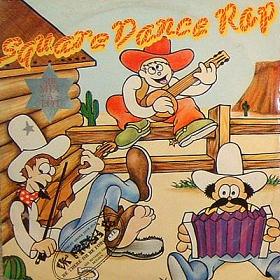 FG: A lot of older hip hop. Slick Rick’s
“La Di Dah” and “Square Dance Rap” by Sir Mix-A-Lot were two songs that were in
a higher echelon of rap music. They went beyond the genre of rap and were just
insanely infectious songs.
FG: A lot of older hip hop. Slick Rick’s
“La Di Dah” and “Square Dance Rap” by Sir Mix-A-Lot were two songs that were in
a higher echelon of rap music. They went beyond the genre of rap and were just
insanely infectious songs. FG: It was a concept
I used to think about a lot as a child- colors that you try to imagine in your
mind that don’t exist. I would get into these weird mind fuck loops as a kid
where I would lie in bed at night wondering if are colors out there can’t see
and don’t exist… what would those look like? It’s just one of those things you
think about as a kid. When highlighter markers hit the market it seemed like
this exciting new technology. I was only five years old or something, but it
was almost magical to me how they were so bright.
FG: It was a concept
I used to think about a lot as a child- colors that you try to imagine in your
mind that don’t exist. I would get into these weird mind fuck loops as a kid
where I would lie in bed at night wondering if are colors out there can’t see
and don’t exist… what would those look like? It’s just one of those things you
think about as a kid. When highlighter markers hit the market it seemed like
this exciting new technology. I was only five years old or something, but it
was almost magical to me how they were so bright. 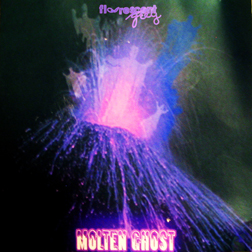 Molten
Ghost was my next release, and is probably my favorite album from this period
of time. It was a culmination of my experimentation on older Windows computer
programs like Cool Edit Pro, Vaz, Audio Mulch, Rebirth- some of it sounds like
modern Mego Records stuff, and I’m pretty proud of it (
Molten
Ghost was my next release, and is probably my favorite album from this period
of time. It was a culmination of my experimentation on older Windows computer
programs like Cool Edit Pro, Vaz, Audio Mulch, Rebirth- some of it sounds like
modern Mego Records stuff, and I’m pretty proud of it ( That’s
how
That’s
how  My
next release,
My
next release, 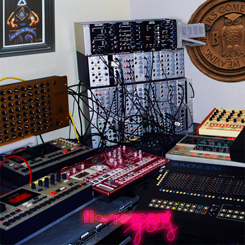 FG:
FG:  MR: A lot of the artists on RLR have also been your
friends growing up. It’s cool that so many of your friends just happen to be
extremely musically gifted as well, and amazing that you have given them an
outlet with RLR to put out their music.
MR: A lot of the artists on RLR have also been your
friends growing up. It’s cool that so many of your friends just happen to be
extremely musically gifted as well, and amazing that you have given them an
outlet with RLR to put out their music. 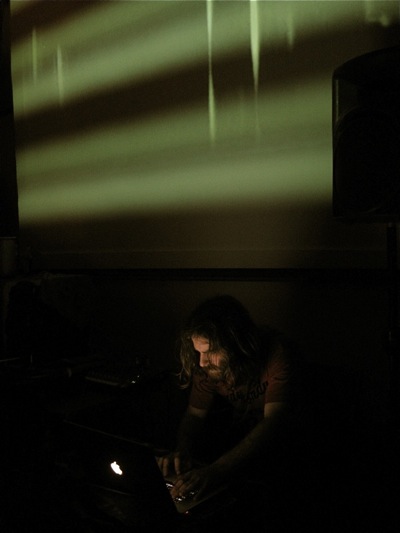 MR: When I saw you play at the Kava Lounge in San
Diego, you blew everyone away. You built up
all your beats and the sound had so many layers. When you do shows that are
interactive like that, are they done extemporaneously or do you
have a good idea of how you are going to build your songs beforehand?
MR: When I saw you play at the Kava Lounge in San
Diego, you blew everyone away. You built up
all your beats and the sound had so many layers. When you do shows that are
interactive like that, are they done extemporaneously or do you
have a good idea of how you are going to build your songs beforehand? MR: Agreed, I think it’s a really exciting time for
electronic music, precisely because of what you just said.
MR: Agreed, I think it’s a really exciting time for
electronic music, precisely because of what you just said.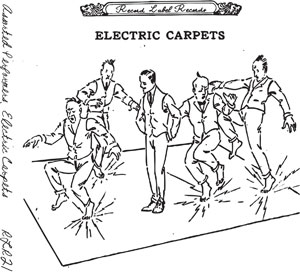 FG: Record
Label Records just released a compilation series this year of Record Label Record
artists, part one of the compilation is called Drinking the Goat’s Blood and
the second one is called Electric Carpets. Drinking the Goat’s Blood is
more of an experimental album, while the second disc shows a more poppy side of
Record Label Records.
FG: Record
Label Records just released a compilation series this year of Record Label Record
artists, part one of the compilation is called Drinking the Goat’s Blood and
the second one is called Electric Carpets. Drinking the Goat’s Blood is
more of an experimental album, while the second disc shows a more poppy side of
Record Label Records.  MEDIA ROOTS- As the current US labor system trembles with insecurity, leaking
the salaries, benefits and rights of workers across the country, people are
increasingly wondering what alternatives there are.
MEDIA ROOTS- As the current US labor system trembles with insecurity, leaking
the salaries, benefits and rights of workers across the country, people are
increasingly wondering what alternatives there are.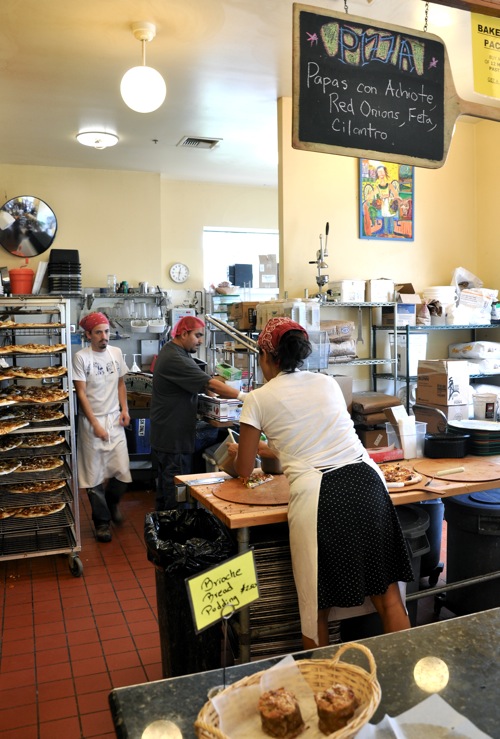 “Learning to cooperate among cooperatives has been one of the keys
to our success,” explains Tim Huet, a participant in the ’95 study group and
member of the Arizmendi Development and Support Cooperative. It is this branch
of the Arizmendi Association that coordinates the development of new
cooperatives while providing ongoing support to the existing bakeries.
“Learning to cooperate among cooperatives has been one of the keys
to our success,” explains Tim Huet, a participant in the ’95 study group and
member of the Arizmendi Development and Support Cooperative. It is this branch
of the Arizmendi Association that coordinates the development of new
cooperatives while providing ongoing support to the existing bakeries.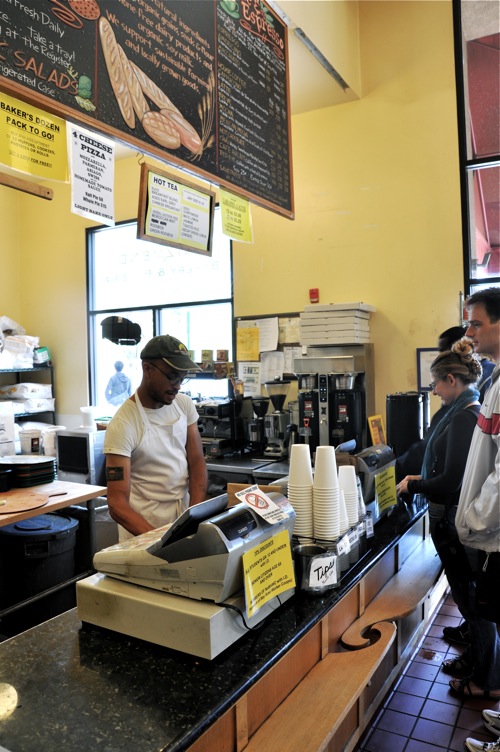 Currently, one of the most challenging
decisions facing the Emeryville cooperative is how to increase their prices in
a global climate of rising food costs.
It is a delicate and difficult line to navigate between sustaining the
bakery and worker-owners while still keeping the food accessible to the
community.
Currently, one of the most challenging
decisions facing the Emeryville cooperative is how to increase their prices in
a global climate of rising food costs.
It is a delicate and difficult line to navigate between sustaining the
bakery and worker-owners while still keeping the food accessible to the
community.  The stability
of her job at Arizmendi and having coworkers that care enough to shift
schedules and work to accommodate the changes in their colleagues lives is
simply something Tiffany had never experienced elsewhere. “I may not always
agree with my coworkers but I love them and I can’t say that about my previous
work experiences.”
The stability
of her job at Arizmendi and having coworkers that care enough to shift
schedules and work to accommodate the changes in their colleagues lives is
simply something Tiffany had never experienced elsewhere. “I may not always
agree with my coworkers but I love them and I can’t say that about my previous
work experiences.” ELECTRONIC INTIFADA